
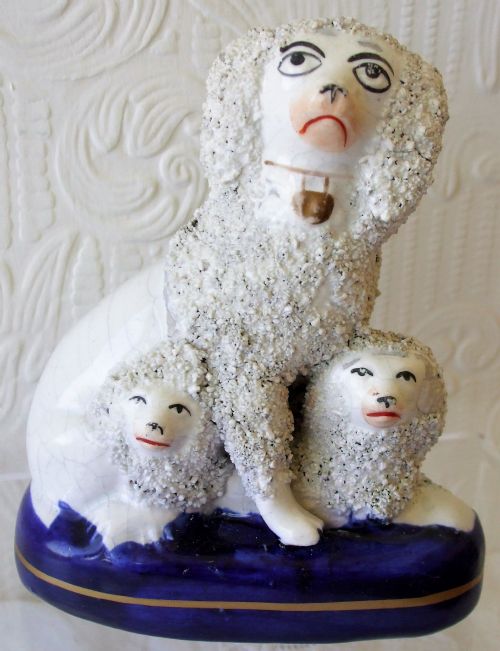


Cobalt Blue Ceramic Ornaments
Cobalt blue ceramic ornaments bring rich colour and historic character to a room, ranging from Staffordshire portrait figures to Japanese export porcelain.
Cobalt Blue Ceramic Ornaments
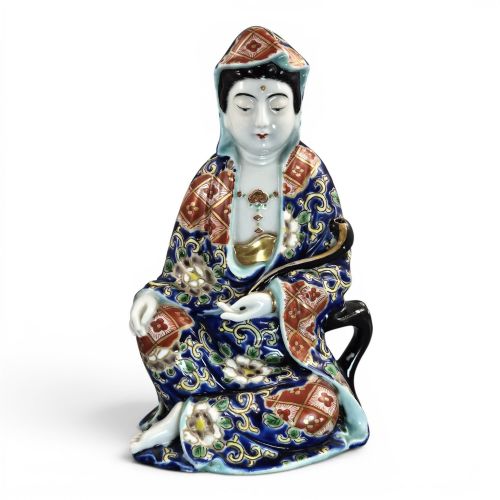
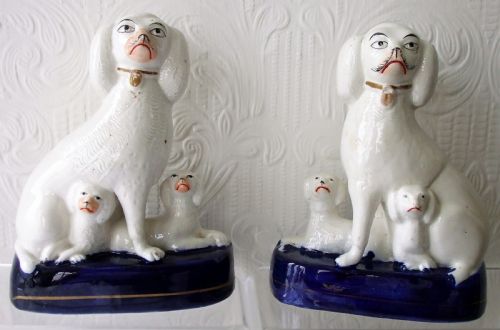
Cobalt blue ceramic ornaments encompass a broad selection of decorative figures, portrait pieces, vases, and inkwells made during the nineteenth and early twentieth centuries. When searching for cobalt blue ceramic ornaments, a buyer encounters everything from Staffordshire earthenware spaniels and royal figures to Japanese Meiji period porcelain and continental porcelain figurines.
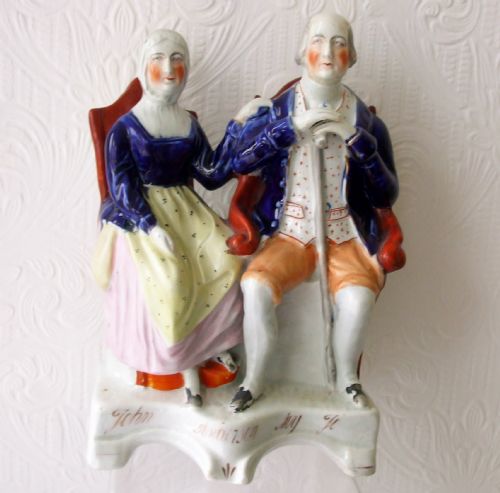
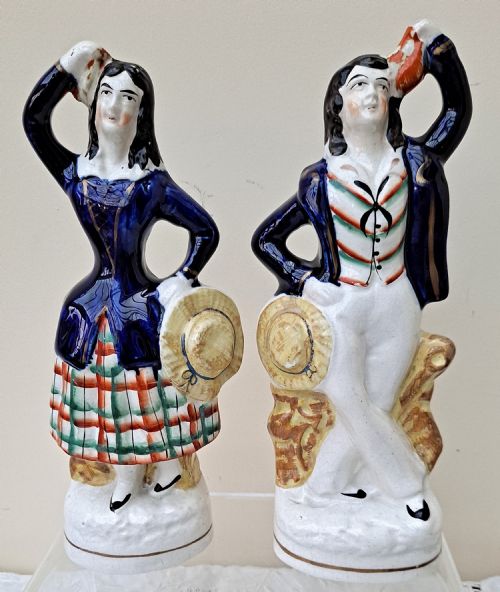
The Staffordshire pottery tradition provides a large portion of these pieces, often modelled as theatrical figures, poodles, and historical personages seated or displayed on vivid blue bases. Alongside English earthenware, the selection includes French porcelain busts, Japanese Satsuma and Arita ceramics, and Derby porcelain figures.
Many of these objects served practical roles as quill holders, spill vases, and inkstands while functioning primarily as chimney piece or table decorations. The variety spans British folk art styles, continental revival designs, and Asian export works united by striking blue glazes and enamel details.
Materials and Construction
Makers shaped these ornaments using earthenware and porcelain bodies, applying lead glazes and vibrant enamel paint to create the finished surfaces. Cobalt oxide provided the deep, stable blue colour seen across nineteenth-century Staffordshire bases, Japanese ceramics, and continental porcelain.
Details were often heightened with gold leaf, gilt, and intricate encrusting applied over the glaze before a final firing. The construction method varied from press-moulded earthenware figures with hollow backs to finely potted Japanese porcelain and bisque figures.
Nineteenth-century potters captured topical diplomacy on the mantelpiece, immortalising the Crimean War alliance as a ceramic trio.
Assessing Quality and Execution
The depth and consistency of the cobalt blue glaze distinguish finer productions, particularly on Staffordshire cushion bases and Japanese vases where uniform colour distribution requires careful kiln control. Workshop mastery shows in the stability of large figure groups and the delicate rendering of theatrical costumes or portrait likenesses.
Samson Paris·Doulton Lambeth·Royal Crown Derby·Derby
The Cobalt Blue Ceramic Ornaments Glossary
- Earthenware
- A porous ceramic body fired at lower temperatures, commonly used for nineteenth-century Staffordshire pottery figures and portrait groups. It requires a glaze to become impermeable to liquids.
- Bisque
- Unglazed porcelain fired once to produce a matte, biscuit-like surface with a smooth texture. This technique highlights fine sculptural detail on portrait busts and continental figures.
- Spill vase
- A hollow cylindrical vase designed to hold wooden spills used for lighting candles and fires. These vessels frequently form part of nineteenth-century Staffordshire figure groups.
- Flatback
- A ceramic figure modelled with a finished front and a flat, unadorned reverse designed to stand against a wall or mantelpiece. This method was standard for Staffordshire chimney ornaments.
- Encrusting
- Applied clay details, such as modelled flowers or foliage, added to the surface of ceramic figures and bases before firing. It creates a textured, decorative effect seen on Victorian dog figures.
Cobalt Blue Ceramic Ornaments: Frequently Asked Questions
What are Staffordshire flatback figures?
Staffordshire flatbacks are earthenware ornaments produced in the nineteenth century with detailed fronts and flat backs designed to sit on mantelpieces. They typically depict royalty, theatrical scenes, literary characters, and domestic animals.
These pieces were made in large quantities by various potteries in the English Midlands and painted by hand with bright enamels and cobalt blue accents. They offer a direct window into Victorian popular culture and news.
How do I care for antique ceramic ornaments?
Antique ceramics require gentle maintenance using a dry, soft brush to remove dust from crevices and encrusted details. Avoid using water or cleaning solutions, particularly on pieces with delicate gilt, enamel paint, or gold leaf.
Keep the ornaments away from direct sunlight and areas subject to sudden temperature fluctuations to protect the glaze and body from stress. Stable placement on a level surface prevents accidental tipping.
How are Japanese Meiji ceramics identified?
Japanese Meiji period ceramics, such as Arita and Kutani figures and vases, date from the late nineteenth to early twentieth century and show distinct artistic styles. They often feature refined porcelain or earthenware bodies decorated with meticulous enamel work and cobalt blue pigments.
Subjects frequently include historical figures, court scenes, and traditional motifs rendered with high technical skill. These works reflect the opening of Japan to Western trade during the late Victorian era.
What is the difference between earthenware and porcelain?
Earthenware is an opaque, porous ceramic body fired at lower temperatures, requiring a glaze to hold water and provide a smooth surface. It forms the foundation of most nineteenth-century Staffordshire pottery figures and decorative groups.
Porcelain is a denser, vitrified material fired at higher temperatures that remains impermeable even without glaze. It allows for finer sculptural details and thinner walls, as seen in continental and Japanese figures.