



Coastal Maritime Wall Decor
Coastal maritime wall decor gathers marine paintings, watercolours, maps, and half models capturing harbours, ships, and coastal life across eras.
Coastal Maritime Wall Decor
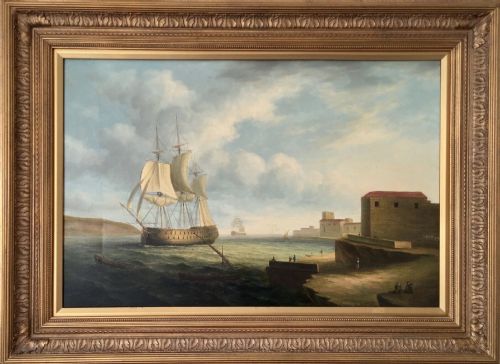
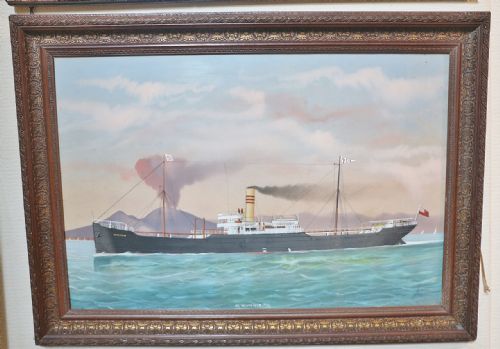
When searching for coastal maritime wall decor, buyers encounter a diverse selection of oil paintings, watercolours, and mixed media pieces focused on the sea. These works range from nineteenth century depictions of fishing boats and warships to mid-century harbour scenes and vintage signs.
The pieces on this page span several distinct periods, including Victorian, Edwardian, and mid-century eras, alongside traditional maritime and British Impressionism styles. Buyers most frequently meet framed oil paintings on canvas or panel and detailed watercolours depicting British and European ports.
Subjects stretch from calm coastal views and bustling boat yards to specific vessels like warships and liners. Alongside paintings, the category includes maps and decorative wooden half models of boats that bring nautical history directly onto the wall.
Materials and techniques
Artists working within these maritime subjects typically applied oil paint to canvas, wood panels, or boards, creating textured surfaces that capture the changing light on water. Watercolour on paper forms another primary medium, often protected beneath glass within traditional wood or gilded frames.
Physical objects intended for wall display, such as half models, utilise shaped wood to represent the hull of a vessel in relief. Paper items like nineteenth century maps rely on detailed cartography and print techniques from their respective periods.
Materials recorded across the inventory include canvas, paper, glass, gilded wood, and solid oak frames.
Judging quality in marine works
Quality in these coastal pieces rests upon the artist's ability to render water, light, and atmosphere convincingly within the chosen medium. Stronger works demonstrate assured brushwork and accurate depiction of rigging, hull forms, and coastal geography.
The choice of framing and the preservation of the original surface significantly influence the overall appeal of a piece. Works by recorded painters who specialised in marine subjects naturally command greater attention than anonymous decorative studies.
James Hardy·Edward Matthew Elliott·Frank Wood·H. Hadfield Cubley·Charles Cameron Baillie·James Kinnear·Johan Jens Neumann·Micheal Matthews·Thomas Bush Hardy·Arthur Joseph Meadows
The Coastal Maritime Wall Decor Glossary
- Half model
- A three-dimensional wooden model representing one side of a ship's hull, designed to be mounted flat against a wall.
- Marine painting
- Artwork depicting ships, boats, coastal views, or naval engagements, executed in oils, watercolour, or other media.
- Panel painting
- A work executed on a rigid wooden support rather than stretched canvas, common in earlier periods.
- Seascape
- A painting, photograph, or other work of art that depicts the sea, waves, and coastal environments.
- Watercolour
- A painting method in which the paints are made of pigments suspended in a water-based solution, frequently utilised on paper for coastal scenes.
Coastal Maritime Wall Decor: Frequently Asked Questions
What subjects appear in maritime art?
These works depict sailing ships, steam liners, fishing vessels, and warships alongside specific harbours, ports, and coastal cliffs. Scenes range from calm coastal waters to dramatic maritime weather.
Artists also recorded everyday maritime life, including boat yards, fishermen hauling catches, and quiet sea views from locations across Britain and Europe.
How do I date an old marine painting?
Dating relies on the style of the clothing, the type of vessel shown, the framing methods, and the materials used for the support such as canvas or panel. Signatures and legible dates left by the artist provide the most direct evidence.
Period labels in titles, ranging from Victorian and Edwardian to mid-century modern, help place the piece within its historical context.
Are these pieces suitable for modern interiors?
Coastal maritime items fit easily into varied interior schemes, bringing texture and historical depth through framed paintings, maps, and wooden half models. Their traditional subject matter contrasts effectively with contemporary spaces.
Smaller watercolours and oval sea views offer versatile sizing for narrower wall spaces or gallery arrangements.
What is a half model?
A half model is a wooden representation of a ship's hull split down the centreline, designed to be hung directly on a wall. Shipbuilders originally used these objects to plan and visualize vessel proportions before construction.
In a decorative context, they function as sculptural wall art that highlights traditional woodworking and marine history.