

Clear Glass Light
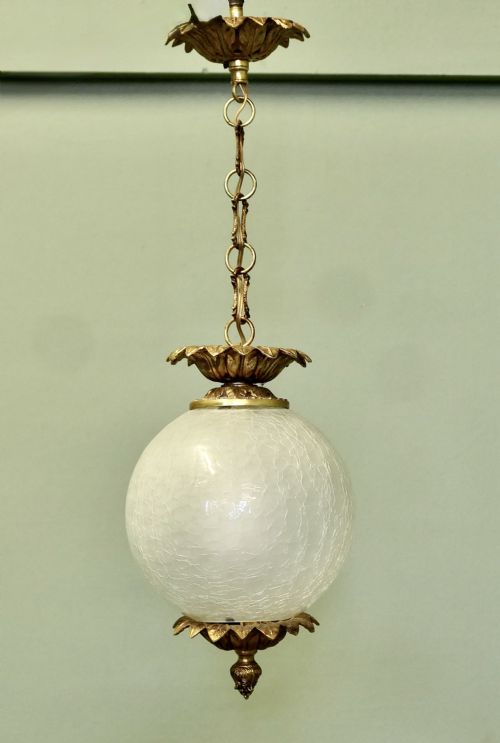
These clear glass light fixtures bring bright, refractive illumination into a room, combining moulded or cut crystal with brass, ceramic, and metal mountings.
Clear Glass Light
A clear glass light encompasses a wide variety of hanging and standing forms, ranging from single-bulb pendants and plafonniers to large multi-armed chandeliers and multi-tiered tent-and-waterfall assemblies. These fittings originate from distinct historical periods, most notably the Victorian, Edwardian, and Art Deco eras, alongside broader nineteenth and twentieth-century interpretations of French Empire and Louis Revival styles.
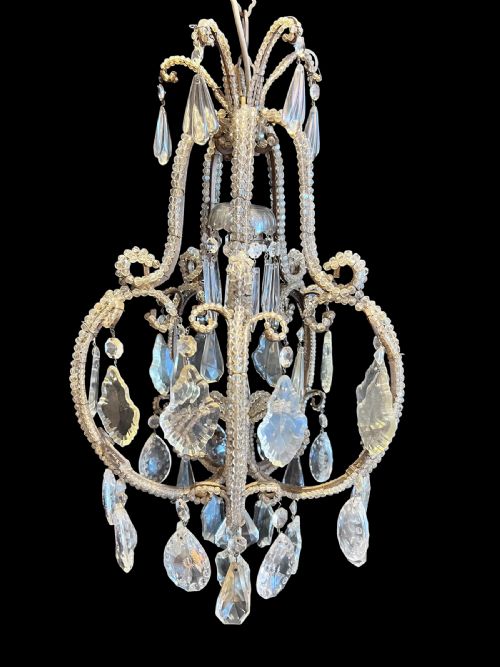
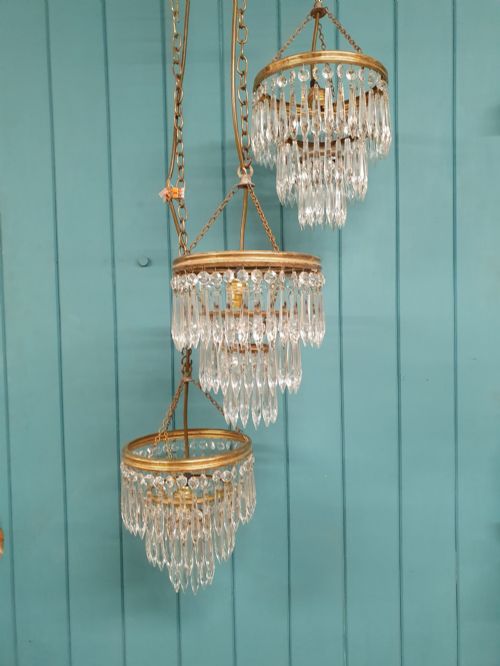
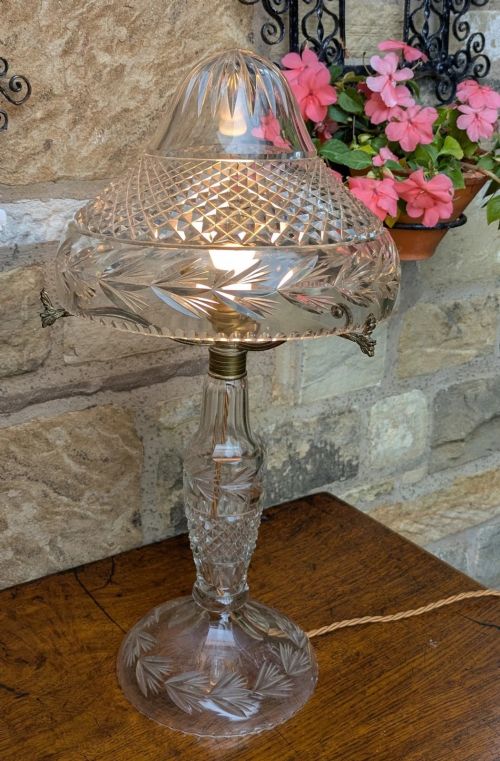
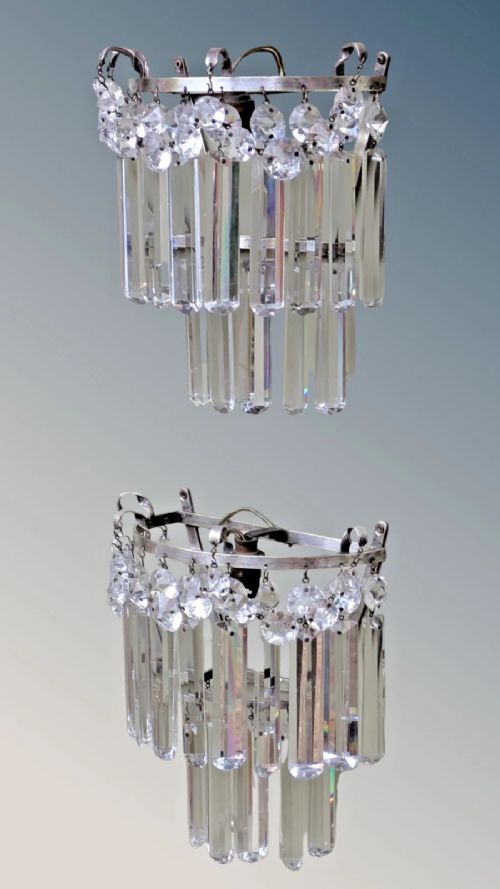
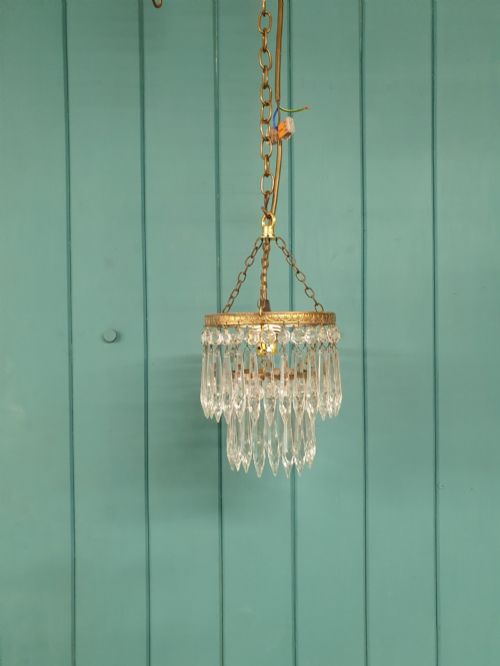
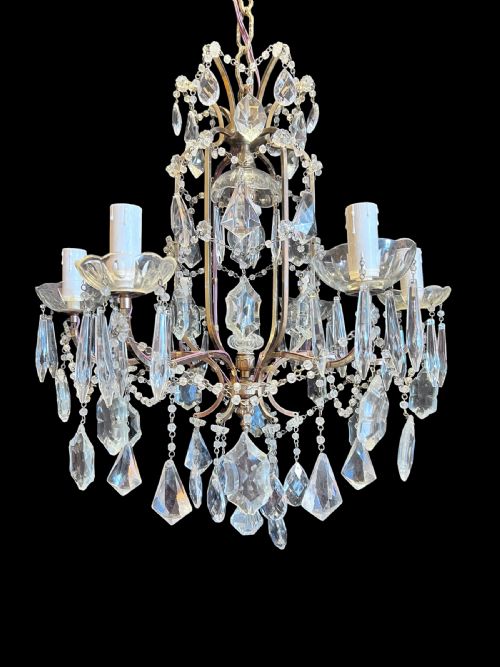
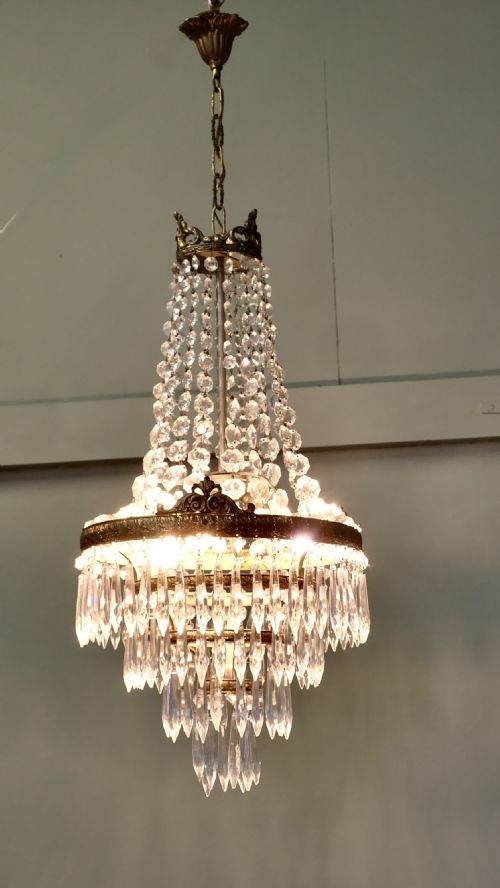
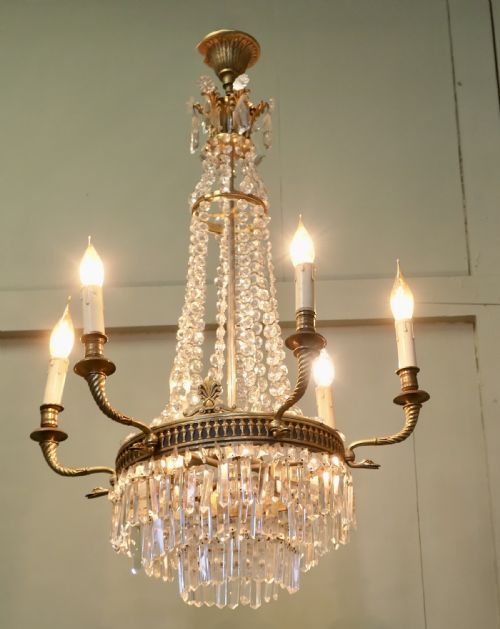
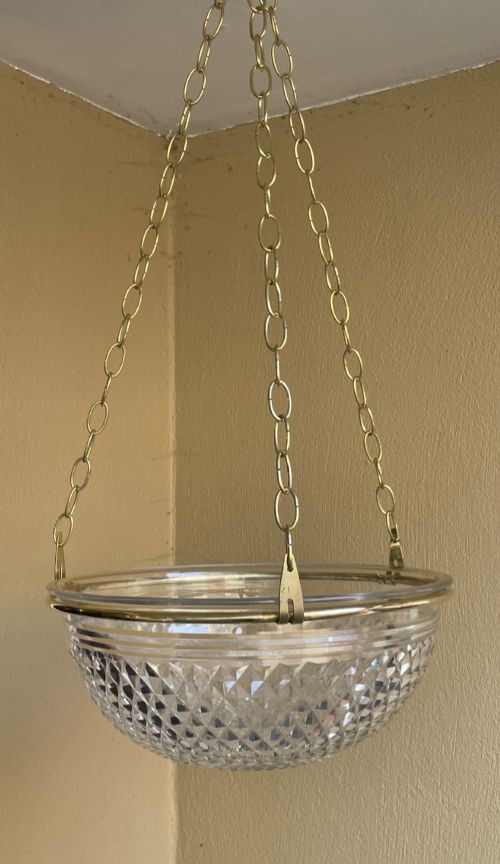
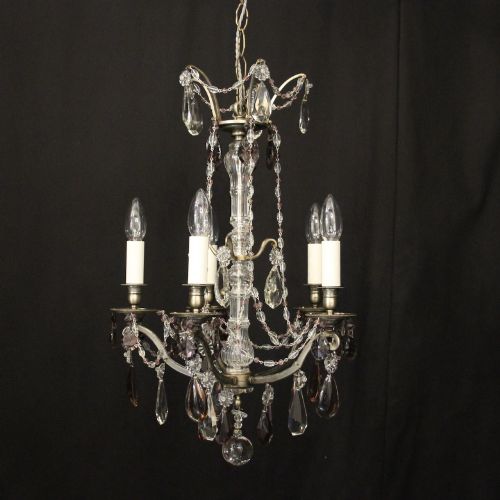
Buyers searching this phrase will most frequently encounter compact Edwardian dome top and spike chandeliers made of cut glass and brass, alongside larger French and Italian multi-light chandeliers featuring extensive crystal drops. Hanging pendant lights, ceiling lights, wall lights, and table lamps also appear regularly, reflecting both domestic and formal interior lighting traditions from the 1880s to the 1940s.
Materials and Construction
These light fixtures rely on a foundation of cast or spun brass, silver-gilded metal, and occasionally ceramic or ormolu mounts to support heavy glass elements. Lead glass and crystal are moulded, hand-blown, or precision-cut into facets, prisms, beads, and globes designed to catch and multiply light.
Component parts such as prisms, pendeloques, and bowls are secured to metal frames using wire ties, pins, or threaded brass fittings. Skilled artisans combined hand-blown shades with intricate metal armatures, integrating specialised optical forms like Holophane ribbed glass or etched domes.
One early twentieth-century oil lamp retains a tall glass body paired with a hand-blown twin-burning shade.
Determinants of Quality
Quality in these glass fixtures rests upon the clarity and weight of the glass, the depth and sharpness of the hand-cut facets, and the substance of the underlying metal frame. Superior examples display dense, high-lead crystal that refracts light with intense brilliance, paired with heavy brass or silver-gilded structures that maintain rigidity under the weight of numerous pendants.
The sophistication of the design and assembly dictates the tier of the piece, distinguishing mass-produced commercial lighting from bespoke or high-style items like French Empire tent chandeliers or elaborate Italian chandeliers. Hand-blown elements with deliberate optical properties, such as specialised prismatic shades, denote a higher standard of manufacture than simple pressed glass.
The Clear Glass Light Glossary
- Plafonnier
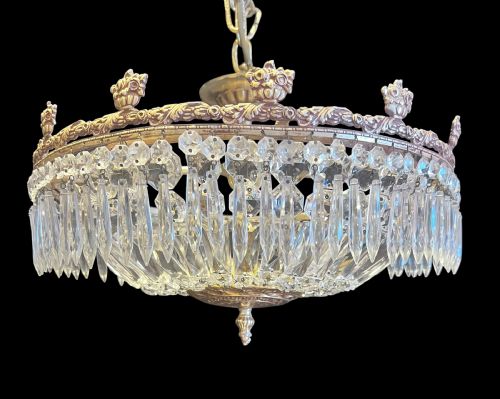
- A ceiling-mounted lighting fixture with a shallow glass bowl or dome held close to the surface. It provides direct downward illumination while keeping the hanging drop minimal.
- Tent and waterfall
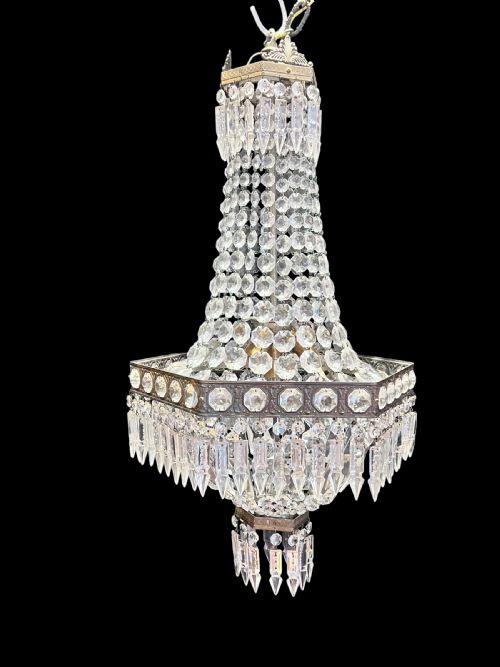
- A chandelier style featuring an upper canopy of beaded strings forming a tent shape, coupled with a cascading arrangement of drops below. This construction maximises the play of light across numerous individual crystal facets.
- Holophane
- A brand of scientific glass globes and shades featuring precise prismatic ribs. These patterns were engineered to direct and diffuse light efficiently while reducing glare.
- Lustre
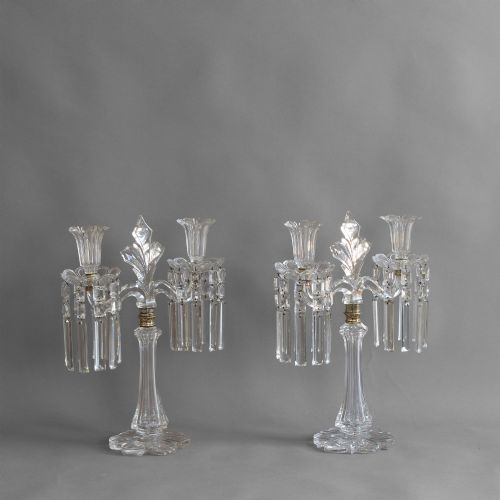
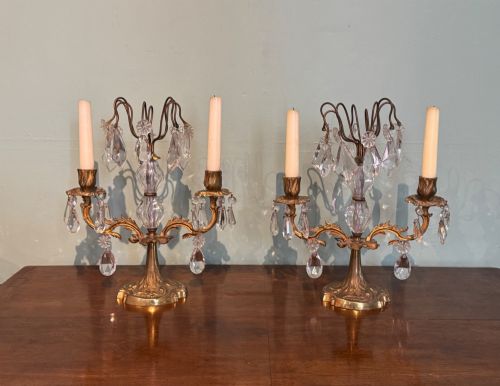
- A decorative tabletop or mantelpiece ornament featuring hanging glass prisms attached to a central stem and bowl. While primarily decorative, they share the refractive glass characteristics of contemporary lighting.
- Coffin prism
- A long, flat-backed crystal pendant with a pointed, tapering tip resembling the traditional silhouette of a coffin. They are frequently hung from the rims of Edwardian and Victorian chandeliers.
Clear Glass Light: Frequently Asked Questions
What is a plafonnier light?
A plafonnier is a ceiling light fitted directly against the ceiling rather than suspended on a long chain or cord. It typically uses a moulded or cut glass bowl to diffuse the light evenly across a room.
These fixtures became particularly popular during the Edwardian period and the 1930s for rooms with lower ceiling heights.
How do I date a glass chandelier?
Dating relies on examining the metalwork, the style of the frame, and the specific cut of the glass prisms. Edwardian and Victorian pieces often feature heavy brass mountings and hand-cut crystal details characteristic of their respective eras.
Later pieces from the 1930s frequently adopt streamlined Art Deco or functional forms, such as pressed glass Holophane shades.
Where were these lights used?
These fixtures appeared throughout domestic and public interiors, from grand nineteenth-century ballrooms requiring massive crystal chandeliers to modest Edwardian hallways lit by single-bulb glass domes. Table lamps and oil lamps provided portable illumination for desks and reading tables before widespread electrification.
French and Italian salons utilised elaborate multi-branch chandeliers as central focal points for formal entertaining.