
Clear Gilded Glass
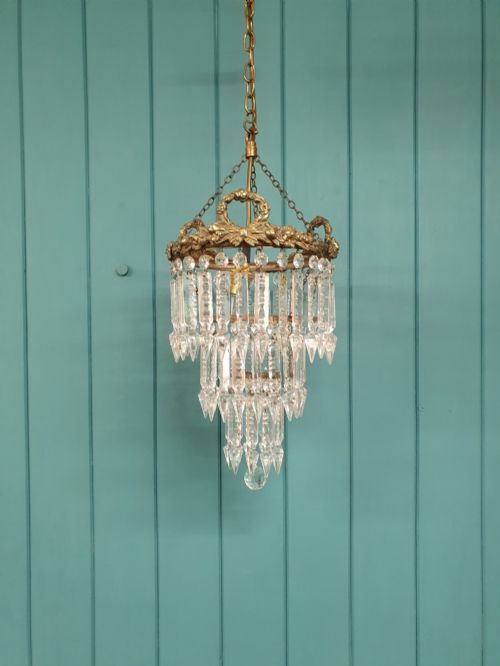
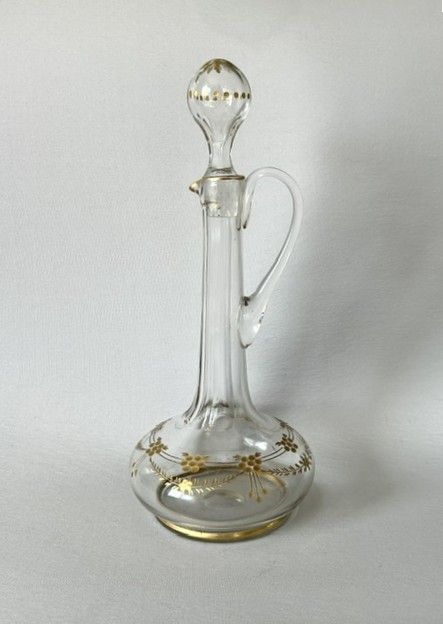
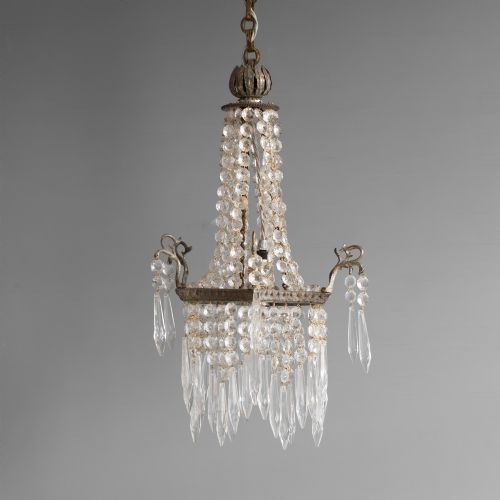
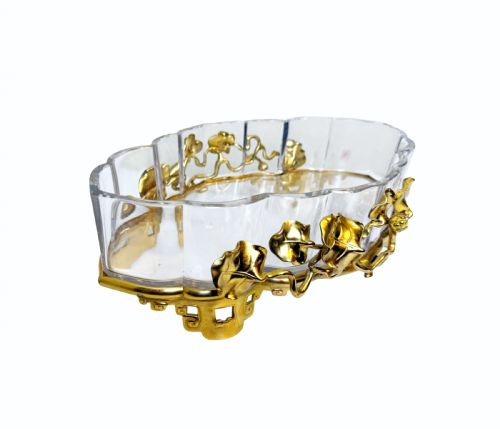
Clear gilded glass catches the light through gold leaf and enamel upon cut crystal, bringing eighteenth-century table service and grand chandeliers into daily rooms.
Clear Gilded Glass
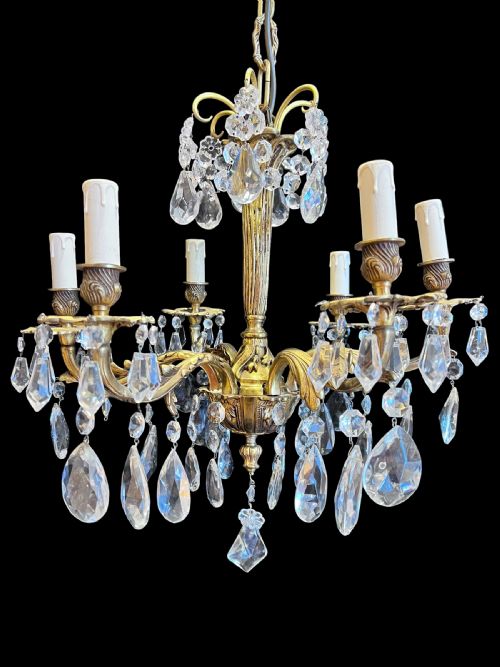
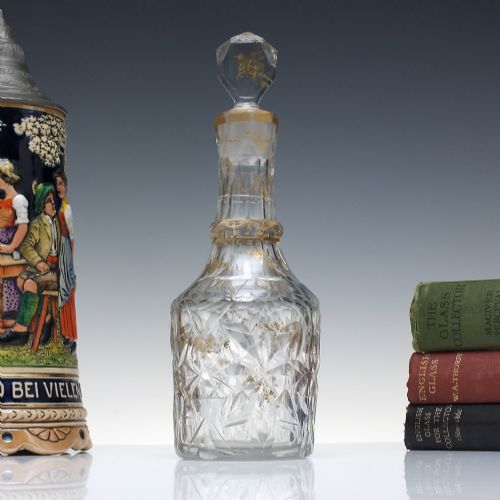
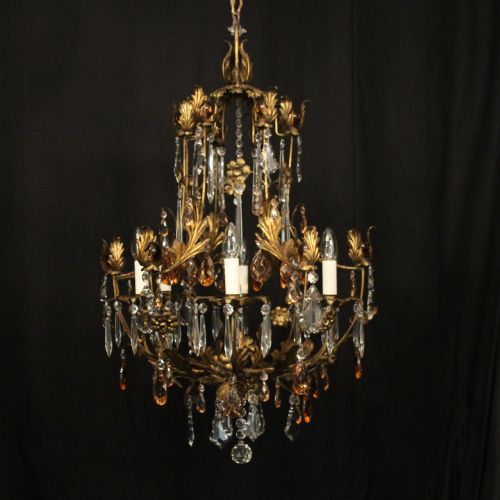
Clear gilded glass encompasses table vessels, decorative bowls, and lighting fixtures spanning from the Georgian period through the early twentieth century. When seeking clear gilded glass, buyers most frequently encounter decanters, stemware, and chandeliers shaped in French, Bohemian, and English workshops.
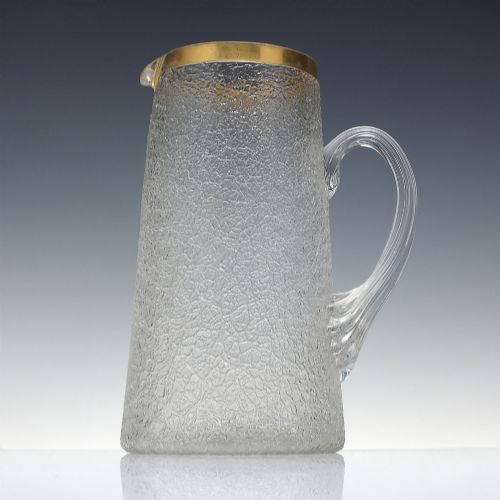
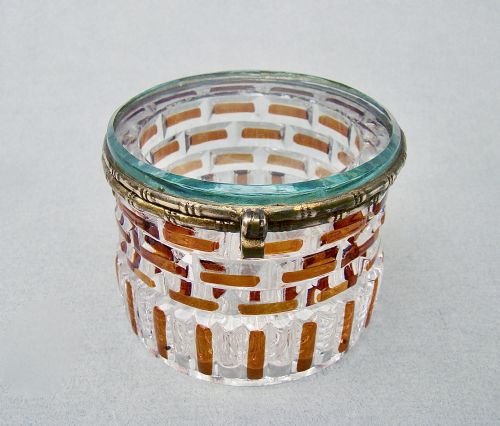
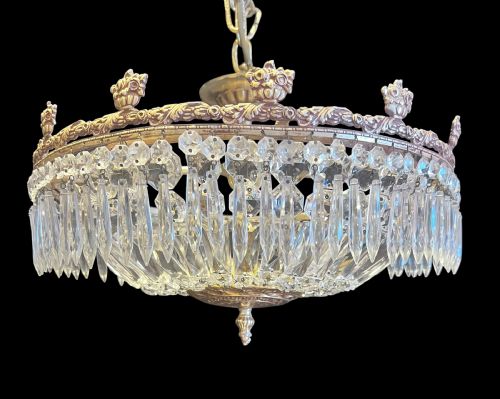
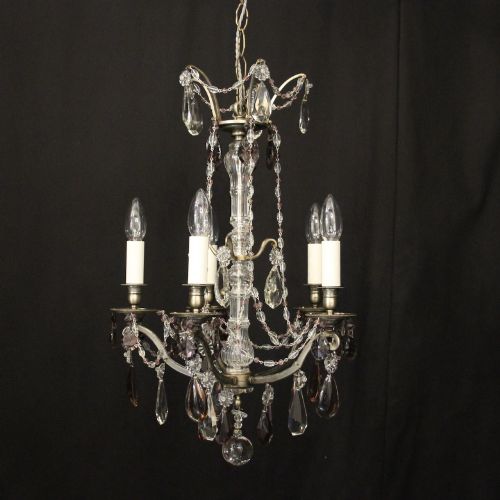
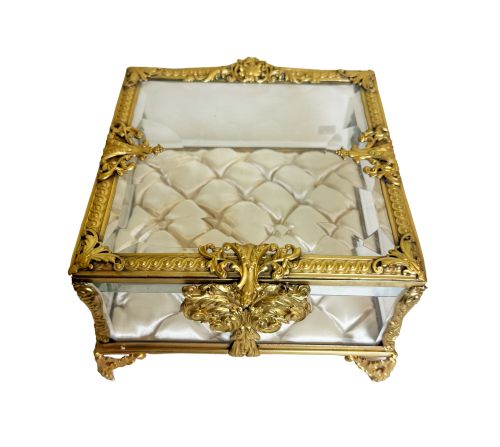
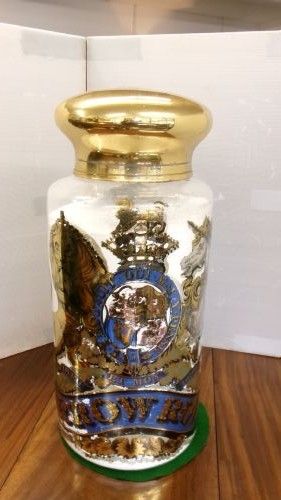
Domestic objects range from apothecary jars and water pitchers with gilded rims to elaborate trinket boxes mounted in gilt bronze or brass. Lighting options extend from single-tier ceiling lanterns and plafonieres to multi-light chandeliers hung with crystal drops.
Materials and Techniques
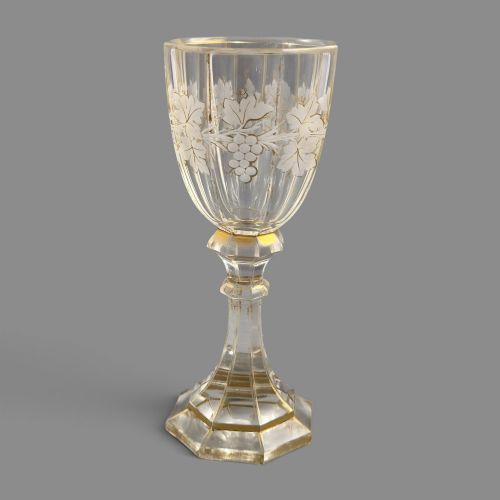
Makers shaped clear glass, crystal, and overshot glass through blowing and facet cutting to create faceted stems, bowls, and decanter bodies. These transparent foundations received surface ornamentation through the application of gold leaf, paste gilt, and intricate enamel painting.
Metal mounts in brass, bronze, and gilt bronze secure the glass components of chandeliers, jewellery boxes, and frames. Engraving and wheel-cutting further articulate floral motifs and heraldic designs directly into the crystal surfaces before gilding.
Listings span eight distinct periods, stretching from Georgian decanters to 1930s crystal ceiling lights.
Distinctions in Execution
Superior examples display precise wheel-engraving and crisp facet cutting that interact sharply with the applied gold leaf and enamel. Lesser execution appears in soft glass moulding and thick, unrefined gilt application that lacks the definition found in pieces from established houses.
The integration of metalwork defines the upper tier, where cast gilt bronze mounts fit snugly against cut crystal bodies. Finer pieces maintain intact gilding with minimal rubbing, whereas inferior items show extensive loss to the gold leaf and enamel decoration.
James Giles·Baccarat·Moser·Theresienthal·St Louis glassworks
The Clear Gilded Glass Glossary
- Gilt bronze
- An alloy of copper and zinc finished with a layer of gold amalgamation. This metal provides structural frames and mounts for crystal boxes and chandeliers.
- Overshot glass
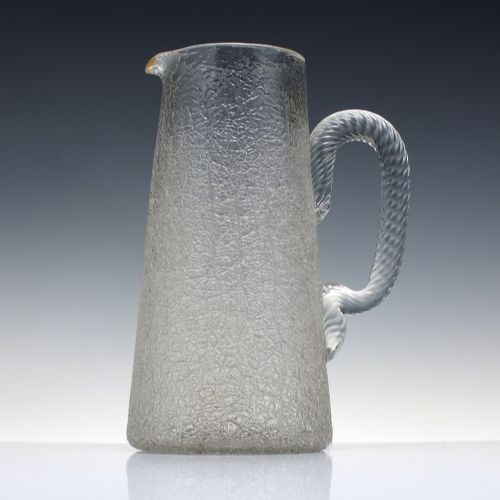
- A technique where fine threads of hot glass are trailed across the surface of a blown vessel. This creates a textured, icy exterior often paired with a smooth gilded rim.
- Römer
- A traditional large German wine goblet featuring a patterned stem and a wide bowl. These glasses frequently display elaborate enamel and gilding.
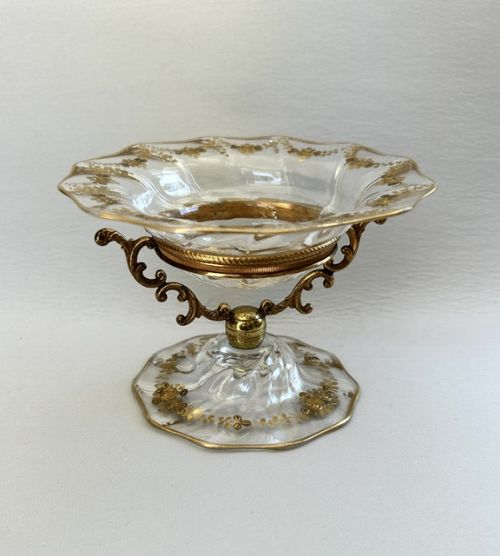
- Tazza
- An elevated decorative dish or shallow bowl raised on a central foot or pedestal. Victorian examples often feature gilt decoration and grapevine motifs.
- Plafoniere
- A ceiling light fixture mounted flush or close to the ceiling surface. These fixtures utilise brass frames and crystal bowls or drops.
Clear Gilded Glass: Frequently Asked Questions
How do I clean clear gilded glass?
Dust surfaces gently with a soft, dry cloth to protect the delicate gold leaf and enamel decorations.
Avoid immersing gilded glass in water or using chemical solvents that lift historical gilding from the crystal.
Were these items used daily?
Georgian and Victorian decanters, glasses, and jugs served functional roles during formal dining and entertaining.
Trinket boxes and apothecary jars fulfilled ornamental and storage purposes in private parlours and apothecaries.
How do I date an antique chandelier?
Examine the metal mounts, wiring channels, and the cut of the crystal drops for period manufacturing traits.
Georgian and Victorian pieces utilise heavy brass or bronze frames differing markedly from later twentieth-century constructions.
What is paste gilt?
Paste gilt involves applying a mixture containing powdered gold onto the glass surface before firing.
This technique creates a durable, slightly raised golden decoration distinct from paper-thin gold leaf.