
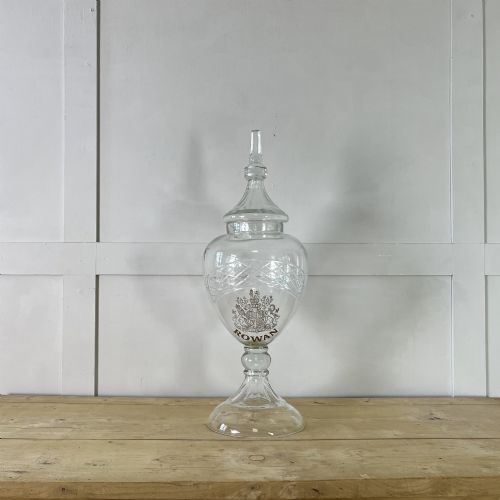


Clear Cut Glass Vessel
When you search for a clear cut glass vessel, you encounter practical tableware and decorative items shaped from brilliant lead crystal and glass.
Clear Cut Glass Vessel
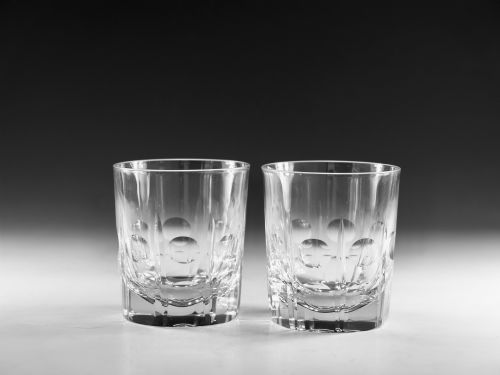
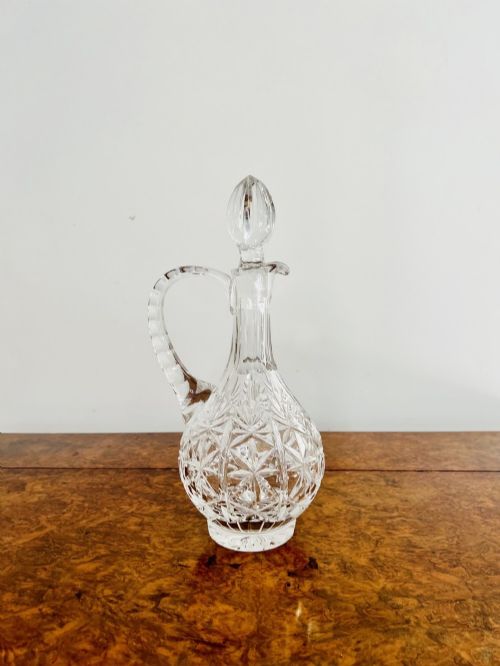
Buyers seeking a clear cut glass vessel examine practical and decorative items spanning the Georgian, Victorian, Edwardian, and Art Deco periods. These forms range from decanters, ewers, and carafes to vases, bowls, jars, and goblets originating from English, Bohemian, and continental makers.
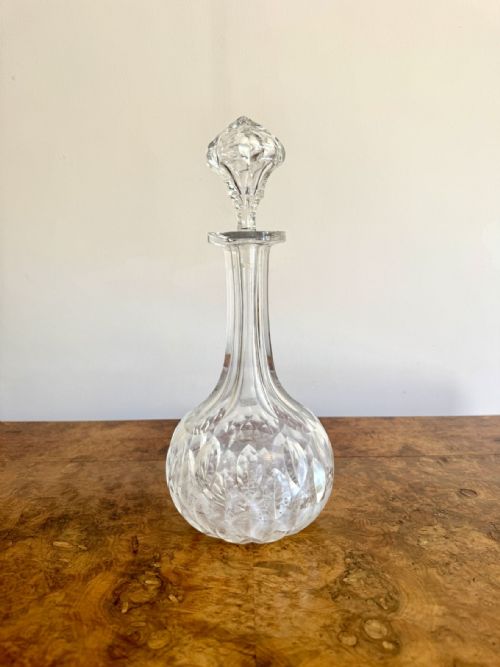
The version most commonly encountered on this page is the decanter or vase produced during the Victorian and Edwardian eras. These pieces demonstrate standard utilitarian and display functions designed for domestic interiors and dining tables.
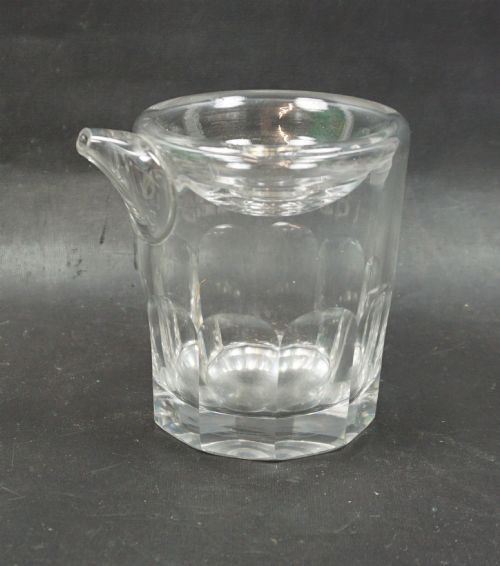
The selection also incorporates specialty items such as feeding cups, apothecary jars, celery vases, and cocktail shakers. These objects highlight the diverse utility of cut glass across the nineteenth and early twentieth centuries.
How they were made
Maker operations utilised lead glass, crystal, and clear glass combined with sterling silver, gold leaf, and enamel. Artisans formed vessels through blowing and moulding before applying deep geometric or floral cutting.
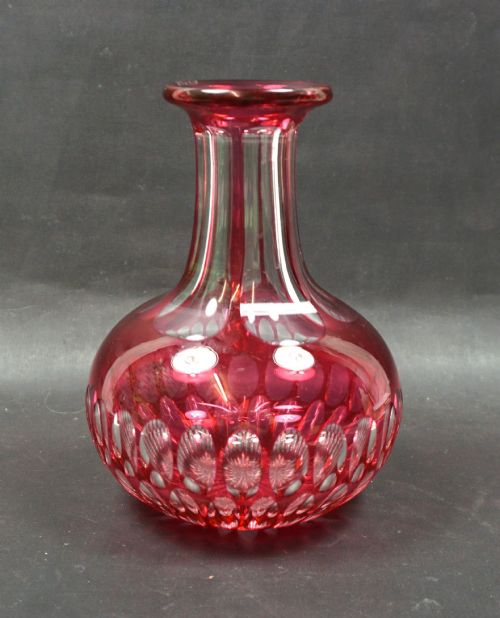
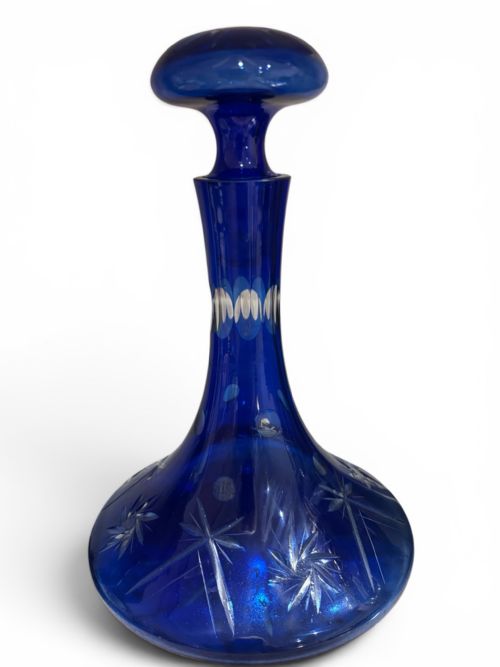
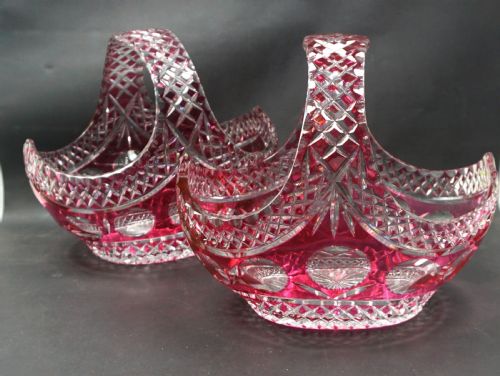
Decoration relied heavily on wheel engraving, etching, and surface gilding, occasionally incorporating coloured glass layers such as cranberry, blue, or cobalt over crystal. Metal mounts and hardware were fitted by silversmiths using silver plating and sterling silver components.
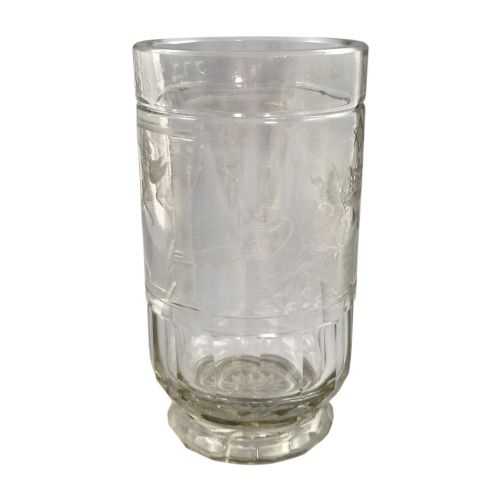
An eighteenth-century mustard pot sits alongside a philosopher engraved on a vase, proving table settings once required deep intellectual stamina.
What varies in quality
Quality differences emerge in the crispness and depth of the wheel cutting and the clarity of the underlying lead crystal. Superior examples display sharp, well-defined facets and smooth surfaces without optical distortion.
The integration of precious metals and supplementary materials establishes hierarchy within the range. Pieces featuring substantial sterling silver hardware, intricate gilding, or complex double and triple casing demonstrate higher manufacturing ambition.
Val St. Lambert·Hukin & Heath·Asprey & Co.·Karl Palda
The Clear Cut Glass Vessel Glossary
- Lead crystal
- Glass containing lead oxide to increase weight, refractive index, and brilliance. This material allows deeper and sharper facet cutting than standard soda-lime glass.
- Wheel engraving
- A decoration technique where a vessel is held against rotating abrasive wheels of various sizes. This process cuts detailed intaglio scenes or patterns into the glass surface.
- Casing
- The method of fusing a thin layer of coloured glass over a clear glass body. Subsequent cutting through the outer layer reveals the contrasting clear glass beneath.
- Decanter
- A stoppered bottle designed for holding and serving wine or spirits. These vessels frequently feature multiple neck rings and geometric body cutting.
- Regency
- An architectural and design style spanning the early nineteenth century. Pieces from this era often exhibit restrained neoclassical proportions and clean structural lines.
Clear Cut Glass Vessel: Frequently Asked Questions
What is the difference between glass and lead crystal?
Lead crystal contains a significant percentage of lead oxide, which increases the density and weight of the object. This chemical composition produces a higher refractive index and a resonant chime when struck.
Standard glass lacks this lead content, resulting in a lighter weight and less dispersion of light through cut facets.
How can I date an old decanter?
Examine the base for a pontil mark where the blowpipe was snapped off, noting whether it remains rough or has been ground and polished flat. Earlier pieces typically feature hand-polished pontils and distinct neck ring formations.
Consider the overall manufacturing style, cutting depth, and any associated silver hallmarks or maker signatures. Victorian and Edwardian examples often display machine-polished bases and heavier lead crystal compositions.
Can I use these vessels for daily dining?
Many of these items function effectively for serving liquids or displaying table arrangements during meals. Hand washing is essential to preserve the integrity of the material and any applied gilding.
Avoid subjecting antique pieces to dishwashers or thermal extremes. Storing them securely prevents accidental chipping of delicate rims and cut facets.