
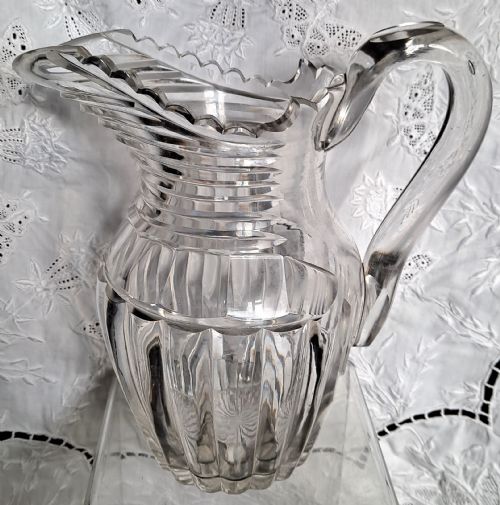
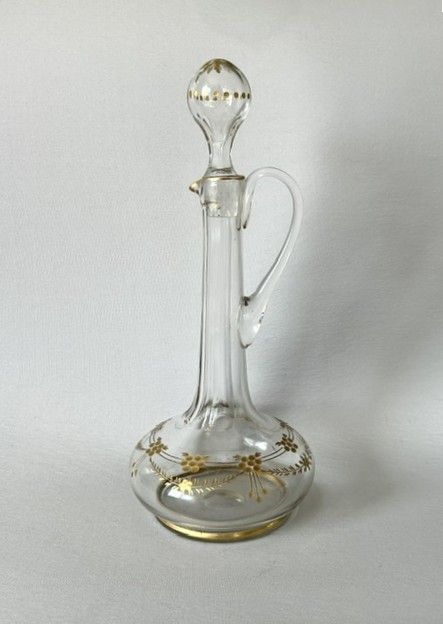
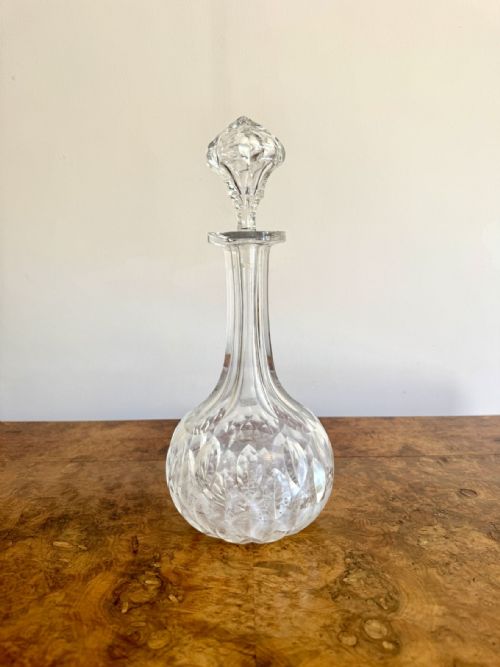
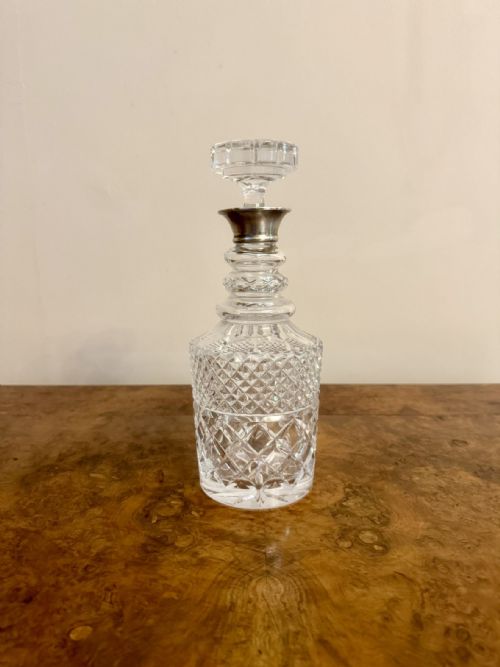
Clear Cut Crystal Decanter
These heavy, refractive vessels for wine and spirits are what you seek when a clear cut crystal decanter catches the light on a dining table.
Clear Cut Crystal Decanter
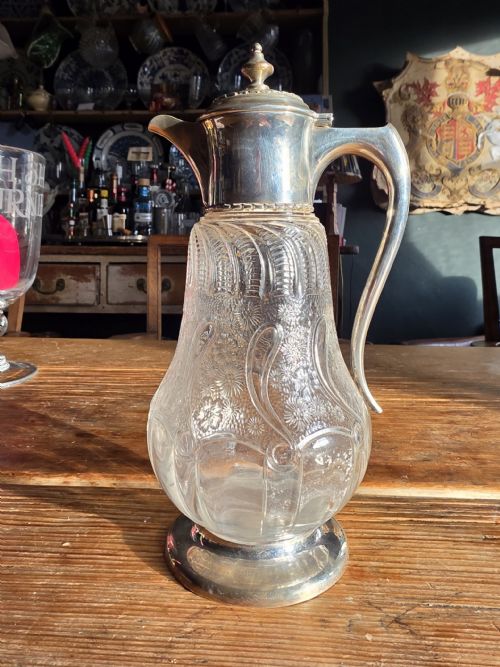
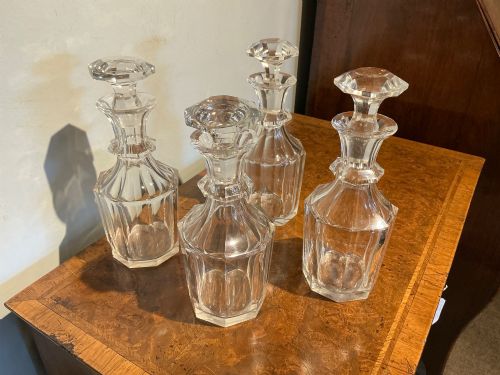
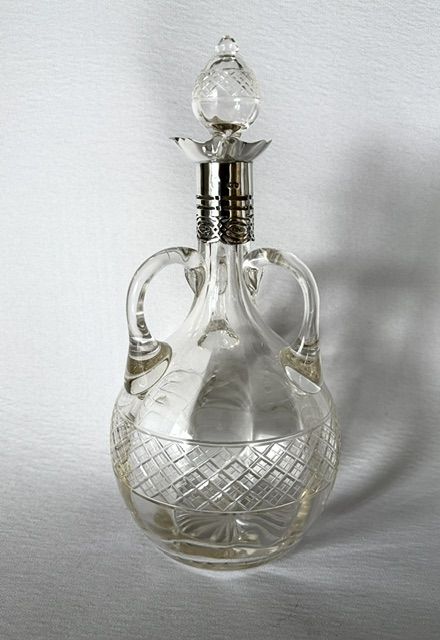
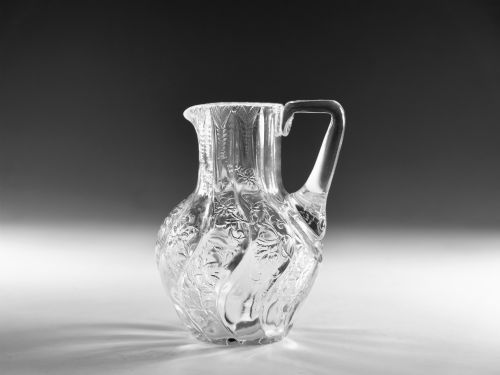
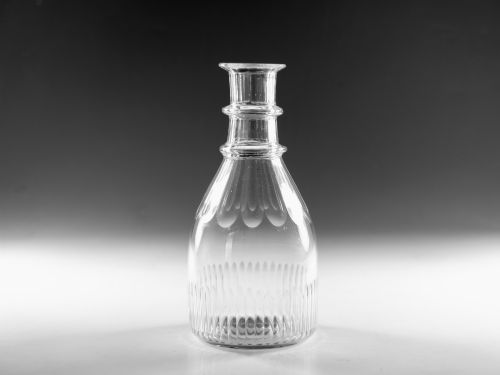
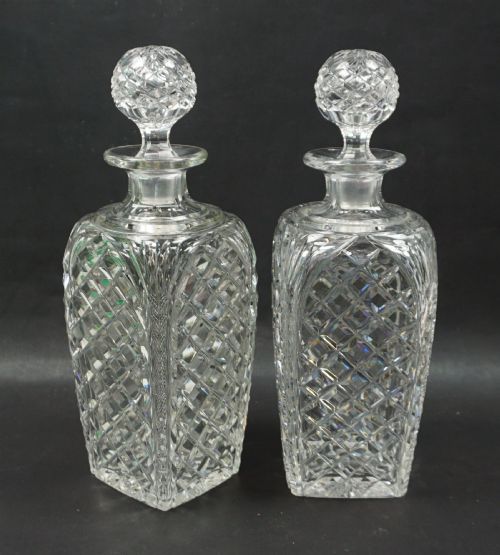
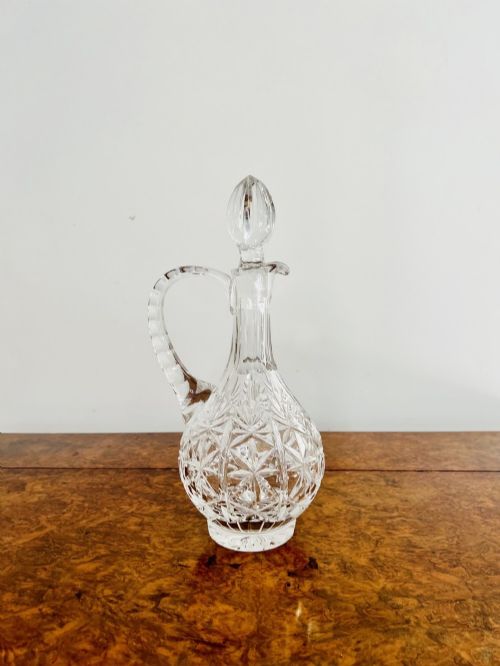
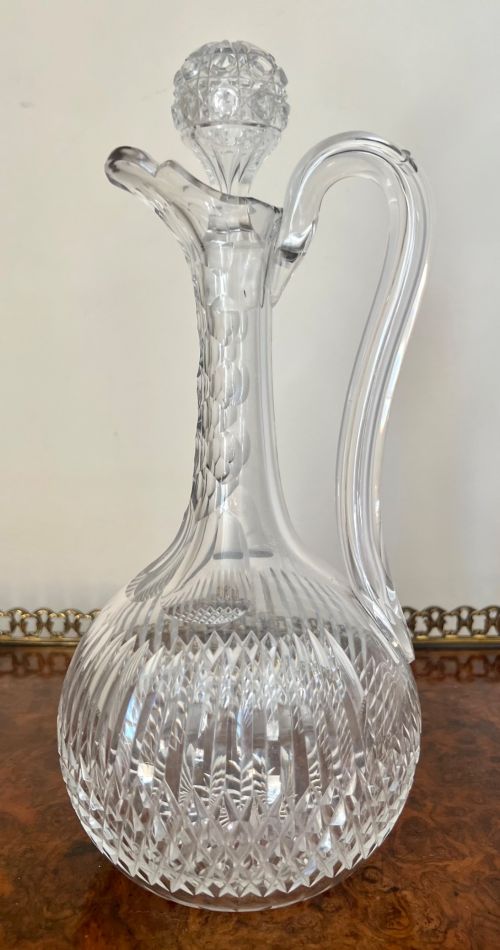
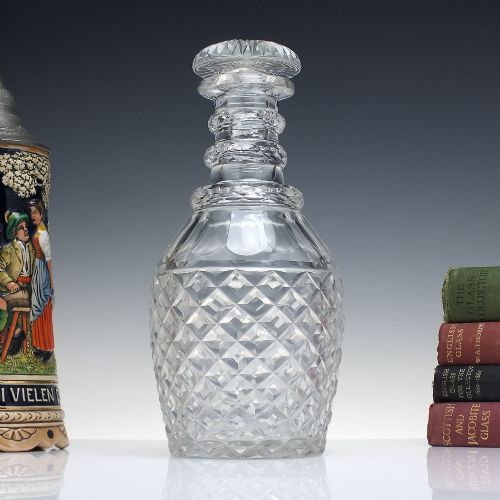
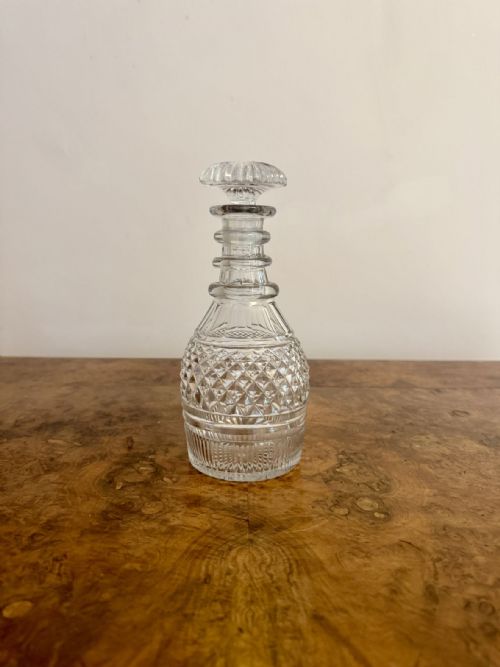
A clear cut crystal decanter brings together heavy glass vessels designed for holding wine, spirits and liqueurs during formal meals and evening gatherings. When searching for a clear cut crystal decanter, buyers encounter forms ranging from squat bell shapes and square section tapered bodies to elegant ewers and tall claret jugs.
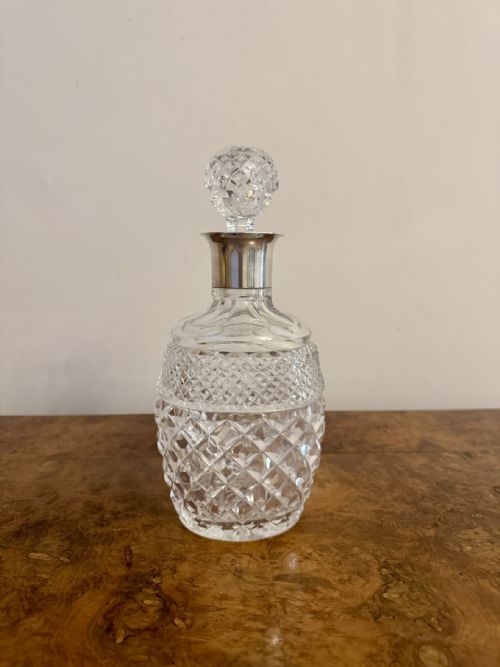
The selections span distinct historical periods from the Georgian era through the Victorian period and into Edwardian times. Many examples feature fitted mounts of sterling silver or silver plate, whilst others rely entirely on the brilliance of heavy glass.
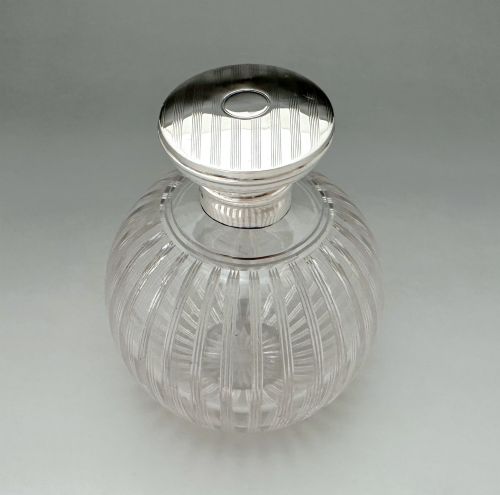
Makers and glasshouses of the nineteenth and early twentieth centuries produced these pieces in England, Ireland and Bohemia. Domestic wine serving and dressing table perfume storage both generated a steady demand for these refractive glass containers.
Materials and construction
The primary material is lead crystal or heavy cut glass, prized for its clarity, weight and capacity to refract light through deep facets. Artisans shaped these vessels by blowing molten glass into moulds or free-blowing before applying wheel-cut geometric patterns.
Decorative techniques include pillar and prism cutting, fluting, intaglio engraving and surface gilding. Metalwork components such as silver collars and mounts were then fitted securely to the necks of the glass bodies.
Georgian hosts utilised heavy crystal decanters with flat-bottomed boat shapes so they would slide safely along the mahogany dining table.
Judging the manufacture
Quality rests upon the depth and crispness of the wheel cutting, where sharper facets catch the light more intensely than shallow, blurred impressions. The purity and weight of the crystal itself dictate the resonance and visual clarity of the vessel.
Proportion and balance define the finer pieces, particularly in the symmetry of hand-cut panels and the precise fit of matching stoppers. The inclusion of hallmarked sterling silver collars adds a distinct tier of craftsmanship above standard silver plate.
Stevens and Williams·Webb Corbett
The Clear Cut Crystal Decanter Glossary
- Lead crystal
- A heavy glass variety containing lead oxide, which increases refractive index, brilliance and weight. This material allows for deeper, sharper facet cutting.
- Prism cut
- A linear facet cutting technique creating parallel planes that refract light into spectral colours. It appears frequently on necks and shoulders of nineteenth-century vessels.
- Claret jug
- A specialised pouring vessel with a handle and spout, often mounted in silver, designed specifically for serving red wine. Edwardian examples frequently combine cut glass bodies with plated mounts.
- Intaglio
- A decorative technique where designs are sunk below the surface of the glass by wheel engraving. This produces a frosted, low-relief tactile pattern against polished facets.
- Bell shaped decanter
- A distinct profile featuring a wide, heavy base tapering sharply upward to a narrow neck. This form provides exceptional stability on dining tables during service.
Clear Cut Crystal Decanter: Frequently Asked Questions
How do I clean inside a decanter?
Residue accumulates inside vintage vessels over decades of holding fortified wines and spirits.
Warm water combined with specialised cleaning beads removes staining without scratching the interior crystal surface.
Are original stoppers important?
Matching stoppers complete the silhouette and ensure the airtight preservation of contents.
Original stoppers sharing the same cut pattern and glass tint add considerably to the integrity of the piece.
How do I date an antique decanter?
Stylistic shifts in cutting patterns and body shapes provide initial clues to the era of manufacture.
Silver collars often bear Birmingham or Sheffield assay hallmarks containing date letters for precise identification.
Can these decanters hold wine safely?
Historic glass serves functionally for modern dining provided the interior remains free from persistent chemical hazing.
Standard lead crystal should not store acidic liquids for extended periods exceeding several days.