
Clear Crystal Waterfall Lights
Clear crystal waterfall lights bring cascades of reflective glass and brass into a room, filtering illumination through tiered drops.
Clear Crystal Waterfall Lights
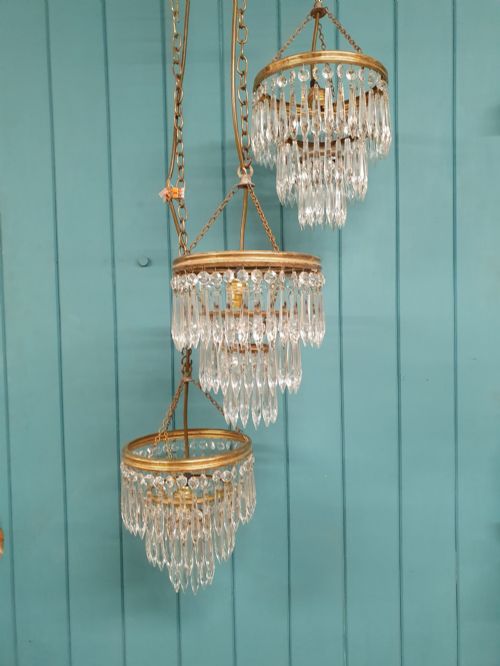
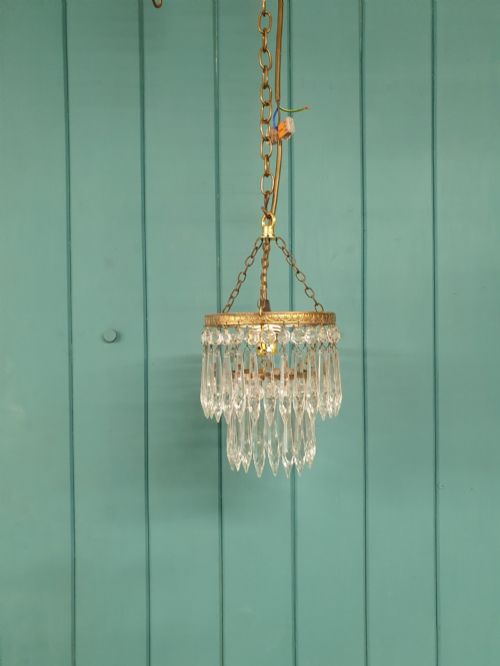
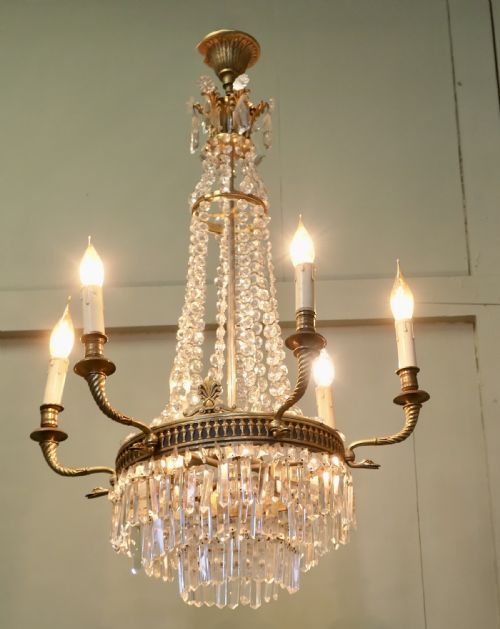
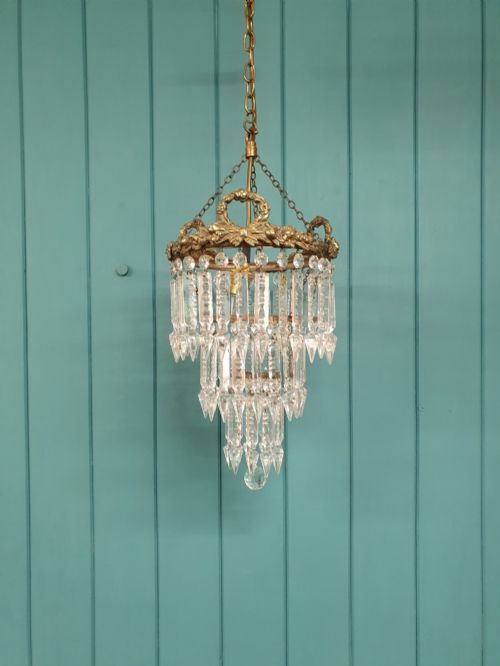
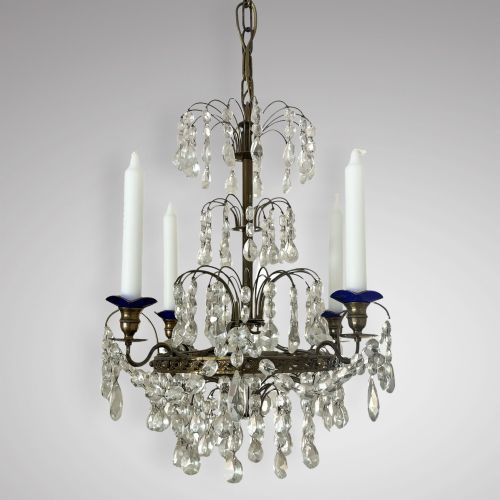
Clear crystal waterfall lights take the form of chandeliers, ceiling lights, wall lights, and pendants that distribute light down a cascading formation of glass. When looking for clear crystal waterfall lights, buyers encounter pieces originating from the nineteenth century through to the 1930s, encompassing Edwardian, Art Deco, and French Empire styles.
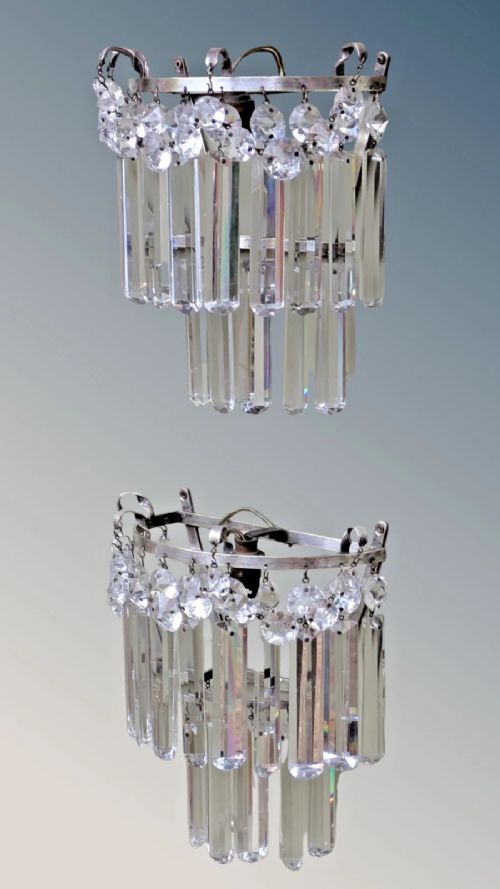
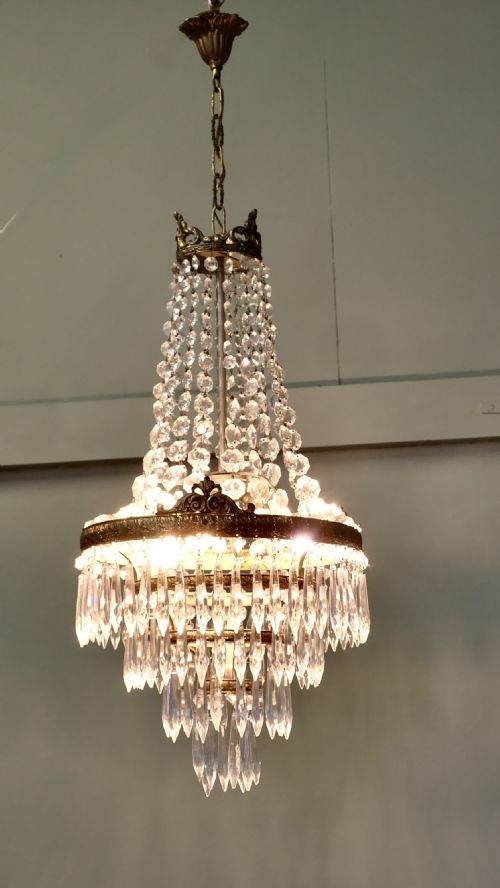
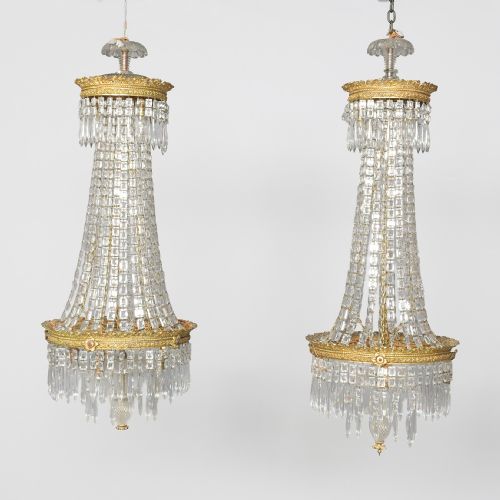
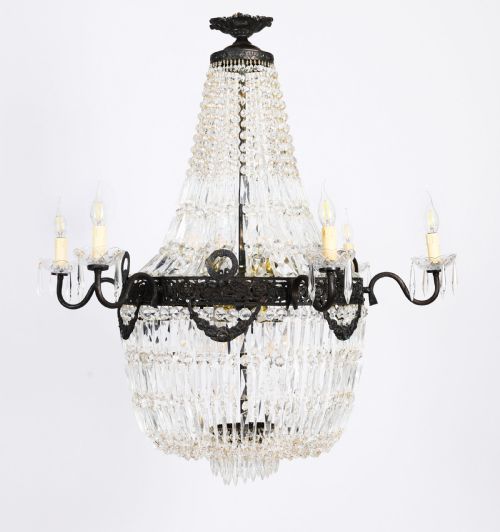
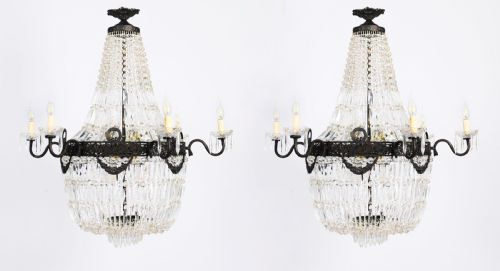
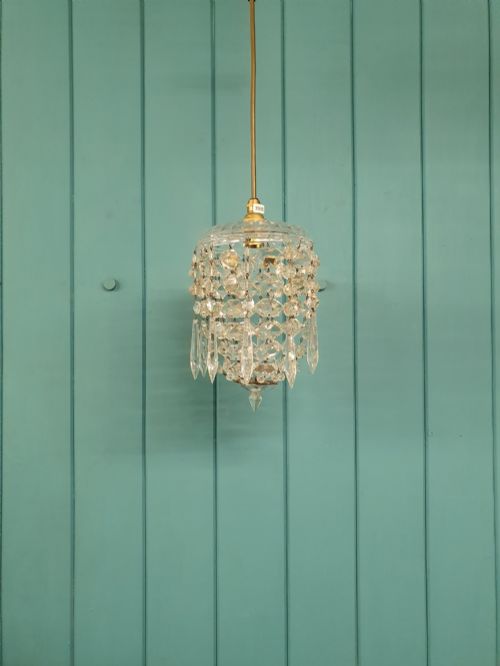
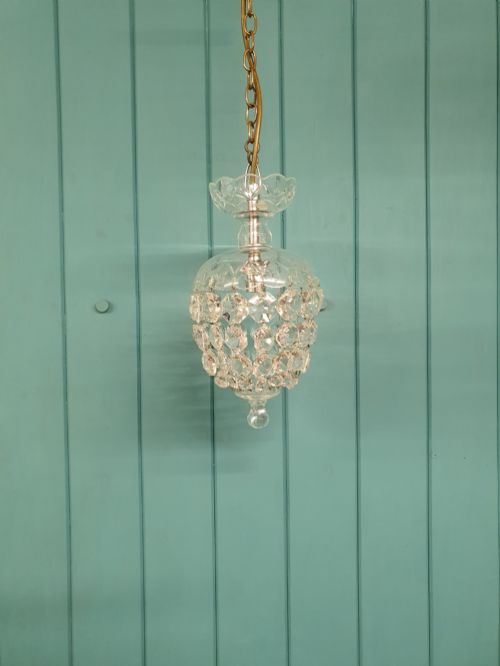
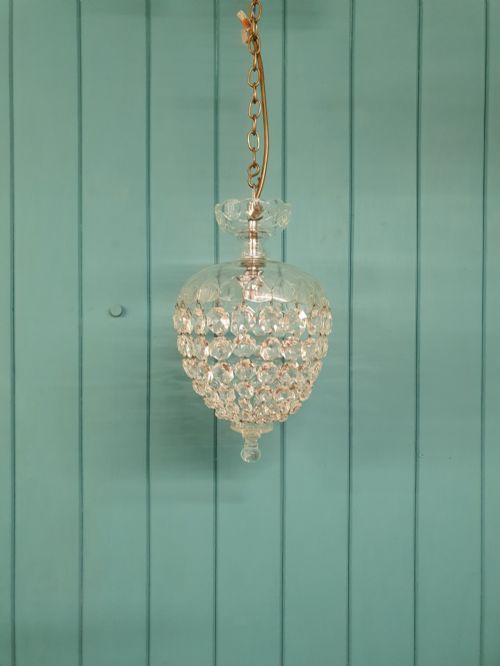
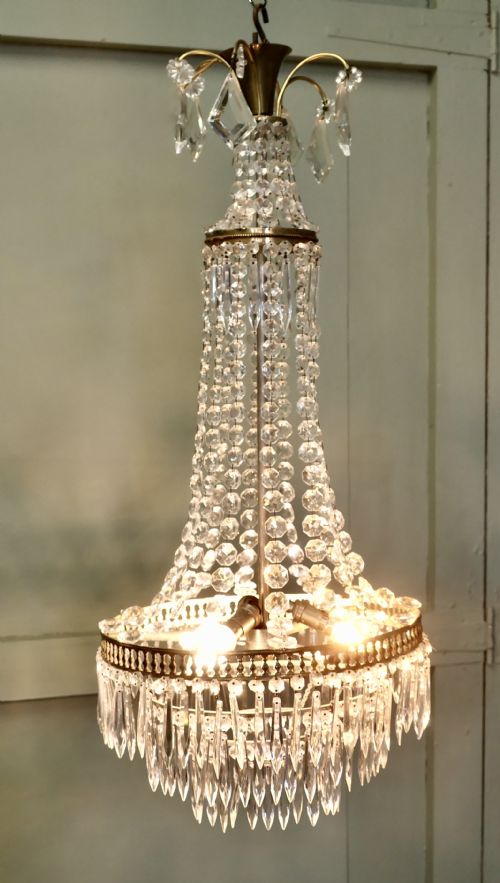
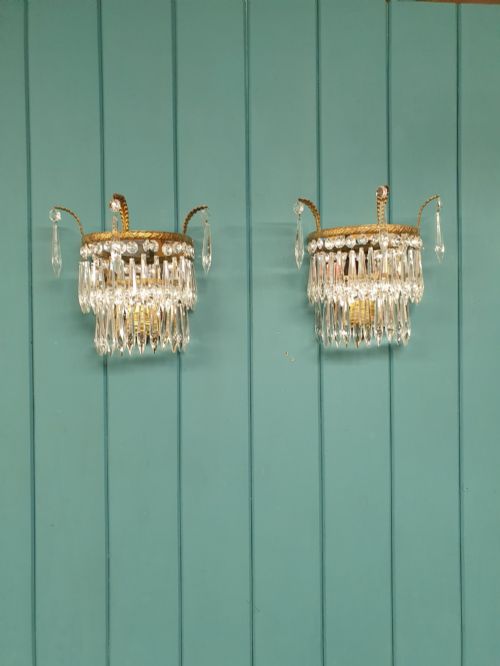
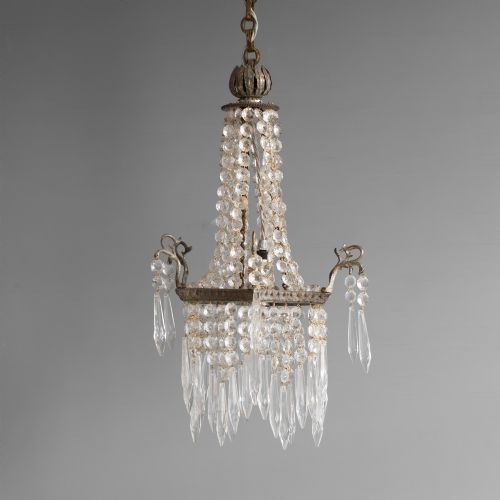
The selection on this page demonstrates various structural configurations, including tent and waterfall layouts, bag chandeliers, spike designs, and basket forms. These fixtures range from small single-light sconces and dome top fittings to large fourteen-light ballroom chandeliers.
Origin and design vocabulary lean heavily towards French aesthetic traditions, such as French Regency, Louis Revival, and French Chateau, alongside Swedish examples. The primary object types remain ceiling lighting and wall sconces designed to maximise light refraction through numerous glass elements.
Materials and construction
The construction of these fixtures relies on metal frameworks of brass, bronze, and wired metal supporting dense arrays of glass. Cut crystal, cut glass, and standard glass drops are suspended across tiers, creating the characteristic cascading effect.
Makers utilised brass mounts and mirror backs on wall lights to amplify the luminosity of the single or multiple internal light sources. Individual glass elements, from small lustres to large spikes and bag prisms, are linked manually to the structural metal armature.
Some Edwardian wall lights arrived equipped with mirror backs, ensuring that even a solitary candle or bulb had to face its own glowing reflection.
Distinctions in quality
Quality reveals itself in the depth of the glass cutting and the weight of the metal framework, where heavier brass and bronze mounts support intricate tiering without sagging. Superior examples display precision in the faceting of cut crystal, which sharpens the refraction of light.
The integrity of the assembly, including the density and uniformity of the crystal drops, distinguishes standard domestic pieces from grand ballroom fixtures. Finer pieces maintain balanced proportions across multiple tiers, whether configured as a tent and waterfall or a multi-tiered Art Deco construction.
The Clear Crystal Waterfall Lights Glossary
- Tent and waterfall
- A lighting configuration featuring an upper conical section of glass beads above a cascading lower fall of crystals. This arrangement directs the eye downward through multiple tiers of glass.
- Bag chandelier
- A fixture style shaped like a small pouch or bag composed of numerous glass drops strung together. It typically gathers closely at the base in a fringe of crystal pendants.
- Spike chandelier
- A design characterised by protruding upward or outward glass spikes arranged in tiers around a central axis. These spikes catch and disperse light at sharp angles.
- Lustre
- A hanging glass pendant or droplet cut to reflect light, often suspended from the arms or rim of a chandelier. Lustres swing gently with air currents.
- French Empire style
- A classical design vocabulary drawing on nineteenth-century motifs, featuring symmetrical metal mounts and structured arrangements of tent and waterfall crystal. It denotes grand proportions and formal elegance.
Clear Crystal Waterfall Lights: Frequently Asked Questions
Where do these lights work best?
These fixtures suit rooms with adequate ceiling height where the cascading glass and metal frames can hang without obstruction. Dining rooms, hallways, and principal reception rooms accommodate the scale and reflective qualities of multi-tiered designs.
Smaller wall lights and single-light sconces fit narrower spaces or flanking positions next to mirrors, where their metal mounts and glass drops enhance ambient illumination.
How do I identify a French Empire style?
French Empire style fixtures display formal symmetry, classical proportions, and structured metal mounts of brass or bronze. They frequently incorporate tent and waterfall configurations that graduate from a conical upper section down to a cascading fringe.
These pieces often reflect nineteenth-century design ideals, distinguishing themselves from later, more stylised Edwardian or Art Deco geometric forms.
What is a bag chandelier?
A bag chandelier takes its name from the distinctive pouch-like shape formed by dense webs of small glass beads and drops. The structure gathers light centrally before releasing it through a lower fringe of hanging crystals.
This compact form appeared frequently during the Edwardian era and into the early twentieth century, offering a decorative profile for lower ceilings.
How do spike chandeliers differ?
Spike chandeliers utilise radiating points of cut glass or crystal arranged in horizontal tiers around the central body. This configuration projects light outward in distinct patterns compared to the smooth cascade of a waterfall design.
They appear primarily in early twentieth-century and Edwardian pieces, often structured in multiple tiers to increase the number of reflective surfaces.