



Regency Glass Waterfall Chandeliers
Regency glass waterfall chandeliers bring cascading crystal and refined period presence to a room, offering a distinct focal point for high-ceilinged interiors.
Regency Glass Waterfall Chandeliers
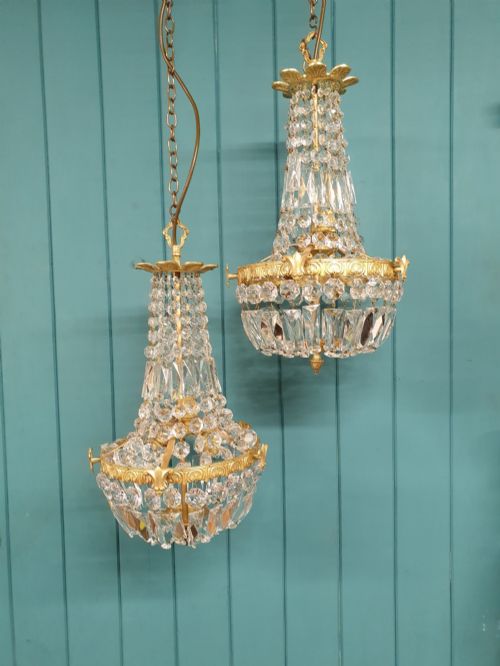
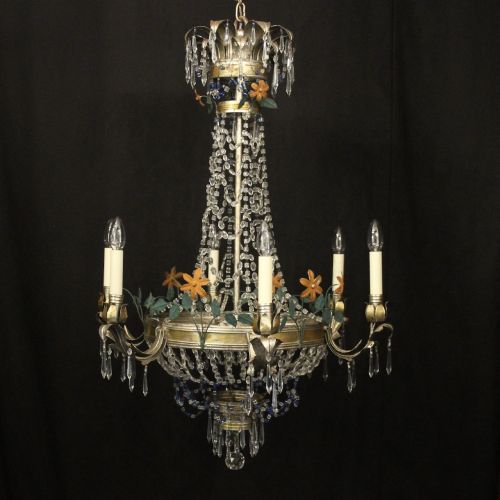
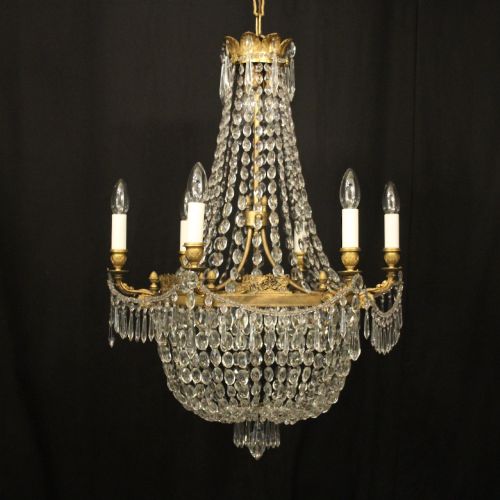
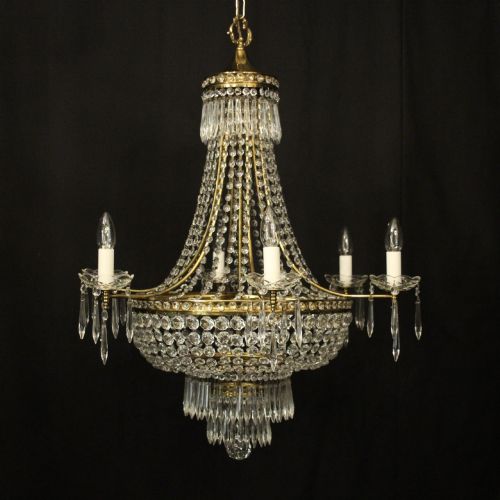
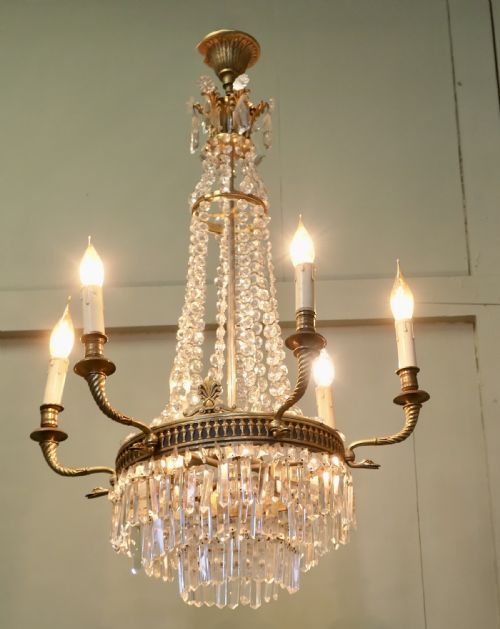
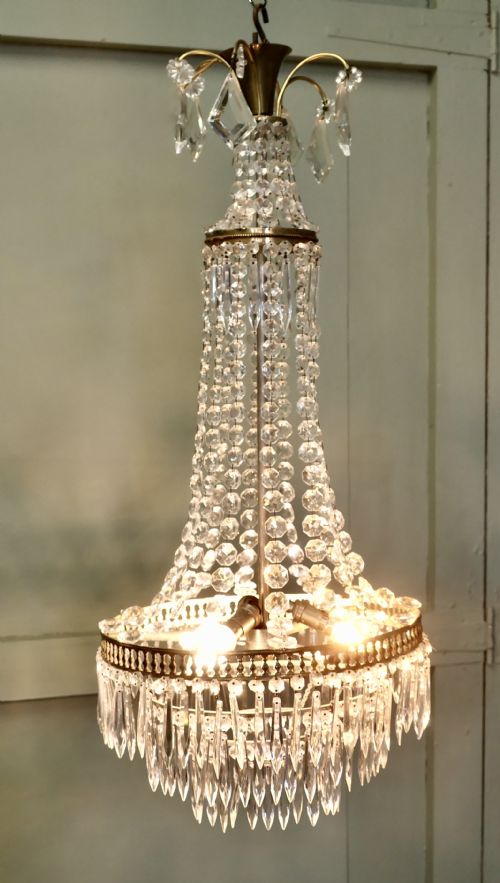
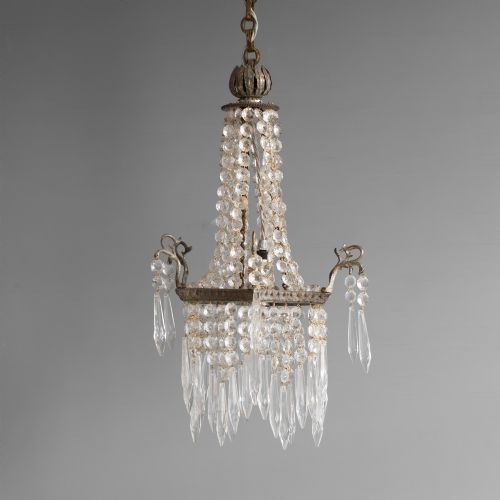
When you search for regency glass waterfall chandeliers, you encounter multi-tiered lighting fixtures defined by cascading cut glass drops, crystal beads, and structured brass or metal frames. The selection primarily spans early twentieth century interpretations and late nineteenth century pieces reflecting French Empire, Regency, and Edwardian design idioms.
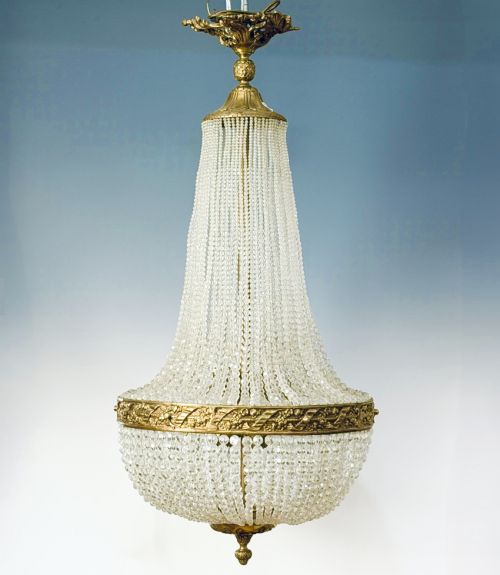
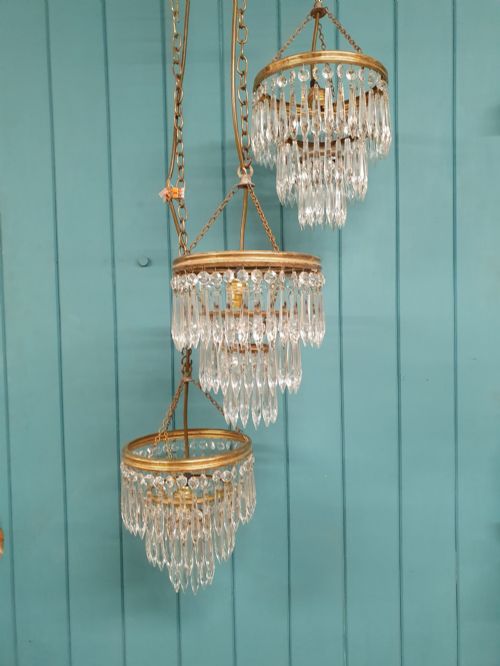
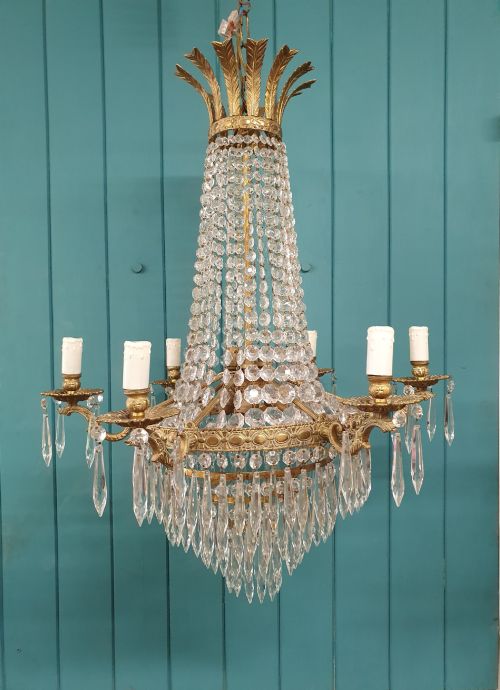
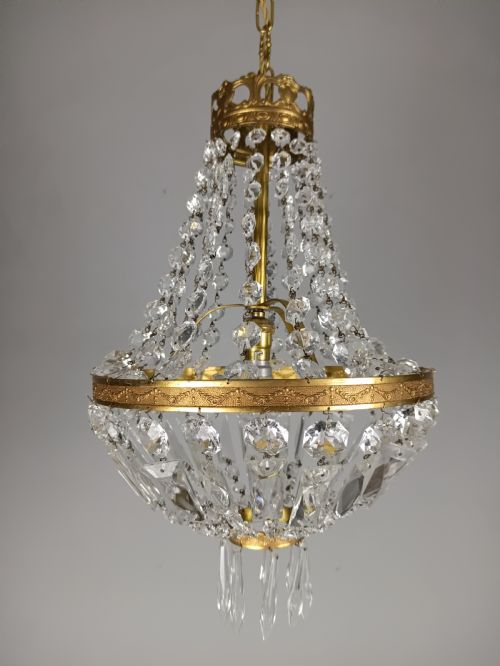
These lighting fixtures range from large tent and bag chandeliers featuring intricate swags to compact single light pendants and spike chandeliers. The forms typically incorporate upper canopy crowns or tent sections flowing down into gathered bag or waterfall cascades.
Origin influences span both English and French workshops, utilising brass mounts, gilded brass, and wire frames to support dense arrays of cut glass and crystal components. The designs serve as prominent ceiling lighting, ceiling lights, and pendant installations suited for traditional spaces.
How they were made
The structural framework relies on brass, gilded brass, and wire armatures designed to bear the weight of numerous glass and crystal components. Metal mounts secure the upper crowns, whilst internal wiring and framing hold the cascading tiers together.
The hanging elements consist of cut glass, crystal glass, and moulded prisms linked by fine wire work to form tents, swags, and bag drops. Leaf decorations and gilt arms appear on specific frames to enhance the decorative profile of the metalwork.
Regency Glass Waterfall Chandeliers Retail Price Guide 2026
Typical asking prices for regency glass waterfall chandeliers among the pieces listed under this phrase on Sellingantiques today, from the lower quarter to the upper quarter. They describe what is for sale here now, not the wider market.
Listings feature periods spanning from the late nineteenth century through to the Edwardian era and the 1930s.
What varies in quality
Quality reveals itself in the density, clarity, and precision-cutting of the crystal and glass drops rather than the sheer size of the fixture. Finer pieces feature sharp, deep facet-cutting that refracts light cleanly across the room.
The construction of the metal frame and the intricacy of the brass mounts also dictate the tier of craftsmanship. Robust gilded brass frames and complex wire-strung swags indicate superior manufacturing standards compared to simpler, heavier metal structures.
The Regency Glass Waterfall Chandeliers Glossary
- Tent and waterfall chandelier
- A lighting fixture featuring an upper conical section of strings of beads that drops down into a cascading waterfall formation of glass prisms.
- Bag chandelier
- A style of lighting where glass drops are gathered into a tapered, bag-like silhouette beneath a circular metal band.
- Spike chandelier
- A vertical lighting form centred around a prominent central spike decorated with tiers of cut glass drops and swags.
- French Empire style
- A classical design influence characterised by symmetrical bronze or brass mounts, restrained ornamentation, and formal neoclassical silhouettes.
Regency Glass Waterfall Chandeliers: Frequently Asked Questions
How do I clean a crystal waterfall chandelier?
Maintenance requires gentle cleaning of individual glass drops and crystal components in situ using a specialist spray and a soft cloth. Avoid harsh chemicals that might damage the underlying brass or gilded metal mounts.
Taking down every drop is rarely necessary unless undertaking a complete restoration. Regular dusting keeps the cut glass facets clear and maintains light refraction.
What rooms suit these chandeliers best?
These fixtures suit dining rooms, hallways, and drawing rooms with sufficient ceiling height to accommodate the cascading crystal drops. The dramatic vertical silhouette draws the eye upward and anchors traditional interior schemes.
Placement should account for the physical drop of the chandelier to ensure adequate clearance beneath. Smaller pendant versions fit more compact spaces whilst retaining the same cut glass aesthetic.
How do I date an antique glass chandelier?
Dating relies on examining the metalwork composition, wire fixings, and the specific style of glass cutting employed on the drops. Edwardian and early twentieth century pieces often utilise distinct brass mounts and wiring techniques compared to late nineteenth century examples.
Moulding seams on the glass and the composition of the crystal offer further clues to the period of manufacture. Comparing the silhouette against established French Empire and Regency design tropes helps narrow the production era.
Are these chandeliers difficult to wire?
Rewiring older fixtures requires an experienced electrician to ensure the internal components meet current safety standards while preserving the antique frame. Many period pieces are adapted for modern electrical supplies without altering the exterior brass or wire structure.
Checking the weight bearing capacity of the ceiling is essential prior to installation due to the heavy crystal and metal construction. Professional installation ensures the fixture hangs securely from its central mount.