



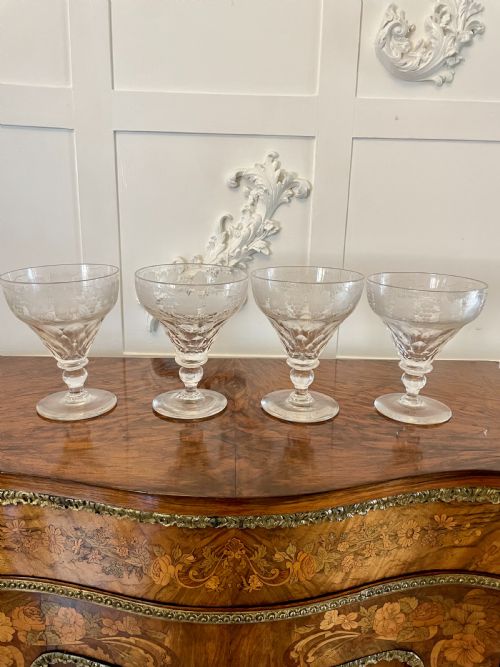
Clear Crystal Coupes
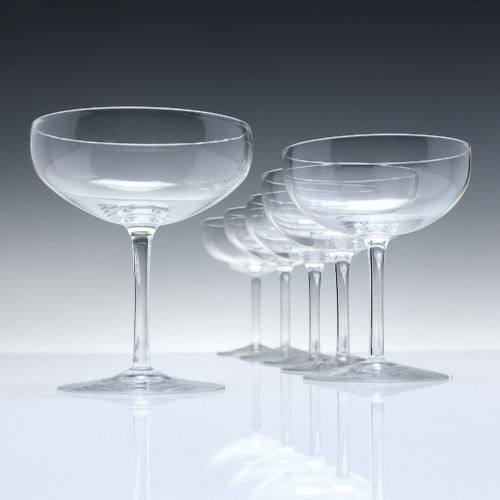
Clear crystal coupes bring shallow elegance to the table, offering a traditional shape designed for sparkling wine and celebratory service.
Clear Crystal Coupes
When buyers search for clear crystal coupes, they look at shallow glass vessels designed for sparkling wine, champagne, and other celebratory drinks. The selection on this page spans several distinct eras, bringing together pieces from the Georgian, Regency, Victorian, Edwardian, and 1920 periods.
The forms vary from individual stemware to larger glassware and centrepiece bowls, encompassing both matching sets and smaller groups. Pieces appear in various styles including Victorian, Edwardian, Art Deco, Georgian, Belle Epoque, and Regency.
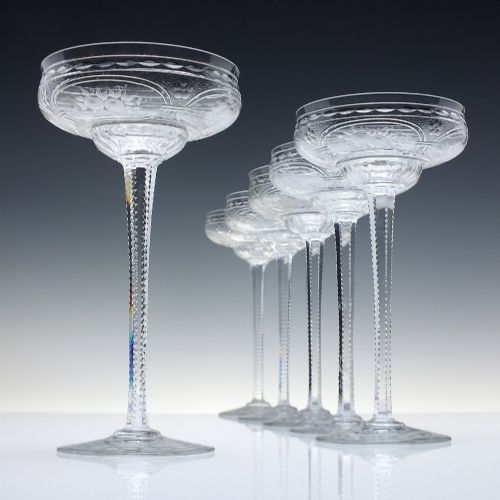
Buyers are most likely to meet Victorian and Edwardian examples on this page, alongside earlier Georgian and Regency specimens and later 1920 designs. These range from simple bowls to hollow stem champagne glasses and pedestal stem forms.
Materials and construction
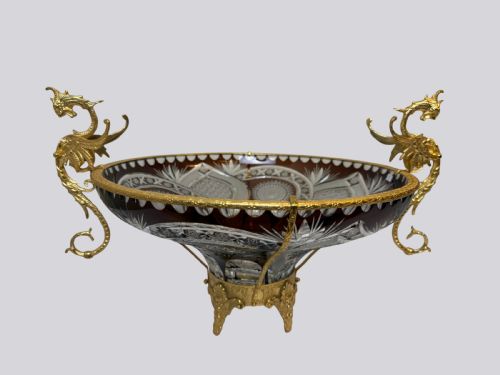
The objects are fashioned from glass, lead glass, crystal, crystal glass, clear glass, and lead crystal, occasionally combined with gilt bronze. These materials provide the substance and clarity required for traditional drinking vessels and centrepiece bowls.
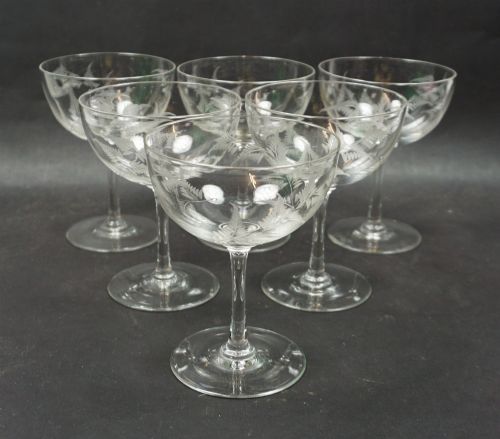
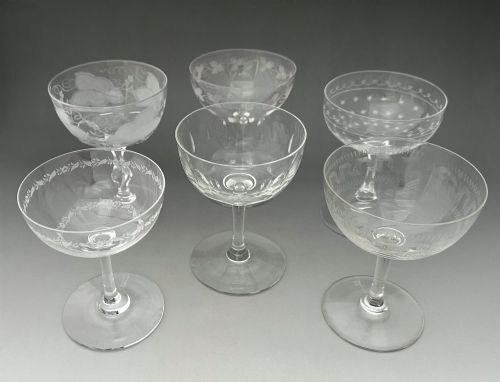
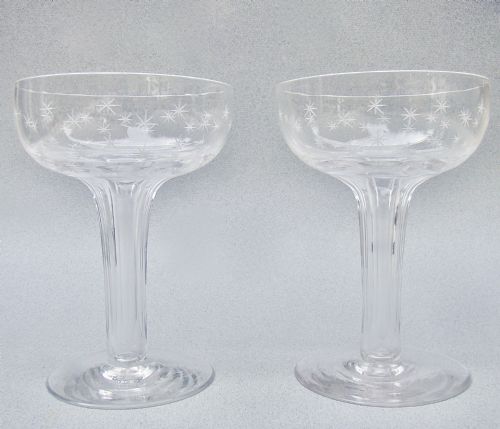
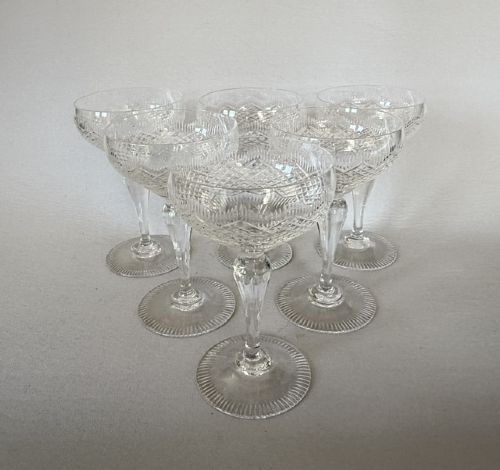
Surface decoration relies on traditional techniques such as cutting, star-etching, facet-cutting, and engraving, particularly floral motifs like convolvulus. These methods create the reflective qualities characteristic of period glassware.
Clear Crystal Coupes Retail Price Guide 2026
Typical asking prices for clear crystal coupes among the pieces listed under this phrase on Sellingantiques today, from the lower quarter to the upper quarter. They describe what is for sale here now, not the wider market.
Listings on this page span the Georgian, Regency, Victorian, Edwardian, and 1920 periods, utilising cut glass, lead crystal, and gilt bronze.
Distinctions in quality
Quality rests upon the purity of the material, ranging from standard clear glass to heavy lead crystal, which dictates the ring and brilliance of the vessel. The precision of the cutting and engraving also marks out superior examples, distinguishing crisp, deep wheel cuts from softer surface work.
Proportion and form define the upper tier of these pieces, particularly in the balance between the shallow bowl, the stem, and the foot. Earlier Georgian and Regency items often display distinct hand-formed characteristics that separate them from later mass-produced glassware.
The Clear Crystal Coupes Glossary
- Crystal
- A type of glass containing metallic oxides such as lead, which increases the weight, refractive index, and clarity of the material.
- Champagne coupe
- A shallow-bowled stemmed glass traditionally used for sparkling wine, designed to showcase the effervescence.
- Facet cut
- A decorative technique involving flat, polished planes ground into the surface of the glass to catch the light.
- Pedestal stem
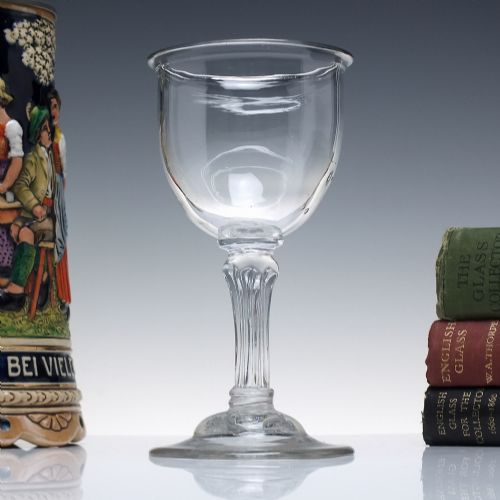
- A raised columnar support connecting the bowl of the glass to the foot, frequently seen in earlier drinking vessels.
- Hollow stem
- A stem featuring an internal channel running from the bowl down into the foot, often found in antique champagne glasses.
Clear Crystal Coupes: Frequently Asked Questions
What are clear crystal coupes?
These pieces are shallow-bowled stemmed glasses created for serving champagne and sparkling wine during social dining. They combine functional drinking vessels with decorative table objects.
Over the centuries, makers adapted the form to suit changing tastes, incorporating cut glass, etching, and coloured overlays.
How were champagne coupes used?
Historically, these glasses held sparkling wine at formal dinners, celebrations, and gatherings. Their wide, shallow rims allowed the bubbles to dissipate quickly.
Beyond dining, larger examples and bowls served as decorative centrepieces on tables and sideboards.
How do I date an antique coupe?
Dating relies on observing the weight of the material, the method of stem construction, and the style of surface decoration. Georgian and Regency pieces often feature heavy lead glass and pedestal stems.
Victorian and Edwardian versions introduce star-etching, facet cutting, and engraved floral motifs like convolvulus.
How do I care for antique crystal?
Antique crystal requires careful hand washing in warm water with mild detergent to preserve the polished surface and delicate cutting. Avoid sudden temperature changes to prevent cracking the glass.
Staining can be addressed gently without harsh abraseners that might damage the lead crystal or engraved details.