



Claw Foot Bureau
A claw foot bureau brings architectural presence to a room, offering practical workspace alongside fitted compartments.
Claw Foot Bureau
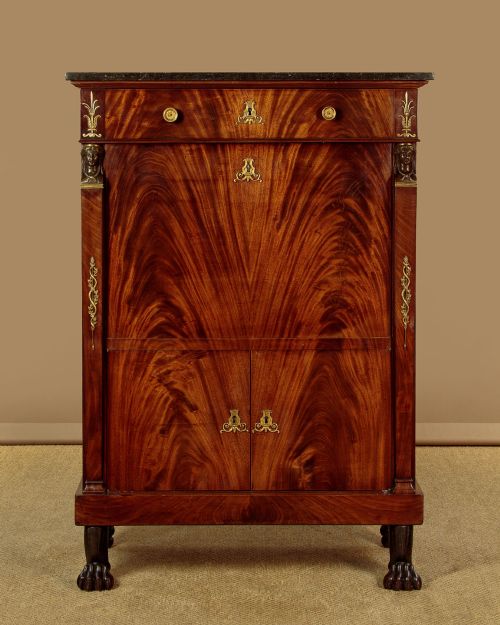
A claw foot bureau combines a sloping writing flap with storage drawers below, resting upon carved paw or ball and claw supports. These pieces emerge in styles ranging from Georgian and Edwardian designs to Dutch Baroque and French Empire interpretations.
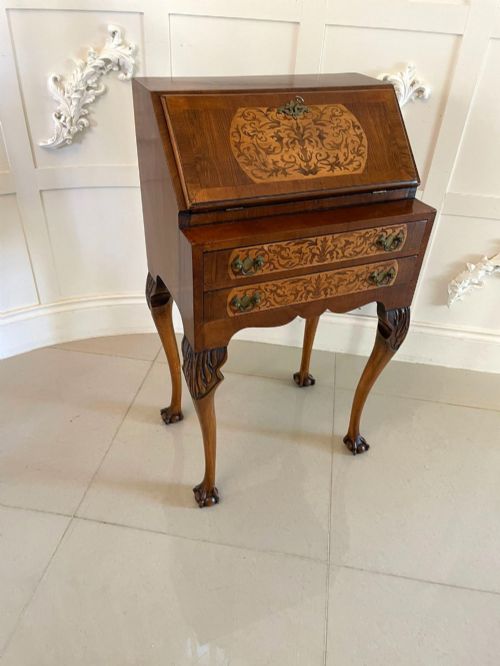
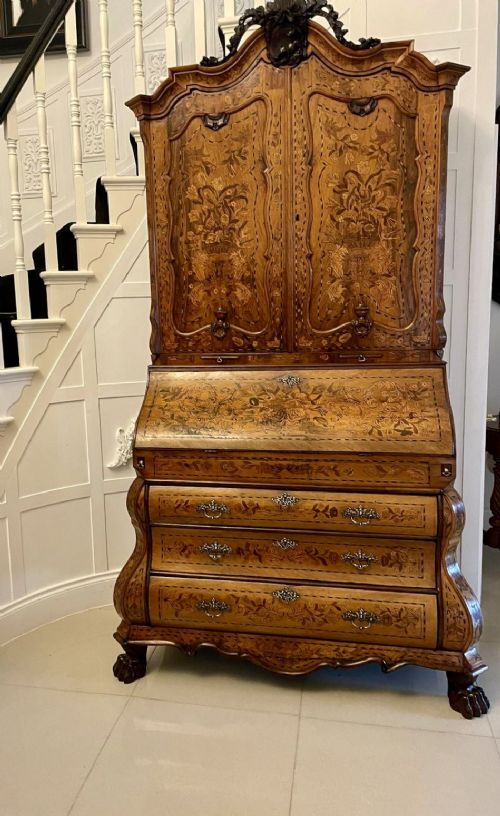
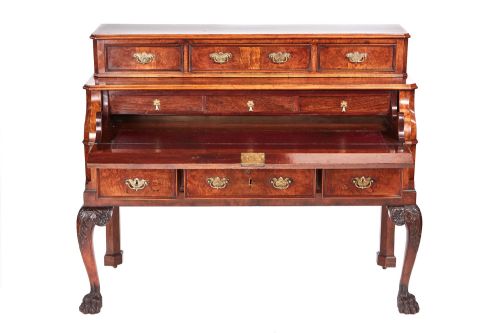
The version most commonly encountered on this page is the bureau desk or bureau bookcase, frequently rendered in burr walnut with floral marquetry inlay or executed in solid mahogany.
Makers shaped these writing cabinets across several centuries, utilising timber frames that house fitted internal compartments for letters and documents.
How they were made
Cabinet makers constructed these pieces using dense hardwoods such as mahogany, oak, walnut, and burr walnut, often mounting them on brass hardware.
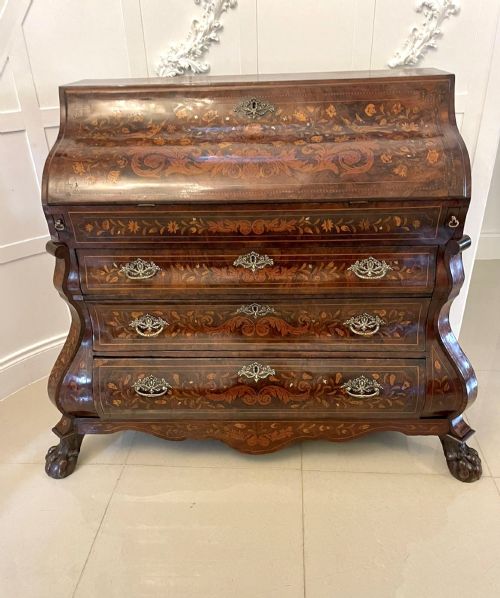
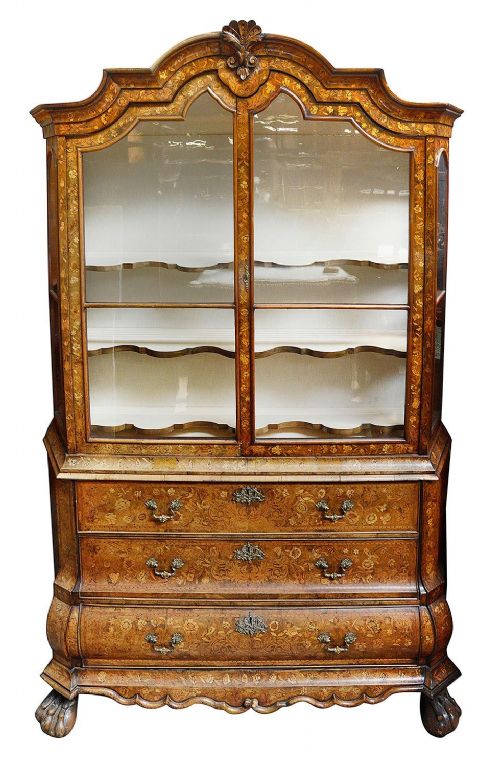
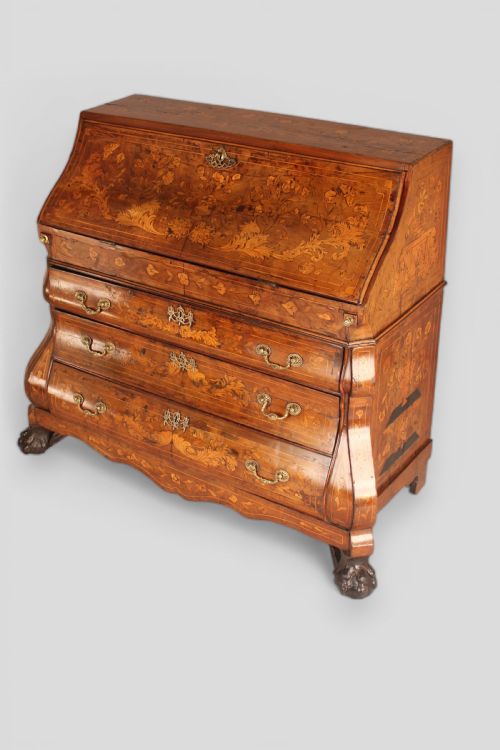
Marquetry inlay work adds intricate floral detail to walnut and bombé surfaces, while internal writing spaces frequently incorporate leather inserts.
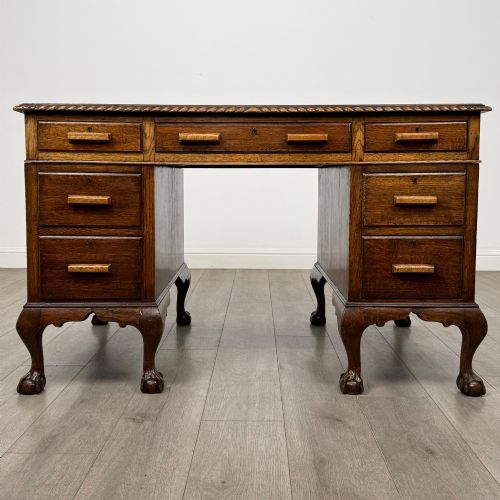
Carved paw feet or ball and claw supports anchor the heavier case forms, such as pedestal desks and bombé chests.
Claw Foot Bureau Retail Price Guide 2026
Typical asking prices for claw foot bureau among the pieces listed under this phrase on Sellingantiques today, from the lower quarter to the upper quarter. They describe what is for sale here now, not the wider market.
Listings span the 18th century, 19th century, Edwardian era, and 1920s, utilising mahogany, walnut, burr walnut, oak, brass, glass, and leather.
What varies in quality
The standard of timber selection and the depth of the marquetry inlay set individual pieces apart, particularly where burr walnut veneers exhibit complex grain patterns.
Carving definition on the paw or ball and claw feet distinguishes workshop output, alongside the complexity of the internal pigeonholes and secret drawers hidden behind the fall-front flap.
The Claw Foot Bureau Glossary
- Bombe
- A swelling, convex contour on the front and sides of a piece of furniture, typical of continental cabinet making. This curved profile requires skilled timber shaping.
- Marquetry
- Decorative patterns formed by fitting together thin veneers of different woods and materials. Craftsmen used this technique to create floral motifs across bureau surfaces.
- Fall front
- A hinged writing flap that drops down to form a desk surface. It conceals internal drawers and pigeonholes when closed.
- Pedestal desk
- A flat-topped writing table supported by two separate pedestals containing drawers. These items often stand on claw and ball feet.
- Vitrine
- A glass-fronted cabinet used for displaying objects. These display pieces frequently accompany bureau bookcases.
Claw Foot Bureau: Frequently Asked Questions
What is a claw foot bureau?
A claw foot bureau is a writing desk featuring a sloping fall-front flap that opens to reveal internal compartments, supported by carved animal paw or ball and claw feet.
These pieces function primarily as writing furniture and storage chests, appearing in various cabinet formats across different periods.
How do I date a bureau?
Dating relies on examining the timber species, construction methods, hardware, and stylistic indicators such as marquetry patterns or bombe shaping. Georgian and 18th-century examples show specific joinery traits distinct from Edwardian or revival pieces.
Comparing the internal drawer linings and secondary woods helps confirm the period of manufacture.
How were these desks used?
Owners used them for private correspondence, record keeping, and storing valuables within fitted internal compartments. The drop-front flap provided a stable writing surface when lowered.
Upper sections in bureau bookcases served to store and display books behind glass doors.
Where do bombe bureaus originate?
Bombé bureaus with swelling curved fronts are strongly associated with continental cabinet making, particularly Dutch Baroque and Rococo workshops. Master craftsmen employed burr walnut and floral marquetry on these rounded forms.
English interpretations often followed Chippendale or Georgian stylistic influences.