

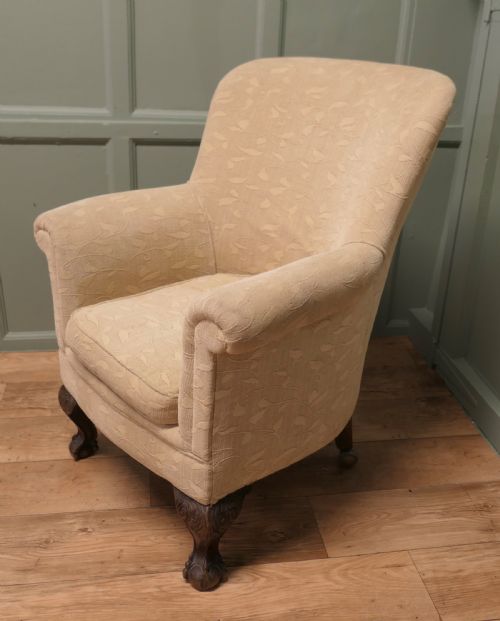
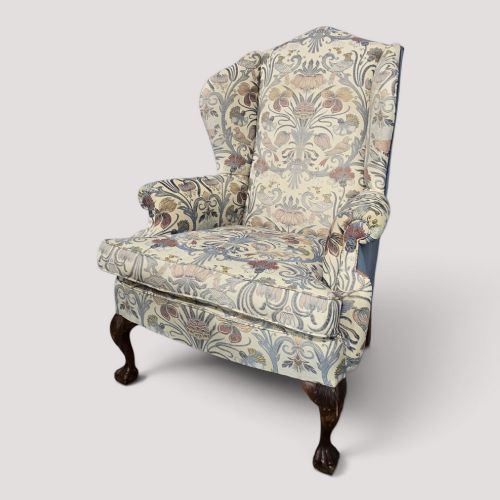
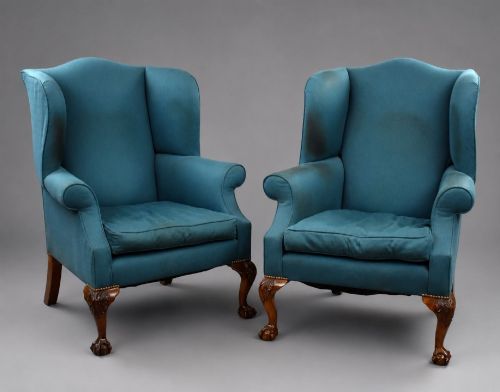
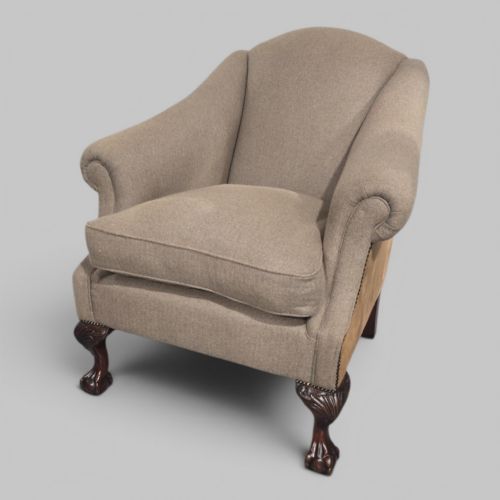
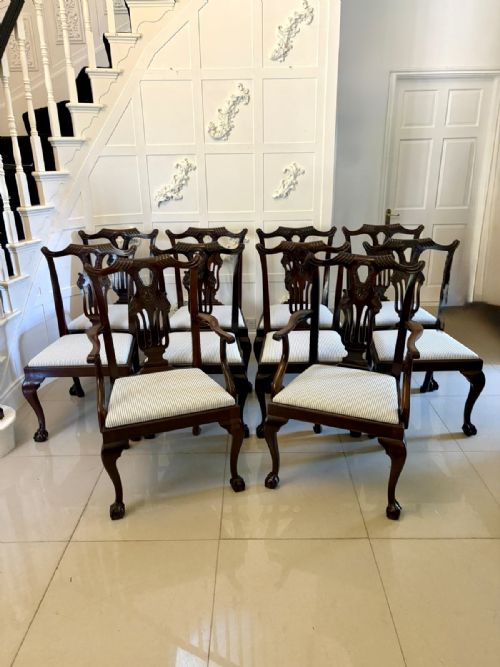


Claw and Ball Feet Armchair
These claw and ball feet armchairs anchor a room with carved wooden grips and grounded proportions.
Claw and Ball Feet Armchair
A claw and ball feet armchair brings together sturdy seating forms and a distinctive carved terminal where the bird's talon grasps a sphere. When you search for a claw and ball feet armchair, you encounter everything from single library chairs and wing backs to large sets of dining chairs and lounge suites.
The pieces span centuries of production, appearing in genuine 18th Century examples as well as 19th Century, Victorian, Edwardian, and later revival styles. Mahogany and walnut form the primary wooden structures, often paired with leather, fabric, or traditional upholstery.
Dining chairs and carvers sit alongside deep-seated club chairs, barrel backs, and occasional tub chairs. You will find single pieces, pairs, and extensive dining sets sharing this same prominent foot detail.
Materials and construction
Cabinetmakers shaped these frames primarily from dense hardwoods like mahogany and walnut, selected for their stability under carved detail. Craftsmen worked the timber by hand to form the cabriole legs and the intricate talon motifs.
Upholstery techniques range from traditional stuffing and horsehair layers beneath fabric, crewel work, or leather to deep-buttoned hides secured with brass tacks. Structural joints rely on mortise and tenon construction to support the weight of the sitter.
Claw and Ball Feet Armchair Retail Price Guide 2026
Typical asking prices for claw and ball feet armchair among the pieces listed under this phrase on Sellingantiques today, from the lower quarter to the upper quarter. They describe what is for sale here now, not the wider market.
The listings span mahogany, walnut, oak, and hardwood, paired with leather, brass, and textile upholstery across multiple centuries.
Factors that distinguish examples
The definition and depth of the carved foot separate standard production from finer work. Crisp feather or scale detailing on the talon indicates skilled carving rather than a soft, rounded finish.
Proportion and wood selection drive distinction across periods. Well-figured timber grain, balanced frames, and substantial secondary woods beneath the upholstery mark the better workshops.
Howard and Son's
The Claw and Ball Feet Armchair Glossary
- Cabriole leg
- A furniture leg that curves outward at the knee and tapers inward toward the ankle, mimicking animal limbs. This form provides the structural sweep that leads directly into the claw and ball foot.
- Carver
- An armchair designed with open arms, traditionally placed at the head of a dining table or used as a desk chair. These often match a set of smaller side chairs.
- Wing back
- An armchair featuring protective side panels designed to shield the sitter from drafts. These upholstered forms frequently stand on carved ball and claw legs.
- Crewel work
- Embroidery executed in worsted wool on a heavy plain-weave ground fabric. This decorative textile appears on period seat inserts and cushions.
Claw and Ball Feet Armchair: Frequently Asked Questions
What is a claw and ball foot?
A claw and ball foot is a carved furniture terminal depicting a bird's talon clutching a spherical orb. It typically terminates the bottom of a cabriole leg on chairs and tables.
The design draws on ancient motifs and became a defining feature of 18th Century furniture, later revived during the Victorian and Edwardian periods.
How do I date a chair?
Dating relies on timber species, construction methods, and stylistic cues such as leg profile and carving sharpness. 18th Century pieces show specific joinery and hand-worked surfaces distinct from later revival work.
Secondary woods and wear patterns also help establish the chronological period of manufacture.
Are these chairs comfortable?
Comfort varies significantly depending on the specific form, from upright library chairs to deep-seated club chairs and upholstered wing backs. Many incorporate sprung seats and padded arms designed for extended sitting.
Dining chairs offer firmer support suited for table use, while lounge suites provide relaxed cushioning.
How do I care for leather upholstery?
Leather upholstery benefits from regular dusting and occasional conditioning to maintain suppleness and prevent drying. Keeping chairs away from direct heat sources protects the hide and underlying wood.
Natural waxes applied to the wooden frames preserve the finish without harming surrounding textiles.