


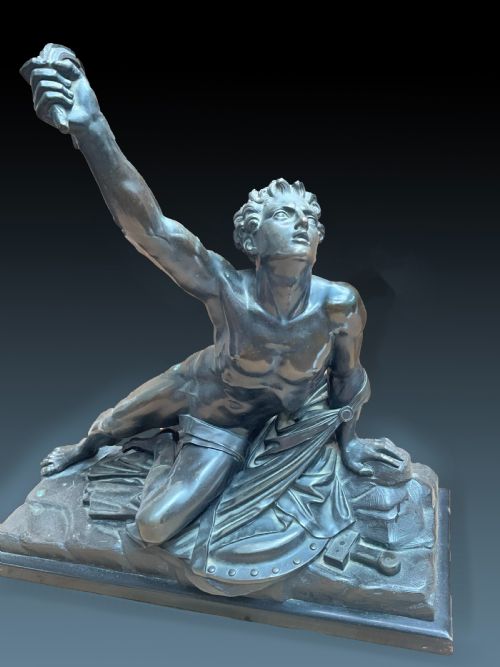


Classical Warrior Figure
A classical warrior figure brings antiquity home in metal, marble, and oil paint, capturing mythological heroes and ancient commanders with dramatic presence.
Classical Warrior Figure
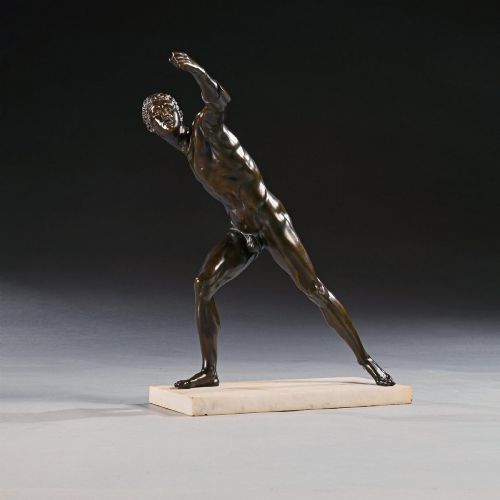
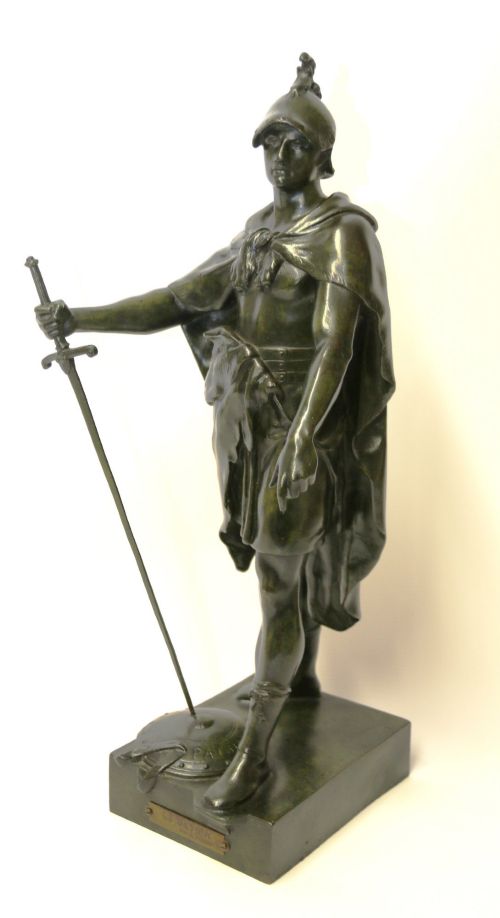
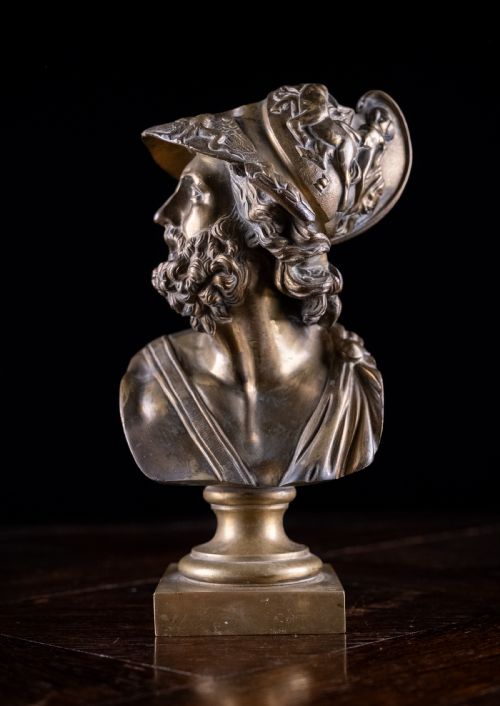
A classical warrior figure represents ancient Greek, Roman, and Celtic fighters, often rendered as standing sculptures, seated depictions, or busts. These works frequently draw on grand tour traditions and French academic styles from the nineteenth century.
Buyers most commonly meet nineteenth-century bronze and spelter statues on this page, alongside occasional oil paintings, porcelain figures, and table lamps. Subjects range from mythological figures like Ajax and Perseus to historical leaders such as Hannibal and Vercingetorix.
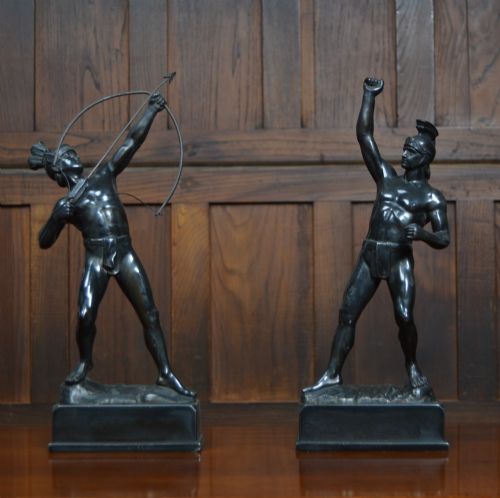
The selection includes both grand scale works and smaller reductions of famous antique monuments. Whether cast in pairs or standing alone, these pieces reflect a nineteenth-century fascination with classical antiquity and historicist revival.
Distinctions in craftsmanship
Quality rests in the crispness of the chasing and the sophistication of the bronze patination, which separates finer foundry work from simpler production. Superior casts retain sharp facial expressions and intricate armour detailing without blurring.
The choice of material fundamentally alters the character of the object, with heavy cast bronze and carved marble sitting at a different level of permanence than spelter or zinc alloy. Signed works by known sculptors carry distinct artistic authority.
Proportion and stance dictate the visual balance of the figure, as successful reductions maintain the tension and anatomy of the original antique source. The integration of mounts, bases, and supporting elements completes the physical integrity of the piece.
Even ancient Spartan kings need a dust, though they usually face the shelf with unyielding stoicism.
Émile Louis Picault·Eugene Barillot·Raoul Francois Larche·Franz Iffland·Emile Laporte·Richard Aurili·Eden Antony Paul Noel
The Classical Warrior Figure Glossary
- Grand Tour
- A nineteenth-century tradition where wealthy travellers collected classical art and architectural souvenirs in Italy. These bronze reductions and marble busts were brought home as evidence of a classical education.
- Patinated Bronze
- Bronze treated with chemical solutions to produce a specific surface colour and finish. This process highlights the contours of the warrior's physique and armour.
- Spelter
- A zinc alloy used as a less expensive alternative to bronze for sculptural figures. It is often painted or electroplated to imitate bronze finishes.
- Parian
- A fine-grained, unglazed white porcelain developed in the nineteenth century to imitate carved marble. It was frequently used for classical portrait busts and literary figures.
- Neoclassical
- A style spanning the eighteenth and nineteenth centuries that revived the aesthetic of ancient Greece and Rome. It prioritises dignity, proportion, and classical subject matter.
Classical Warrior Figure: Frequently Asked Questions
What is a classical warrior figure?
A classical warrior figure is a statue, bust, or painting depicting an ancient soldier, mythological hero, or historical commander. These pieces draw inspiration from Greek and Roman antiquity.
Most examples found here date from the nineteenth century, reflecting the era's widespread interest in classical revival and grand tour souvenirs.
How were these figures displayed originally?
These sculptures and busts were typically displayed in nineteenth-century libraries, studies, and drawing rooms as symbols of learning and taste. Larger bronze works stood on pedestals or tabletops, while smaller reductions decorated mantelpieces.
Pairs of figures were often arranged symmetrically to frame a fireplace or a bookcase.
How do I distinguish bronze from spelter?
Bronze is heavier, colder to the touch, and rings with a clear tone when tapped gently. Spelter, a zinc alloy, is softer and may show a grey or white metal underneath worn surface paint.
Examining the underside or areas of friction often reveals the underlying material of the casting.
What subjects are most common?
Common subjects include mythological figures such as Ajax, Perseus, and Zeus, alongside historical commanders like Hannibal, Vercingetorix, and Roman gladiators. Celtic and Spartan leaders also appear frequently in nineteenth-century sculpture.
These characters were chosen for their dramatic narratives and association with martial virtue.
How do I care for antique bronze?
Antique bronze requires gentle dusting with a soft, dry cloth to prevent the accumulation of dirt in recessed details. Avoid using commercial metal polishes, which can strip the historic patina.
Keeping the piece away from direct heat sources and high humidity helps preserve the surface finish.