





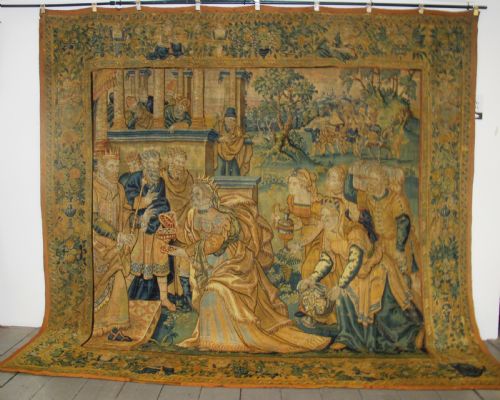
Classical Wall Tapestry
A classical wall tapestry brings grand architectural depth and centuries of woven narrative into a room, offering rich historical texture for interior schemes.
Classical Wall Tapestry
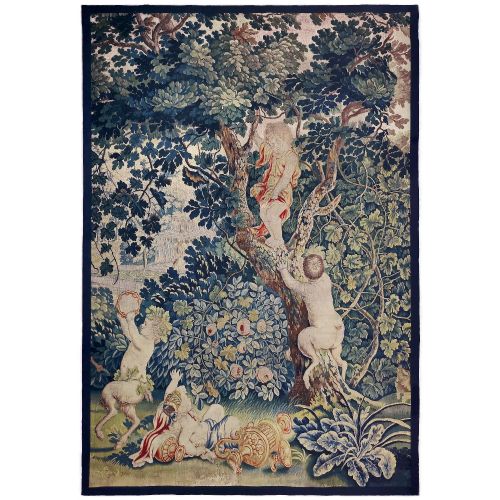
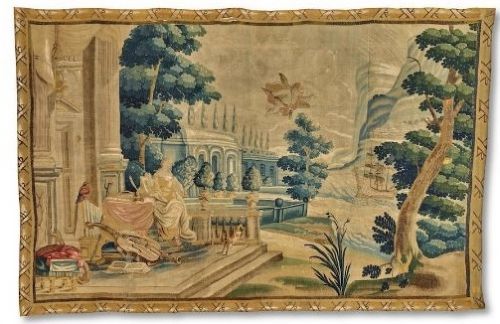
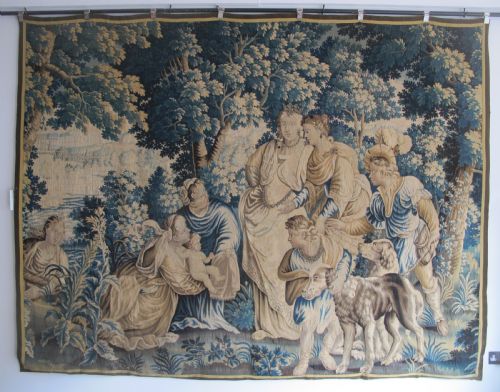
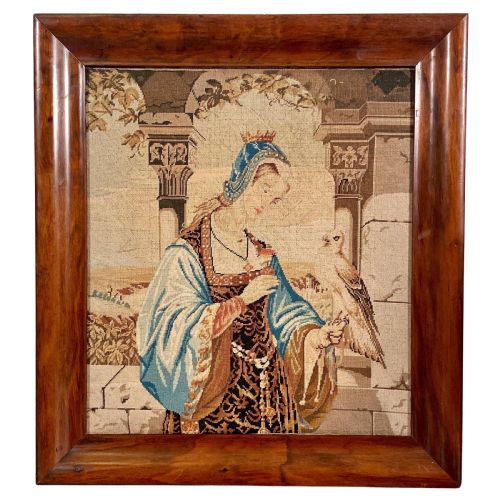
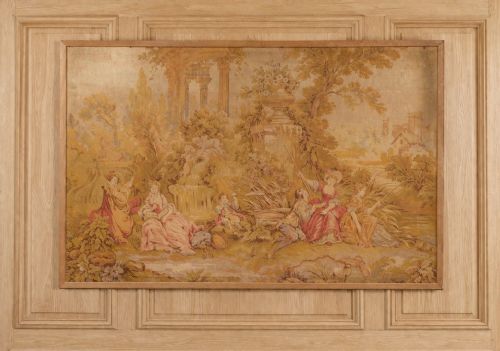
A classical wall tapestry represents a textile art form spanning from the sixteenth century through to the nineteenth century, drawing on Baroque, Flemish, and French Rococo traditions. When exploring a classical wall tapestry, buyers encounter monumental Flemish verdure scenes, mythological narratives, and framed French textile panels alongside embroidered cushion covers.
The pieces appearing most frequently range from seventeenth-century Flemish weaveworks to later nineteenth-century French interpretations and oil on canvas cartoons designed for Aubusson production. These textiles function primarily as wall art and wall hangings, transforming domestic interiors with historical scale and narrative depth.
Materials and construction
The construction relies fundamentally on wool and silk threads, woven to create dense pictorial surfaces that survive across centuries. Supporting elements such as wood frames occasionally house these textiles, while related works employ oil paint on canvas as preparatory cartoons.
Linen and wood further appear within the broader material scope of these historic panels, providing structural support and framing for textile art. Artisans combined these natural fibres through traditional weaving and embroidery techniques to achieve the intricate detail visible in mythological and verdure panels.
Classical Wall Tapestry Retail Price Guide 2026
Typical asking prices for classical wall tapestry among the pieces listed under this phrase on Sellingantiques today, from the lower quarter to the upper quarter. They describe what is for sale here now, not the wider market.
Listings feature periods spanning from the sixteenth century through to the nineteenth century, utilising wool, silk, linen, and wood frame materials.
Assessing quality in historical weaves
Quality rests upon the fineness of the weave and the complexity of the narrative composition, distinguishing grand scale mythological works from simpler decorative panels. The integration of silk threads alongside wool adds tonal nuance and luminosity that elevates the visual depth of a piece.
Condition and scale also define the standing of a textile, with large format seventeenth-century examples demonstrating greater ambition than smaller nineteenth-century derivatives. The clarity of the imagery, whether depicting hunting falconry, biblical scenes, or grotesque masks, dictates the refinement of the execution.
The Classical Wall Tapestry Glossary
- Verdure
- A type of tapestry featuring a heavily wooded landscape or foliage as the primary subject matter. These panels often incorporate natural greenery and distant architectural elements.
- Cartoon
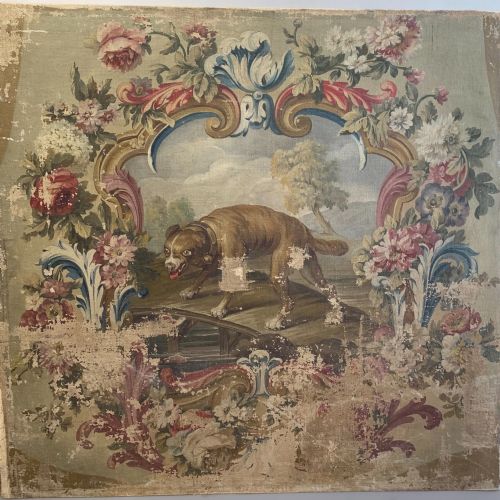
- A full-scale preparatory drawing or painting executed on canvas or paper for a weaver to follow. Painters produced these works before artisans translated the design into wool and silk.
- Aubusson
- A style of tapestry originating from the French town renowned for its woven textile production. These works frequently exhibit French Rococo or classical architectural motifs.
- Grotesque
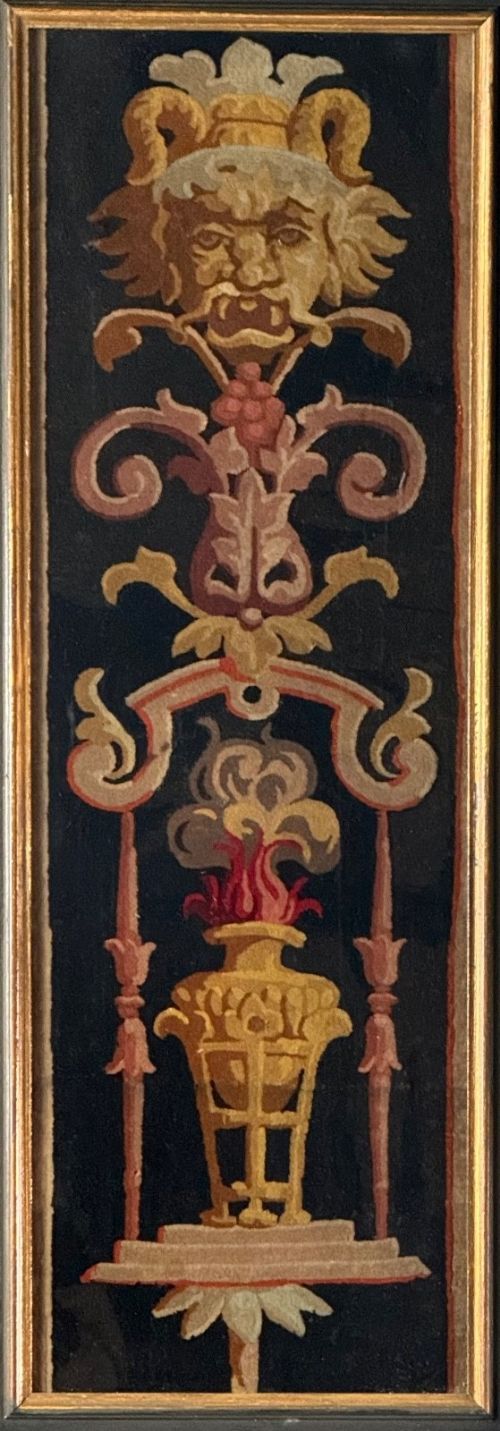
- A style of decorative ornamentation involving fantastical human and animal figures intertwined with foliage. This aesthetic appears frequently in sixteenth and seventeenth-century continental panels.
- Flemish
- Pertaining to the historic region of Flanders, celebrated for mastery in textile art during the Renaissance and Baroque periods. Flemish weavers produced some of the most celebrated grand scale narrative wall hangings.
Classical Wall Tapestry: Frequently Asked Questions
How do I hang a heavy tapestry?
Heavy textile art requires even weight distribution across the upper edge using a concealed wooden batten or heavy-duty velcro system. Sewing a stabilizing sleeve to the reverse protects the historic fibres from direct strain.
Avoid hanging large wall hangings in direct sunlight to prevent fading of the wool and silk dyes. Professional consultation ensures the chosen wall can support the scale of seventeenth or eighteenth-century panels.
What is the difference between Flemish and Aubusson styles?
Flemish weaving typically emphasises dense foliage, mythological narratives, and darker, richer palettes characteristic of the sixteenth and seventeenth centuries. These works often carry a heavy architectural presence.
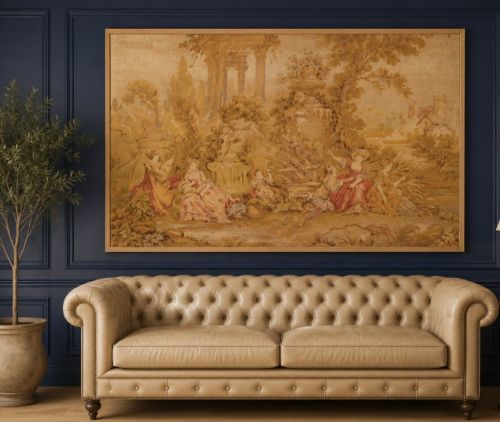
Aubusson design, developing primarily in France during later periods, favors lighter classical compositions, pastoral scenes, and French Rococo ornamentation. The colour palette tends toward softer pastels and airy decorative schemes.
Can I clean an antique textile?
Routine maintenance is limited to very gentle surface dust removal using a soft brush attachment through a protective mesh screen. Professional conservation is the only appropriate course for deep cleaning historic fibres.
Water and standard cleaning agents cause irreversible damage to aged wool, silk, and linen. Specialists should assess any significant staining or structural weakness.
How can I date an old textile panel?
Dating relies on stylistic analysis of the figures, border designs, and material composition compared against documented historical examples. Sixteenth and seventeenth-century works display distinct Flemish or Baroque characteristics, while nineteenth-century pieces often reflect revival movements.
Examining the reverse reveals the ageing of the wool and linen threads, providing further clues to the period of manufacture. Documentation and historical provenance remain key indicators of age.