





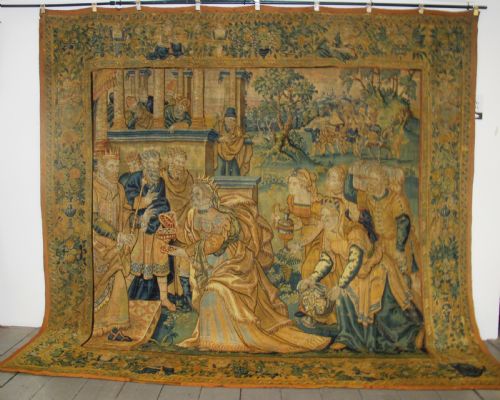
Classical Textile Art
Classical textile art brings centuries of woven mythology, pastoral greenery and heraldic portraiture directly into a modern room.
Classical Textile Art
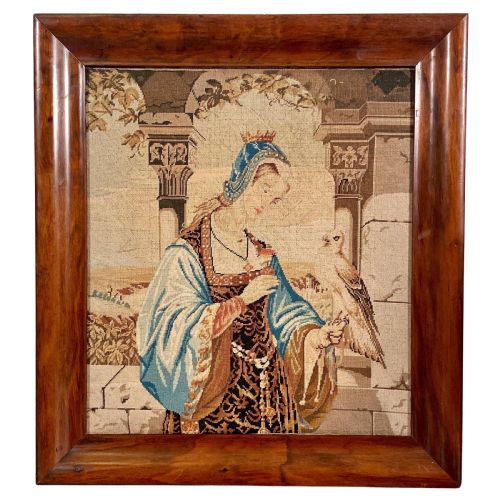
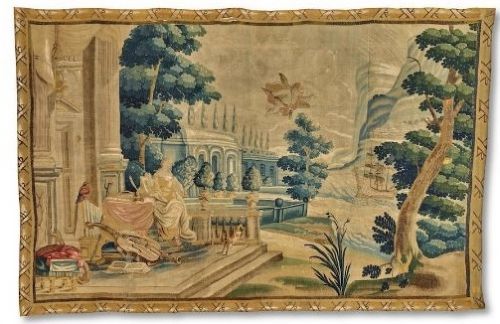
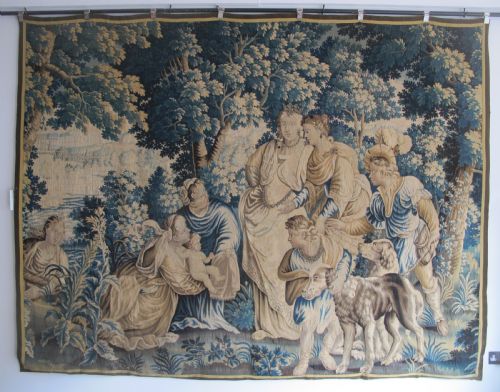
Classical textile art centres on heavy woven wall tapestries, embroidered panels and verdure scenes spanning from the sixteenth century to the nineteenth century. Buyers searching this phrase typically encounter Flemish verdure hangings, French pastoral woven panels and Continental needlework pieces mounted in timber frames.
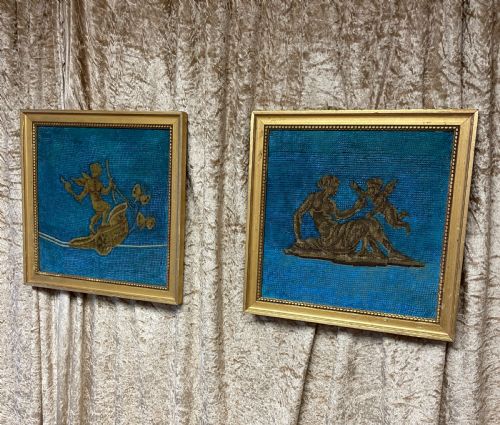
The selection ranges from grand scale mythological Flemish works down to smaller cushion covers and framed fragments of toile de jouy. Seventeenth century Flemish examples and eighteenth century French panels dominate the visual landscape of the category.
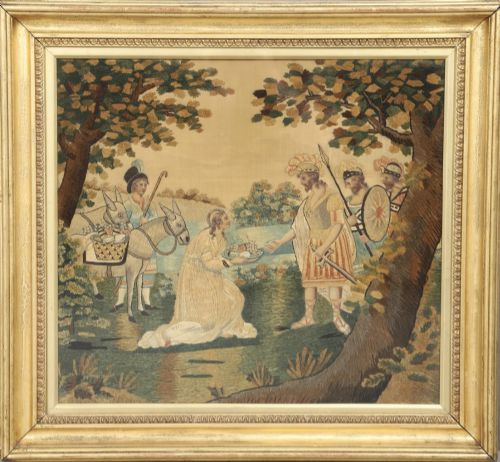
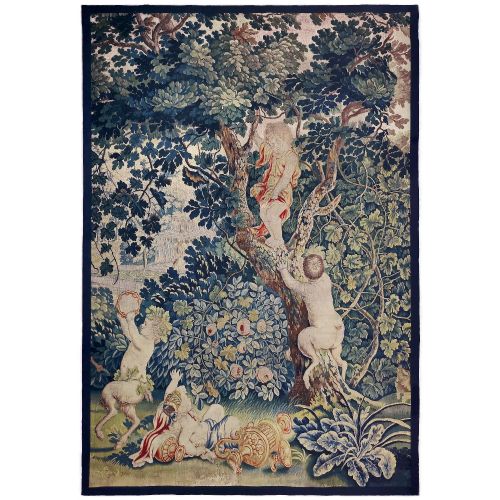
Most pieces serve as substantial wall art, utilising wool, silk and linen threads to depict hunting scenes, biblical narratives and grotesque masks. Buyers look to these textile works for historic depth, architectural presence and rich surface texture.
How they were made
The makers of these historic textiles employed hand weaving techniques on vertical and horizontal looms, interlacing wool, silk and linen yarns to build complex figurative and landscape compositions. Artisans often integrated dyed silk highlights into heavy wool foundations to create tonal depth within foliage and garments.
Needlework pieces and embroidered panels relied on meticulous hand stitching across linen grounds, utilising varied thread counts to render facial expressions and architectural details. Many surviving textile panels later received timber frames or wood frames to protect their edges and facilitate wall hanging.
Classical Textile Art Retail Price Guide 2026
Typical asking prices for classical textile art among the pieces listed under this phrase on Sellingantiques today, from the lower quarter to the upper quarter. They describe what is for sale here now, not the wider market.
Renaissance weavers occasionally tucked playful hidden animals into the deep green foliage of verdure tapestries, rewarding close inspection by candlelight.
What varies in quality
Quality in these textiles rests upon the density of the weave, the complexity of the narrative iconography and the survival rate of the original hand-dyed colours. Tightly woven Flemish verdure tapestries with varied botanical detail and balanced proportions sit distinctly apart from simpler nineteenth century needlework reproductions.
The handling of perspective, facial definition in portraits and the integration of silk highlights reveal the competency of the original workshop. Preservation of the textile ground, minimal structural intervention and the integrity of early timber framing further distinguish the finer pieces.
The Classical Textile Art Glossary
- Verdure tapestry
- A woven wall hanging dominated by lush foliage, trees, plants and often birds or animals without a central human narrative. These pieces rely on varied shades of green and brown wool.
- Aubusson tapestry
- A woven textile produced in the French town of Aubusson, known for pastoral scenes, floral motifs and classical architectural elements. They often lack a visible warp thread border.
- Toile de jouy
- A cotton or linen fabric featuring repeated printed pastoral scenes, usually in a single monochrome colour on a light background. Eighteenth century fragments are often framed as independent wall art.
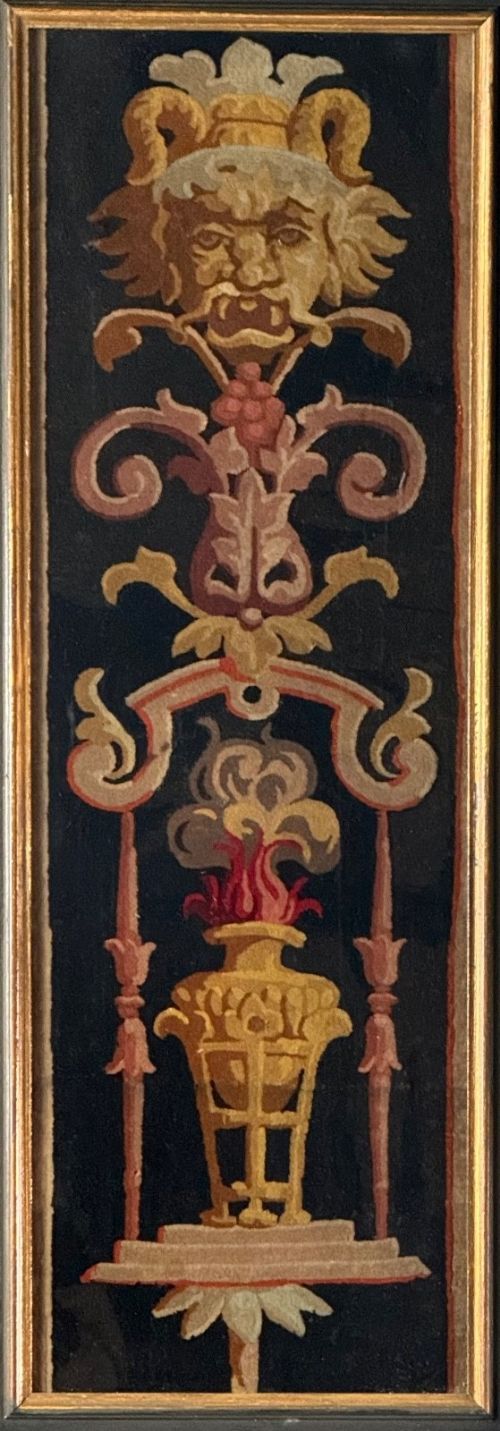
- Grotesque
- A style of decorative surface ornament featuring fantastical human and animal forms intertwined with foliage and architectural scrolls. This motif appears frequently in seventeenth century continental embroidered panels.
- Needlework
- A broad term for decorative stitching executed by hand on a fabric ground using wool or silk threads. These pictures often emulate the pictorial depth of woven tapestries.
Classical Textile Art: Frequently Asked Questions
How do I hang a large antique tapestry?
Large tapestries require even distribution of weight along the upper edge to prevent distortion of the woven threads. A concealed linen sleeve is typically stitched to the reverse, allowing a flat timber batten to slide through and mount securely to the wall.
Heavier framed textile panels rely on traditional mirror plates and picture wire fixed directly into structural wall studs. Avoid placing antique wool and silk textiles in direct sunlight to protect the natural dyes from fading.
What is the difference between Flemish and French tapestries?
Flemish tapestries from the sixteenth and seventeenth centuries generally feature dense verdure landscapes, deep earthy tones and complex mythological or hunting narratives. Their wool and silk weaves tend to possess a heavier, more architectural gravity.
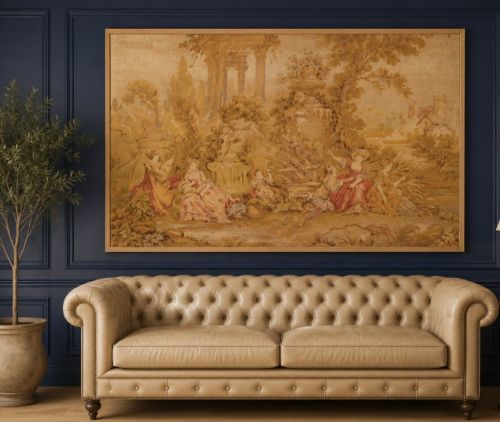
French pieces, particularly from the eighteenth century French Rococo tradition, often display lighter pastel palettes, elegant pastoral court scenes and decorative floral borders. The weaving style prioritises refined grace over the dark drama typical of earlier Flemish workshops.
How should I clean and maintain textile art?
Maintenance involves gentle, low-suction vacuuming through a protective mesh screen to remove surface dust without catching loose threads. Professional textile conservators should handle any significant cleaning or structural repair to prevent fibre degradation.
Maintaining stable indoor humidity and moderate temperatures prevents brittle fibres in wool and silk. Keeping textiles away from direct heat sources ensures the natural materials retain their flexibility over time.
How do I date an antique tapestry?
Dating relies on stylistic clues within the clothing, architectural backgrounds, border designs and the specific weave structure of the wool and silk. Seventeenth century works often display heavier baroque proportions and dark verdure palettes, whereas nineteenth century revivals mimic these traits with machine assistance or different yarn twists.
Comparing the iconography to dated examples in museum archives helps narrow the production period. Material analysis under magnification confirms whether the yarns align with historical dyeing practices of the stated century.