



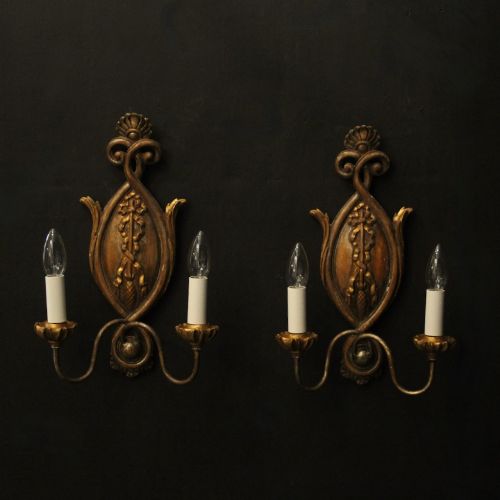
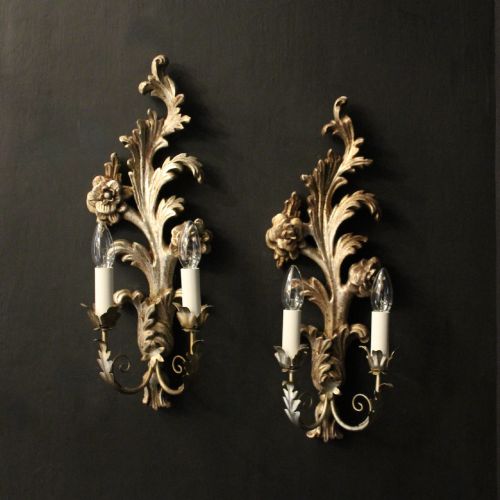
Classical Style Lighting
These pieces of classical style lighting bring enduring architectural proportion and warm illumination to a room.
Classical Style Lighting
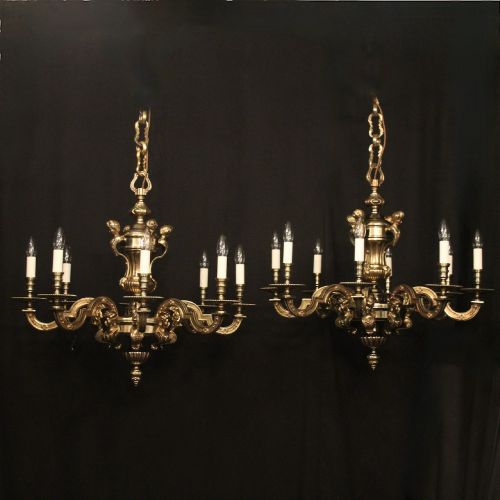
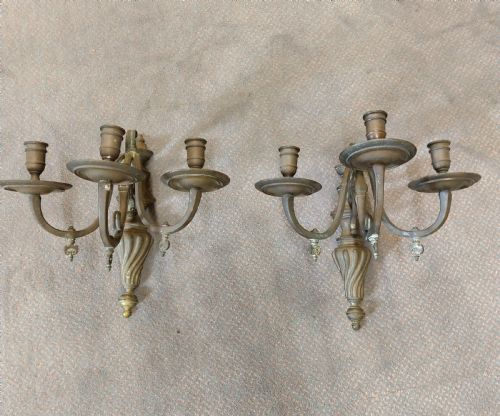
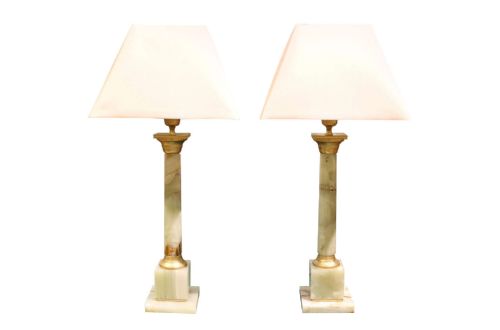
Classical style lighting comprises chandeliers, wall lights, and table lamps drawn from nineteenth and early twentieth-century decorative vocabularies. The most frequent examples on this page are French and Italian fixtures produced across the nineteenth century and into the nineteen-thirties.
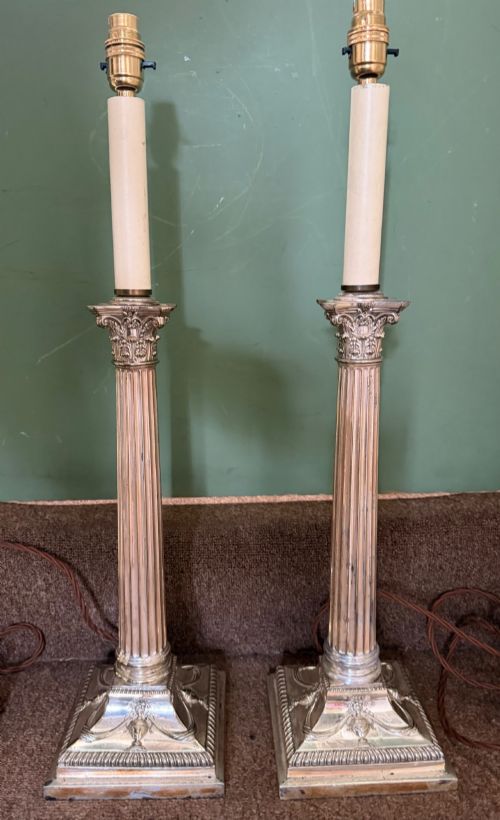
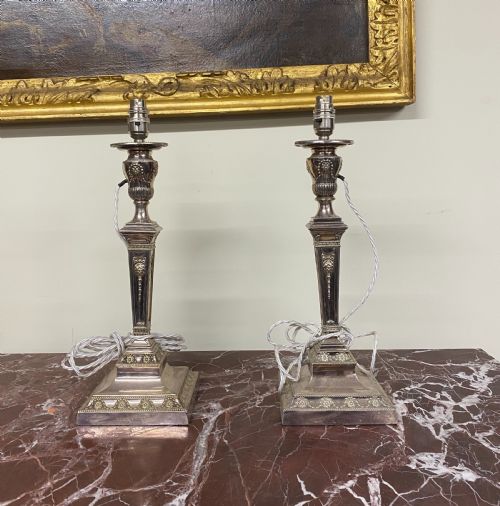
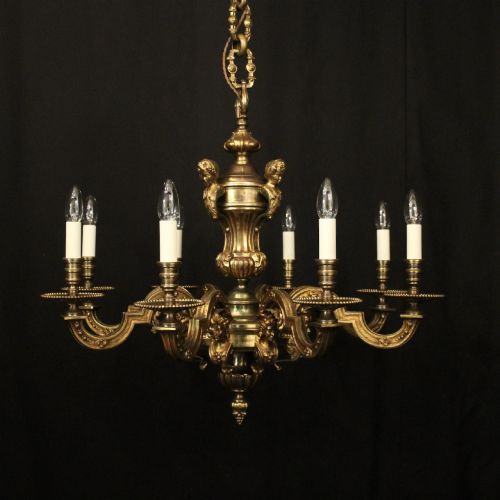
Buyers encounter items ranging from monumental multi-branch chandeliers to small candelabra converted for electrical use. Pieces trace lineages through French Empire, Louis XVI, and Neoclassical revivals.
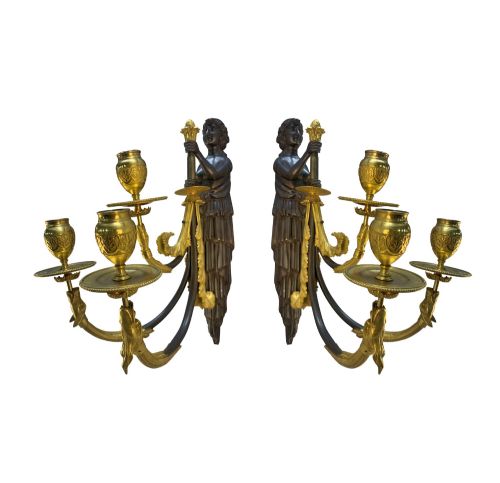
Many items incorporate figural elements or architectural motifs such as caryatids and urns. The assortment spans standard floor lamps, wall sconces, and delicate desk or table fixtures.
How they were made
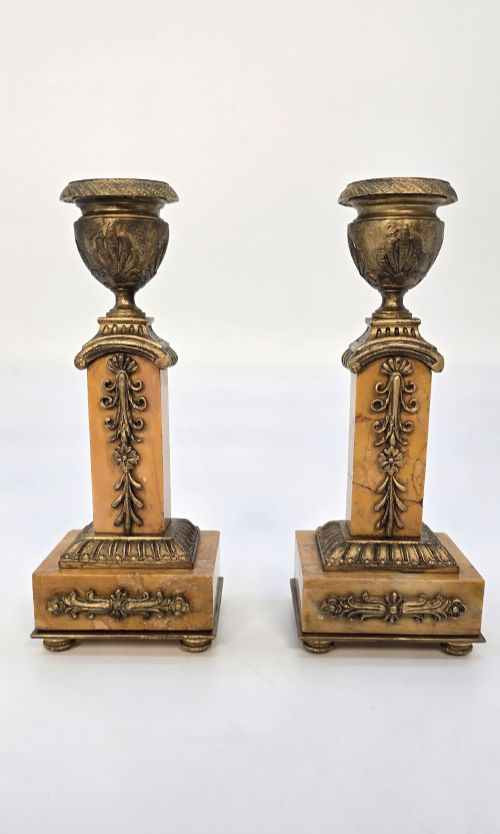
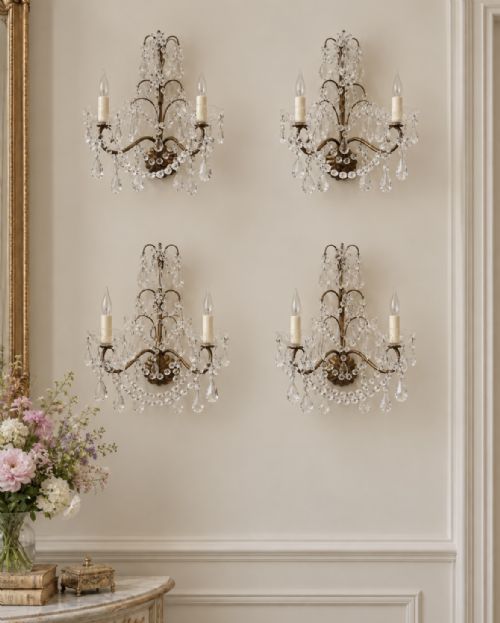
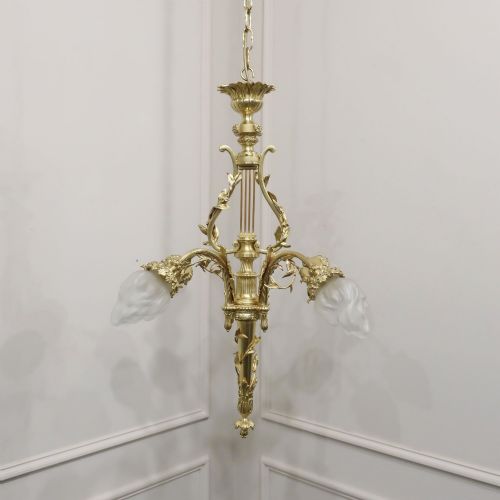
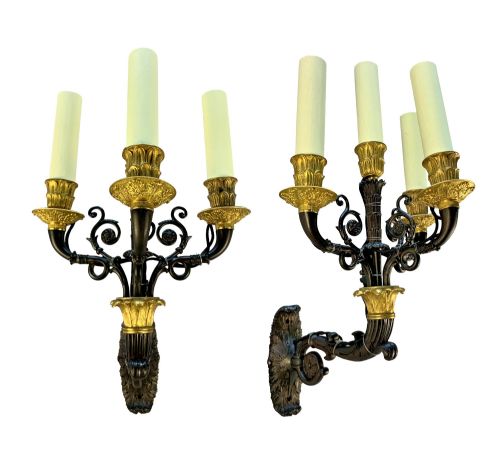
Metalwork dominates these items, utilising gilt bronze, brass, ormolu, and silver plating formed through casting and chasing. Artisans combined these metallic elements with carved giltwood, marble bases, and crystal drops.
Surface treatments rely on applied gilding, verdigris patina, and hand-carved detailing. Porcelain components such as pate sur pate appear alongside fabric shades on table and floor lamps.
Classical Style Lighting Retail Price Guide 2026
Typical asking prices for classical style lighting among the pieces listed under this phrase on Sellingantiques today, from the lower quarter to the upper quarter. They describe what is for sale here now, not the wider market.
Cast bronze cherubs occasionally hold up your reading light, keeping watch over nineteenth-century drawing rooms.
What varies in quality
The standard of chasing in bronze and ormolu separates average commercial work from exceptional atelier production. Crisp definition in cast ornamentation and substantial metal weight indicate superior manufacturing.
The integration of materials determines distinction, seen in the choice of genuine Carrara marble and fire-gilt surfaces rather than plated substitutes. Original components and unified design across multi-branch candelabra elevate a piece.
Pierre Philippe Thomire·Casier·E Rousseau·Dugourc
The Classical Style Lighting Glossary
- Ormolu
- Gilded bronze produced by applying a mercury and gold amalgam to a bronze base and firing it. This technique creates a durable, warm metallic finish seen on French candelabra and chandeliers.
- Caryatid
- A sculpted female figure serving as an architectural support column. These figures appear frequently on nineteenth-century candlesticks and lamps.
- Pate sur pate
- A ceramic decorating technique where wet white porcelain slip is built up in layers on a coloured clay body. The resulting relief design resembles a cameo.
- Tent and waterfall
- A chandelier configuration featuring strings of crystal beads rising to a crown and cascading outwards. This arrangement maximises light refraction across large reception rooms.
- Lyre
- A stringed musical instrument motif incorporated into the brass or bronze frames of wall lights and chandeliers. It is a defining Neoclassical design element.
Classical Style Lighting: Frequently Asked Questions
How do I wire antique chandeliers safely?
Most antique fixtures require rewiring to meet modern electrical safety standards before installation. A qualified electrician can replace internal wiring while preserving original sockets and exterior brass components.
Chain length and ceiling weight bearing must also be assessed prior to hanging heavier bronze or crystal models.
Can I convert antique candelabra into lamps?
Many nineteenth-century candelabra and candlesticks have been adapted to hold electrical fittings over the decades. Conversions should ideally utilise non-destructive methods that protect the underlying metal or marble body.
Reversible wiring ensures the original architectural integrity of the piece remains intact.
How do I clean gilt bronze and ormolu?
Dusting gently with a soft dry brush prevents particulate accumulation on intricate cast surfaces. Avoid abrasive cloths, chemical polishes, or water on fire-gilt or ormolu because harsh agents strip the delicate gold layer.
Professional conservation is recommended for heavily tarnished or soiled metalwork.
What defines the French Empire style?
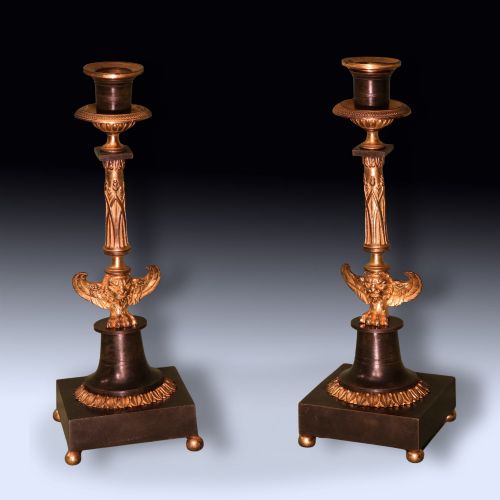
French Empire lighting draws inspiration from ancient Roman and Greek military and architectural motifs. Pieces typically feature heavy gilt bronze, symmetrical layouts, and symbolic creatures like sphinxes or eagles.
This aesthetic dominated the early nineteenth century and returned in later revival periods.