


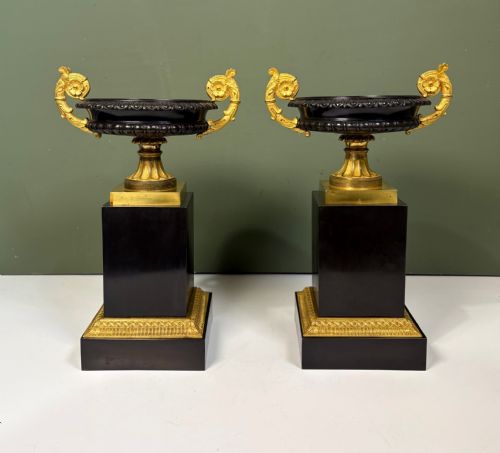


Classical Style Centerpiece
A classical style centerpiece anchors a formal table with enduring architectural presence and sculptural bronze or porcelain.
Classical Style Centerpiece
A classical style centerpiece gathers the decorative focus of a room, taking forms such as tazzas, urns, and sculptural candelabra. These objects embody formal balance and historical ornament derived from ancient traditions.
The pieces seen on this page span the eighteenth and nineteenth centuries, including French Empire, Regency, and Napoleon III works. Makers frequently turned to architectural salvage, grand tour subjects, and mythological themes for their inspiration.
Buyers will encounter bronze, gilt bronze, and porcelain vessels designed to sit centrally on tables or mantelpieces. Many examples incorporate marble bases or pair with figural candle holders.
Materials and construction
Foundries and workshops shaped these pieces primarily in bronze, ormolu, and brass, often combining patinated and silvered surfaces for visual contrast. Master metalworkers utilised fire-gilding techniques to apply gold to bronze components, creating lasting lustre.
Ceramic elements utilise porcelain and majolica, glazed and fired before mounting in metal mounts. Marble provides dense, heavy foundations for bronze puttis figures and candelabra stems, lending stability to heavy metalwork.
Classical Style Centerpiece Retail Price Guide 2026
Typical asking prices for classical style centerpiece among the pieces listed under this phrase on Sellingantiques today, from the lower quarter to the upper quarter. They describe what is for sale here now, not the wider market.
Small bronze puttis frequently perch upon marble bases, holding aloft candle holders with mischievous expressions.
Assessing quality in metal and ceramic
The standard of chasing and finishing on bronze and ormolu dictates the refinement of a piece. Crisp detail in foliage, drapery, and figural anatomy separates superior foundry work from softer, mechanical cast production.
The integration of mixed media, such as the mounting of porcelain urns in gilt bronze or the pairing of bronze with marble bases, reveals the care taken in assembly. Finer works display seamless joints and thoughtful proportion between disparate materials.
Pierre Philippe Thomire·Lerolle Fres
The Classical Style Centerpiece Glossary
- Ormolu
- Gilt bronze, where a mixture of gold and mercury is applied to metal and heated to leave a gold coating. This technique was widely practiced by French artisans in the eighteenth and nineteenth centuries.
- Tazza
- A shallow cup or bowl mounted on a stem and foot, frequently rendered in bronze or porcelain. It served as a decorative vessel for display on dining tables and sideboards.
- Grand Tour
- A cultural journey undertaken by wealthy young Europeans to view classical antiquities, inspiring souvenir bronzes like the Warwick vase. These reduced-scale copies captured archaeological discoveries for domestic display.
- Majolica
- Tin-glazed earthenware decorated with colourful pigments, popular in nineteenth-century decorative pieces. It provides vibrant surfaces often paired with metallic mounts.
- Patinated bronze
- Metal treated with chemical solutions to produce a darkened surface colour. This finish highlights bright ormolu details through stark contrast.
Classical Style Centerpiece: Frequently Asked Questions
What is a classical style centerpiece?
A classical style centerpiece is an ornamental object designed for the middle of a table or mantelpiece, drawing on ancient Greek and Roman design motifs. These pieces take the form of urns, tazzas, and sculptural candelabra.
They function purely as decorative focal points, often elevated on marble bases or cast in heavy bronze and porcelain to anchor a formal interior scheme.
How were these centerpieces used historically?
Historically, these items decorated dining tables, sideboards, and drawing rooms during formal dinners and receptions. They displayed wealth, taste, and an appreciation for classical antiquity.
Some pieces, such as candelabra and candlesticks, held wax tapers to illuminate rooms, while vessels like tazzas and urns remained strictly ornamental displays of metalwork and ceramic art.
How do I style a centerpiece today?
Place a bronze or porcelain centerpiece on a large dining table, a heavy sideboard, or a marble mantelpiece where its proportions can command the space. Allow negative space around the object so its silhouette remains clear.
Avoid crowding the piece with smaller items, letting the patinated bronze, gilt ormolu, or painted porcelain act as the primary visual anchor in the room.
How do I tell nineteenth century pieces apart?
Nineteenth-century works draw on specific revival styles like French Empire, Regency, and Napoleon III, each utilising distinct motifs from antiquity. Examining the casting technique, chasing quality, and material combinations helps reveal the period.
Bronze treatments vary from dark patination to bright silvered finishes, while porcelain incorporates majolica glazes mounted in classical gilt bronze mounts characteristic of the era.