
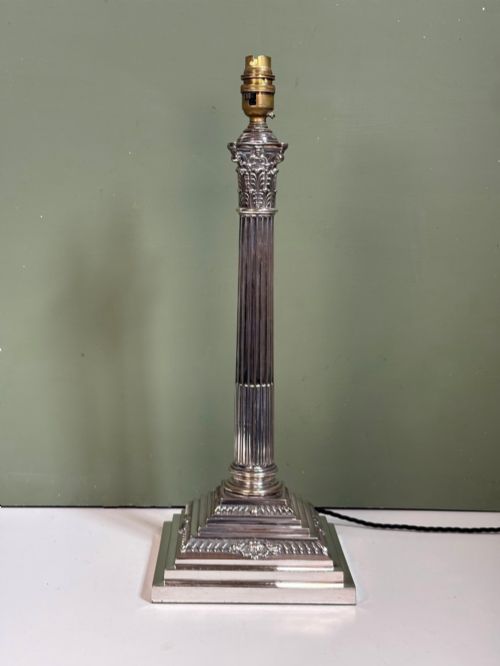
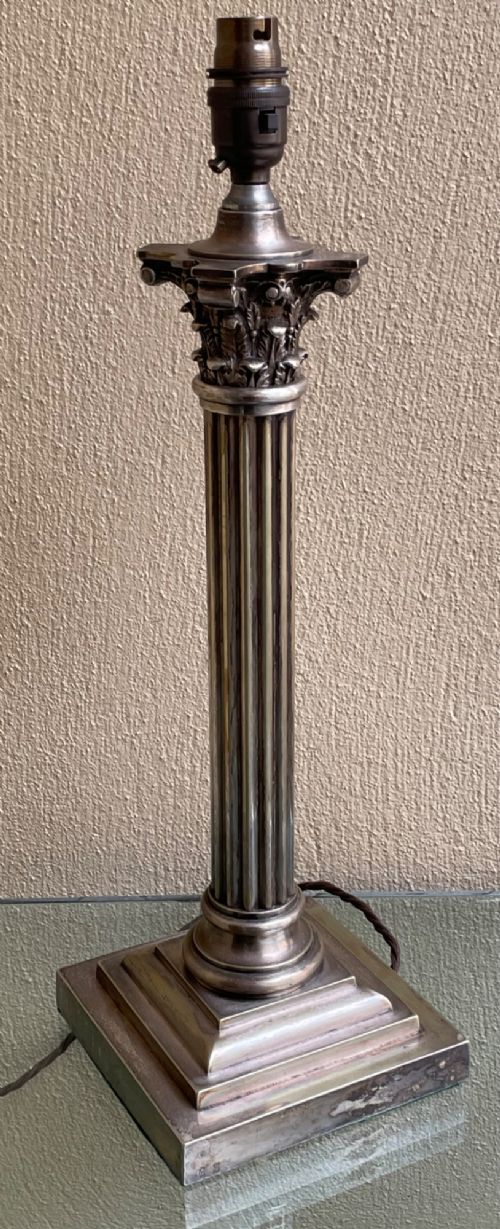


Classical Silver Column Light
These pieces for a classical silver column light bring architectural dignity to a room, channelling ancient temple forms into domestic lighting.
Classical Silver Column Light
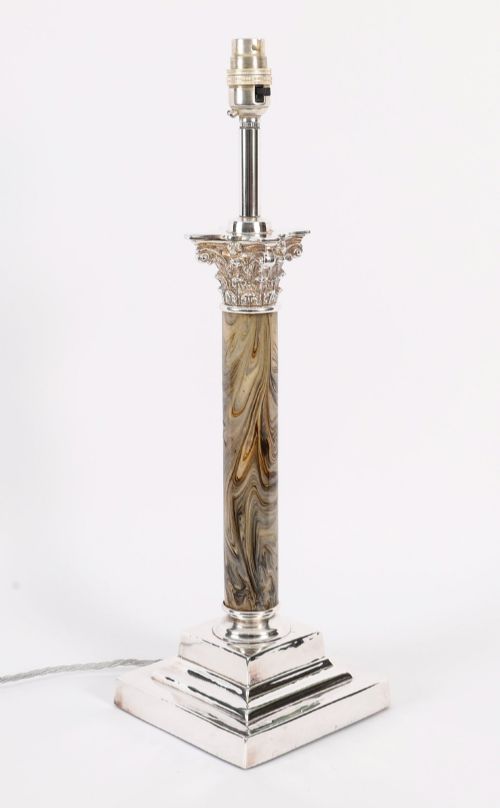
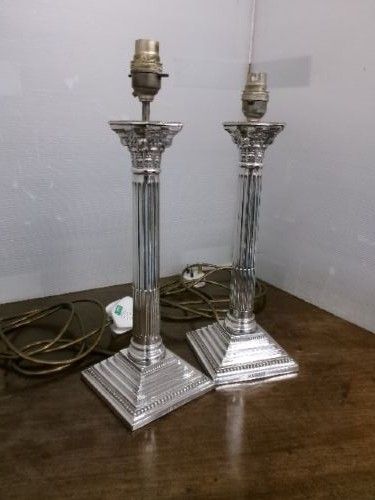
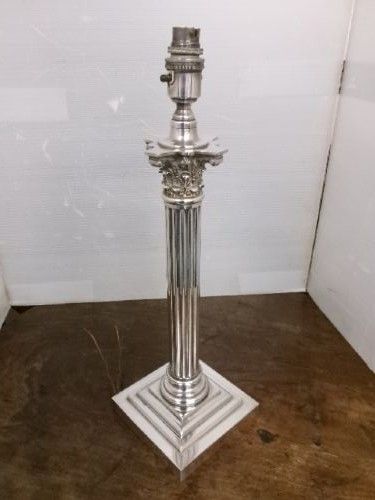
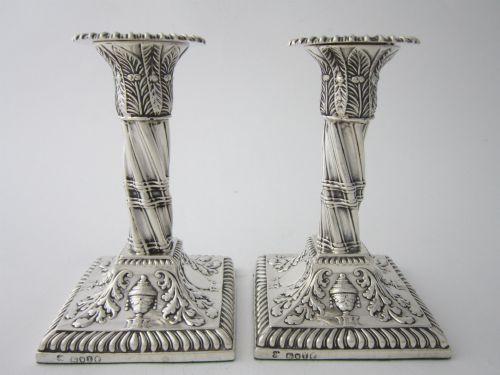
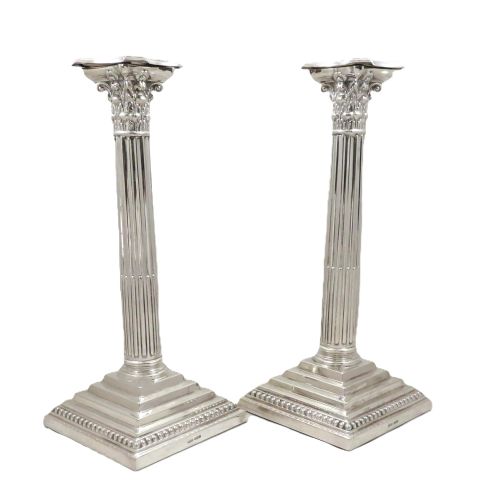
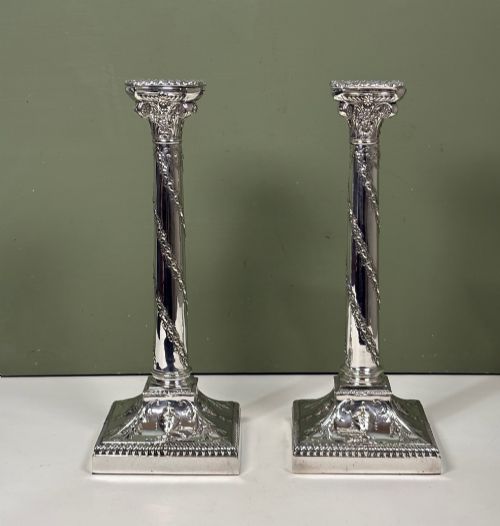
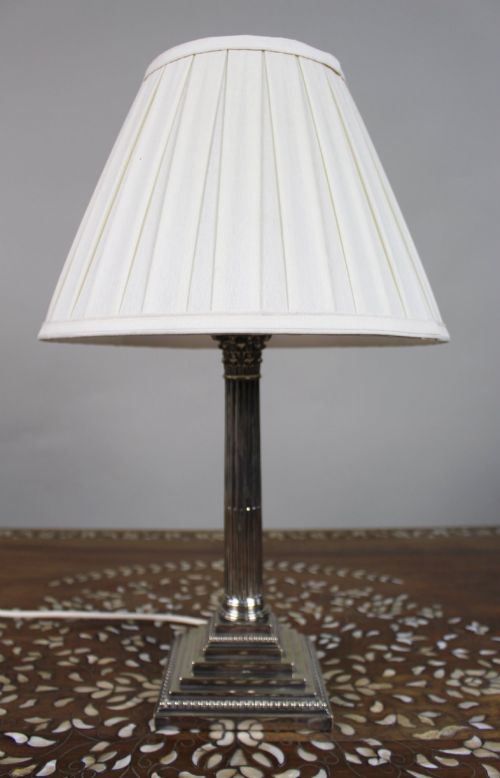
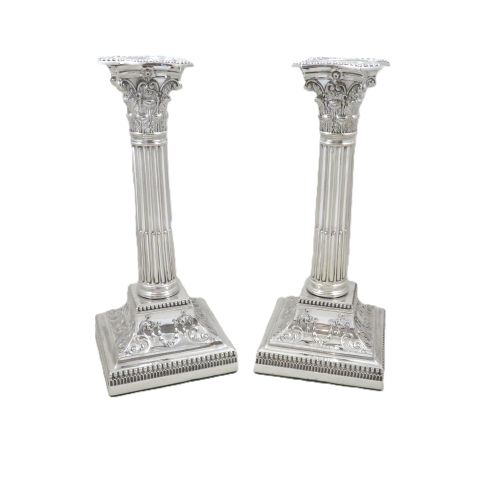
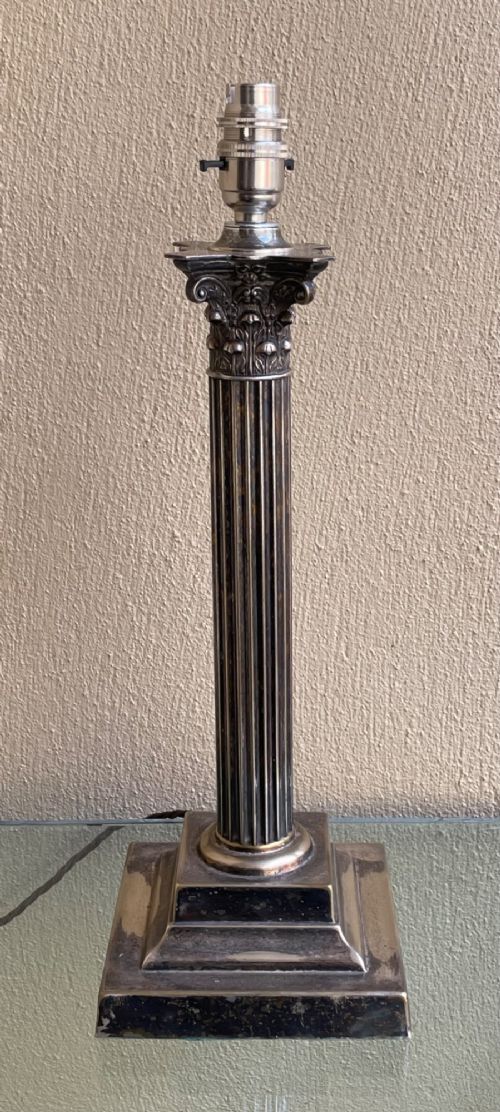
A classical silver column light takes the shape of ancient Greek and Roman architectural orders, most frequently translated into table lamps, standard lamps, and candlesticks through the Victorian and Edwardian eras. The Corinthian capital with its acanthus leaves dominates the selection, appearing on both silver-plated and solid sterling silver shafts.
Makers adapted these classical motifs from oil lamps and candlesticks into electric table lamps as domestic lighting evolved. Pieces range from modest mantelpiece pairs to monumental floor-standing torcheres and multi-light candelabras dating from the nineteenth century into the twentieth century.
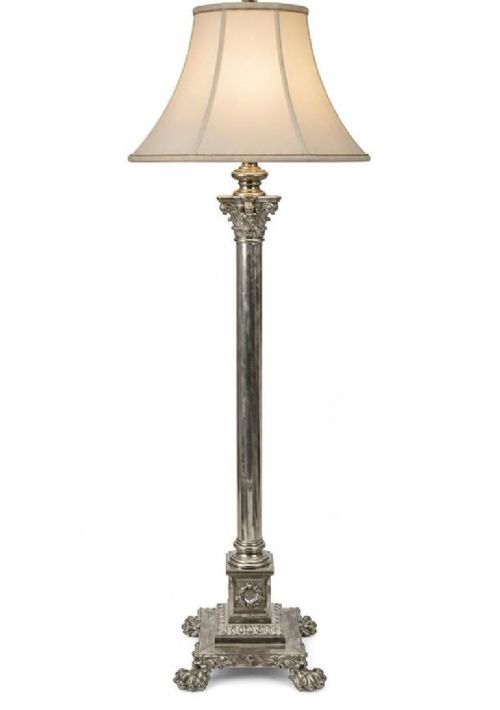
The dominant aesthetic draws heavily on Neoclassical and Neoclassical Revival styles, reflecting periodic revivals of classical antiquity in British and continental design. Buyers encounter variations that include stepped square bases, lion's paw feet, and applied beaded or fluted detailing along the column.
Materials and Construction
Constructed primarily from base metals coated in silver plate or forged from solid sterling silver, these objects frequently incorporate brass components within their internal weights and structural cores. Silver plating techniques vary from early Old Sheffield methods to later electroplating, which coated white metal or brass foundations.
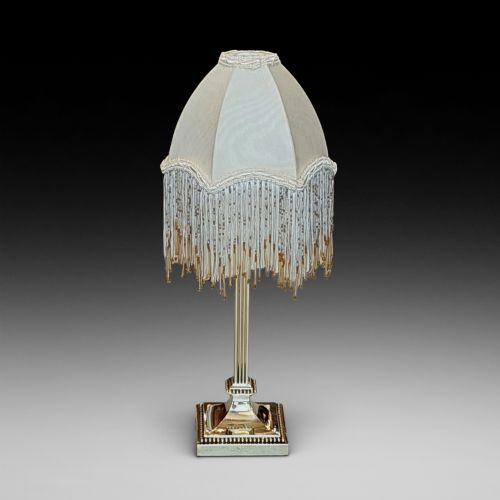
Detail work relies on casting and stamping, producing crisp acanthus leaves on column capitals and precise fluting down the shafts. Supplementary materials such as cut glass, silk, fabric, and glass beads appear on associated shades and reservoirs, while weighted bases provide stability for tall column structures.
One towering column rests firmly upon realistic lion's paw feet, ensuring your reading corner is guarded by miniature beasts.
Proportion and Finish
The distinction between ordinary and superior examples rests on the crispness of the casting in the capital and the integrity of the silver surface. Sharp, deep relief work in the acanthus leaves and fluting indicates careful hand-chasing after casting, whereas worn or softened detail points to repeated plating or inferior initial execution.
Proportion and scale dictate the visual weight of the piece, with heavier weighted bases and thicker gauge silver plating commanding greater architectural presence. Maker marks from established silversmiths or retailers also denote higher manufacturing standards and better documented provenance.
WMF·Goldsmiths and Silversmiths Company·Harrison Brothers and Howson·Walter Latham and Son·Ferdinand Barbedienne
The Classical Silver Column Light Glossary
- Corinthian column
- An architectural order featuring an ornate capital decorated with rows of acanthus leaves, frequently utilised on the shafts of these lamps and candlesticks.
- Silver plate
- A layer of silver fused or electroplated onto a base metal such as brass, copper, or white metal, providing the appearance of solid silver at a lower weight and cost.
- Sterling silver
- An alloy consisting of silver and other metals, typically copper, standardised to a high purity level for use in quality tableware and decorative objects.
- Torchiere
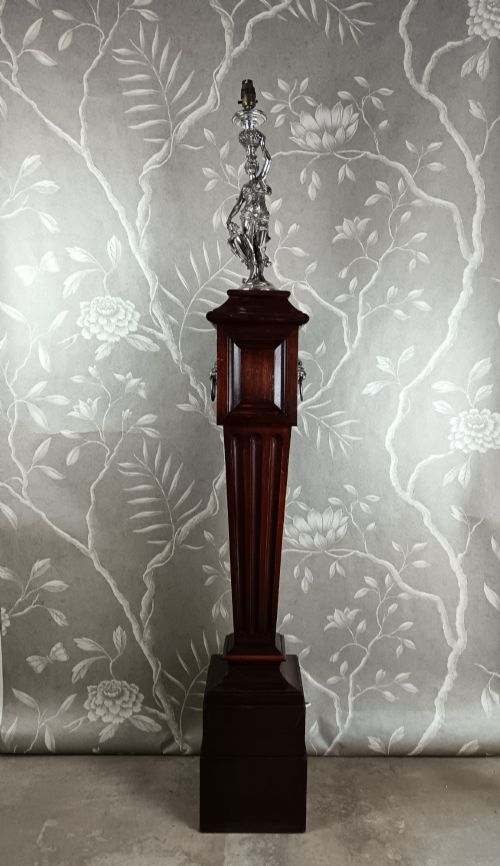
- A tall floor lamp designed to direct light upward, often supported by a slender column or figural pedestal base.
- Candelabra
- A branched candlestick holding multiple lights, occasionally adapted for electricity in later domestic interiors.
Classical Silver Column Light: Frequently Asked Questions
How do I identify a solid silver column from a plated one?
Examine the piece for British hallmark stamps, which indicate sterling silver through symbols such as a lion passant and assay office marks. Plated items typically lack these official hallmarks and may reveal base metal showing through on high points where the silver layer has worn.
Silver plate often carries maker stamps or electroplate designations instead of traditional assay marks. Weight can also offer a clue, though many plated columns contain internal lead or iron weights for stability.
Were these originally made as electric lamps?
Many examples began life as oil lamps, standard oil burners, or traditional wax candlesticks before undergoing conversion to electricity during the twentieth century. Columns designed as candlesticks often show evidence of later drilling to accommodate electrical wiring through the central shaft.
Later production pieces from the early twentieth century were frequently manufactured specifically as electric table lamps. Inspecting the base and internal fittings reveals whether the wiring represents a contemporary conversion or an original factory setup.
How should I clean a silver plated column?
Use a soft, lint-free cloth and a mild silver cleaner formulated specifically for plated items to avoid removing the thin silver layer. Gentle application preserves the crisp detail of the acanthus leaf capitals and prevents damage to the underlying metal.
Avoid abrasive pastes and excessive rubbing, particularly on pieces with electroplated finishes where harsh chemicals can cause pitting. Regular dusting with a dry microfibre cloth helps maintain the lustre between deeper cleans.
What is the significance of the Corinthian capital style?
The Corinthian order represents the most ornate of the classical Greek architectural styles, chosen by Victorian and Edwardian designers to project grandeur and classical learning. Its inclusion on domestic lighting reflects a broader Neoclassical revival that favoured ancient temple motifs in home decoration.
Columns with detailed acanthus foliage indicate higher manufacturing effort and typically accompany heavier, better-proportioned bases. This architectural detailing helps date the piece and ties it to specific revivals of classical design.