





Classical Portrait Shell Cameo
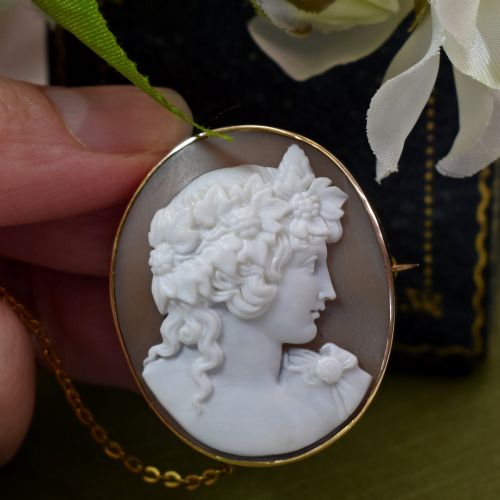
A classical portrait shell cameo offers wearable sculpture carved from layers of conch shell, prized for miniature profiles of mythological figures and classical deities.
Classical Portrait Shell Cameo
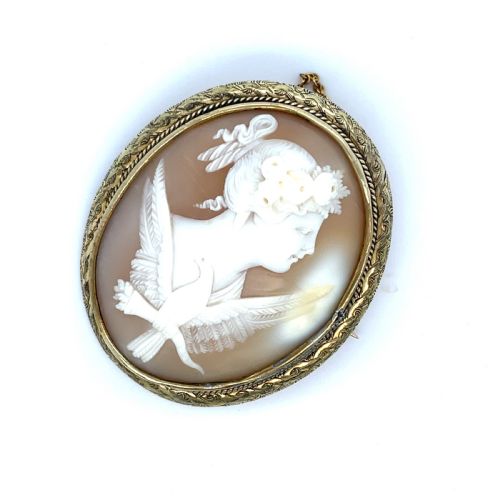
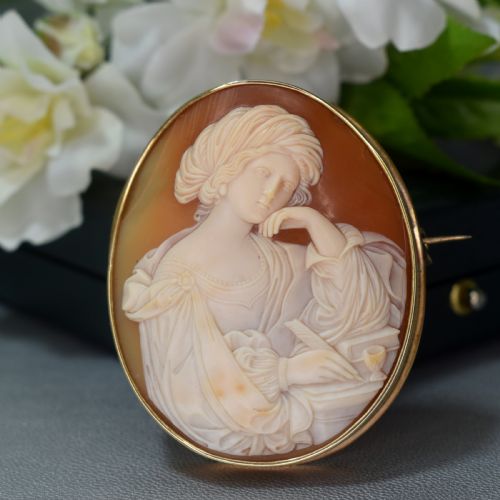
When you search for a classical portrait shell cameo, you are looking at carved miniature reliefs that interpret ancient mythology and historical figures through the lens of nineteenth and twentieth-century jewellery. These portable sculptures depict classical deities, sibyls, and mythological heroes carved in high or low relief from natural shell layers.
The pieces you are most likely to meet on this page take the form of brooches and drop earrings framed in gold, silver, or pinchbeck. Victorian examples predominate, alongside Edwardian interpretations and mid-twentieth-century conch shell pieces.
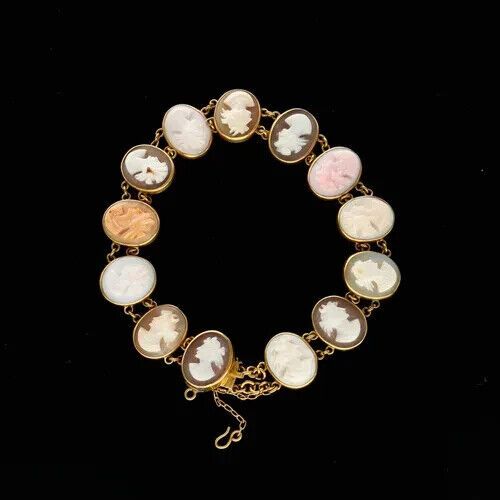
Makers set these carved shells into precious metal mounts, ranging from solid nine-carat and fifteen-carat gold frames to silver and base metal alloy settings. Formats include large statement brooches, matched drop earrings, multi-link bracelets, and rings featuring single or double carved profiles.
How they were made
Carvers utilised natural layered shells, predominantly helmet shell and conch shell, exploiting the colour contrast between the pale upper stratum and the darker background layer. By cutting away the outer white material, the artisan left the raised profile standing proud against a deeper pink or amber field.
Metalsmiths housed these delicate carvings in secure bezels, frequently adding twisted wirework, granulation, or rope-twist borders to the gold, silver, or pinchbeck frames. Brooches incorporated secure pin stems and C-clasps, while earrings utilised gold wires or screw fittings suited to the weight of the shell.
Object forms span brooches, drop earrings, multi-link bracelets, and rings featuring single or double portrait subjects.
What varies in quality
Mount quality matches the artistry of the shell. Substantial frames cast in higher carats of gold or solid silver indicate a commission of importance, whereas pinchbeck or thin mounts often accompany simpler commercial carvings.
R.Pernice
The Classical Portrait Shell Cameo Glossary
- Cameo
- A method of carving an object such as an engraved gem, item of jewellery, or vessel, where a raised relief image is presented against a contrasting background colour.
- Conch shell
- A material derived from marine molluscs, yielding distinct pink and white strata utilised by carvers for nineteenth-century portrait jewellery.
- Pinchbeck
- An alloy of copper and zinc invented in the eighteenth century to imitate gold, frequently utilised for Victorian jewellery mounts and frames.
- Relief
- A sculptural technique where the sculpted elements remain attached to a solid background of the same material, categorised by how high the carving projects.
- Bezel
- A band of metal pressed over the edge of a gemstone or carved shell to hold it securely within its mounting frame.
Classical Portrait Shell Cameo: Frequently Asked Questions
Are all these cameos from the Victorian period?
While the majority of pieces originate from the nineteenth century, the selection also includes Edwardian and mid-twentieth-century examples. Victorian items often feature detailed neoclassical revivals in solid gold settings.
Later twentieth-century examples frequently utilise queen conch shell with distinct pink colouration mounted in silver. Examining the mount style and metal purity marks helps distinguish between these eras.
How were cameo brooches worn originally?
In the nineteenth century, women wore cameo brooches fastened at the high necklines of collars, at the centre of lace jabots, or pinned to sashes. Large statement brooches served as focal points for formal daywear and evening attire.
Matching sets, including earrings and bracelets, completed formal ensembles. Today, these pieces transfer easily to modern lapels, scarves, and heavy knitwear.
What is the difference between shell and stone cameos?
Shell cameos utilise layered marine shells like conch or helmet shell, resulting in warm pink, orange, or brown backgrounds beneath white profiles. Stone cameos employ layered hardstones such as agate or onyx, offering greater durability and cooler, monochrome tones.
Stone carvings require different cutting techniques using diamond dust points, whereas shell is softer and responds to steel gravers.