




Classical Mythology Canvas Painting
These classical mythology canvas painting works bring gods, nymphs and ancient legends to life through centuries of European brushwork.
Classical Mythology Canvas Painting
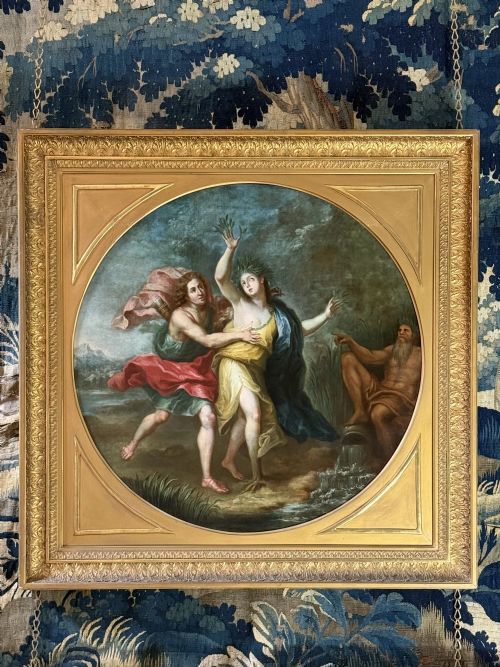
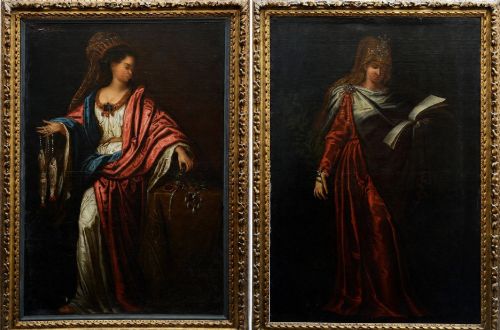
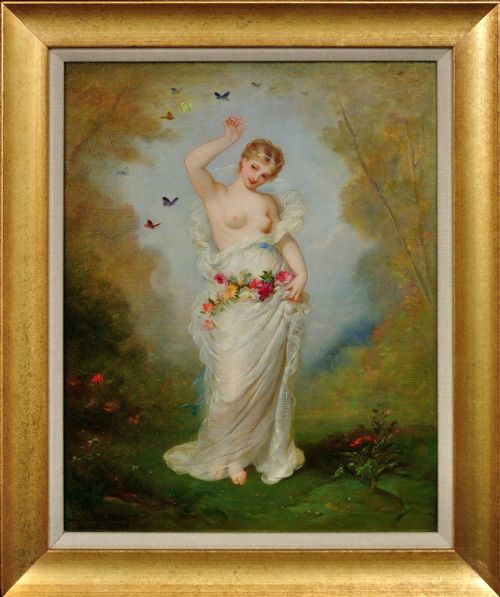
A classical mythology canvas painting depicts legendary scenes from ancient history and divine fables, rendered in oil upon woven fabric. The examples here span from the seventeenth century through to the 1930s, capturing gods, nymphs and mythological narratives.
French and Italian schools dominate the forms, moving through Baroque, Rococo, Empire and Academic styles. You will encounter grand mythological depictions alongside intimate portrayals of deities like Apollo, Venus, Flora and Pan.
Many works arrive housed in their original gilt wood or giltwood frames, which provide an essential period context to the canvases. These frames range from ornate French designs to simpler period moulding.
Factors of Quality
The skill of the brushwork and the anatomical proportion of figures set the finer paintings apart from more modest studio copies. Masterful handling of light, shadow and narrative expression distinguishes the most accomplished works.
The preservation of the original canvas and the integrity of the period gilt wood frame influence the overall physical standing of the piece. Intact nineteenth-century or eighteenth-century framing adds considerable historical weight to the artwork.
Classical Mythology Canvas Painting Retail Price Guide 2026
Typical asking prices for classical mythology canvas painting among the pieces listed under this phrase on Sellingantiques today, from the lower quarter to the upper quarter. They describe what is for sale here now, not the wider market.
The selection includes works from Italian, French and English schools, spanning oil on canvas mediums from the seventeenth century to 1930.
Charles-Antoine Coypel·Margaret Maitland Howard·André Charles Voillemot·Antoine Calbet·Jean Baptiste Isabey·Francesco Albani·Peter Paul Rubens
The Classical Mythology Canvas Painting Glossary
- Oil on Canvas
- Pigment mixed with drying oil applied to a woven fabric support. This combination offers durability and allows artists to achieve subtle tonal gradations.
- Gilt Wood Frame
- A timber moulding coated in gold leaf or gilt finish. These frames often reflect the specific decorative taste of the painting's period.
- French Academic Style
- A formal artistic approach taught by official academies in France, emphasising precise drawing and classical subject matter. It governs several nineteenth-century pieces in this selection.
- Baroque
- An artistic movement characterised by dramatic movement, deep shadow and emotional intensity. Italian and Flemish examples demonstrate this theatrical aesthetic.
- Rococo
- A lighter, more ornate decorative style that succeeded the Baroque, favouring playful mythological themes and delicate pastel tones.
Classical Mythology Canvas Painting: Frequently Asked Questions
What periods do these paintings span?
The works originate from several distinct periods, stretching from the seventeenth century through the eighteenth and nineteenth centuries, up to 1930s British realism.
Each era brings its own distinct handling of mythological subjects, ranging from Italian Baroque interpretations to French Academic and Art Nouveau canvases.
Are the frames original to the canvases?
Many works retain period gilt wood or giltwood frames that match the age and stylistic origin of the oil painting. These frames provide authentic historical context.
Checking the construction of the timber and the application of the gilding helps determine whether the frame has accompanied the canvas for centuries.
Which mythological figures appear most often?
Deities and figures from Greek and Roman mythology feature prominently across the collection, including Venus, Apollo, Pan, Flora, cupids and nymphs.
Artists frequently drew upon classical legends like Daphne, Theseus and Ariadne to construct dramatic or romantic narratives.
How do I care for an oil painting on canvas?
Keep the canvas away from direct sunlight and maintain stable indoor humidity levels to prevent the oil paint and wooden stretcher from warping or cracking.
Dust the surface and the gilt wood frame gently with a soft, dry brush, avoiding any liquid cleaners or harsh chemicals.