
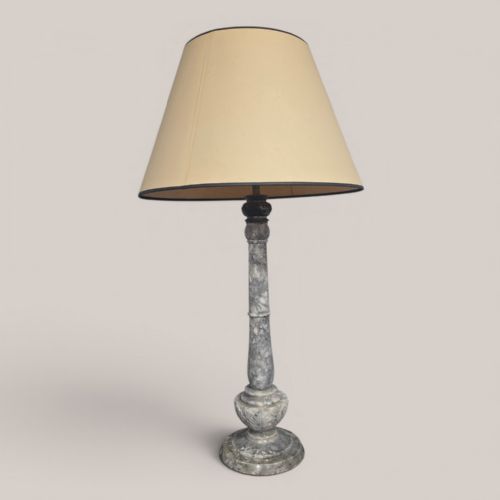
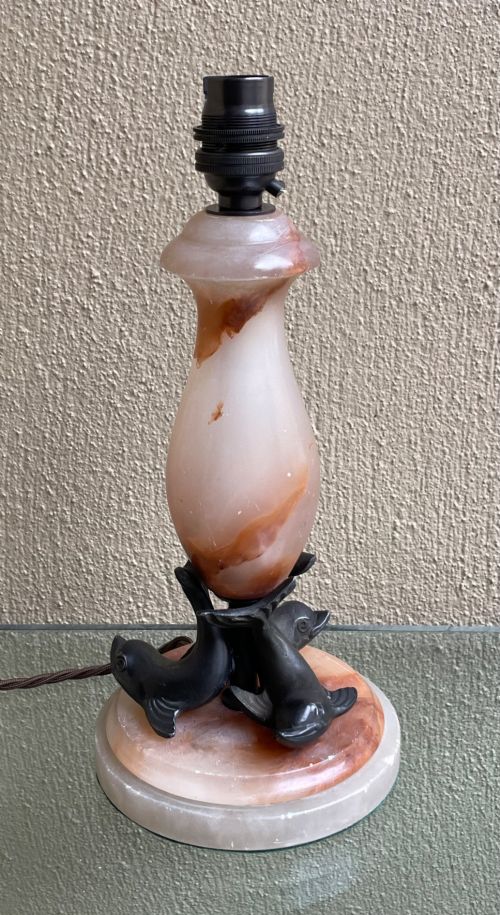
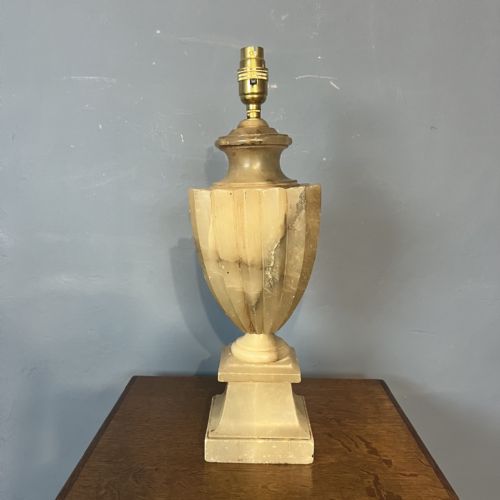
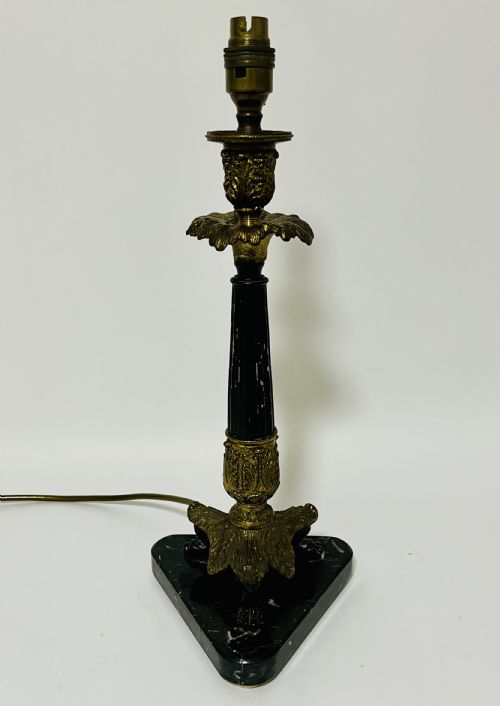


Classical Marble Lamp Base
These classical marble lamp base options bring weighty stone and formal proportion to a room, offering the solid permanence that collectors prize.
Classical Marble Lamp Base
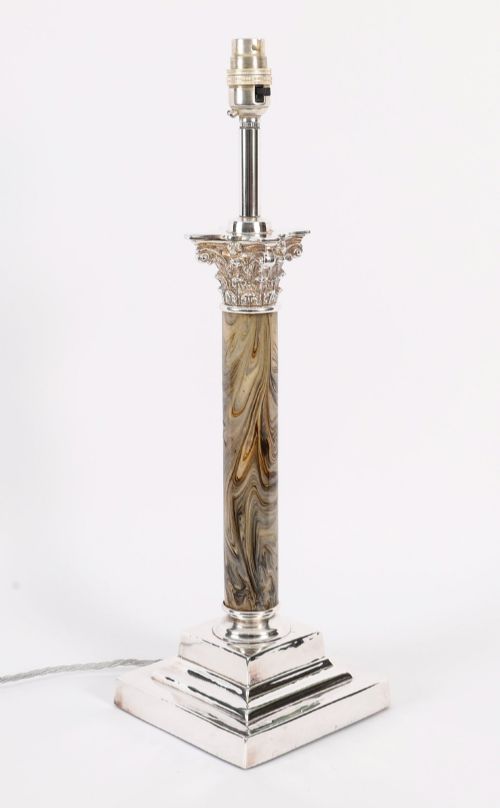
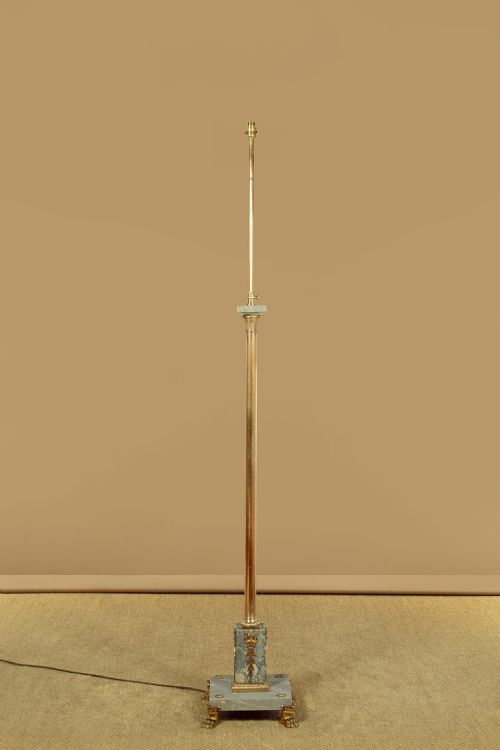
A classical marble lamp base combines carved stone with metal mounts, drawing on nineteenth-century and early twentieth-century revival styles. These pieces range from substantial table lights to slender floor models that anchor a corner.
You will most frequently encounter French Empire and Neoclassical designs from the Victorian and Edwardian eras. They often pair polished stone with cast bronze, brass, or ormolu details.
How they were made
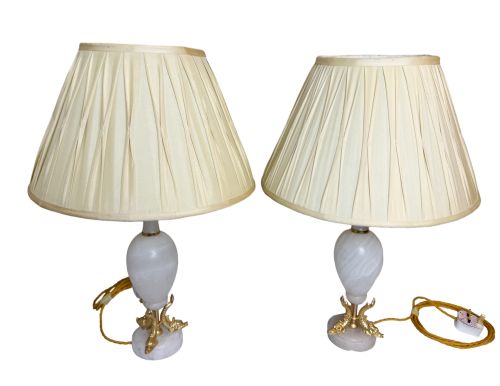
Makers shaped natural marble, onyx, and alabaster into columns, urns, and plinths, often turning the stone on a lathe. They combined these mineral bodies with cast bronze, brass, spelter, or gilded ormolu mounts.
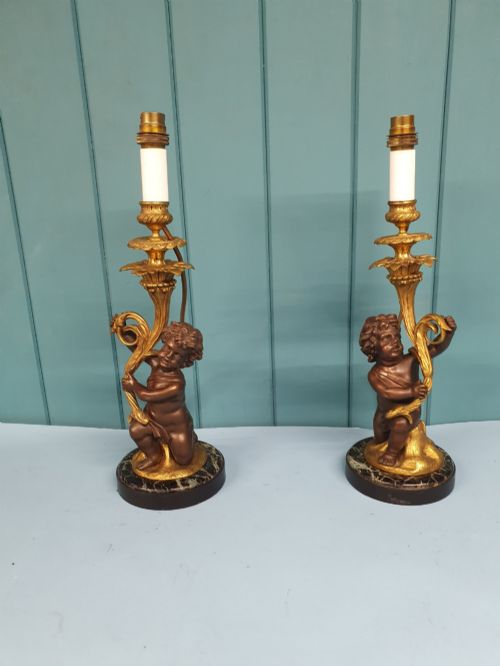
Metal components were cast and chased by hand before being fitted to the stone pillars. Many incorporated patinated or cold-painted bronze figures, cherubs, and classical motifs.
Several pieces feature small bronze cherubs perched atop heavy stone columns, keeping watch over the parlor.
What varies in quality
The weight and selection of the stone dictate much of the quality, with dense, finely veined marble holding greater presence than composite or lighter alternatives. The crispness of the cast metal mounts and the depth of the gilding further distinguish finer examples.
Proportion and architectural balance set superior pieces apart from simpler domestic lighting. The integration of stone and metal shows the hand of skilled workshops through tight joints and carefully chased ornament.
The Classical Marble Lamp Base Glossary
- Ormolu
- Gilded bronze, usually mercury-gilded, applied to mounts and decorative details on furniture and lighting. It provides a warm, reflective surface that contrasts with dark marble.
- Empire
- A stylistic period drawing on ancient Roman and Greek forms, popular during the nineteenth century. It relies on symmetrical layouts, classical columns, and military motifs.
- Spelter
- A zinc alloy used as a less costly alternative to bronze for cast figures and mounts. It was frequently painted or electroplated to imitate bronze or silver.
- Gueridon
- A small, tall table, sometimes adapted or repurposed to carry lighting. These forms often feature a circular marble top supported by a central column.
Classical Marble Lamp Base: Frequently Asked Questions
How do I date a marble lamp?
Examine the wiring holes, the type of metal used for the mounts, and the turning style of the stone. Heavier cast bronze fittings and hand-cut threads usually point to nineteenth-century manufacture.
Later twentieth-century reproductions often feature machine-standardised fittings and lighter synthetic or treated stones. Compare the style of any cast figures against known revival periods.
Were these originally oil lamps?
Many surviving nineteenth-century examples started life as oil lamps or candlesticks before conversion to electricity. This adaptation often occurred gradually as households modernised during the Edwardian period and the early twentieth century.
Look for original burner assemblies or font fittings that indicate how the piece held oil. Such conversions remain standard for period lighting.
What styles fall under classical?
The category spans Neoclassical, French Empire, and various revival movements from the Victorian and Edwardian eras. These styles borrow heavily from ancient Greek and Roman architecture, featuring columns, urns, and mythological figures.
French influences appear frequently, particularly through Empire and Rococo revival designs. Each style interprets classical motifs with distinct proportions and mount styles.