



Classical Mantle Urns
These classical mantle urns bring neoclassical form and nineteenth-century craftsmanship into your home, offering sculptural presence and decorative balance.
Classical Mantle Urns
When you search for classical mantle urns, you encounter nineteenth-century decorative pieces including mantel clocks, vase garnitures, and standalone urns. These objects originate primarily from French and Victorian makers, reflecting enduring interest in classical antiquity.
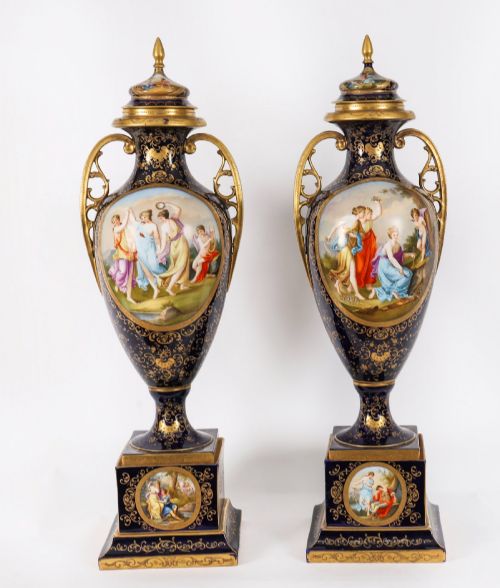
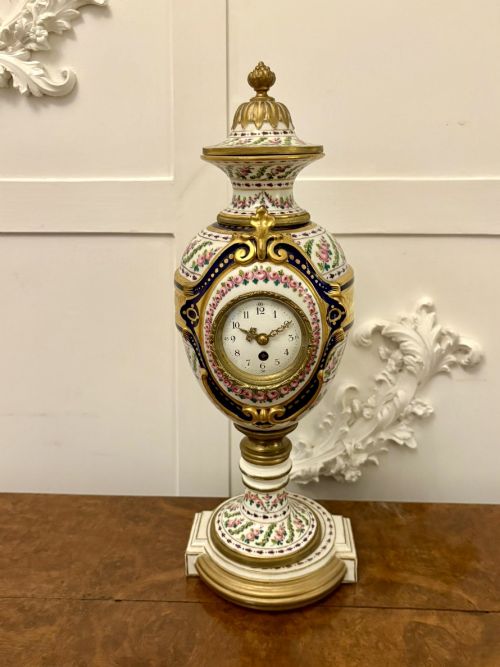
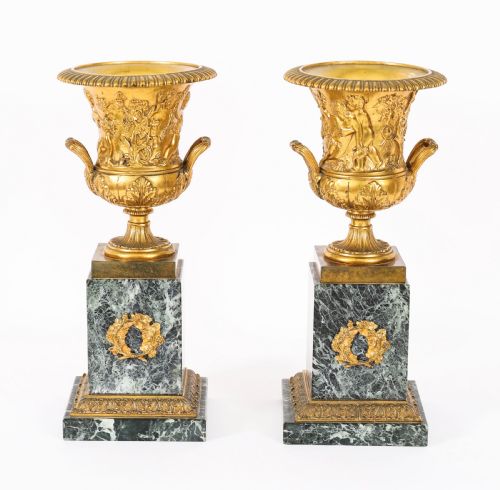
The selections available here range from campana-shaped bronze urns to porcelain mantel clock garniture sets and lidded vases. Neoclassical and Rococo Revival styles dominate the forms, alongside French Chateau and Charles X influences.
Buyers most frequently meet nineteenth-century pairs of urns and clock sets designed to sit symmetrically upon a mantlepiece or sideboard. Materials such as porcelain, marble, and gilt bronze provide the substance for these architectural decorative objects.
How they were made
The creation of these items involves combining cast metals like brass, ormolu, and gilt bronze with natural stones such as Sienna marble and porphyry. Artisans utilised fire gilding and casting techniques to produce intricate mounts and sculptural frames.
Ceramic pieces feature hand-painted porcelain, enamel detailing, and pate sur pate decoration applied by skilled factory hands. Wood and metal movements inside the clock garnitures were engineered for eight-day striking capability.
Surface finishes include gold leaf and silvered elements applied to cast bronze bodies, paired with turned marble bases. Detail work relies on traditional nineteenth-century foundry and ceramic firing methods.
Classical Mantle Urns Retail Price Guide 2026
Typical asking prices for classical mantle urns among the pieces listed under this phrase on Sellingantiques today, from the lower quarter to the upper quarter. They describe what is for sale here now, not the wider market.
Listings feature nineteenth-century materials including porcelain, gilt bronze, Sienna marble, and pate sur pate.
What varies in quality
The refinement of the casting and hand-painting separates standard production from exceptional work. Precision in the chased details of gilt bronze mounts and the finesse of hand-painted porcelain scenes define the higher tier.
Material selection dictates the weight and presence of the piece, with dense Sienna marble and heavy ormolu standing apart from lighter gilt metal or simpler ceramics. Complete garniture sets matching their original clocks or matching pairs of vases retain greater coherence.
Complexity of the decorative scheme, such as elaborate pate sur pate panels or multi-piece clock garniture sets with matching side vases, distinguishes more ambitious workshop outputs.
Royal Vienna·Sevres·Dresden·Minton
The Classical Mantle Urns Glossary
- Garniture
- A set of decorative objects designed to be displayed together, typically comprising a central clock flanked by two matching vases or urns.
- Campana
- A bell-shaped classical urn profile with a flared rim and footed base, common in nineteenth-century bronze and porcelain.
- Ormolu
- Gilded bronze, where finely ground high-carat gold is applied to a cast bronze base using a mercury amalgam or electrical process.
- Pate-sur-pate
- A ceramic decoration technique where layers of liquid porcelain slip are built up on a contrasting body to create a low-relief cameo effect.
- Porphyry
- An igneous rock with large crystals embedded in a fine-grained groundmass, valued for its rich purple or reddish colour and monumental appearance.
Classical Mantle Urns: Frequently Asked Questions
What is a clock garniture?
A clock garniture is a matched set of three decorative objects designed for a mantlepiece, featuring a central clock accompanied by two matching side urns or vases.
These sets were popular in nineteenth-century formal rooms to create a balanced, symmetrical display on furniture surfaces.
How do I identify a nineteenth-century urn?
Nineteenth-century urns typically display revival styles such as neoclassical campana forms or French Rococo motifs, utilising materials like gilt bronze, porcelain, and Sienna marble.
Examining the casting quality of the metal mounts and the style of hand-painted decoration helps distinguish these period pieces from later reproductions.
Were these urns purely decorative?
Many classical mantle urns functioned as decorative centrepieces, while lidded porcelain versions could hold small items or dried flowers.
Clock garnitures combined sculptural ornamentation with practical timekeeping for the nineteenth-century domestic interior.
How do I care for gilt bronze and marble?
Gilt bronze and ormolu require gentle dusting with a soft brush to preserve the delicate gold surface without abrasive cleaners.
Sienna marble bases benefit from occasional wiping with a dry or barely damp cloth, avoiding chemical solvents that might dull the stone polish.