



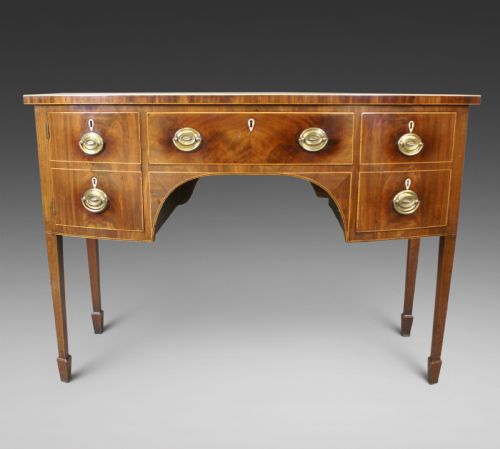

Classical Mahogany Credenza
A classical mahogany credenza brings grand proportion and figured timber to a room, offering both display and storage.
Classical Mahogany Credenza
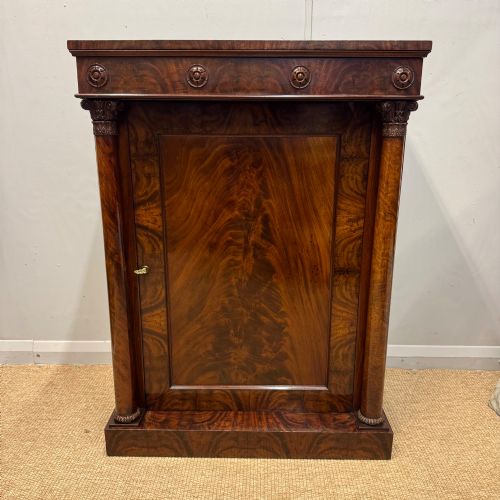
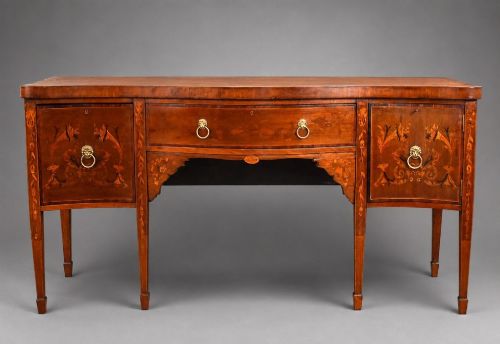
A classical mahogany credenza encompasses substantial sideboards, side cabinets, and pedestal pieces designed for formal dining rooms and drawing rooms. These forms derive from Georgian, Regency, and Edwardian periods, utilising rich timbers like flame mahogany.
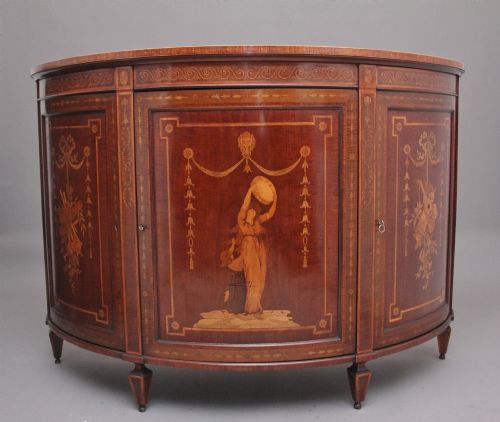
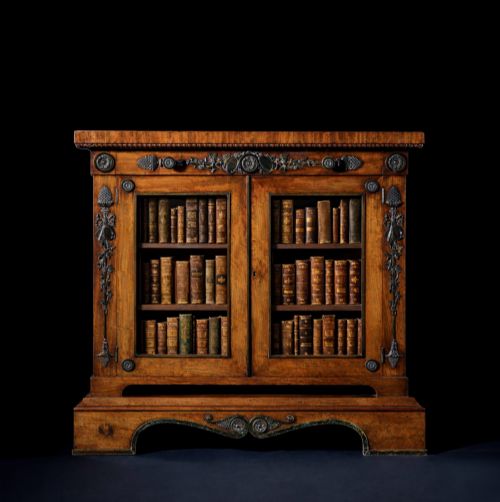
The pieces frequently display sophisticated neoclassical elements, including satinwood and boxwood inlay, alongside bronze, ormolu, or brass mounts. Cabinets and commodes in the French Empire and Louis XVI styles also appear among the selections.
Buyers most commonly encounter Regency and nineteenth-century examples featuring pedestals, drop wells, or adjustable shelving. These items serve as both practical storage and focal points for formal interiors.
Materials and construction methods
Makers built these pieces primarily from solid and veneered mahogany, frequently selecting flame mahogany for its striking grain patterns. Cabinetmakers enhanced these surfaces with contrasting stringing and banding in satinwood and boxwood.
Structural enrichment relied on cast and chased ormolu, bronze, and brass mounts applied to doors, pilasters, and feet. Glass panels and marble tops further distinguished the finer side cabinets and commodes.
Classical Mahogany Credenza Retail Price Guide 2026
Typical asking prices for classical mahogany credenza among the pieces listed under this phrase on Sellingantiques today, from the lower quarter to the upper quarter. They describe what is for sale here now, not the wider market.
Some nineteenth-century pedestals conceal clever interior cellarets designed to keep wine bottles cool and secure during grand dinners.
Distinctions in craftsmanship
Quality rests upon the precision of the timber selection and the restraint of the inlay work. Finer examples display continuous grain matching across drawer fronts and doors, paired with crisp, well-defined brass or ormolu mounts.
Structural integrity and the subtlety of neoclassical carving separate standard production from exceptional pieces. The architectural proportions and the integration of secondary timbers inside drawers indicate the standard of workshop execution.
George Hepplewhite·Jean-Henri Riesener·Edwards and Roberts
The Classical Mahogany Credenza Glossary
- Flame mahogany
- A veneer cut from timber where the branches join the trunk, producing a distinctive flickering flame pattern. This highly decorative figure was favoured for principal display surfaces on high-status cabinets.
- Ormolu
- Gilded bronze used for decorative mounts and architectural details. The best examples exhibit sharp chisel work and deep fire-gilding.
- Pedestal sideboard
- A form consisting of two distinct pedestals joined by a central section or drop well. This layout gained prominence during the Regency period.
- Serpentine
- A curved line that swells outward and recesses inward in a continuous wave. It requires expert carpentry to execute across solid timber drawer fronts.
Classical Mahogany Credenza: Frequently Asked Questions
What is a classical mahogany credenza?
A classical mahogany credenza refers to substantial nineteenth-century storage furniture, including sideboards and side cabinets built from mahogany.
These pieces draw on Georgian and Regency design traditions, incorporating classical motifs and fine timber veneers.
How were these cabinets used?
Historically, these pieces served in dining rooms and parlours to store silver, linen, and glassware.
Many examples also provided flat surfaces for serving food or displaying decorative ceramic and bronze objects.
Where should I place one?
These large timber forms suit formal dining rooms, hallways, or spacious living areas with high ceilings.
Ensure adequate wall space is available to accommodate the substantial proportions of pedestal sideboards and commodes.
How do I identify a Regency piece?
Regency items often feature bold architectural lines, brass inlay, and bronze mounts inspired by classical antiquity.
Construction details such as drop wells and pedestal configurations also point specifically to this nineteenth-century era.