


Classical Floor Lighting
These classical floor lighting pieces bring sculptural presence and steady illumination to a room, spanning grand torcheres and adjustable standard lamps.
Classical Floor Lighting
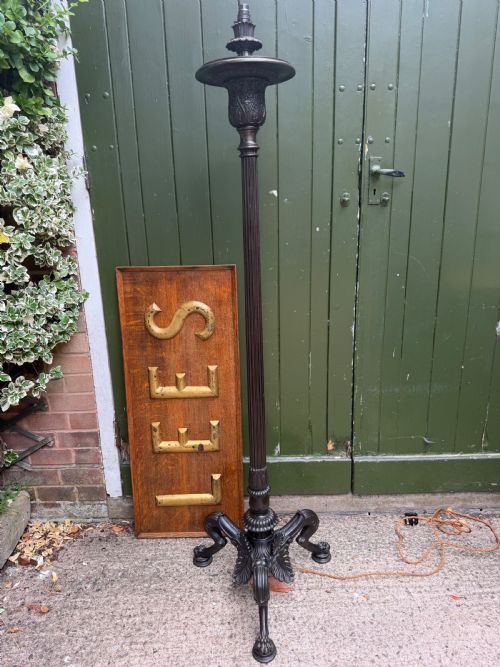
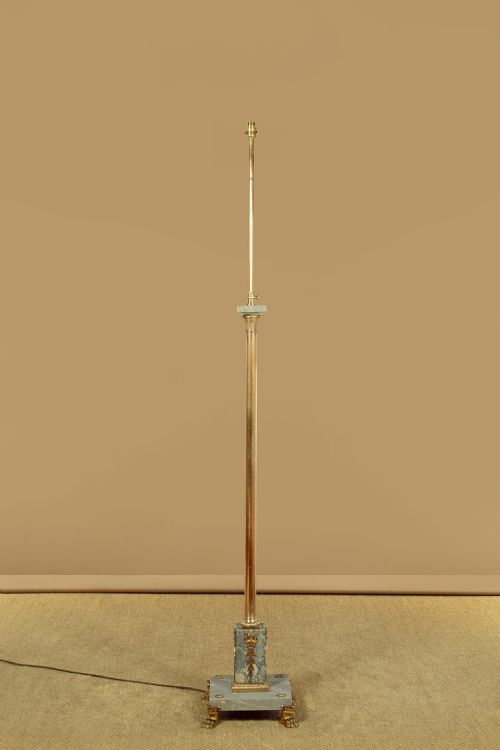
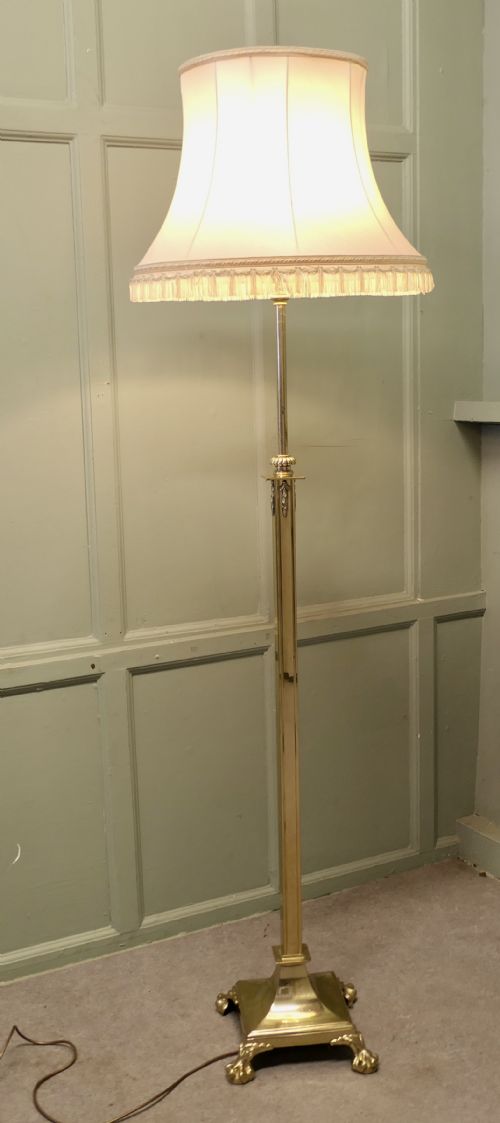
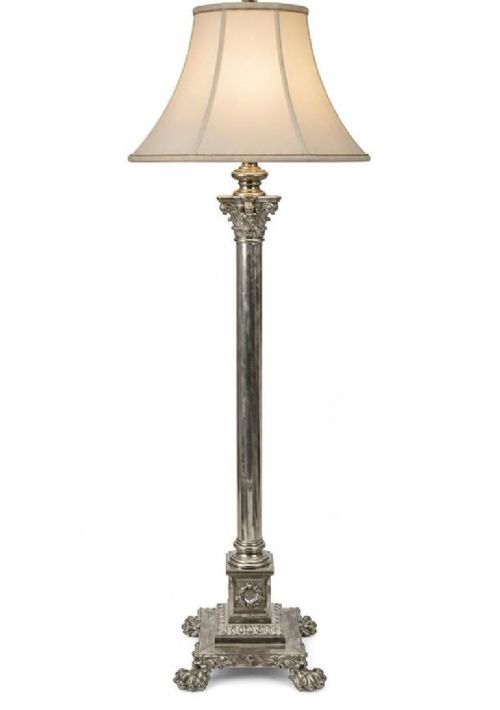
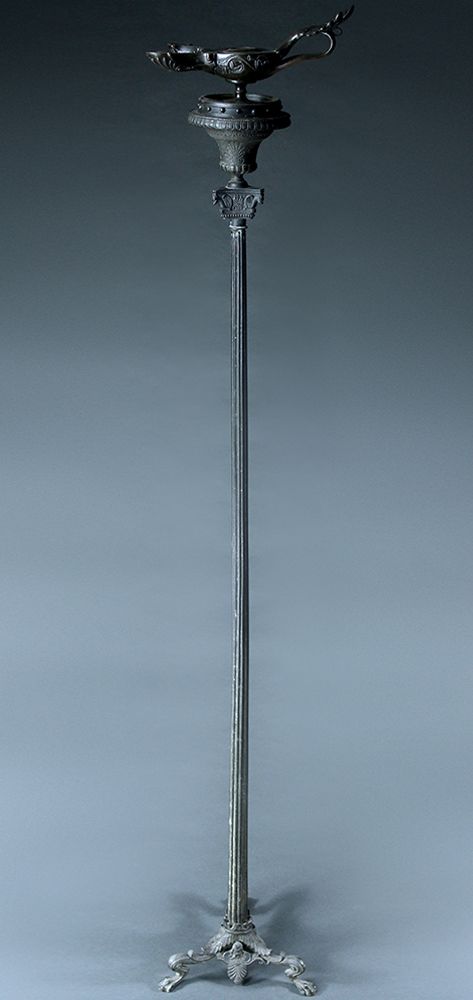
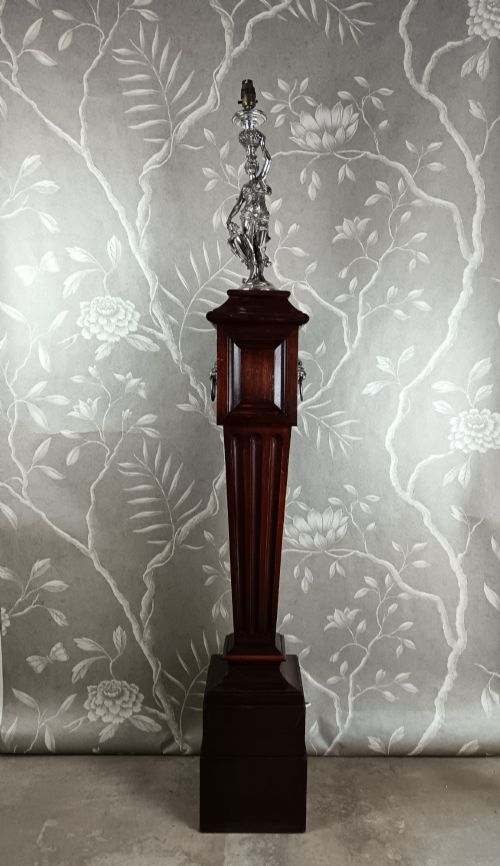
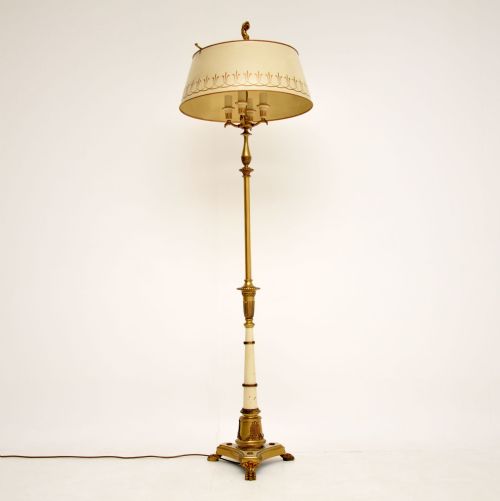
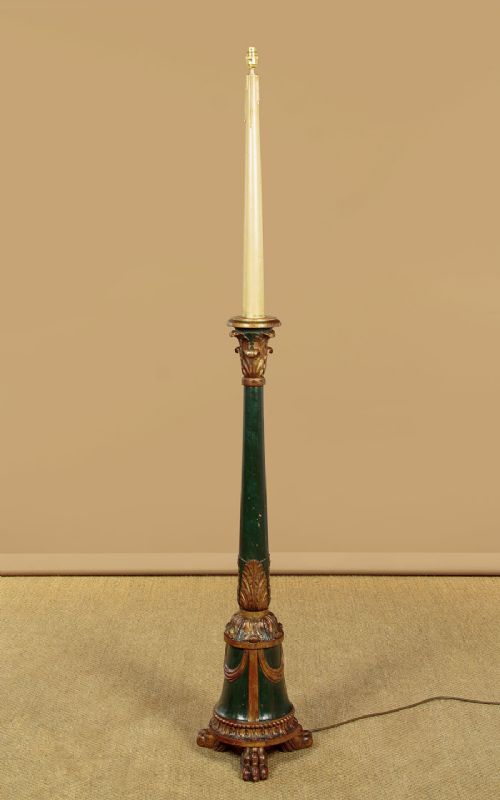
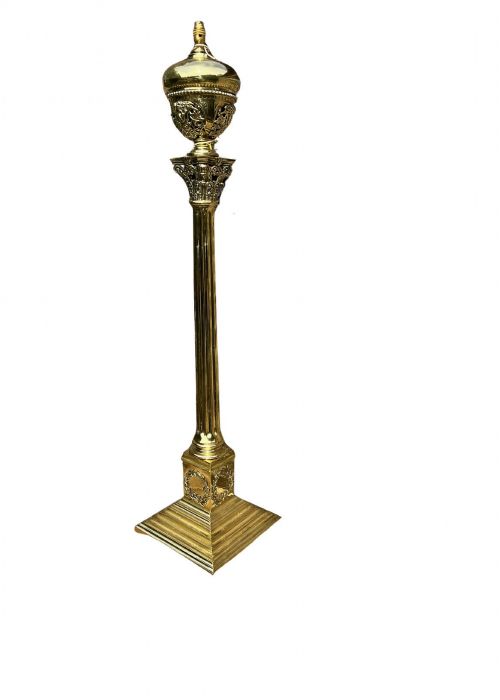
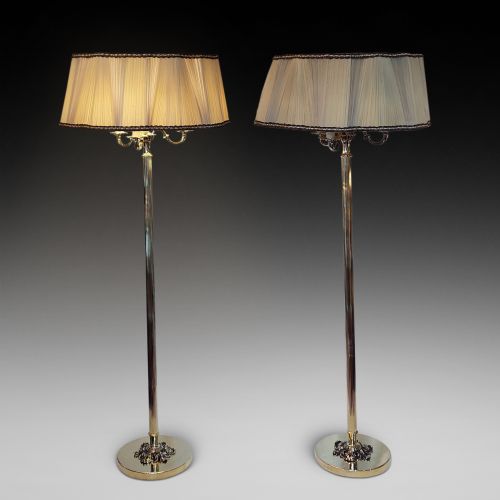
Classical floor lighting encompasses floor lamps, standard lamps, and torcheres created in revival and period styles. Buyers looking for classical floor lighting encounter sturdy columns, figural statues, and tripod forms designed to hold a single light source or multiple arms.
The selections span the nineteenth century through the 1930s, incorporating Victorian, Edwardian, and Regency interpretations alongside neoclassical revival designs. Tall telescopic models and heavy cast bases appear frequently across the available inventory.
Makers and designers from various European hubs produced these upright lamps to illuminate large reception rooms and libraries. Figures of muses, Corinthian capitals, and bronze patination recur throughout the works.
Materials and construction methods
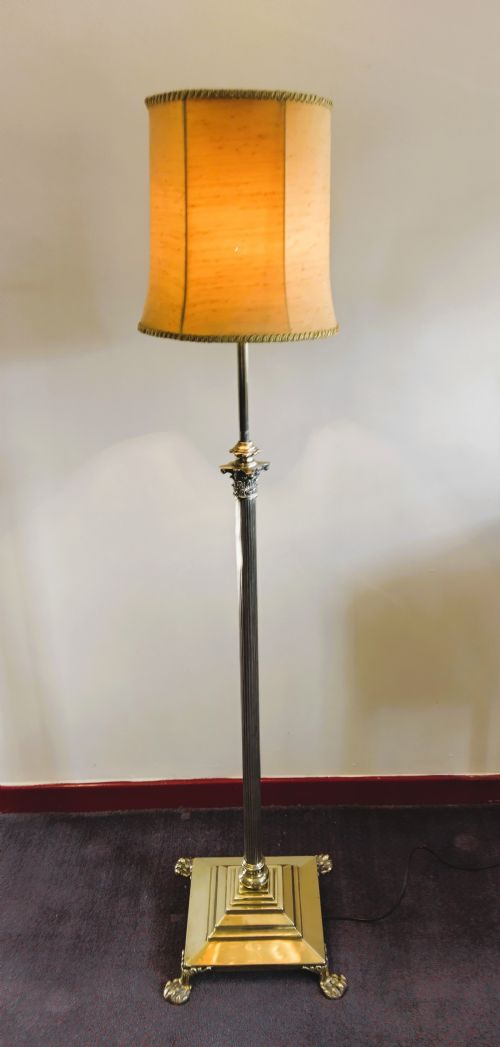
Metalwork forms the core of most pieces, utilising cast brass, patinated bronze, silver plate, and cast iron. Structural columns often employ telescoping brass tubes or carved giltwood and painted timber shafts.
Decorative elements involve applied bronze figures, marble bases, alabaster bowls, and toleware shades. Heavier items rely on cast iron or weighted brass components to maintain stability at heights reaching several feet.
Listings feature brass, bronze, and giltwood materials across the nineteenth and early twentieth centuries.
Distinctions in quality
Quality rests upon the crispness of the cast ornamentation, such as acanthus leaves on Corinthian capitals or the anatomical detail in figural statues. Solid bronze or heavy brass construction outclasses lighter plated alternatives.
The presence of functional mechanisms, including smooth telescopic height adjustment and secure locking keys, separates utilitarian stands from finer salon pieces. Original surface patination and signed foundry marks elevate the standing of an individual lamp.
WMF·Humphrey Hopper·F. De Luca·François-Christophe-Armand Toussaint·Coutan
The Classical Floor Lighting Glossary
- Torchere
- A tall stand or floor lamp designed to hold a light source high above the ground. These often feature figural or classical column supports.
- Standard lamp
- A British term for a floor-standing lamp base designed to carry a shade and bulb. They appear frequently in brass and wood.
- Corinthian column
- An architectural column order marked by ornate capitals decorated with carved acanthus leaves. This form frequently shapes brass lamp standards.
- Telescopic
- A construction method allowing the central shaft of a lamp to extend or retract in height. This mechanism uses inner sliding tubes secured by a key or screw.
- Giltwood
- Timber coated with a thin layer of gold leaf over a prepared gesso ground. It provides a reflective surface on carved lamp shafts.
Classical Floor Lighting: Frequently Asked Questions
How do I adjust a telescopic floor lamp?
Telescopic lamps use an internal sliding tube secured by a thumbscrew or tightening key located near the upper section of the shaft. Loosen this key gently while supporting the top portion to raise or lower the light to the desired height.
Take care not to pull the inner cord taut during adjustment, as this strains the internal wiring. Secure the fastener firmly once the correct height is reached.
Where should I place a heavy torchere?
Torcheres suit corners of reception rooms, beside reading chairs, or flanking large pieces of furniture where their height adds vertical balance. Their substantial bases provide stability on sturdy timber floors or carpets.
Ensure the placement allows easy access to the floor plug without running cables across busy walkways. Heavy bronze and marble models require solid ground support.
How do I distinguish Regency from Victorian models?
Regency designs draw direct inspiration from Greco-Roman archetypes with strict symmetry, restrained gilt, and bronze patination. Victorian examples often introduce heavier ornamentation, such as Corinthian capitals and ram head mounts.
Examining the casting quality and secondary materials helps clarify the manufacturing era. Revival pieces from later decades frequently blend these stylistic markers.
Can I use modern lampshades on antique standards?
Modern shades fit older standard lamps provided the fitter matches the shade carrier type, such as a duplex ring or shade spider. Standard lamp fittings varied over the decades, so check the gallery holder dimensions before purchasing a replacement shade.
Fabric shades in silk or parchment complement the traditional aesthetic of brass and giltwood columns. Ensure the wattage of modern bulbs remains appropriate for the vintage wiring.