
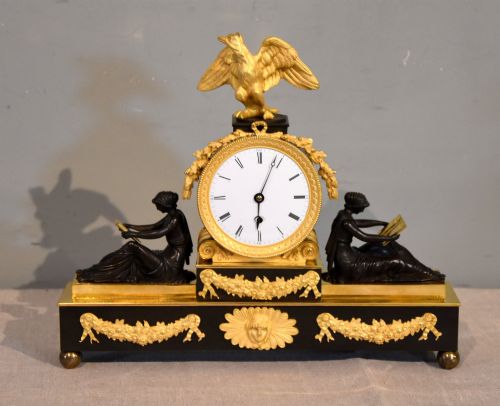
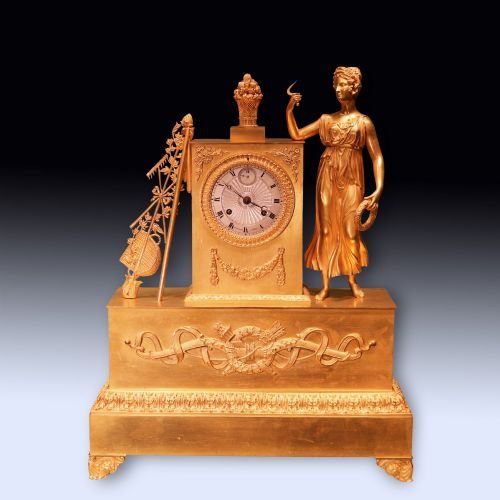


Classical Figural Bronze Clock
A classical figural bronze clock brings nineteenth-century presence to a room, combining architectural marble with finely cast mythological or historical subjects.
Classical Figural Bronze Clock
A classical figural bronze clock is a mantel timepiece or striking clock incorporating human figures, mythological subjects, or historical personages cast in bronze or ormolu. When you search for this phrase, you find heavy nineteenth-century French and English pieces designed to sit centrally on a fireplace mantel or console table.
The pieces appearing here lean heavily toward French Empire, Louis XVI style, and Victorian interpretations of classical forms. Alongside single mantel clocks, you will encounter clock garnitures that include matching side pieces or candelabra, frequently mounted on contrasting marble bases.
How They Were Made
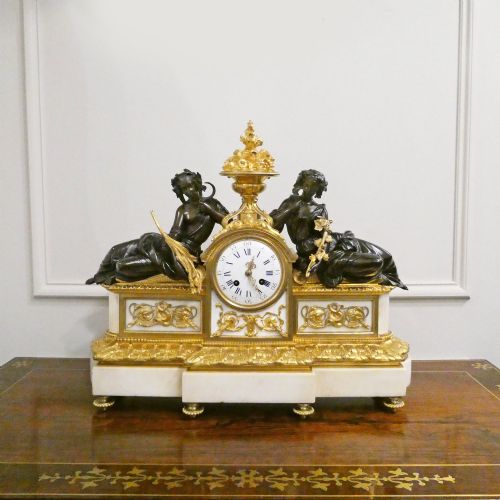
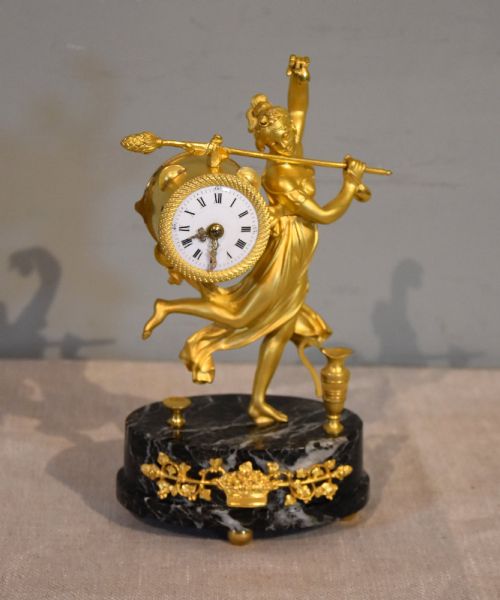
These clocks rely on the pairing of cast bronze and patinated bronze with heavy bases of white, green, or rouge marble. Founders applied mercury gilding to create bright ormolu surfaces, contrasting sharply with dark patinated bronze figures and enamel clock dials.
Movements were built around brass plates, sometimes employing chain fusee mechanisms in finer English work or robust spring-driven trains by volume makers in France. Cases combined structural marble architecture with applied cast mounts, bezels, and cast feet.
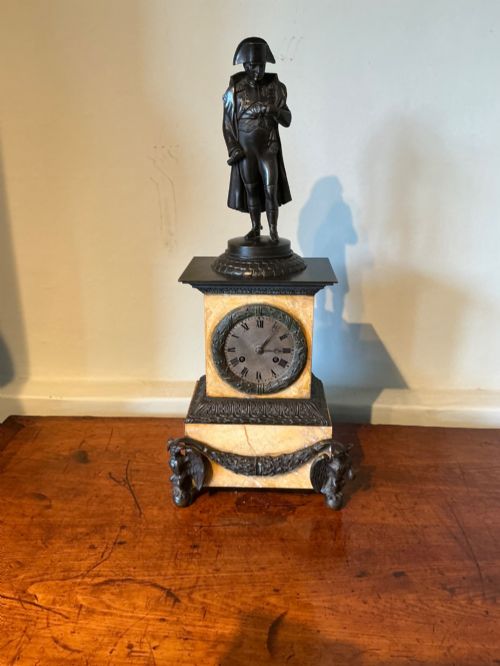
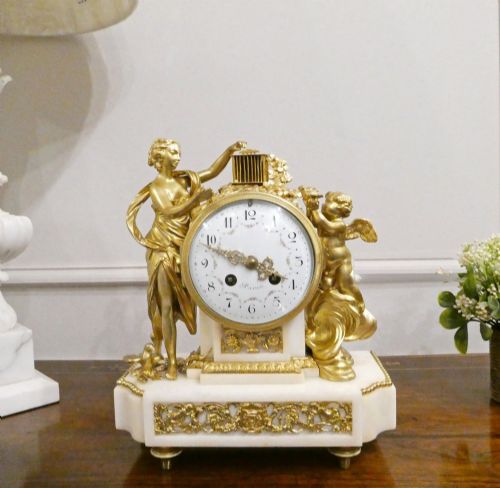
Several figures depicted on these clocks include Napoleon, Amphitrite, and Cupid keeping watch over the hours.
What Varies in Quality
The movement itself dictates the tier of the piece, distinguishing mass-produced French striking mechanisms from signed maker movements with specialised escapements. The integration between the bronze subject, the dial enamel, and the stone base separates standard production from exceptional salon pieces.
Vincenti·Canaillor of Paris·Japy Freres·Deniere Et Fils·Freres Raingo·Perigal Duterrau
The Classical Figural Bronze Clock Glossary
- Ormolu
- Gilded bronze produced by applying a mercury and gold amalgam to a cast bronze object and heating it to drive off the mercury. This historical technique creates a distinct matte golden finish found across French Empire and Louis XVI style pieces.
- Garniture
- A set consisting of a central clock flanked by matching decorative objects such as urns, vases, or candelabra. These sets were designed to create a balanced arrangement on a mantelpiece.
- Chain Fusee
- A mechanism using a conical pulley and a fine chain to equalize the pull of the mainspring as it unwinds. This device improves timekeeping accuracy across the duration of the wind.
- Patinated Bronze
- Bronze treated with chemical solutions to alter its surface colour to dark brown, green, or near-black tones. This treatment highlights the polished ormolu elements by contrast.
Classical Figural Bronze Clock: Frequently Asked Questions
How do I wind a classical bronze clock?
Most of these clocks use a key inserted into winding holes on the enamel dial to tension the spring behind the movement plates.
Care must be taken not to overwind the spring, stopping the key the moment resistance increases firmly.
What is a clock garniture set?
A clock garniture is a matched suite comprising a central mantel clock accompanied by two matching side ornaments, such as urns or candelabra.
These sets were manufactured together to provide a symmetrical decorative arrangement on nineteenth-century mantelpieces.
Are these clocks suitable for daily use?
These clocks are mechanical antiques that require professional servicing and careful setting to maintain accurate time over an eight-day or daily cycle.
Placing them on a stable, level mantel surface away from direct heat sources ensures the movement operates without excessive wear.
How do I distinguish French Empire from Victorian styles?
French Empire pieces rely on strict classical antiquity, military symbols, and precise ormolu mounts reflecting Napoleonic taste. Victorian interpretations incorporate heavier proportions, mixed marble colours, and broader revival styles.