
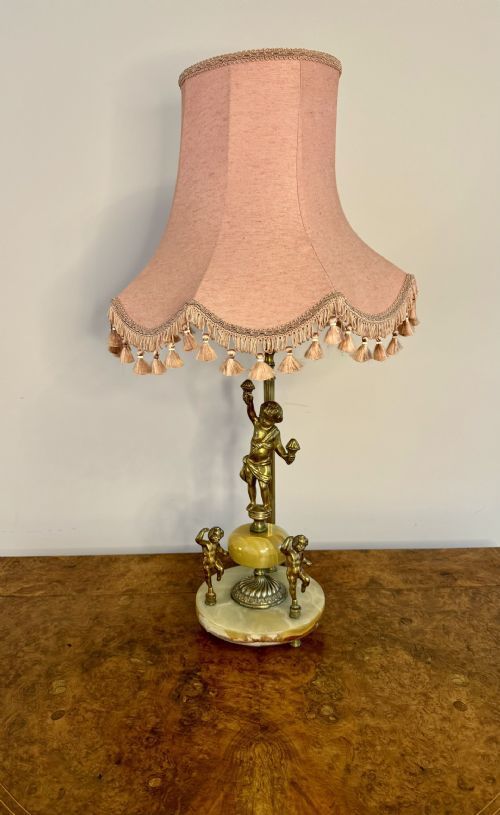


Classical Cherub Lighting
Classical cherub lighting brings figurative bronze, marble, and gilt metal into domestic interiors, offering sculptural illumination shaped by nineteenth-century revival styles.
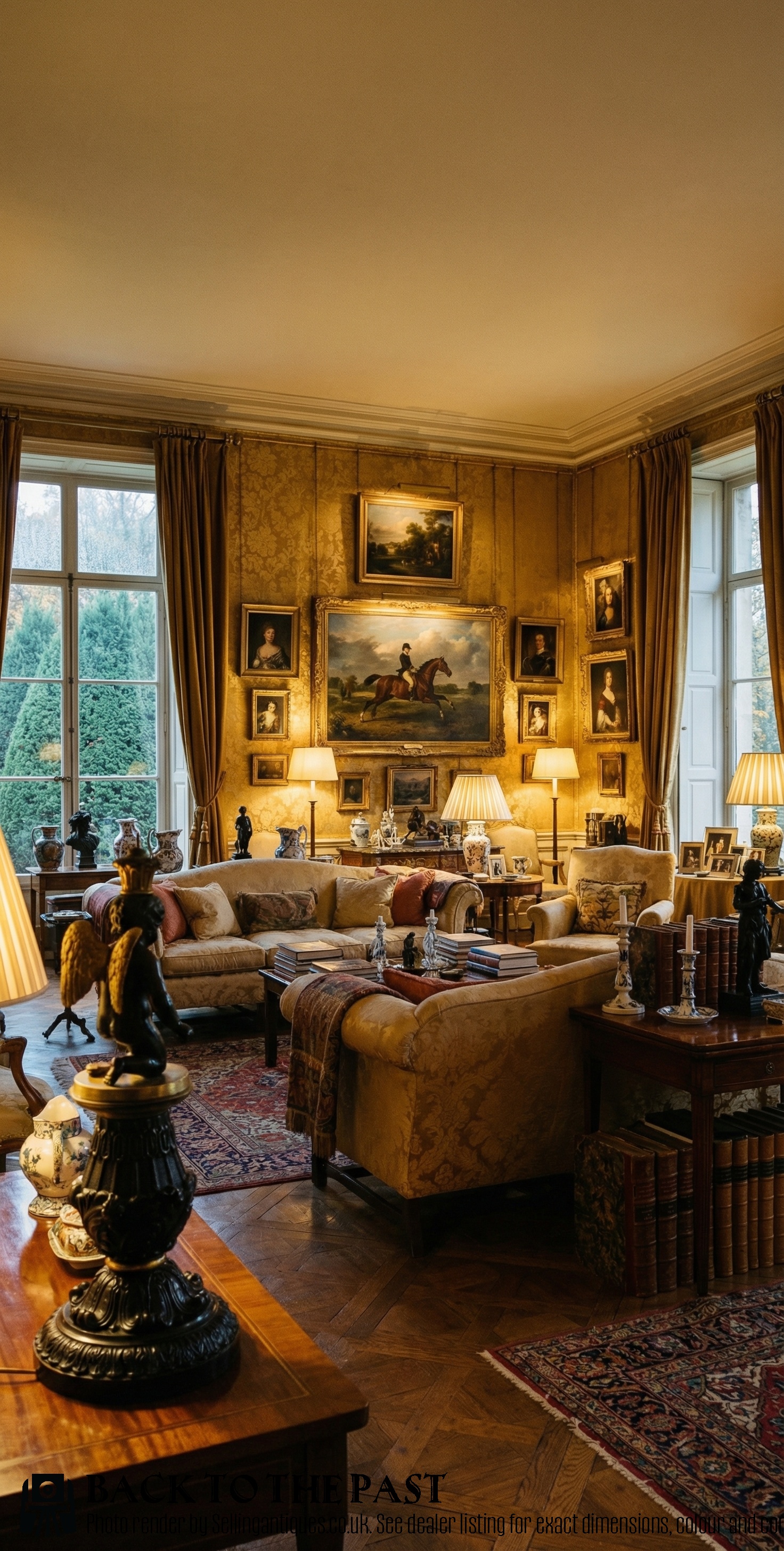
Classical Cherub Lighting
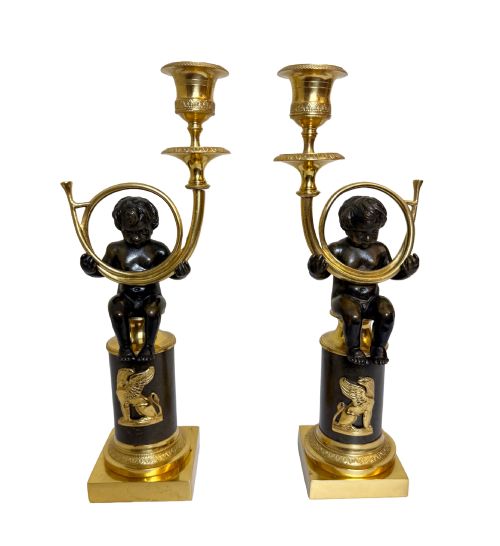
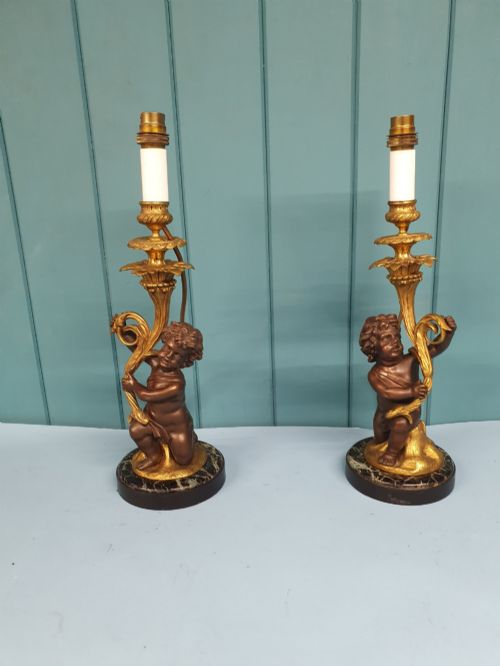
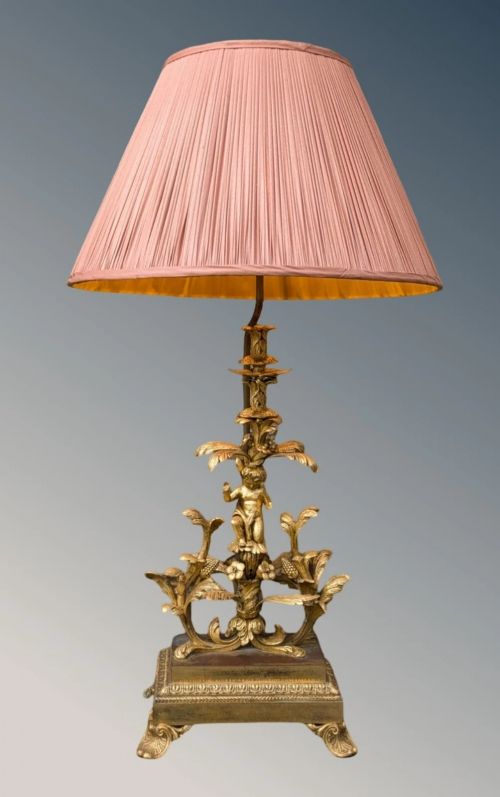
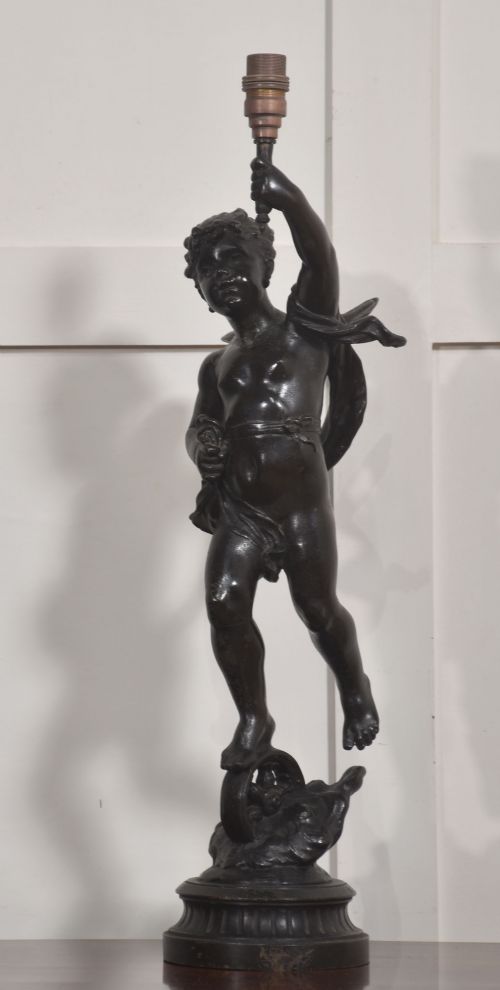
Classical cherub lighting encompasses table lamps, wall sconces, candelabra, and chandeliers featuring cast figures of puttis or cherubs. These pieces draw primarily from nineteenth-century production, incorporating Victorian and Edwardian interpretations of French design.
The most common forms on this page are matched pairs of table lamps and candelabra. They combine cast figural bronze or brass with heavy bases of marble, onyx, or porphyry to support electrical fittings or candleholders.
Materials and construction methods
Foundry work relies on bronze, gilt bronze, ormolu, and brass, often paired with patinated surfaces to create tonal contrast on the cherub figures. These metal elements are cast and chased before assembly onto stone bases.
Stonework such as marble, onyx, and porphyry is turned or slab-cut to anchor the heavier metal bodies. Secondary materials include moulded plaster, oak, fabric shades, and hand-painted tole peinte.
Distinguishing quality across the range
Quality rests in the crispness of the metal chasing and the depth of the patination. Finer castings show clear musculature and facial detail on the cherub figures, whereas simpler pieces rely on softer moulded finishes.
The choice of base material elevates a piece significantly. Solid marble, porphyry, and heavy fire-gilded ormolu distinguish the top tier of production from standard brass and timber alternatives.
The Classical Cherub Lighting Glossary
- Ormolu
- Gilded bronze produced through a mercury amalgamation process or modern electroplating. It provides a bright, lasting golden finish on decorative mounts.
- Porphyry
- A very hard igneous rock with purple or red crystals. It appears on high-end nineteenth-century bases.
- Tole peinte
- Painted sheet metal used for lamp bodies and shades. It introduces flat colour to domestic lighting.
- Candelabra
- Branched candlestick holders designed for multiple candles. Many examples are later converted to electricity.
Classical Cherub Lighting: Frequently Asked Questions
How do I wire antique cherub lamps?
Rewiring requires running modern flexible cable through the existing central channel of the bronze or brass body. It is best entrusted to a specialist who can preserve historical lamp holders.
Most pieces accommodate standard domestic lamp bases once modern earth wiring is fitted inside the metal stem.
Are these fixtures French or English?
The majority of pieces follow French design canons, including Rococo revival, Empire, and Louis XVI styles. Workshops in Paris dominated the export of figural lighting during the nineteenth century.
English equivalents appear occasionally, often featuring simpler silver-plated mounts or timber construction.
How should I clean gilt bronze?
Dusting with a soft, dry brush prevents grime accumulation on intricate cast surfaces. Avoid abrasive metal polishes that strip away the original fire-gilding or patination.
Light application of microcrystalline wax protects exposed metal from oxidation in humid environments.
Can candelabra be used for dining?
Candelabra function effectively as dining table centrepieces when fitted with standard taper candles. Their height permits conversation underneath the candle arms.
Heavier marble-based pairs remain stable on dining surfaces during regular domestic use.