





Classical Center Table
A classical centre table grounds a room with distinct architecture, bringing a formal surface for display or gathering right to the middle of the floor.
Classical Center Table
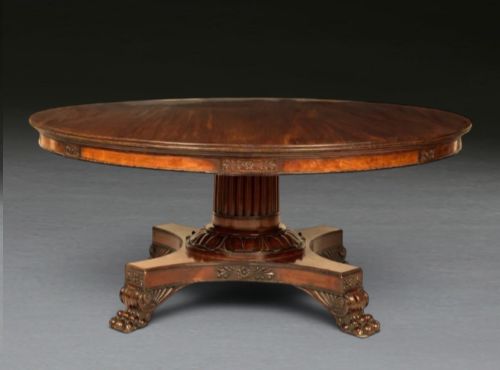
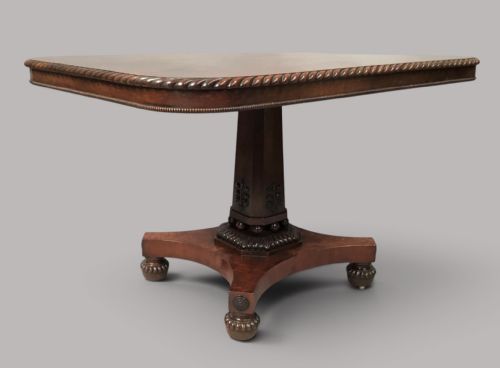
A classical centre table stands independently in an interior, designed to be viewed from every angle rather than pushed against a wall. The selections span the nineteenth century up to the mid twentieth century, drawing on French Empire, Regency, and neoclassical revival styles.
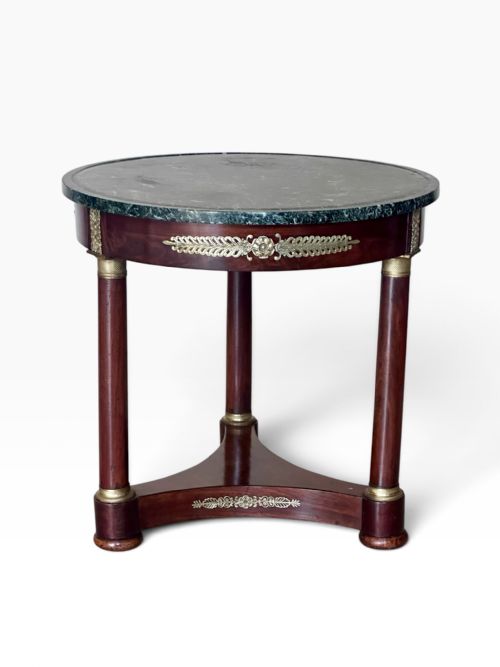
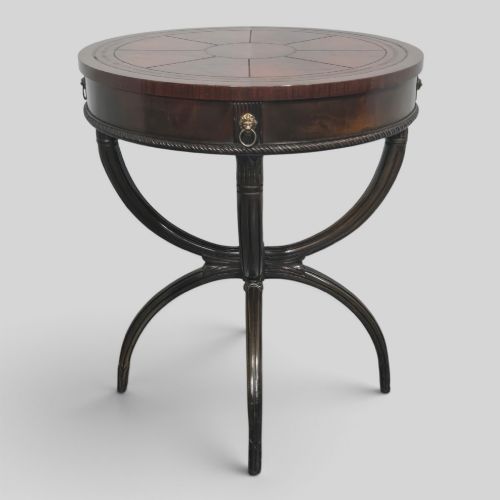
Most examples found here take the form of round or occasional tables, frequently featuring inset marble tops supported by elaborate pedestals. Mahogany and satinwood appear alongside painted and gilt surfaces, reflecting diverse interpretations across different decades.
How they were made
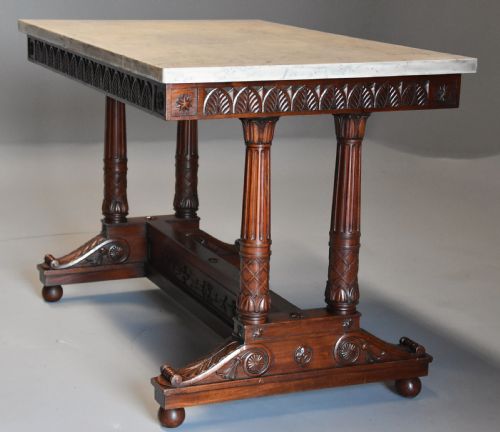
Cabinetmakers utilised dense timbers such as mahogany, oak, and amboyna as foundational structures, often applying marquetry inlay or parcel-gilt finishes. These woods provided the necessary strength to support heavy stone surfaces without warping.
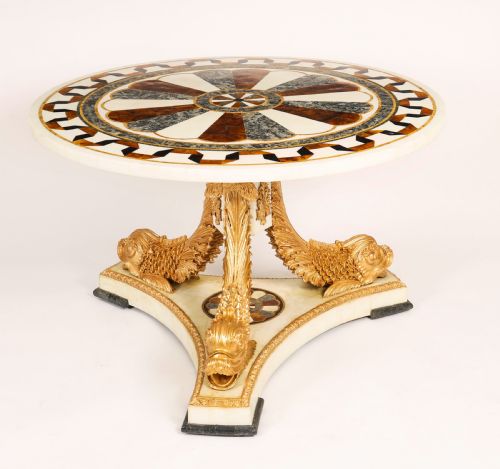
Decorative detailing relies heavily on cast brass, ormolu, and bronze ornaments, alongside carved giltwood. Marble tops add considerable weight and permanence, shaped to fit precisely within the timber framing.
Classical Center Table Retail Price Guide 2026
Typical asking prices for classical center table among the pieces listed under this phrase on Sellingantiques today, from the lower quarter to the upper quarter. They describe what is for sale here now, not the wider market.
Listings feature woods including mahogany, satinwood, amboyna, and oak, frequently paired with marble and gilt bronze.
What varies in quality
The sophistication of the carved motifs and the crispness of the gilt metal mounts separate standard production from superior work. Finer examples display meticulous attention to proportion and integration between the stone top and the wooden base.
Choice of timber grain and the complexity of marquetry inlay indicate the maker's skill level. Superior tables maintain structural integrity in their pedestals while presenting finely chased ormolu details.
JACOB·Holland and Son
The Classical Center Table Glossary
- Gueridon
- A small French table, typically round and supported by a single central column or tripod base. This form gained popularity during the seventeenth century and remained a staple of neoclassical design.
- Ormolu
- Gilded bronze applied as decorative mounts on furniture. The technique involves creating an amalgam of gold and mercury.
- Marquetry
- Inlaid wood veneers arranged in decorative patterns on furniture surfaces. Craftsmen cut contrasting woods to form pictorial or geometric designs.
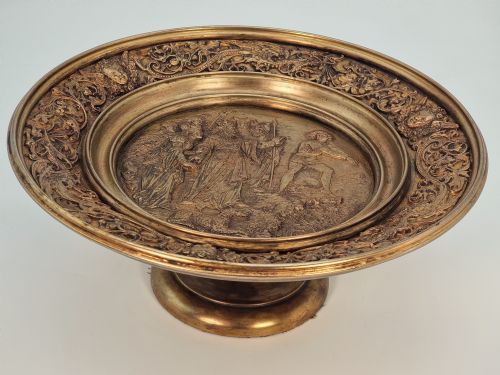
- Tazza
- A shallow saucer-like dish or ornament raised on a stem and foot. In furniture contexts, it describes low centerpieces designed for display.
- Satinwood
- A durable hardwood characterised by a golden-yellow sheen and natural lustre. It serves well for fine veneer work and inlay.
Classical Center Table: Frequently Asked Questions
Where should I place a centre table?
A centre table works best positioned directly in the middle of a spacious room or entrance hall. Because the design allows viewing from all sides, it acts as a central focal point.
Ensure adequate walking space around the perimeter so the piece functions properly without obstructing movement.
How do I care for a marble top?
Clean the marble surface regularly using a soft, damp cloth and mild, neutral soap. Avoid abrasive cleaners or acidic liquids that can etch the stone.
Use coasters beneath glasses and place protective pads under decorative objects to prevent scratching the polished finish.
Can I use a centre table for dining?
Certain larger examples, particularly breakfast tables from the Regency period, function well for casual dining or meetings. However, standard centre tables prioritise decorative display and writing.
Check the height and leg clearance of the specific piece before using it for extended seating.