


Classical Brass Pendant
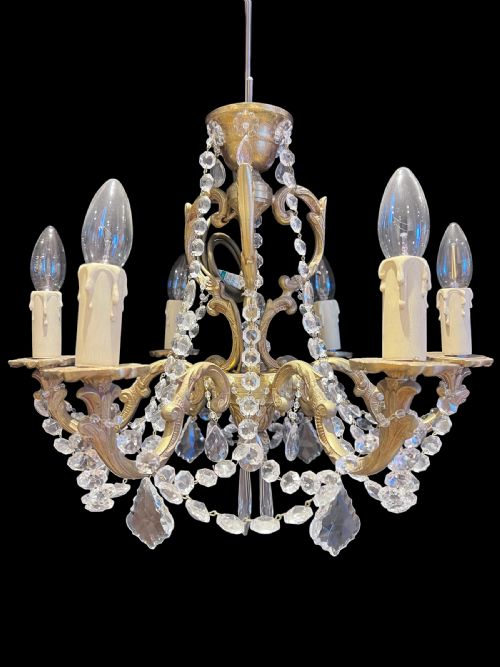
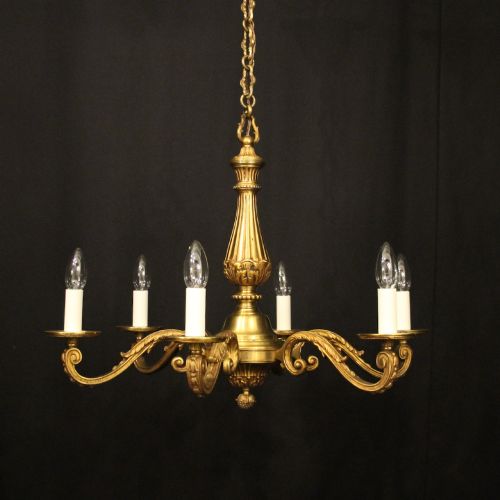
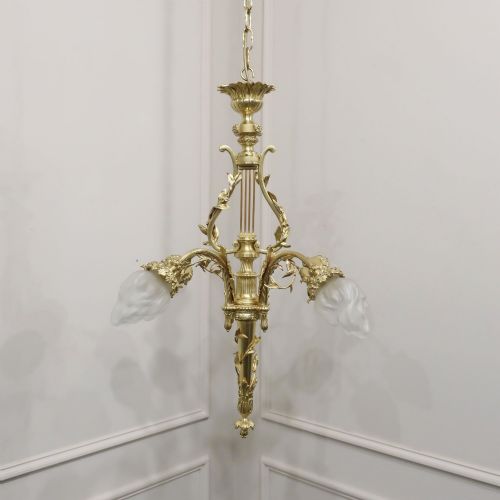
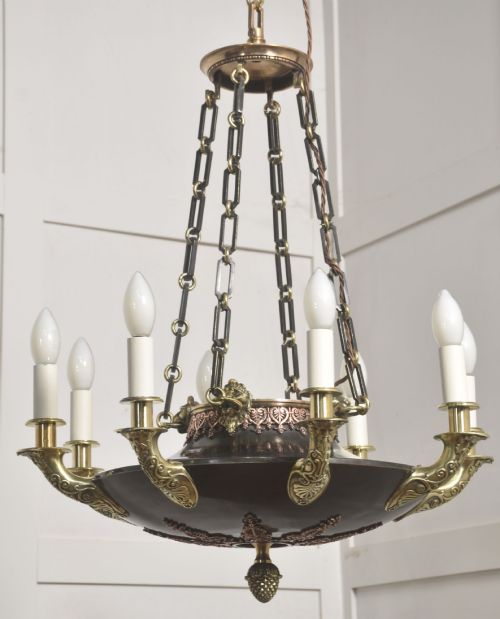
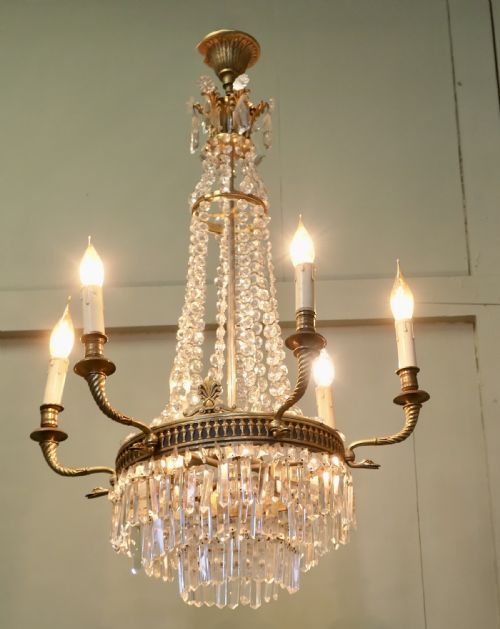
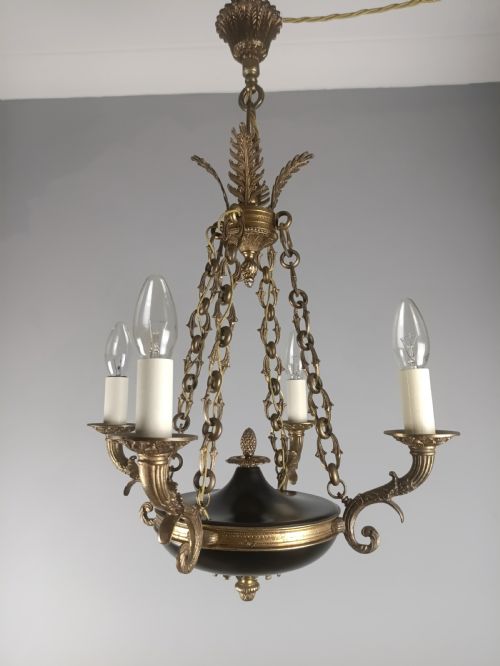
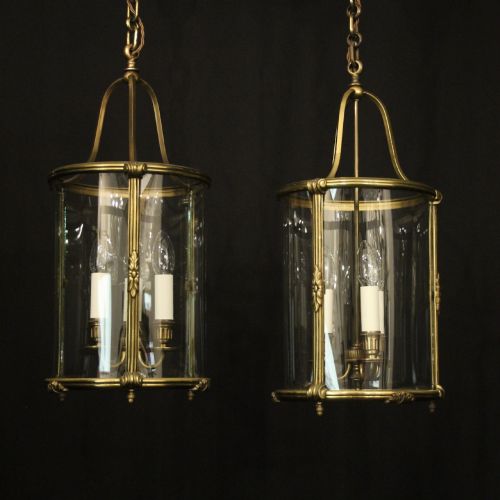
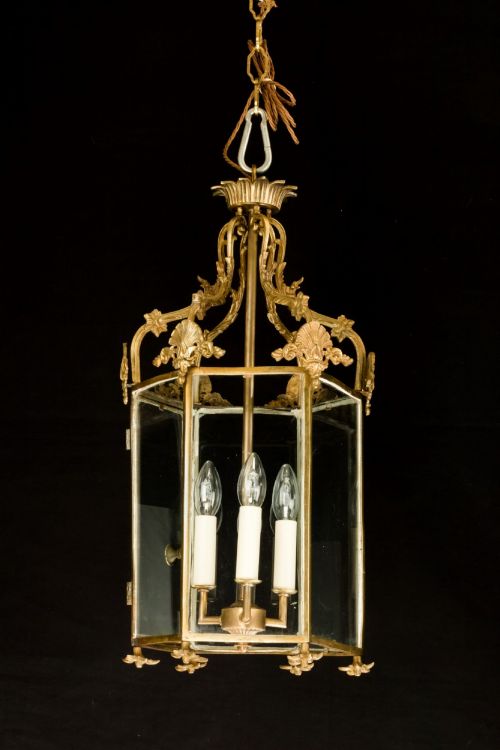
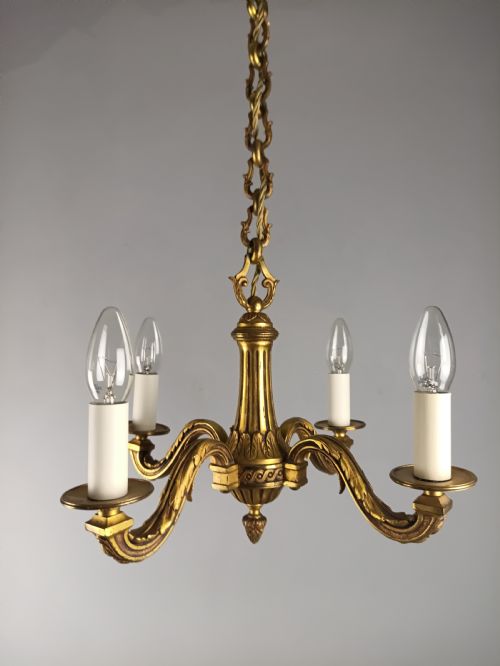
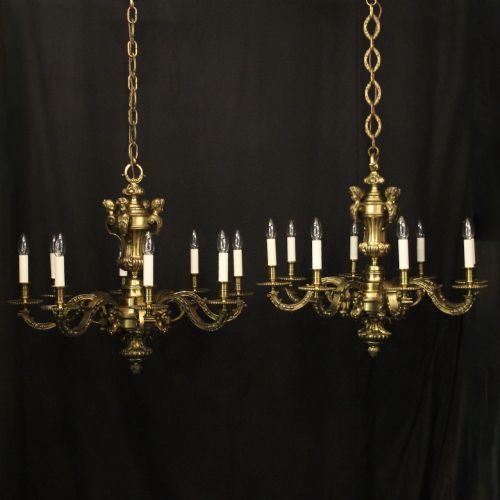
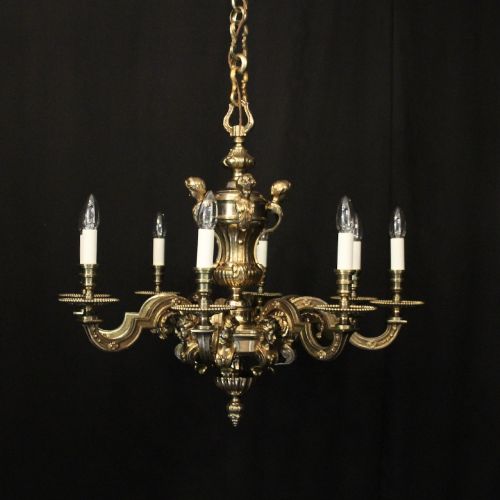
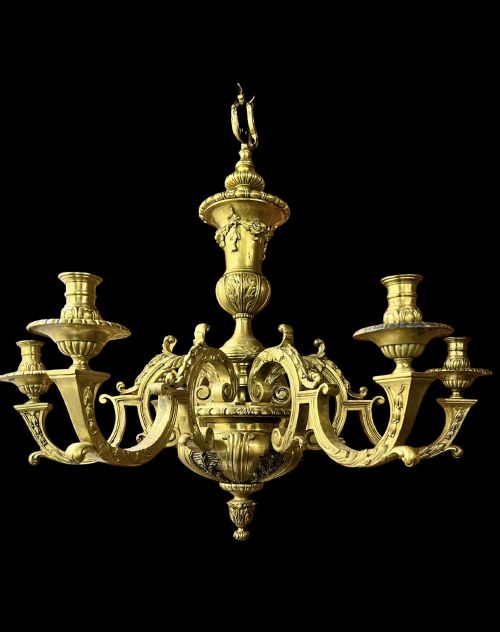
These classical brass pendant fixtures bring heavy French metalwork and glowing crystal into a room.
Classical Brass Pendant
A classical brass pendant or chandelier hangs from the ceiling to illuminate a space using multiple candle arms or bulbs, frequently paired with sparkling crystal drops. You find them spanning periods from the nineteenth century through the nineteen-thirties, reflecting Victorian and Edwardian tastes.
The most common versions on this page are French multi-light chandeliers and hall lanterns shaped by neoclassical, empire, and rococo styles. They utilise heavy cast metals and often take the form of grand tent and waterfall designs with numerous branches.
How they were made
The primary structure relies on cast brass, bronze, and gilt bronze, shaped into elaborate arms, rings, and frames. Craftsmen enhanced these metal bodies with fire gilding, silver gilding, or patination to achieve deep metallic tones.
Glass and crystal form the secondary layer, incorporated as cut glass bowls, beads, tent drops, and painted glass shades. Alabaster and copper also appear in specific hanging shade designs.
The listings here span the Victorian and Edwardian eras alongside nineteen-teens and nineteen-thirties revivals, dominated by French bronze and brass craftsmanship.
What varies in quality
The crispness of the metal casting dictates the refinement of the piece, separating sharp, deeply chased ormolu details from softer, simpler moulded forms. Heavier bronze and thick gilt layers denote superior craftsmanship that holds its warmth over time.
The abundance and cut of the crystal pendants determine the brilliance of the refraction when lit. Original matching components and integrated double-tiered structures elevate the architectural presence of the hanging fixture.
The Classical Brass Pendant Glossary
- Ormolu
- Gilded bronze produced by applying a mercury and gold amalgam to a bronze base, creating a rich golden finish. This technique was widely used in French lighting of the eighteenth and nineteenth centuries.
- Plafonnier
- A ceiling-mounted light shade, often made of glass, that sits flush or very close to the ceiling surface. These provide diffuse illumination rather than hanging on a long drop.
- Tent and waterfall
- A chandelier configuration where strings of glass beads form an upper tent shape above a cascading arrangement of crystal drops. This style maximises light reflection across large rooms.
- Chasing
- The hand-tooling of cast metal surfaces with punches and chisels to sharpen details and create texture. Fine chasing distinguishes high-end foundry work from basic production.
- Patinated bronze
- Bronze that has been chemically treated to alter its surface colour to a dark brown, green, or black tone. This finish contrasts with bright gilt metals.
Classical Brass Pendant: Frequently Asked Questions
How do I hang a heavy bronze chandelier?
These heavy metal and crystal fixtures require secure ceiling joists and appropriate steel fixings to bear the substantial weight safely. Professional installation by an electrician ensures the electrical load and ceiling mount match the demands of the piece.
Position the fixture at a height that clears head room while anchoring the visual centre of the room, particularly over dining tables or in high-ceilinged hallways.
What is the difference between empire and neoclassical styles?
Neoclassical lighting draws on ancient Greek and Roman motifs, featuring symmetrical urns, ribbons, and restrained, elegant lines. Empire style, developing slightly later, leans into grander military and imperial symbolism with heavier laurel wreaths, sphinxes, and bold proportions.
Both styles frequently utilise gilt bronze and brass, but empire pieces often project a more imposing architectural silhouette.
How do I clean crystal drops on a chandelier?
Cleaning crystal involves wiping each pendant individually with a mild soapy solution and a soft cloth while the drops remain attached to the frame. This prevents damage to the delicate brass wiring and old metal pins holding the glass.
Avoid spraying liquid directly onto the bronze or brass body to protect historic gilding and patination from moisture damage.
Can these antique lights be rewired for modern homes?
Most period chandeliers and lanterns can be adapted to accept modern standard bulb fittings and safely wired to current electrical standards. Electricians can thread modern flex through the internal channels without altering the visible exterior bronze.
Retaining the original candle tubes or adding appropriate sleeve covers helps maintain the period appearance while ensuring safe daily use.