

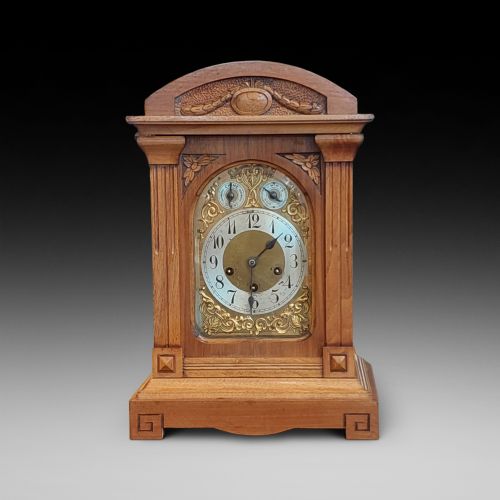
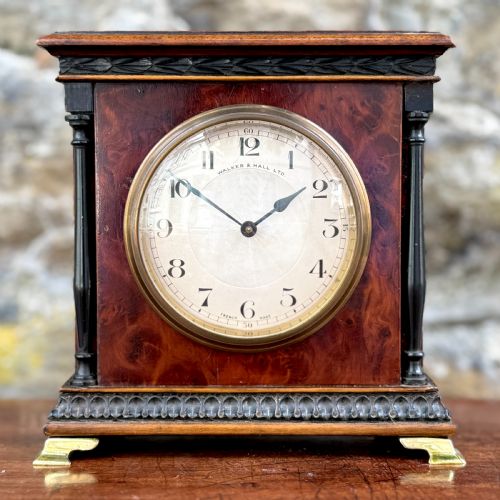


Classical Bracket Clock
A classical bracket clock sits on a shelf or wall, bringing precise movement and period design into a room.
Classical Bracket Clock
A classical bracket clock is a timepiece designed for domestic interiors, appearing in forms such as mantel clocks and wall clocks across the nineteenth and early twentieth centuries.
The selections here span periods including Regency, Victorian, Edwardian, and the early twentieth century, alongside styles like French Louis XIV, French Empire, and High Victorian.
Buyers will encounter various formats, from standard mantel pieces to specialised fusee movement designs and wall-mounted pieces.
What varies in quality
The standard of execution separates everyday pieces from superior examples, visible in the precision of the case joinery and the finishing of ormolu and bronze mounts.
Movement sophistication dictates worth, where complex mechanisms like fusee movements distinguish standard timepieces from finer horological examples.
Classical Bracket Clock Retail Price Guide 2026
Typical asking prices for classical bracket clock among the pieces listed under this phrase on Sellingantiques today, from the lower quarter to the upper quarter. They describe what is for sale here now, not the wider market.
Listings feature woods such as mahogany, oak, and burr walnut alongside metals like ormolu and patinated bronze.
Walker and Hall·Barraud and Lunds·Fatton Eleve de Breguet
The Classical Bracket Clock Glossary
- Fusee
- A conical pulley used in clock movements to maintain even drive force as the mainspring unwinds. This mechanism helps ensure steady timekeeping accuracy.
- Ormolu
- Gilded bronze used for decorative mounts on clock cases. It provides a bright metallic finish popular in French Empire and Regency designs.
- Ebonised wood
- Timber treated to resemble ebony, offering a dark and uniform surface. It is frequently seen on Victorian bracket clocks.
- Mantel clock
- A portable timepiece designed to stand on a fireplace mantel or shelf. These clocks form a major part of nineteenth-century domestic horology.
Classical Bracket Clock: Frequently Asked Questions
What is a classical bracket clock?
A classical bracket clock is a portable timepiece housed in a decorative case, historically placed on shelves, brackets, or mantelpieces.
These clocks utilise mechanical movements, such as fusee systems, and appear in styles ranging from Regency mahogany to Victorian ebonised wood.
How do fusee movements work?
A fusee movement uses a conical pulley connected to the mainspring by a chain or cord to equalise the power delivery.
This mechanical refinement ensures the clock maintains consistent timekeeping as the spring loses tension.
Which woods were used for cases?
Clockmakers utilised timbers such as mahogany, Cuban mahogany, burr walnut, and oak for domestic timepieces.
Ebonised wood was also common during the Victorian period to mimic expensive exotic hardwoods.
How do I identify the period?
Dating relies on stylistic clues, case materials, and movement signatures recorded on the dial or internal components.
Regency pieces often display classical bronze mounts, while Victorian examples frequently feature darker woods or inlaid marble.