


Classical Art Sketch
A classical art sketch brings the discipline of the academy and the direct hand of the draughtsman into a room.
Classical Art Sketch
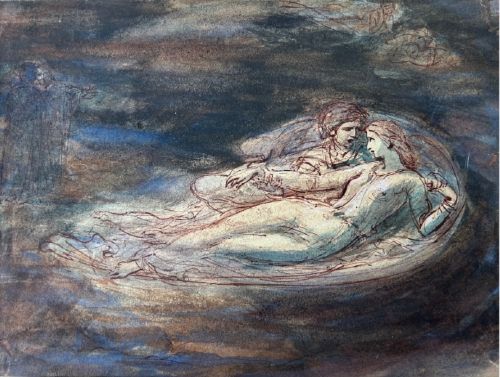
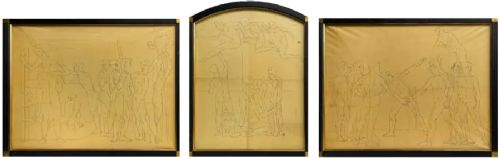
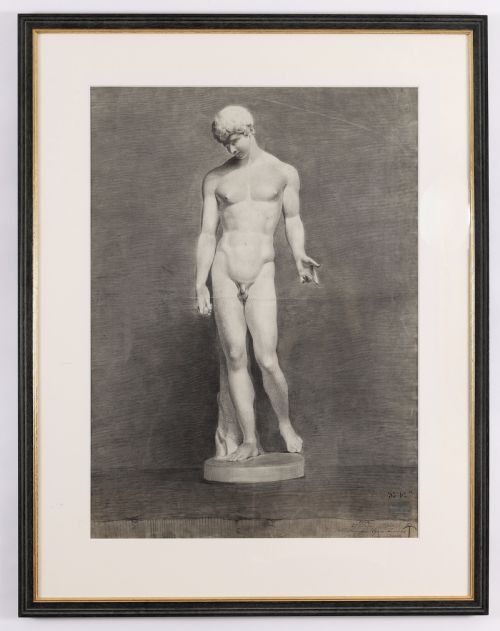
A classical art sketch captures figure studies, mythological subjects, and architectural drafts executed across the eighteenth and nineteenth centuries. These works stem from academic traditions and European schools, focusing on proportion, anatomy, and antique sculpture.
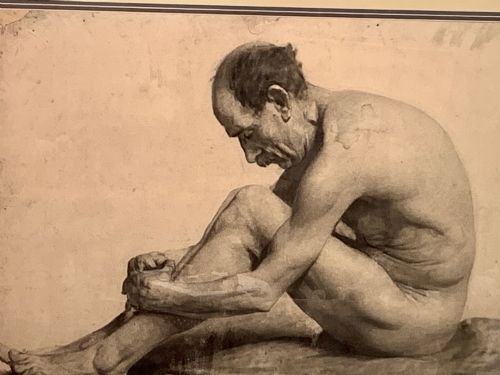
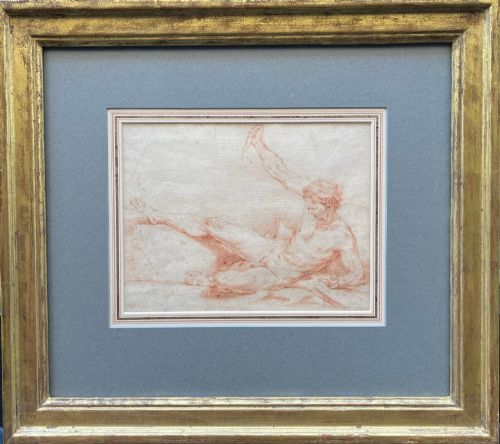
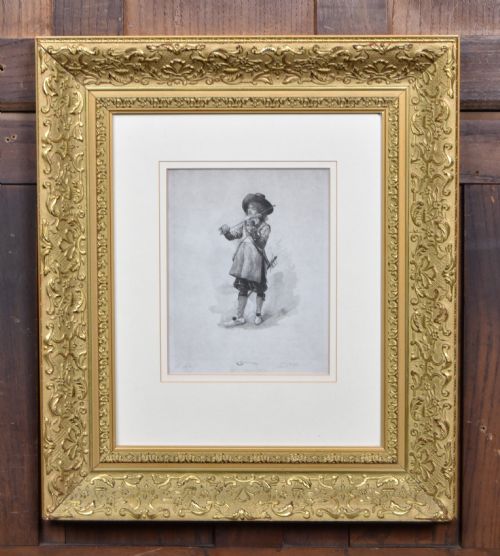
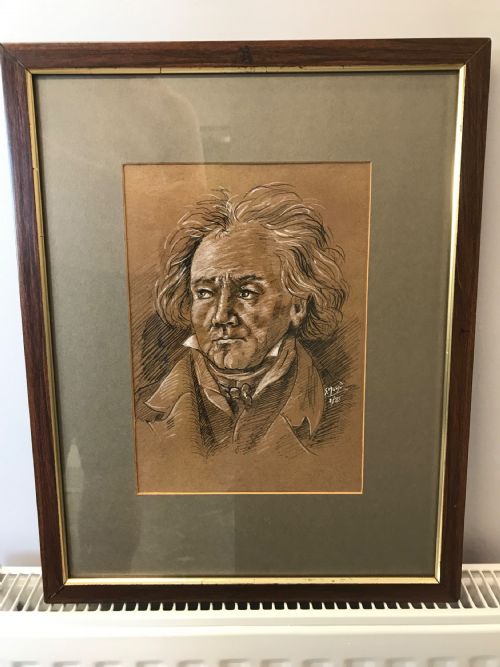
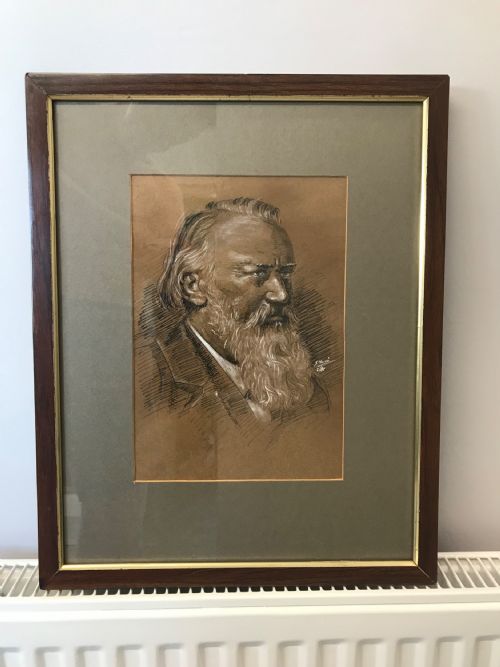
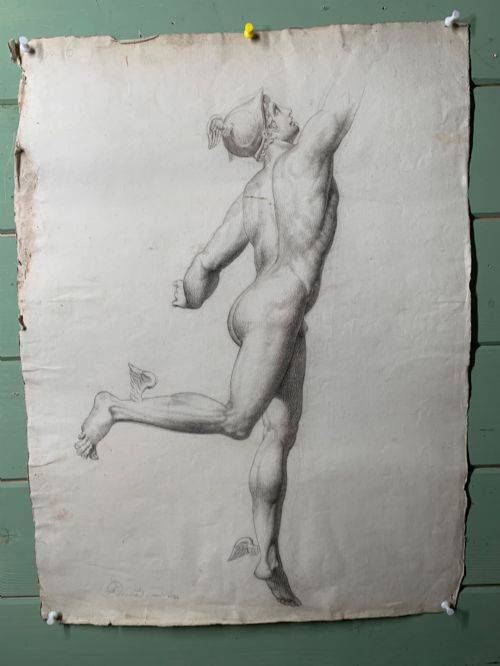
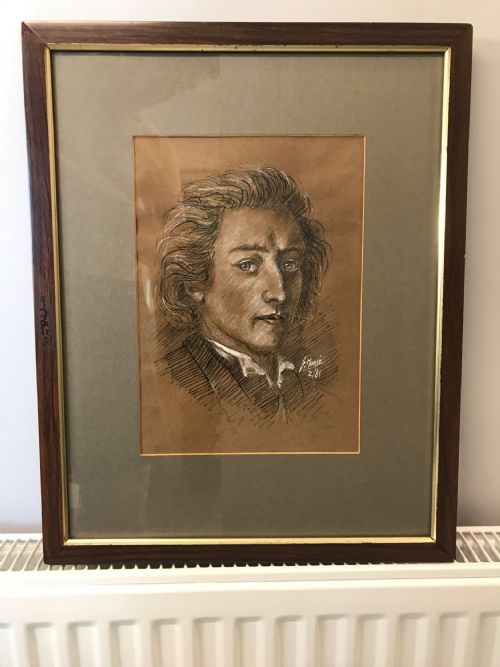
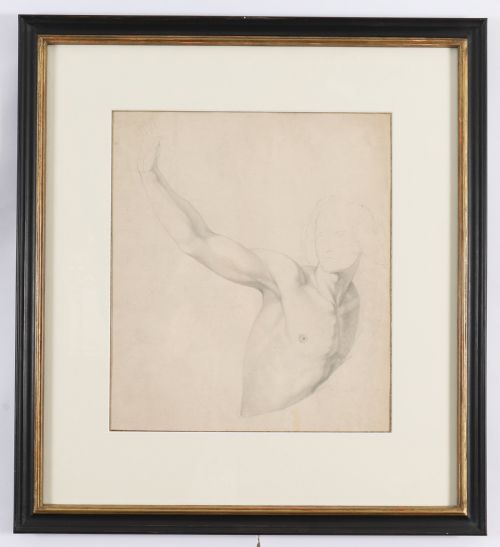
Most pieces encountered here take the form of framed drawings or original works on paper, utilising media such as graphite, charcoal, red chalk, and ink wash. Subjects range from male nude life studies to portraits of composers and mythological figures.
The selection spans from Georgian and eighteenth-century northern European sheets to later nineteenth-century academic realism and twentieth-century interpretations. Each piece reflects the rigorous training methods of past draughtsmen.
Materials and technique
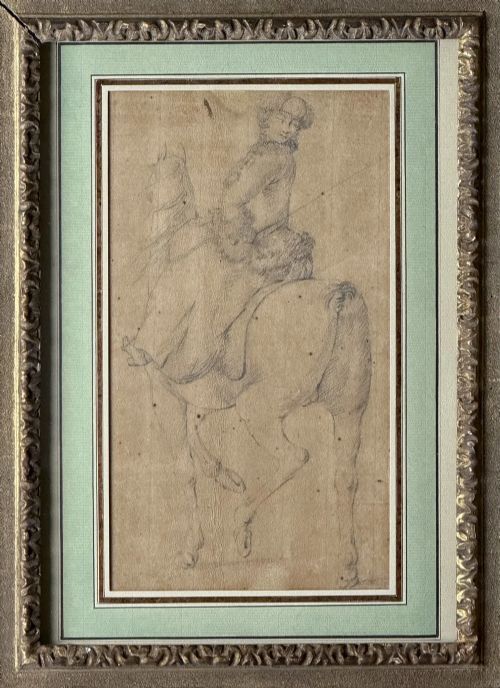
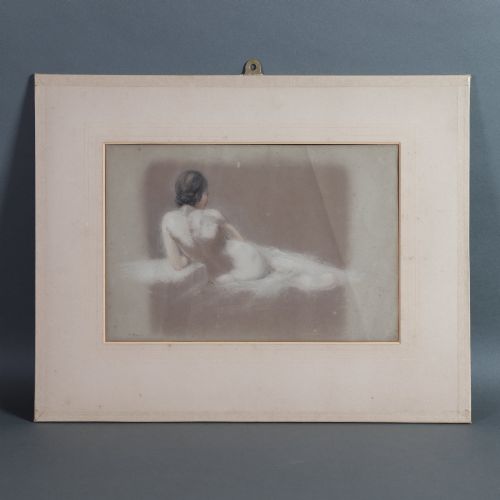
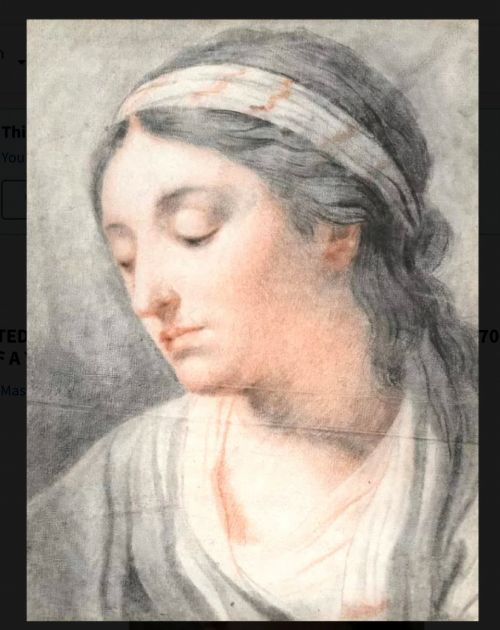
Draughtsmen relied primarily on paper supports, applying charcoal, graphite, chalk, and pen with ink and wash to build tone and form. Red chalk and sanguine appeared frequently in figural studies and copies after antique sculpture.
Many works involved mixed media or gouache highlights on paper, occasionally mounted to canvas stretchers or secured behind glass within period frames. Technique emphasised precise line work, shading, and anatomical accuracy derived from direct observation.
Classical Art Sketch Retail Price Guide 2026
Typical asking prices for classical art sketch among the pieces listed under this phrase on Sellingantiques today, from the lower quarter to the upper quarter. They describe what is for sale here now, not the wider market.
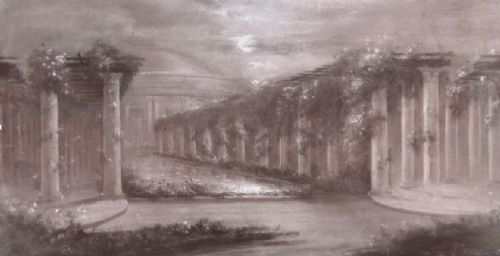
At least one youthful hand is preserved here through a royal palace design drawn by a seventeen-year-old student at the South Kensington School.
What separates the work
Quality rests upon the sureness of the line, the handling of light and shadow, and the structural integrity of the human form or architectural subject. Confident hatching and subtle tonal gradations distinguish rigorous academic exercises from routine student output.
The degree of finish and the expressive power within a rapid study determine the distinction of a sheet. Direct observation of muscle, drapery, or expression yields greater vitality than rigid, formulaic copying.
William Etty·James Stroudley·P. Ruiz·Hyacinthe Colin de Vermont·Henry Arthur Roberts·Pio Panfili
The Classical Art Sketch Glossary
- Academic Realism
- A style of painting and drawing produced under the influence of European academies of art, emphasising precise anatomy, classical subjects, and traditional techniques.
- Sanguine
- A type of red chalk used in drawing, favoured for its warm earth tone and ability to render flesh and muscle with lifelike softness.
- Recto and Verso
- The front and back sides of a sheet of paper, both of which occasionally carry independent sketches or studies.
- Wash
- A thin, transparent layer of diluted ink, watercolour, or paint applied with a brush to create tonal depth and shadow behind ink lines.
- Manner of
- A term used when a work is executed in the distinct style of a known master without being a direct copy or an original by that hand.
Classical Art Sketch: Frequently Asked Questions
What is a classical art sketch?
A classical art sketch is an original drawing or study on paper, often originating from academic training in the eighteenth or nineteenth centuries. These pieces typically depict figures, nudes, architecture, or mythological subjects using graphite, charcoal, chalk, or ink.
Such works served as preparatory exercises or finished academic studies rather than commercial pictures. They document the traditional methods by which draughtsmen learned anatomy and perspective.
How were these drawings used?
Artists created these sketches within studio environments, academies, or schools of design to practice drawing from life and antique sculpture. They functioned as foundational exercises for larger paintings or architectural projects.
Students and masters alike used sketchbooks and loose sheets to record proportions, drapery, and lighting before committing to oil or canvas.
How should I frame and display a paper sketch?
Paper drawings require conservation framing with acid-free mounts and glass that filters ultraviolet light to prevent fading. Keeping the paper away from direct sunlight preserves the integrity of charcoal, ink, and chalk media.
Display these works in stable indoor environments away from excessive moisture. Proper framing protects the delicate surface while allowing the character of the antique paper to remain visible.
How do I tell different periods apart?
Period identification relies on the paper quality, watermark evidence, mounting styles, and the specific academic conventions of the handwriting or medium. Eighteenth-century sheets often display heavier laid paper and red chalk, while nineteenth-century academic drawings frequently show graphite or ink wash with institutional stamps.
Stylistic cues, clothing details, and framing remnants also provide context for dating. Comparing the handling of anatomy to established school practices helps narrow down the decade of creation.