



Classic Wall Sconces
Classic wall sconces bring layered illumination to a room, offering period lighting fixtures fashioned in brass, bronze, and gilt metal.
Classic Wall Sconces
When you search for classic wall sconces, you encounter decorative lighting fixtures designed to mount directly onto vertical surfaces, providing both ambient illumination and ornamental focus. These pieces originate across the nineteenth and twentieth centuries, spanning Victorian, Edwardian, and later decades.
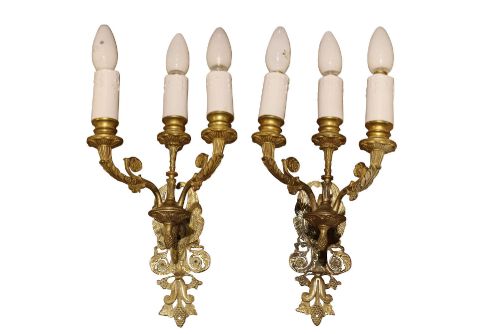
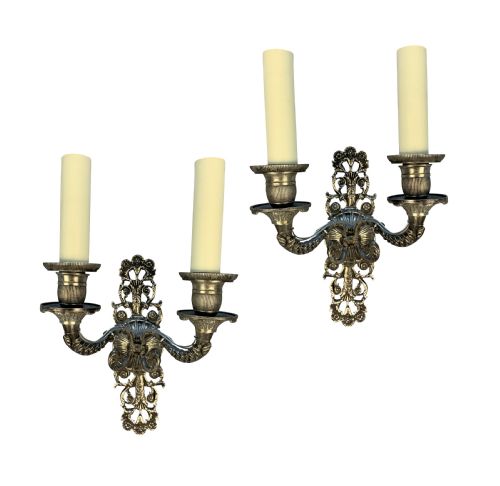
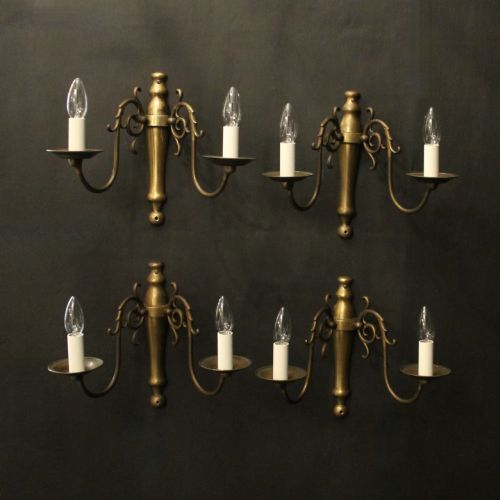
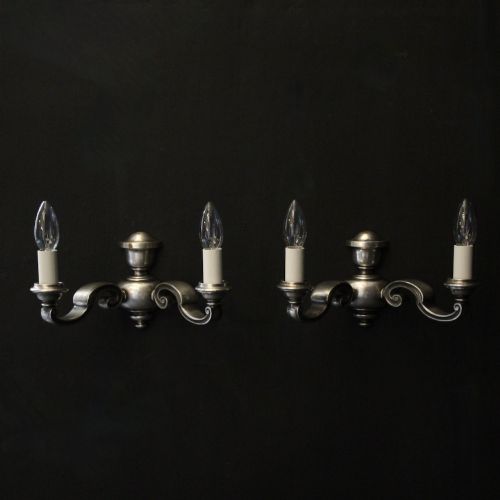
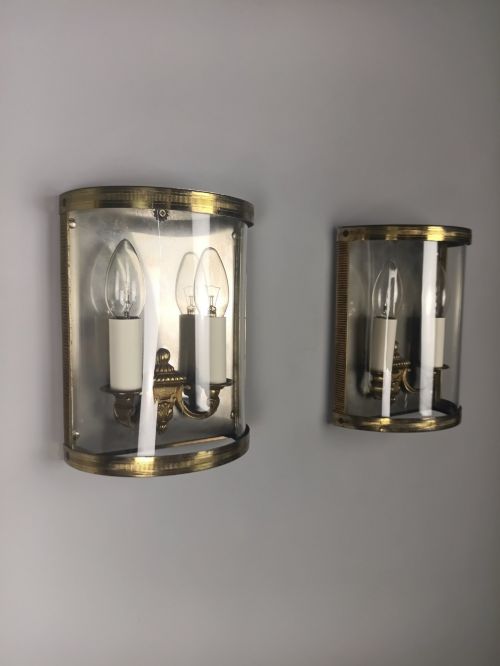
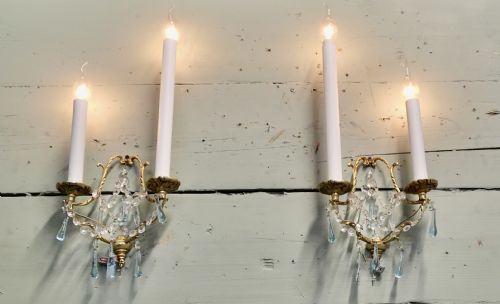
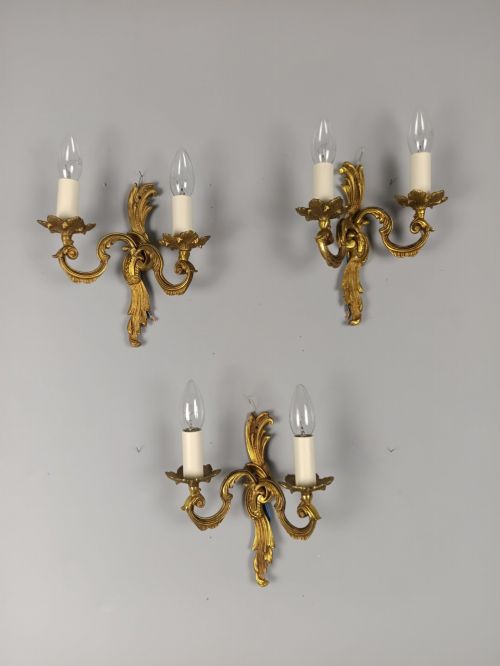
The selections on this page lean heavily towards French and English origins, frequently appearing as pairs or sets rather than isolated pieces. Common forms include twin-arm and triple-arm wall brackets, alongside convex half lanterns and wall chandeliers.
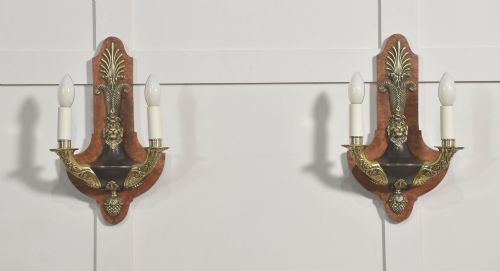
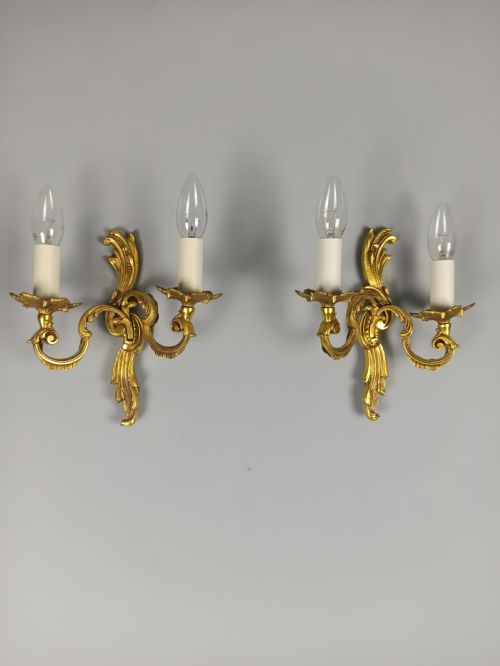
Stylistically, French Empire and Rococo influences dominate the selection, bringing cast metal work and classical ornamentation into domestic interiors. Alongside these, traditional English brass fixtures offer a restrained alternative with simpler lines.
How they were made
Metal fabrication forms the foundation of these lighting fixtures, utilising cast brass, bronze, and gilt brass as structural and decorative mediums. Artisans employed silver plating and mercury gilding techniques to finish metal surfaces, creating reflective sheens that caught candle or electric light.
Moulded glass and cut crystal components frequently accompany the metal frames, suspended as drops or shaped into lanterns. Wood appears less often, carved and polychromed to form decorative backplates or brackets.
Classic Wall Sconces Retail Price Guide 2026
Typical asking prices for classic wall sconces among the pieces listed under this phrase on Sellingantiques today, from the lower quarter to the upper quarter. They describe what is for sale here now, not the wider market.
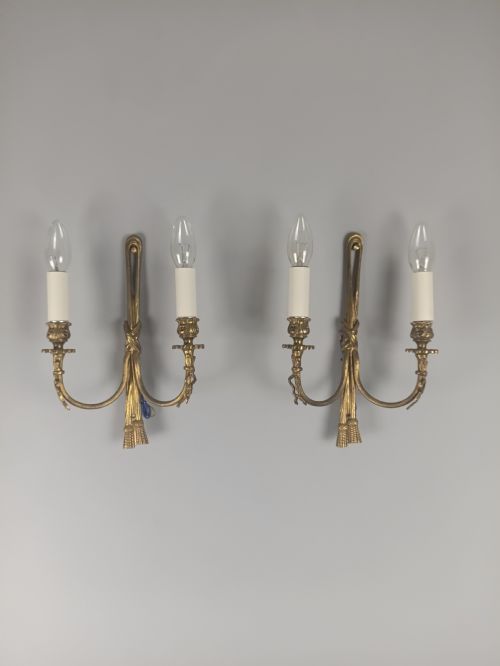
Several pairs incorporate delicate gilded ribbons frozen in cast brass, permanently tying up light.
What varies in quality
The standard of metal casting determines much of the visual weight and crispness in these fixtures, with finer examples displaying sharply rendered acanthus leaves, ribbon twists, and classical motifs without soft edges. Heavier gauge brass and bronze provide structural integrity that lighter pressed metals cannot match.
Surface treatments also differentiate pieces, particularly the depth and durability of gilding or silver plating. Original mercury gilt surfaces retain a warm, complex lustre that distinguishes them from later chemical treatments.
The Classic Wall Sconces Glossary
- Gilt brass
- Brass that has been coated with a thin layer of gold or gold-coloured alloy to give the appearance of solid gold metal. This finish was widely utilised in French lighting design.
- Wall bracket
- A structural support or arm projecting from a wall to hold a lighting fixture or shelf. These often feature decorative carving or casting.
- Convex half lantern
- A wall-mounted lighting enclosure with a curved glass front projecting outward from a flat backplate. This form directs light forward into the room.
- Torch
- A decorative wall light modelled after a classical flaming torch, frequently executed in bronze. Victorian examples often utilise this motif for entrance halls.
- Polychrome
- Painted in several colours, typically applied to carved wooden wall lights or brackets. This technique adds decorative colour and pattern to the timber base.
Classic Wall Sconces: Frequently Asked Questions
How were wall sconces used historically?
Historically, wall sconces held candles or oil lamps to supplement natural daylight and central hearth light in domestic interiors. Placed along hallways, flanking mirrors, or beside mantelpieces, they directed illumination where it was most needed.
Over time, many of these fixtures were adapted for electricity while retaining their original mounting positions and decorative arms.
How do I distinguish French styles from English ones?
French wall sconces from these periods frequently display ornate cast bronze or gilt brass work influenced by Empire and Rococo styles, featuring motifs like ribbons, urns, and scrolling foliage. They often appear as matched pairs or larger sets.
English equivalents tend to rely on simpler brass or silver-plated forms with more restrained proportions, reflecting traditional country house or Georgian revival aesthetics.
Are these sconces wired for modern electricity?
Many antique wall lighting fixtures have been fitted with modern electrical wiring during their long histories, though some retain older components. It is standard practice to have any vintage lighting inspected and re-wired by a qualified electrician before installation.
Checking the backplate and candle tubes will reveal the current state of the internal wiring and lampholders.
Can I mix different pairs of wall sconces?
Mixing different pairs of wall sconces works well if the metals or periods share a common visual weight and finish within the same space. Matching pairs should be kept within individual rooms or symmetrical focal points, such as either side of a fireplace.
Contrasting styles across separate hallways or distinct rooms allows for individual character without disrupting the balance of a single wall.