




Classic Upholstered Settee
A classic upholstered settee brings enduring comfort and layered character to a room, offering deep seats shaped by a century or more of traditional craft.
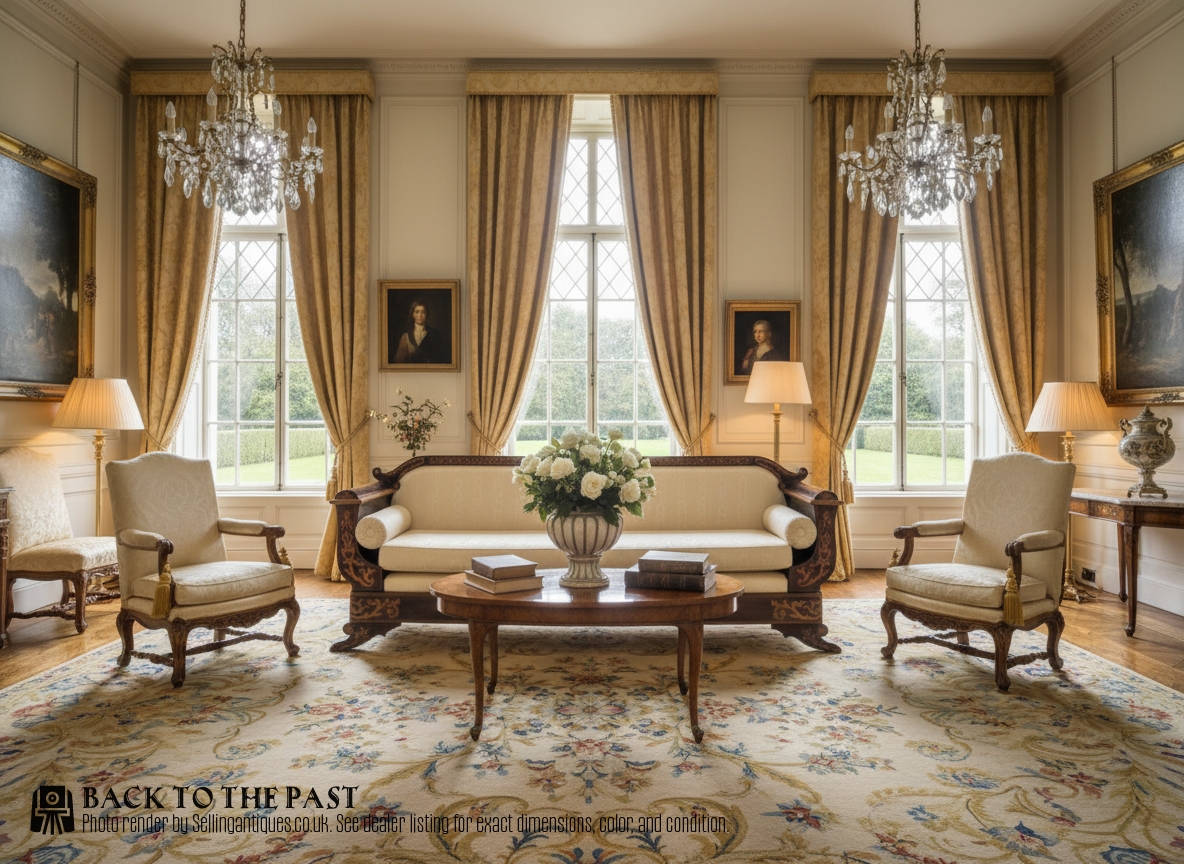
Classic Upholstered Settee
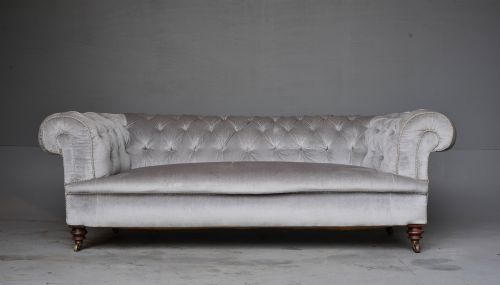
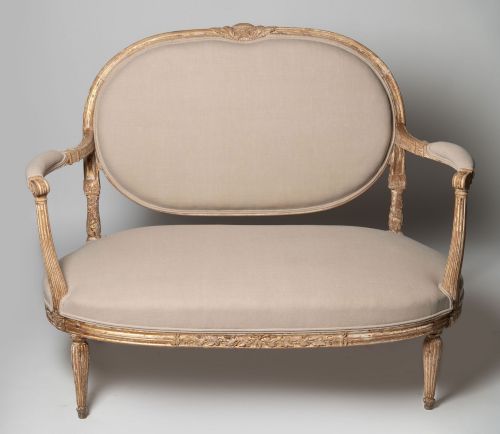
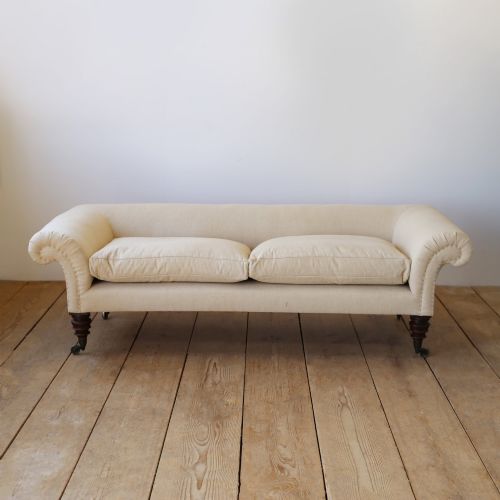
A classic upholstered settee encompasses comfortable seating forms ranging from generous Victorian Chesterfosields to compact Edwardian country house sofas. These pieces emerge primarily from the nineteenth century, the Edwardian era, and the nineteen-thirties, spanning styles from Regency and Louis XVI to Dutch Neo-Classical and Art Deco.
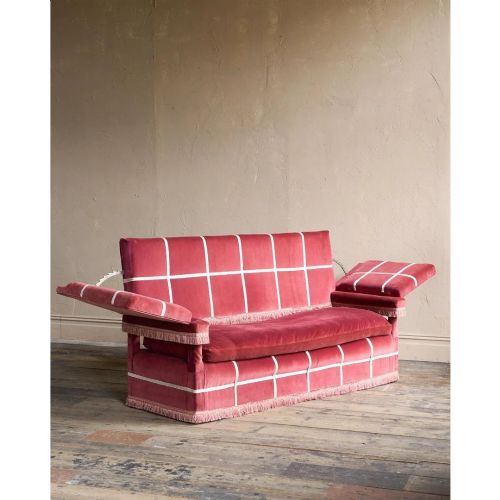
Buyers meet varied iterations on this page, including Knole sofas in velvet or damask, lyre-shaped Regency frames, camel back designs, and French couches. Materials scale from mahogany, walnut, and timber frames to brass accents and upholstery in fabric, linen, velvet, and leather.
Object designations blend fluidly across these listings, appearing as sofas, settees, and couches designed for two or three occupants. The overarching thread is a substantial wooden or timber structure entirely covered in textiles, uniting formal neoclassical lines with domestic ease.
How they were made
Makers built the foundational frames of these settees using solid hardwoods such as mahogany, walnut, and general timber. These structural skeletons dictated the silhouette, whether a camel back, a lyre shape, or the straight lines of a Dutch marquetry piece.
Upholstery layers transformed these wooden frames into soft seats, utilising textiles like velvet, linen, damask, leather, and general woven fabric over supportive springs and stuffing. Brass details occasionally punctuated the design, adding functional or decorative punctuation to the woodwork and upholstery.
Listings span nineteen-thirties Art Deco designs, Edwardian country house pieces, and nineteenth-century neoclassical forms.
What varies in quality
Quality rests in the architectural integrity of the wooden frame and the precision of its carved or inlaid details, such as the distinct marquetry on a Dutch settee or the refined sweep of a Regency lyre arm. Frames built from dense timbers like walnut and mahogany hold their joints firmly over generations.
The sophistication of the upholstery execution also separates examples, from standard fabric recovery to meticulous reinstatement of traditional materials like velvet, damask, and leather. Original maker attribution, such as documented Berners Street workshops, elevates the historical significance of a piece.
Howard and Sons·Hepplewhite
The Classic Upholstered Settee Glossary
- Knole sofa
- An early upholstered form featuring hinged or adjustable sides that can be laced upright or dropped flat, frequently covered in rich textiles like velvet or damask.
- Chesterfield sofa
- A deep-buttoned upholstered design featuring arms and back of the same height, traditionally finished in leather or heavy fabric.
- Marquetry
- The art of applying thin pieces of wood veneer to a structural structure to form decorative patterns, seen on neoclassical settees.
- Camel back
- A sofa or settee back featuring a distinct curving contour that resembles the humps of a camel, popular in eighteenth and nineteenth-century furniture.
- Lyre-shaped
- A furniture motif fashioned in the curved outline of an ancient musical instrument, frequently seen shaping the arms of Regency sofas.
Classic Upholstered Settee: Frequently Asked Questions
How do I clean antique velvet?
Velvet upholstery requires gentle brushing with a soft-bristled brush to lift the pile and remove surface dust. Avoid vigorous rubbing or applying water directly to the fabric.
For deeper cleaning, consult a specialist in historic textiles to prevent permanent flattening or water marking of the delicate pile.
Are these settees comfortable?
These settees are designed for substantial seating, featuring deep proportions and padded upholstery built over traditional supportive frames. Their comfort levels depend on the depth of the seat and the firmness of the internal stuffing.
Pieces reupholstered with modern interiors often offer a softer sit while retaining their historic exterior appearance.
How do I date a settee?
Dating relies on examining the secondary woods, construction joints, and stylistic markers such as neoclassical inlay or Edwardian proportions. Secondary materials hidden beneath upholstery often reveal the period of manufacture more accurately than surface decoration.
Comparing the overarching silhouette to documented nineteenth-century and nineteen-thirties design books helps narrow the timeline.
Can I fit one in a hallway?
Settees vary significantly in length and depth, from compact two-seat Edwardian couches to expansive three-seater Chesterfield sofas. Measuring both the furniture dimensions and your access doorways is essential before moving large timber-framed pieces.
Low backs and removable cushions can sometimes ease the process of navigating tight corners.