


Classic Single Strand Pearls
Classic single strand pearls are traditional necklaces valued for their timeless elegance, featuring uniform or graduated beads with secure metal clasps.
Classic Single Strand Pearls
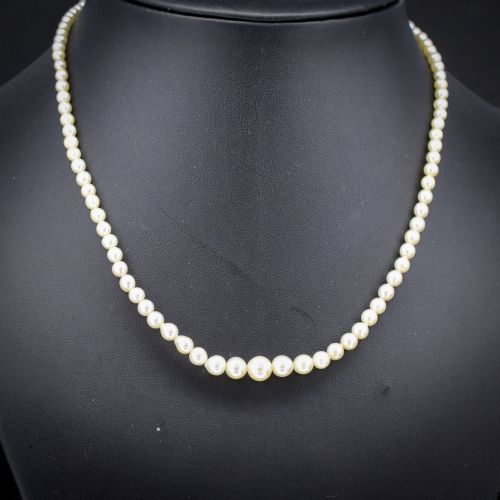
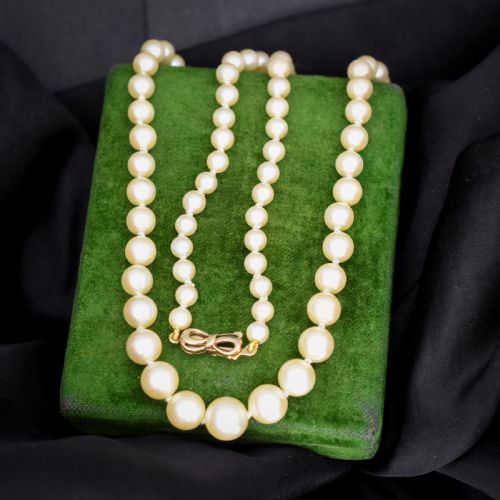
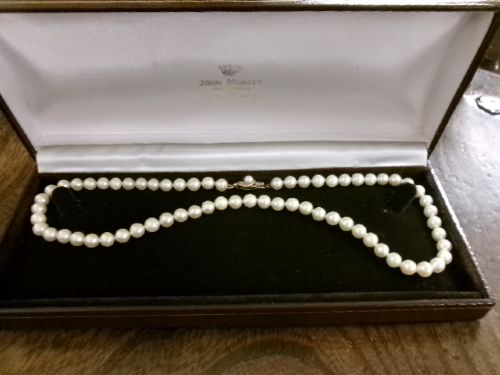
Classic single strand pearls form a traditional category of necklaces that rely on simplicity and refined form. Buyers searching for classic single strand pearls encounter pieces primarily from the 1930s, 1940s, 1950s, and 1960s, reflecting styles such as Mid-Century, Art Deco, and vintage classic.
The primary forms on this page consist of necklaces featuring either cultured or natural saltwater pearls. These items often incorporate beaded strands of varying lengths, supplemented by secure metal clasps.
Origins and periods span the mid-twentieth century, capturing traditional jewellery design alongside mid-century modern aesthetics. Each necklace presents a single continuous line of pearls designed to sit neatly around the neck.
How they were made
Materials recorded in the evidence combine organic pearls with precious metals like 9ct gold, 18ct gold, 14ct gold, and white gold. These metals form the structural clasps that secure the necklaces.
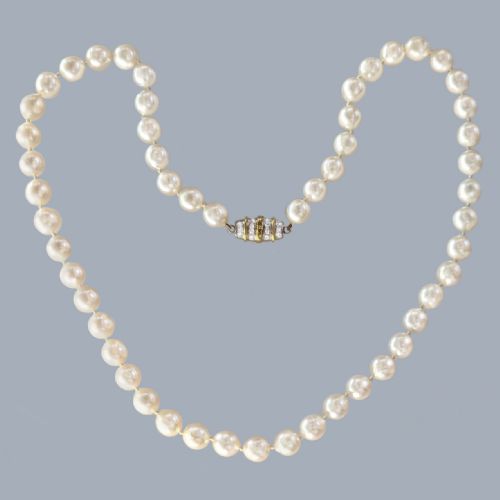
Construction techniques include stringing pearls alongside the integration of decorative elements such as diamonds, sapphires, rose quartz beads, and paste stones. Clasps frequently showcase floral or geometric designs characteristic of their respective periods.
Listings feature items exclusively from the 1930s, 1940s, 1950s, and 1960s, utilising pearl, gold, diamond, and silver materials.
What varies in quality
Quality differences emerge in the selection and grading of the pearls themselves, alongside the complexity and material composition of the clasp. Finer examples incorporate larger cultured or natural saltwater pearls paired with precious metal clasps set with diamonds or sapphires.
The choice of metalwork, ranging from standard 9ct gold to 18ct white gold, dictates the caliber of the mounting. Additional decorative stones like diamonds enhance the overall composition of the clasp, separating standard pieces from more elaborate designs.
The Classic Single Strand Pearls Glossary
- Cultured pearl
- Pearls created with human intervention by inserting a nucleus into an oyster or mollusc. They form the basis of many mid-century necklaces.
- Graduated
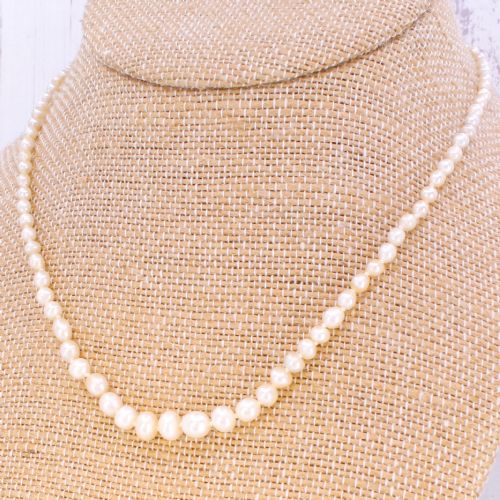
- Pearls arranged by size in a single strand, with the largest beads centred at the front and smaller beads tapering toward the clasp. This method creates a balanced visual flow.
- Clasp
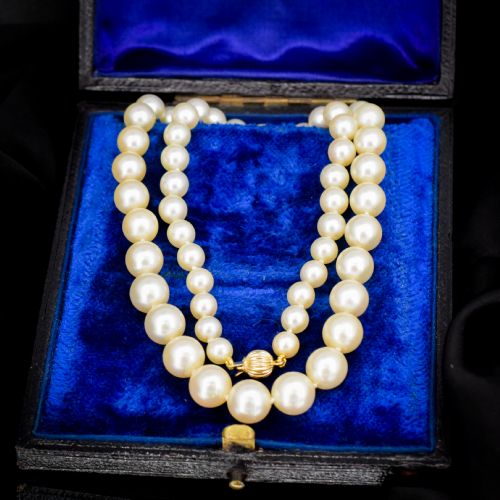
- The mechanical fastening device situated at the ends of a necklace. In finer pieces, these are fashioned from gold and set with diamonds or sapphires.
- Natural saltwater pearl
- Pearls formed organically in saltwater environments without human intervention. They represent rarer finds in vintage jewellery collections.
- Strand
- A single continuous line of beads or pearls assembled together. Necklaces in this category rely on one primary strand.
Classic Single Strand Pearls: Frequently Asked Questions
What periods do these pearl necklaces come from?
The pieces available originate primarily from the 1930s, 1940s, 1950s, and 1960s. These decades encompass Art Deco and mid-century design movements.
Design characteristics shift across these years, moving from geometric Art Deco clasps to the softer floral motifs of the 1950s.
What metals are used in the clasps?
Clasps are constructed from precious metals including 9ct gold, 14ct gold, 18ct gold, white gold, and silver. These metals provide durable mountings for the fastenings.
Many clasps also incorporate gemstones such as diamonds, sapphires, and paste stones to enhance their decorative appeal.
Are the pearls natural or cultured?
The listings include both cultured pearls and natural saltwater pearls. Cultured examples dominate the mid-century selections.
Natural saltwater pearls appear in specific vintage rope necklaces, representing organic formation processes.
How are the lengths measured?
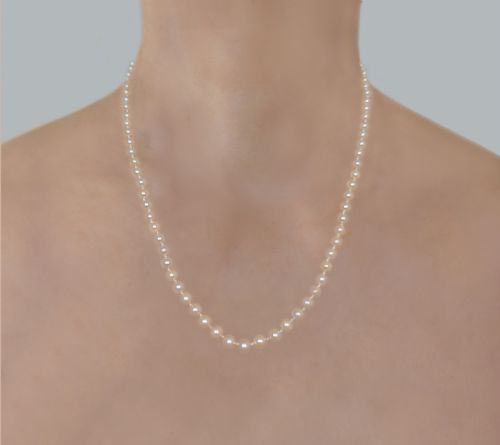
Lengths are measured in inches, with common sizes on this page including sixteen, seventeen, and eighteen inches. These dimensions determine how the single strand rests against the collarbone.
Longer rope necklace variants also appear in the evidence, offering alternative draping options.