





Classic Office Desk
A classic office desk brings timeless timber and leather to your workspace, offering robust daily utility alongside period character.
Classic Office Desk
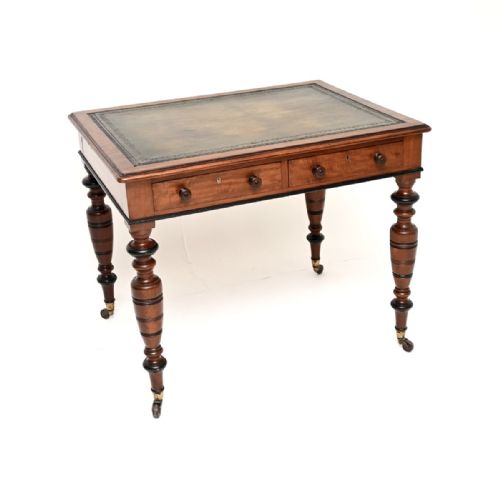
A classic office desk encompasses heavy timber pedestal forms, partners desks, and roll-top variants designed for serious administrative work. These pieces primarily date from the Victorian and Edwardian eras, constructed to command a study or library.
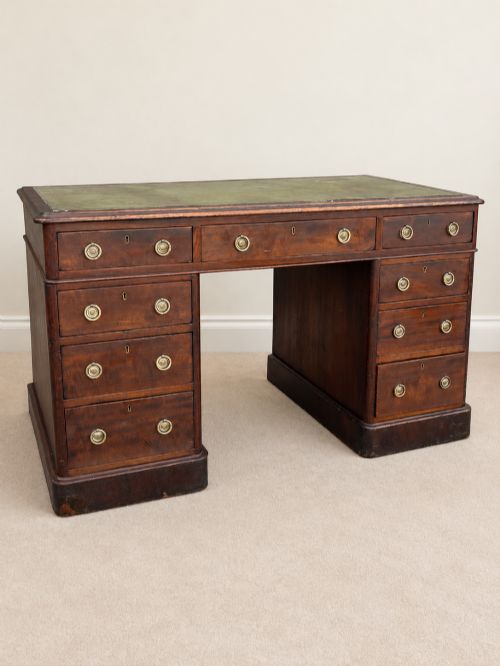
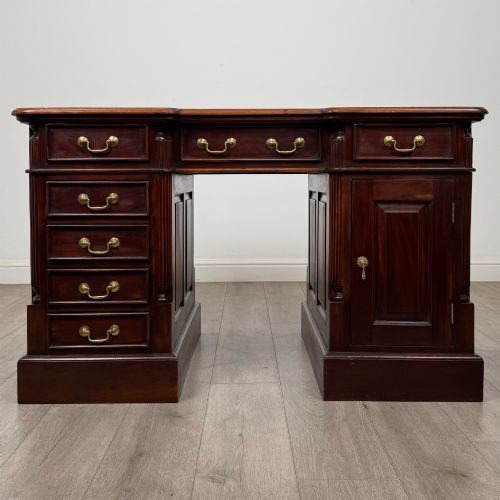
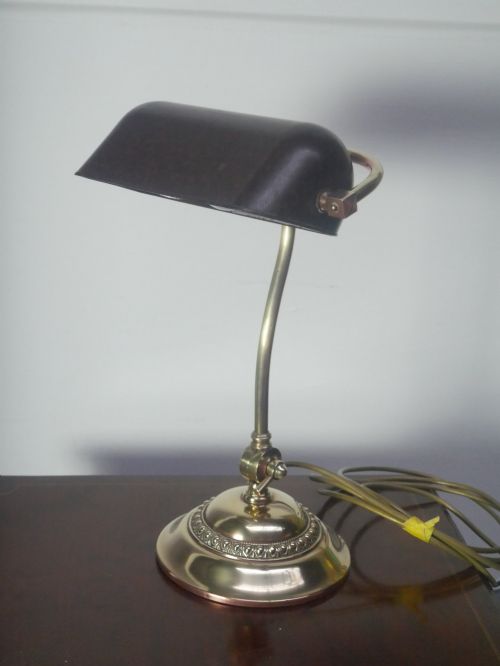
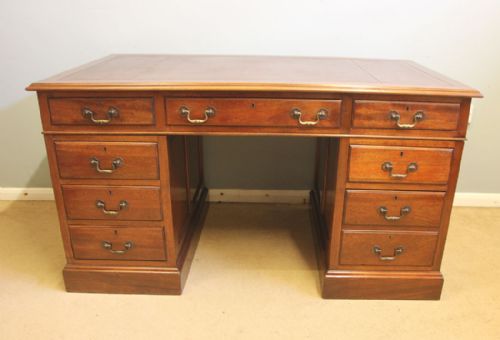
The most common version met on this page is the pedestal desk in mahogany, featuring banks of small drawers flanking a central kneehole. Walnut and oak examples also appear frequently, alongside associated seating and brass task lighting.
How they were made
Makers utilised solid timbers and selected veneers, predominantly mahogany and burr walnut, laid over sturdy framing to build these robust workspaces. Brass handles, escutcheons, and castors provided functional metallic contrast to the dark wood.
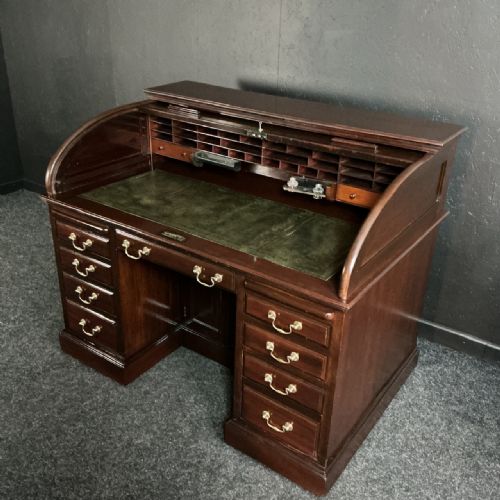
Writing surfaces were typically inset with tooled leather or fabric panels to provide a smooth, resilient writing plane. Tambour shutters and roll-tops relied on delicate slatted timber tracks to conceal internal pigeonholes.
Classic Office Desk Retail Price Guide 2026
Typical asking prices for classic office desk among the pieces listed under this phrase on Sellingantiques today, from the lower quarter to the upper quarter. They describe what is for sale here now, not the wider market.
Some desks retain ink stains inside their top drawers, quietly recording centuries of crossed t's and dotted i's.
What varies in quality
Superior examples display carefully selected timber grain and finely dovetailed drawer construction that ensures smooth operation over generations. The thickness of the mahogany and the crispness of any carved detailing separate standard workshop output from finer cabinet work.
Hardware originality and the quality of the leather writing surface significantly influence the overall integrity of a piece. Well-proportioned pedestals with balanced drawer arrangements show superior architectural consideration during initial design.
Maple and Co
The Classic Office Desk Glossary
- Pedestal desk
- A freestanding writing table supported by two pillars or pedestals containing drawers. Each pedestal generally holds three smaller drawers beneath the main top surface.
- Partners desk
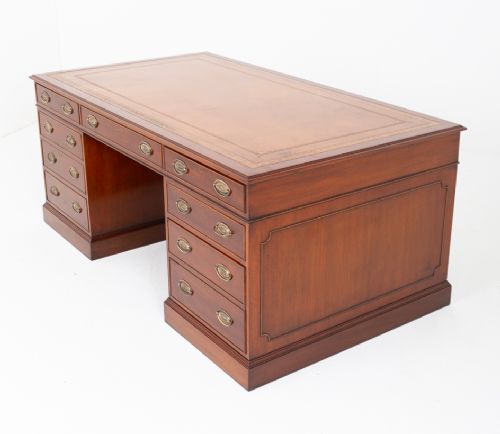
- A large pedestal desk designed with drawer and cupboard storage on both sides for two people to work opposite one another. These often feature premium leather inserts across the entire top.
- Tambour top
- A flexible desktop closure constructed from narrow vertical strips of wood glued to a canvas backing. This mechanism slides smoothly along curved grooves to secure the desk interior.
- Kneehole
- The central recessed space beneath a desk where the user sits. Some variations include a small concealed cupboard or single drawer directly above this opening.
Classic Office Desk: Frequently Asked Questions
What is a partners desk?
A partners desk is a substantial double-sided workstation built with drawers and cupboards on both faces. This allows two individuals to sit and work opposite each other.
Such pieces were traditionally used in banks, legal offices, and large libraries where administrative staff shared a single large surface.
How do I care for the leather top?
Leather writing surfaces require gentle cleaning with a slightly damp cloth and occasional treatment with appropriate leather balms to prevent drying and cracking. Avoid using harsh chemical solvents or abrasive pads.
Keep direct sunlight away from the leather to maintain the colour and the gold-tooled borders where present.
Are roll top desks practical for modern use?
Roll top desks provide excellent concealed storage for paperwork and small modern electronics behind their slatted wooden shutters. The internal pigeonholes help organise mail and stationery.
Measure your chair height against the kneehole clearance before purchasing, as older desk heights can vary from modern standards.
How do I date a Victorian pedestal desk?
Dating a Victorian pedestal desk involves examining the timber species, drawer construction methods, and hardware styles. Earlier Victorian pieces often feature dense mahogany and hand-cut dovetails, while later examples show machine-sawn elements.
Maker stamps inside drawer boxes or registration marks on brass fittings also help establish a more precise decade.