






Classic Georgian Sideboard
These classic georgian sideboard examples combine architectural proportion with practical dining room storage, built to last centuries.
Classic Georgian Sideboard
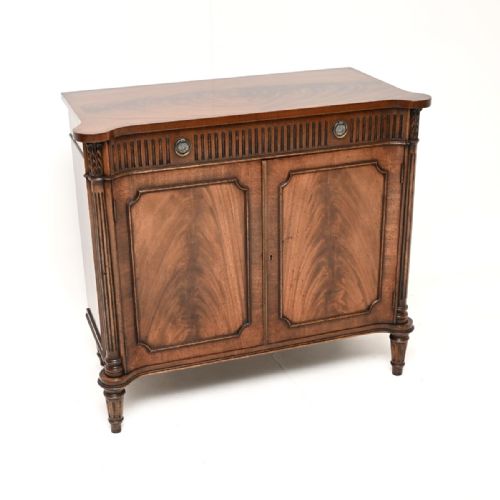
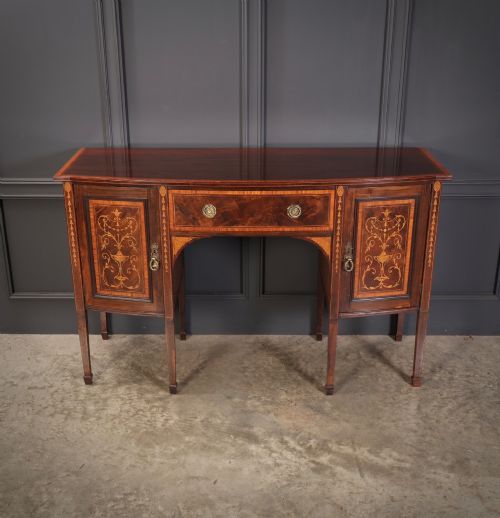
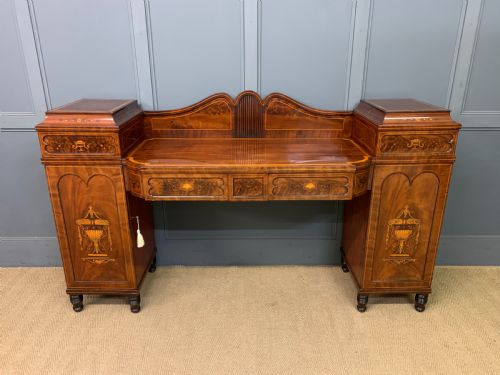
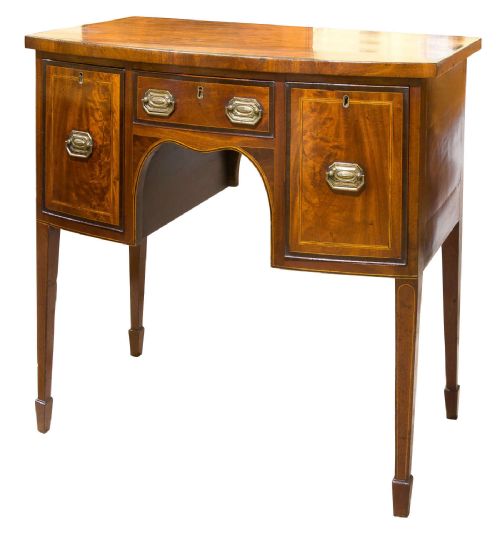
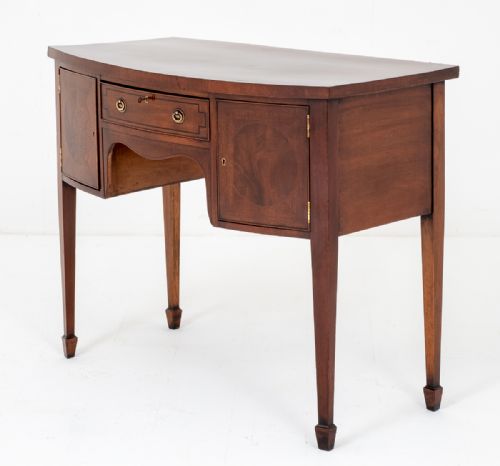
When you search for a classic georgian sideboard, you are looking at substantial dining room furniture built to serve food and display silver. The examples found here span genuine eighteenth-century pieces from the Georgian and Regency periods alongside later revivals from the Victorian era and nineteen-hundreds. Most pieces take the form of bow-fronted or serpentine-fronted cabinets and serving tables designed for large formal rooms.
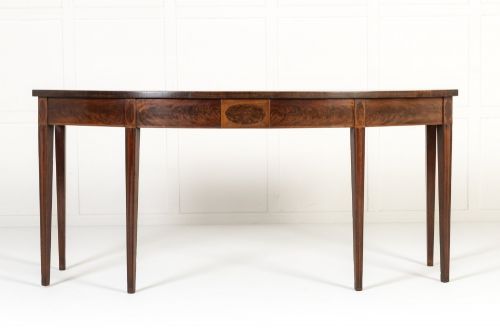
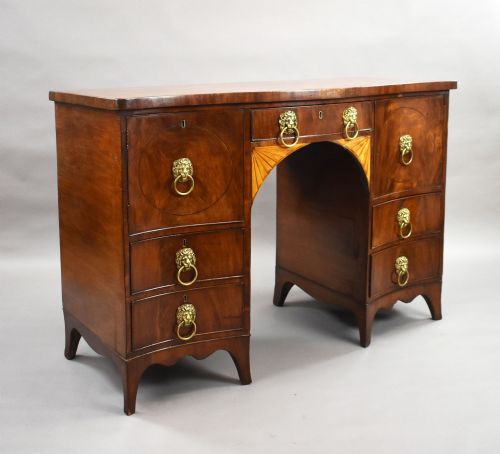
The primary forms on this page include mahogany serving tables, pedestals, and bow-front sideboards featuring multiple drawers and cupboards. You will also encounter console tables, side cabinets, and occasional chests associated with the same domestic dining tradition. These range from straightforward utilitarian servers to grander inlaid designs with distinctive curved profiles.
How they were made
Makers built these pieces primarily from solid mahogany and mahogany wood veneer over secondary timbers, selected for strength and deep grain pattern. Workshops applied fine contrasting details using satinwood and boxwood inlay to create geometric stringing and decorative borders along drawer fronts and tabletops.
Hardware played an essential functional and decorative role, with original brass handles, backplates, and sometimes fitted galleries or rails completing the construction. Carpenters shaped the timbers using traditional joinery techniques, accommodating curved serpentine and bow fronts through precise framing and bending methods.
Classic Georgian Sideboard Retail Price Guide 2026
Typical asking prices for classic georgian sideboard among the pieces listed under this phrase on Sellingantiques today, from the lower quarter to the upper quarter. They describe what is for sale here now, not the wider market.
Listings on this site range across the eighteenth and nineteenth centuries, including Georgian, Regency, and Victorian periods alongside later revivals.
What varies in quality
The standard of a classic georgian sideboard rests on the crispness of its cabinetwork and the figuring of the mahogany timber selected by the maker. Superior examples exhibit balanced proportions, tight joints, and harmonious grain matching across multiple drawer fronts and doors.
Decorative restraint and the quality of contrasting boxwood or satinwood inlay also separate standard items from finer productions. The retention of original brass hardware and untouched surface patination indicates better preservation and higher original workshop standing.
The Classic Georgian Sideboard Glossary
- Bow front
- A convex, outward-curving cabinet or drawer front that softens the linear geometry of dining room furniture. This curved profile became particularly popular during the late eighteenth century.
- Serpentine front
- A shaped furniture front featuring a convex centre flanked by concave curves, creating an undulating wave effect. It requires advanced carpentry to execute cleanly.
- Inlay
- A decorative technique where contrasting woods like satinwood or boxwood are fitted into recesses carved into the primary mahogany surface. It defines borders and creates geometric panels.
- Pedestal sideboard
- A distinct form featuring separate flanking pedestals united by a central serving table or board. These substantial dining pieces appeared frequently in formal George III interiors.
- Veneer
- A thin layer of figured mahogany applied over a sound secondary wood body to provide an attractive decorative surface. This method maximised the use of highly figured timber.
Classic Georgian Sideboard: Frequently Asked Questions
How do I spot a revival piece?
Later revival pieces from the Victorian era or nineteen-hundreds often employ different internal construction methods and standardised machine-cut timber compared to eighteenth-century work. Examining the secondary woods, screw types, and backboards usually clarifies the manufacturing epoch.
Stylistic cues also help distinguish periods, as Sheraton and Regency revivals interpreted earlier Georgian proportions with their own contemporary aesthetic preferences and mechanical innovations.
Where were these sideboards used?
These pieces belonged in the formal dining rooms of large townhouses and country estates, where servants arranged dishes before serving guests. They functioned as both practical storage units for linen and cutlery and display surfaces for silver.
Over time, these large servers migrated into smaller domestic spaces and reception rooms while retaining their traditional role as focal points for dining room storage.
How do I clean mahogany surfaces?
Maintain mahogany timber by dusting regularly with a soft, dry cloth and applying traditional beeswax sparingly to nourish the grain. Avoid modern silicone sprays that can build up and degrade the original polish.
Keep these cabinets away from direct sunlight and strong heat sources to prevent the wood veneer from drying out, cracking, or warping over the years.
What is a serving table?
A serving table is an open-frame console or side table designed to hold dishes and platters during meals, lacking the enclosed cupboards found on full sideboards. They often feature elegant tapering legs and decorative stringing.
Many examples from the Georgian period demonstrate refined architectural proportions that suited formal dining spaces before enclosed pedestals became standard.