



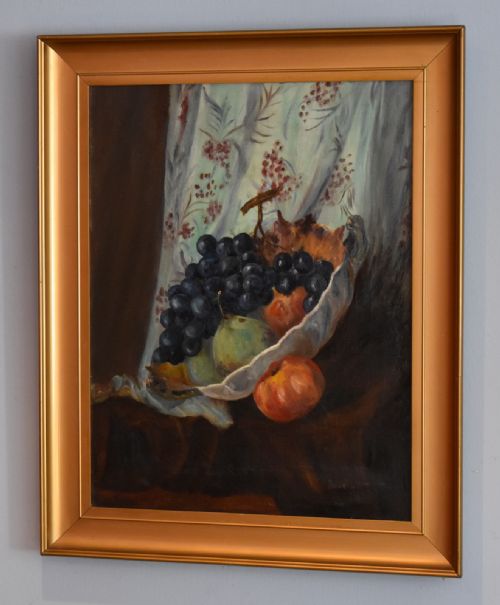
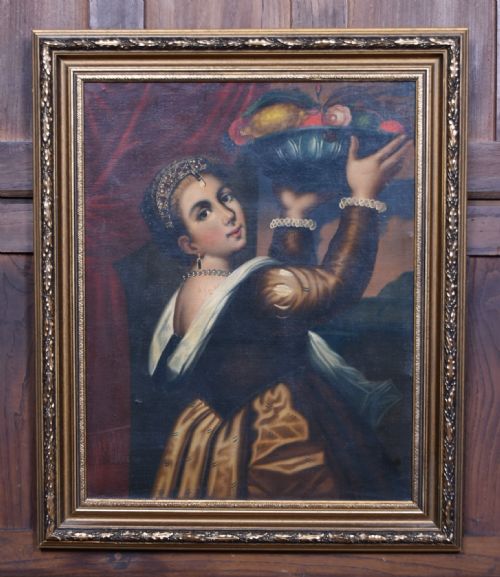


Classic Fruit Artwork
Classic fruit artwork brings rich oils on canvas into your room, capturing centuries of domestic abundance in detailed still life compositions.
Classic Fruit Artwork
Classic fruit artwork comprises oil paintings on canvas depicting traditional groupings of produce, often accompanied by tableware and baskets. These works span from the eighteenth century through the mid-twentieth century, capturing shifts in domestic aesthetics across multiple eras.
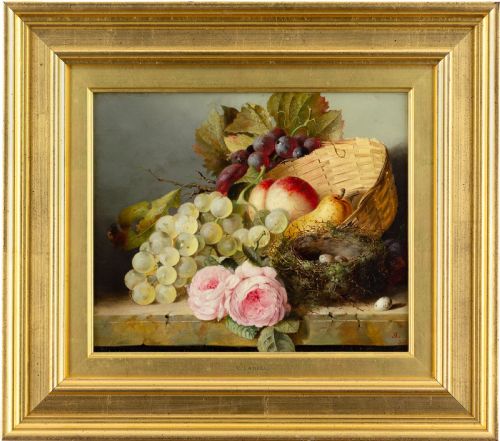
You are most likely to encounter nineteenth-century canvases and early twentieth-century pieces on this page. Victorian still lifes frequently feature detailed arrangements involving wicker baskets, birds' nests, and ceramic vessels alongside the central harvest.
The assortment includes named nineteenth-century artists alongside European school works and period paintings from the Georgian, Victorian, Edwardian, and Art Deco eras. Traditional realism and Post-Impressionism dominate the stylistic range of these canvas works.
How they were made
These paintings rely on oil paint applied to canvas supports, allowing artists to build deep layers of colour and texture. The medium lends itself to the realistic depiction of fruit skins, glassware, and woven baskets.
Many of these works are housed in their original giltwood or gilt frames, which complement the rich tonal palette of the oils. Wood stretchers and frames provide the structural foundation for the canvas works.
Classic Fruit Artwork Retail Price Guide 2026
Typical asking prices for classic fruit artwork among the pieces listed under this phrase on Sellingantiques today, from the lower quarter to the upper quarter. They describe what is for sale here now, not the wider market.
Listings span from the 18th century through the mid-20th century, encompassing Georgian, Victorian, Edwardian, and Art Deco periods.
What varies in quality
The distinction between standard works and exceptional examples lies in the precision of brushwork and the complexity of the composition. Superior pieces render textures such as the bloom on grapes and the weave of baskets with striking fidelity.
Provenance and attribution elevate certain works, particularly those by recorded nineteenth-century painters rather than anonymous European school pieces. The integration of secondary elements like porcelain jars or wildlife adds depth to the better compositions.
Edward Ladell·Else Preußner·Evelyn Chester·William Joseph Carroll·Thomas Hooper·William Jones Of Bath·E Cremer·Oliver Clare·George Lance·James And William Ward
The Classic Fruit Artwork Glossary
- Still life
- A painting depicting inanimate subject matter, typically commonplace objects such as fruit, flowers, and tableware. These compositions focus on the arrangement of form, light, and colour.
- Giltwood
- Wood that has been covered with a thin layer of gold leaf or gold paint. Frames utilising this material are common in nineteenth-century fine art.
- Post-Impressionism
- An art movement extending roughly from the late nineteenth century to the early twentieth century. It characterises works that rejected naturalistic depiction in favour of expressive forms.
- Canvas
- A heavy woven fabric used as a surface for oil painting. It is typically stretched tightly across a wooden frame before application of the ground and paint.
- Traditional realism
- An artistic approach that aims to represent subject matter truthfully without artificiality. In these listings, it describes detailed depictions of fruit and domestic objects.
Classic Fruit Artwork: Frequently Asked Questions
What subjects appear alongside fruit in these paintings?
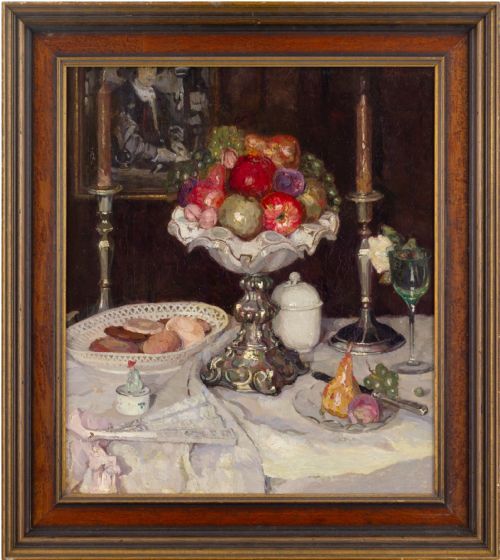
Compositions frequently incorporate domestic items such as Chinese ginger jars, blue and white jugs, candlesticks, biscuits, and wicker baskets. Some Victorian pieces also include birds' nests or parrots.
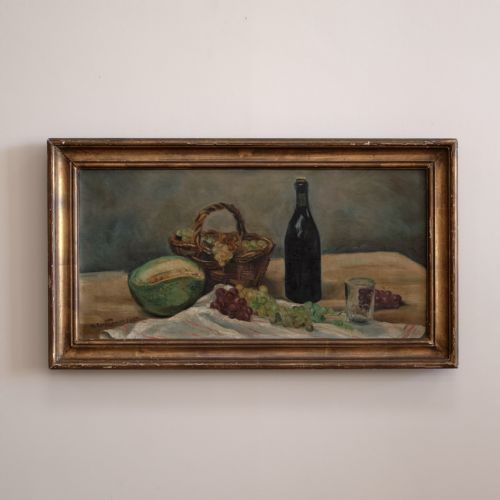
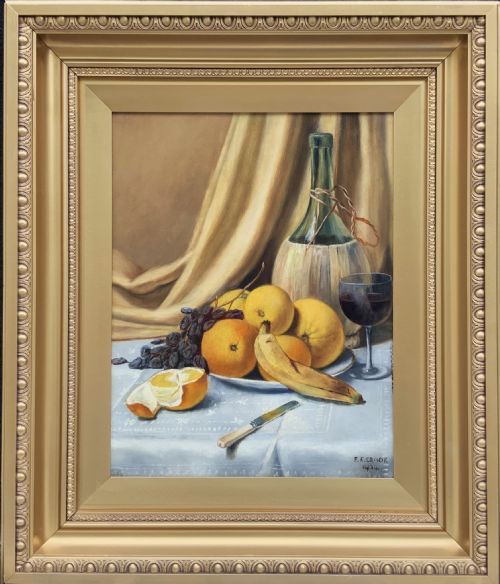
These secondary elements provide context and additional textures, balancing the central arrangement of apples, grapes, melons, and peaches.
How do I identify the period of an oil painting?
Dating relies on stylistic clues, framing materials, and the canvas stretcher construction. Victorian works often feature ornate gilt frames and dense realist arrangements.
Later pieces from the Edwardian and Deco periods show shifts toward looser brushwork or modern compositional layouts while retaining the core fruit theme.
Are these paintings supplied with frames?
Many listings include period surrounds such as giltwood frames that match the age of the canvas. These enclosures are often original to the artwork.
Details regarding framing are specified in individual item descriptions to indicate whether the work retains its historical housing.
How should I care for an antique oil on canvas?
Protect the canvas from direct sunlight and dramatic fluctuations in temperature or humidity. Avoid using chemical cleaners on the paint surface or the surrounding gilt frame.
Dust gently with a soft, dry brush when necessary, and consult a professional restorer for any structural maintenance.