


Classic French Wall Lights
Classic french wall lights bring warm candle-inherited illumination to a room, cast in heavy gilt metals and shaped by centuries of continental design.

Classic French Wall Lights
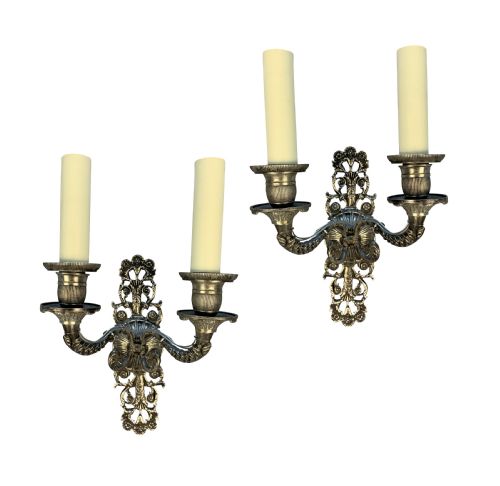
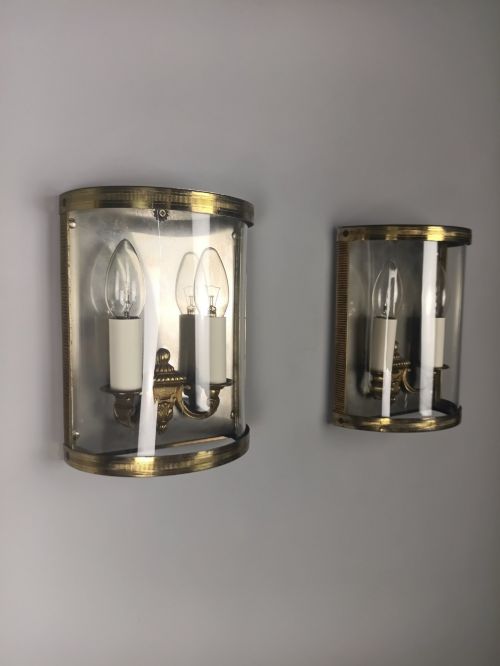
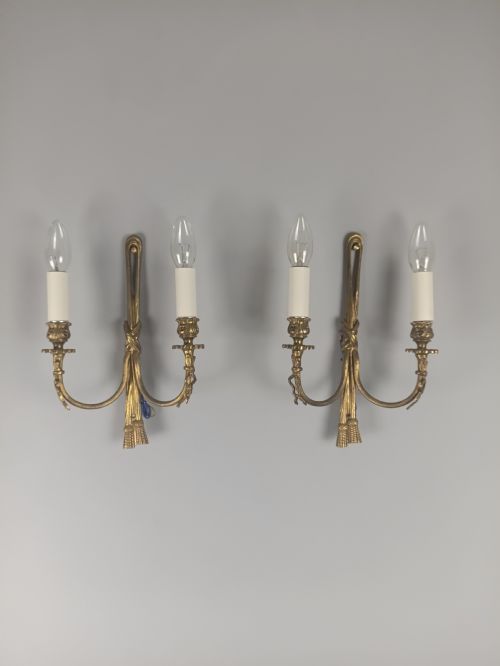
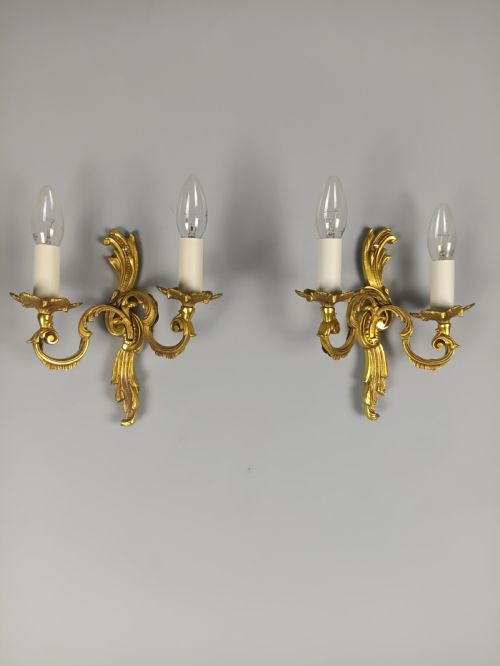
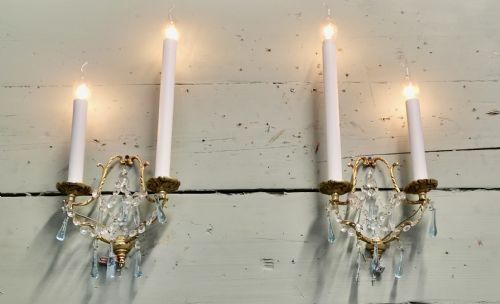
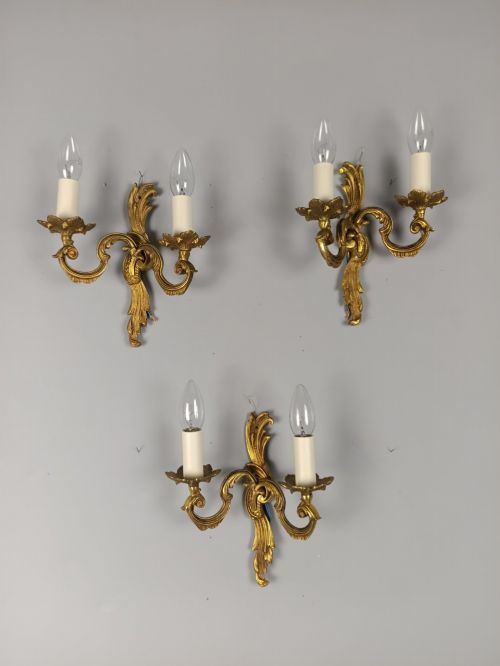
Classic french wall lights comprise wall-mounted light fixtures originating from continental workshops, most frequently encountered here as matched pairs or sets dating from the nineteenth and early twentieth centuries. These pieces manifest primarily as twin or triple-branch sconces, convex half lanterns, and wall chandeliers designed to project candlelight or electrified illumination across a domestic interior.
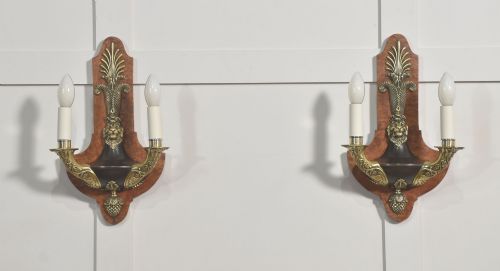
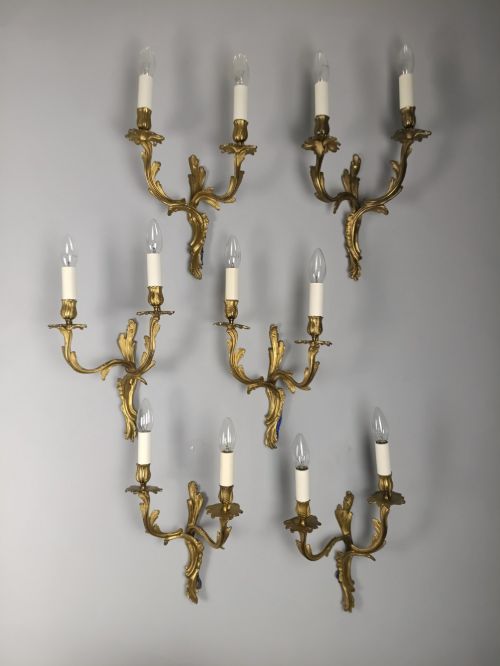
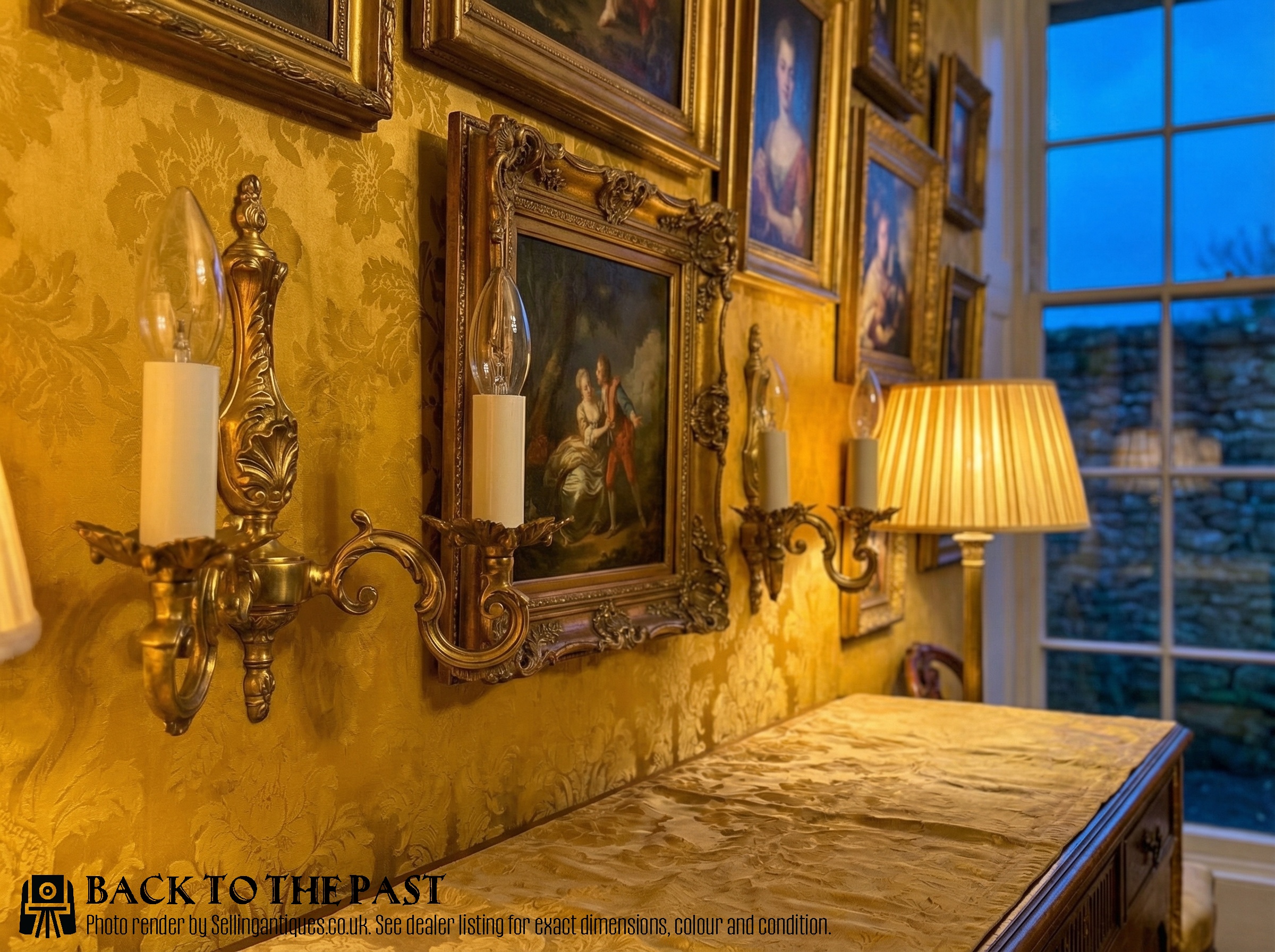
The aesthetic vocabulary draws heavily upon historical idioms, with French Rococo, Empire, and Louis XVI styles dominating the surviving pieces. Buyers encounter ornate ribbon motifs, classical architectural lines, and naturalistic flora rendered in cast metals, alongside occasional polychrome wooden brackets and burl walnut pairings.
Evidence from past sales demonstrates a strong representation of Neo-classical ormolu appliques alongside standard brass configurations. The physical formats span from single-light lanterns up to substantial sets of six, reflecting the varied scale of domestic reception rooms for which these fixtures were originally commissioned.
What Varies in Quality
Quality diverges notably in the crispness of the metal casting and the depth of the subsequent gilding or silver plating. Superior examples exhibit sharply defined acanthus leaves, crisp facial embossments, and clean joinery that conceals fixing points, whereas lesser items suffer from softened details and slurry casting surfaces.
The integrity of the structural components also separates standard production from finer workshop output, particularly in the weight of the cast bronze or brass and the substantial gauge of the mounting arms. Original crystal elements, substantial backplates, and intact period fixings elevate the structural hierarchy of a surviving pair.
The inventory records classic french wall lights spanning from the 1860s through the 1930s, constructed predominantly in brass, bronze, and gilt finishes.
The Classic French Wall Lights Glossary
- Ormolu
- Gilded bronze produced by applying a mercury and gold amalgam to a bronze base and firing it in a kiln. This historic technique creates a warm, durable golden matte finish characteristic of high-end continental metalwork.
- Applique
- A wall-mounted light fixture designed to hold candles or electric lamps, synonymous with a wall sconce. The term frequently applies to neoclassical wall lights featuring flat backplates.
- Louis XVI Style
- A neoclassical design movement characterised by straight lines, symmetry, and classical motifs such as urns, ribbons, and swags. This aesthetic heavily influences nineteenth-century French lighting production.
- Half Lantern
- A wall light featuring a glazed, projecting front half that encloses the bulb or candle tube while remaining flush against the wall. They are often constructed with brass frames and convex glass panels.
Classic French Wall Lights: Frequently Asked Questions
How do I mount antique wall lights safely?
Wall lights require secure anchorage into solid masonry or studwork using appropriate wall plugs and screws, given the substantial weight of cast bronze and brass. The mounting bracket must bear the entire vertical load without placing strain on the decorative backplate.
Electrical connections should be routed through the rear access hole directly into the wall cavity. Professional installation by a qualified electrician ensures compliance with modern safety standards.
Were these fixtures originally wired for electricity?
Original period wall lights were designed exclusively for candles or oil burning, meaning surviving examples have been subsequently adapted for electrical current. This conversion typically involves running internal flex through the original channels and adapting the drip pans to house lamp holders.
Rewired antique fixtures frequently appear in the market to meet contemporary domestic requirements. Buyers should inspect the internal wiring paths to confirm they respect the structural integrity of the antique metalwork.
How do I distinguish Empire style from Louis XVI?
Empire style pieces display a heavier, more militaristic classical vocabulary influenced by Napoleonic conquests, featuring bold laurel wreaths, sphinxes, and dark patinated bronzes. They convey an imposing architectural presence compared to earlier lighter aesthetics.
Louis XVI pieces instead employ restrained neoclassical symmetry, delicate ribbon ties, and brighter gilt brass finishes. The decorative motifs focus on pastoral and refined classical elements rather than imperial dominance.
How should I clean gilded brass without damage?
Gilded surfaces require gentle dusting with a dry, soft bristle brush or a microfiber cloth to remove surface particulates without abrasion. Moisture and chemical cleaning agents can strip historic gold leaf or degrade underlying patination.
Polishing compounds must be avoided entirely on ormolu and gilt surfaces because they permanently remove the thin layer of gold. Professional conservation is recommended for fixtures requiring deeper remediation.