

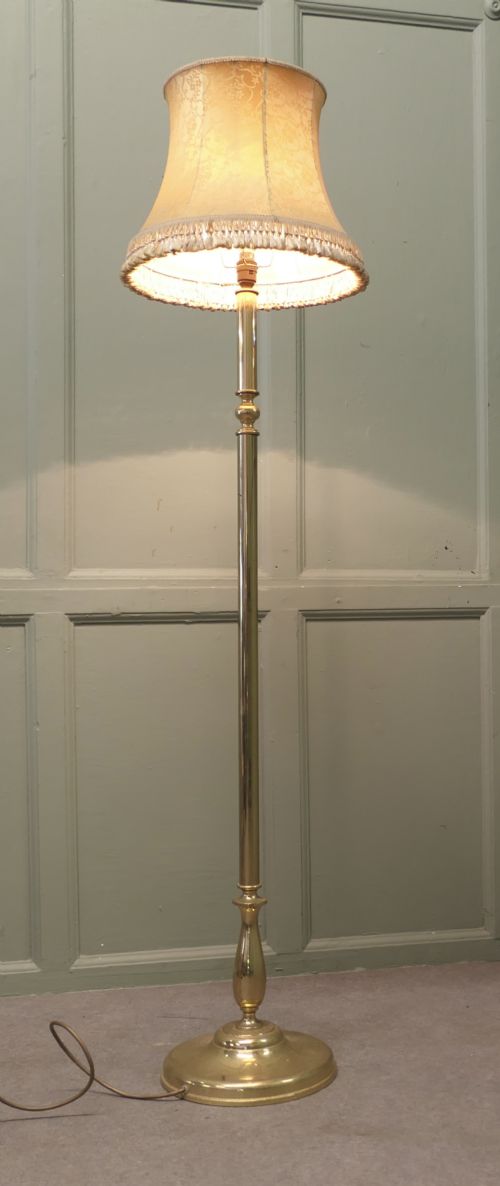


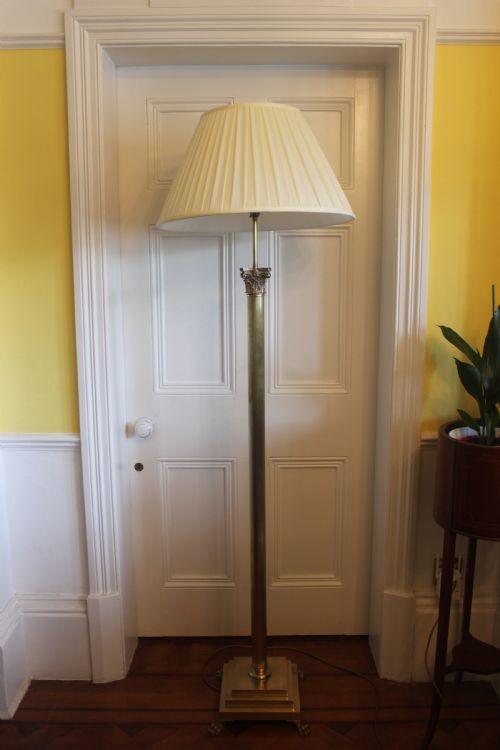


Classic Floor Lighting
Classic floor lighting brings height and warmth to a room, offering tall timber standards and gleaming brass reading lamps for every corner.
Classic Floor Lighting
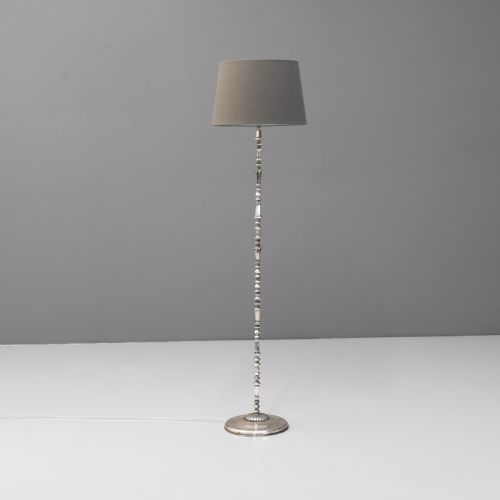
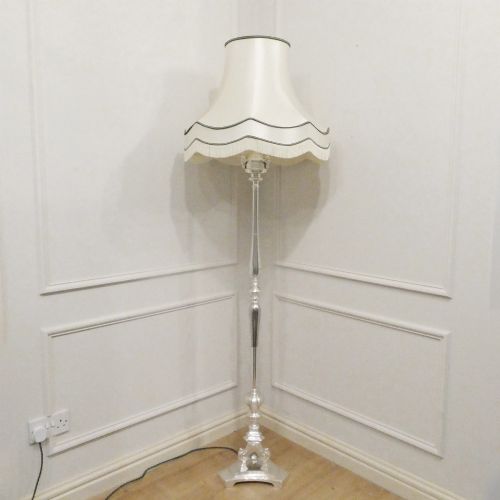
Classic floor lighting encompasses tall standard lamps and floor lamps designed to illuminate large spaces from an elevated position. Buyers exploring classic floor lighting will encounter pieces spanning the Victorian, Edwardian, and 1930s periods, ranging from simple timber columns to elaborate Italian Baroque giltwood fixtures.
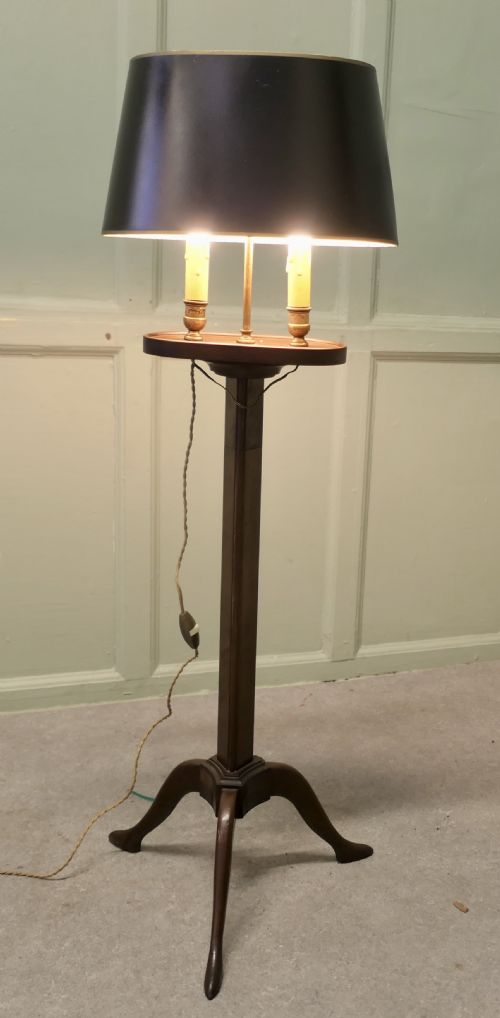
The forms vary from slender mahogany shafts to sturdy brass tripods and telescopic brass stands. Many pieces incorporate adjustable heights or twin candle configurations intended for reading and task illumination.
Originating across Britain, France, and Italy, these lamps reflect diverse regional tastes from French boudoir elegance to English country simplicity. The selection on this page relies heavily on Edwardian and Victorian brass standards alongside carved mahogany examples.
How they were made
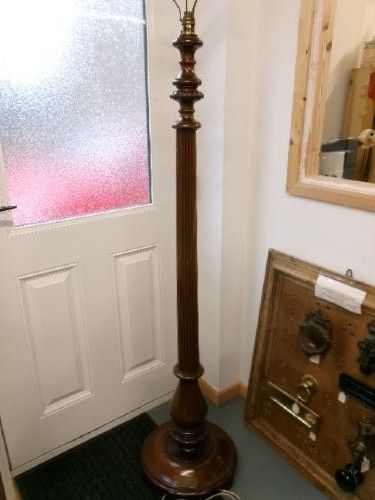
Makers utilised turned and carved mahogany and rosewood for timber standards, often pairing the dark wood with polished brass fittings. Heavy cast brass forms the basis for telescopic and tripod floor lamps, frequently complemented by onyx details or triple glass shades.
Giltwood construction appears in Italian Baroque and French-style pieces, where artisans applied gold leaf over carved wooden surfaces. Fabric shades and painted metal finishes complete the construction of many Edwardian and later reading lamps.
Classic Floor Lighting Retail Price Guide 2026
Typical asking prices for classic floor lighting among the pieces listed under this phrase on Sellingantiques today, from the lower quarter to the upper quarter. They describe what is for sale here now, not the wider market.
Listings feature materials spanning brass, mahogany, giltwood, glass, and onyx across Victorian, Edwardian, and 1930s periods.
What varies in quality
The standard of carving in mahogany and the depth of relief in giltwood set apart superior pieces from simpler utilitarian stands. Heavier gauge brass and smoothly functioning telescopic or adjustable mechanisms indicate higher workshop standards during production.
Originality of components, such as intact glass shades and well-preserved brass patination, distinguishes the better surviving examples from heavily altered or later-assembled lamps.
The Classic Floor Lighting Glossary
- Standard Lamp
- A tall freestanding floor lamp designed to hold a light bulb and shade at height. These fixtures provide ambient illumination without occupying tabletop space.
- Bouillotte Lamp
- A type of adjustable lamp originally designed for card playing, featuring candles or bulbs beneath a shade. Examples often include twin candle arms.
- Telescopic
- A descriptor for stands featuring nested metal tubes that allow the height of the lamp to be adjusted up and down. This mechanism provided practical versatility in period rooms.
- Giltwood
- Wood that has been coated with a thin layer of gold leaf or gold paint. It appears frequently on ornate Italian and French decorative pieces.
- Neoclassical
- A style drawing inspiration from classical antiquity, marked by symmetry, restrained ornamentation, and architectural columns. Victorian examples utilise these motifs in brass standard lamps.
Classic Floor Lighting: Frequently Asked Questions
Where do I put a standard lamp?
These tall lamps sit comfortably beside armchairs, in dark corners, or next to sofas where overhead lighting falls short. Their height distributes light across a wider radius than table lamps.
Position them where the shade height aligns with seated eye level to avoid glare, using the adjustable mechanisms found on many Edwardian brass models to fine-tune the spread.
How do I date an old floor lamp?
Dating relies on examining the materials, construction joints, and stylistic motifs present in the standard. Victorian and Edwardian brass lamps often feature heavier cast bases and distinct patination.
Turned mahogany shafts and telescopic brass stems point toward specific manufacturing eras between the late nineteenth century and the nineteen-thirties.
Can I adjust the height of these lamps?
Many period floor lamps incorporate telescopic columns or adjustable joints specifically designed to alter the overall height. These moving parts allow the light source to be raised or lowered depending on the room arrangement.
Checking the mechanism reveals whether the adjustment relies on a thumb screw or a sliding internal brass sleeve.
What shades suit antique floor lamps?
Fabric shades and glass shades both appear on historic floor lighting, depending on the period and the maker's original intention. Triple glass shades frequently accompany nineteen-thirties brass stands.
Fabric options complement carved mahogany and giltwood pieces by diffusing the light softly across Edwardian and Victorian interiors.