




Classic Floor Lamp
A classic floor lamp brings useful height and warm illumination to a room, drawing on decades of period brass, mahogany, and giltwood design.
Classic Floor Lamp
A classic floor lamp provides targeted illumination by raising a light source above furniture level, operating as a functional yet decorative vertical element in a room. When hunting for a classic floor lamp, buyers encounter pieces spanning from the Victorian and Edwardian eras into the early twentieth century.
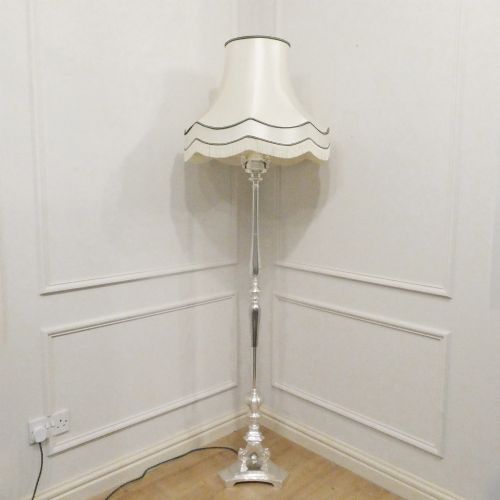
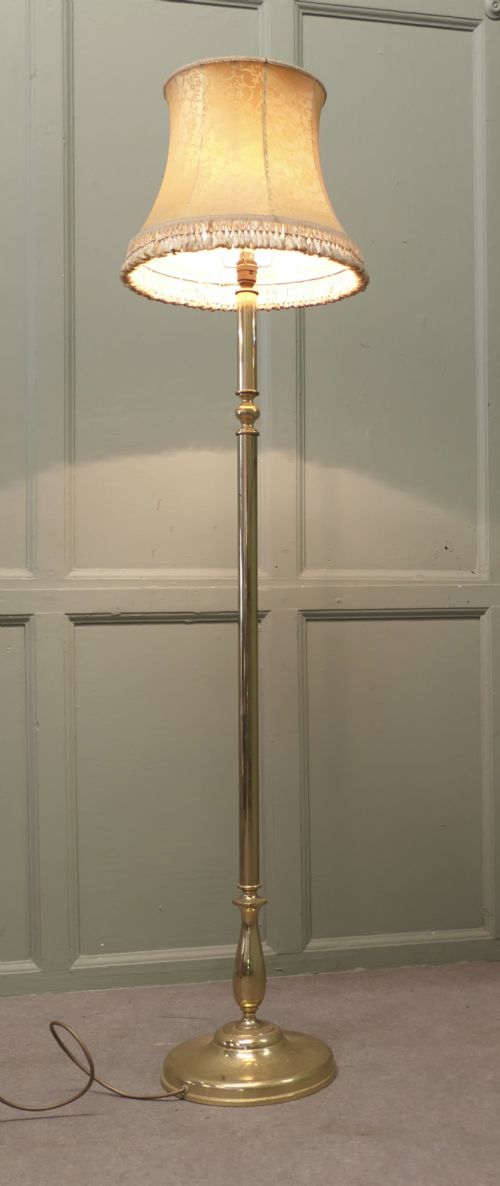
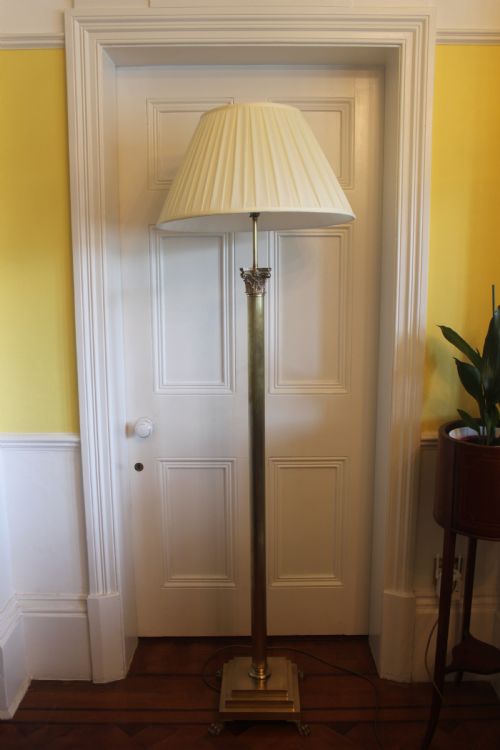
The selections on this page draw heavily from the Edwardian period and the early twentieth century, alongside nineteenth-century examples. Common formats include adjustable brass standards, carved mahogany shafts, and giltwood designs influenced by Italian Baroque or French Chateau styles.
Makers and designers from these periods utilised both metalwork and timber construction to produce standard lamps that complemented contemporary domestic interiors. Buyers frequently find pieces featuring telescopic mechanisms, tripod bases, and paired fabric shades suited to reading or ambient lighting.
What separates the best examples
Quality in these standard lamps rests on the weight and integrity of the materials, particularly the thickness of the brass and the density of the mahogany or rosewood. Substantial metal casting and solid timber turning provide the stability necessary for supporting extended heights.
Mechanical execution distinguishes superior adjustable and telescopic examples, where moving parts operate smoothly and lock securely into position without drift. The finesse of the carving on wooden shafts and giltwood ornaments also separates standard production pieces from finer workshop outputs.
Brass standards decorated with cast roses and thistles bring a subtle touch of botanical stubbornness straight into the sitting room.
The Classic Floor Lamp Glossary
- Standard lamp
- A tall floor-standing lamp designed to illuminate a room from an elevated position. This term appears frequently alongside floor lamp in period descriptions.
- Telescopic
- A shaft design incorporating concentric tubes that allow the overall height of the lamp to be adjusted. This mechanism is common in nineteenth-century and early twentieth-century brass standards.
- Giltwood
- Wood that has been coated with a thin layer of gold leaf or gold paint. This finish appears on decorative Italian and French style standard lamps.
- Bouillotte lamp
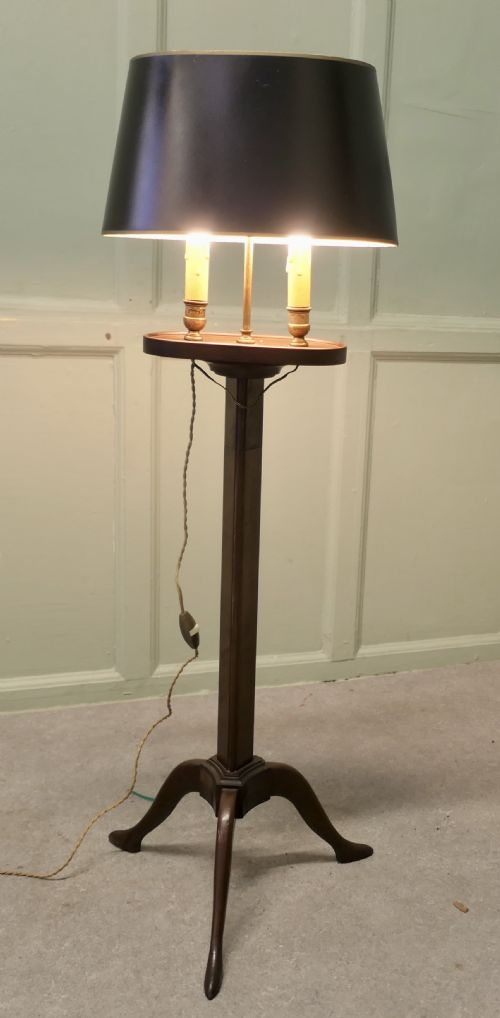
- A traditional candle lamp adapted for electric lighting, typically featuring an adjustable shade on a central metal column. The evidence includes nineteenth-century twin candle variants.
- Tripod base
- A supporting structure featuring three distinct legs, providing stability for slender floor-standing standards. This formation is found on Arts and Crafts-style brass models.
Classic Floor Lamp: Frequently Asked Questions
What is a standard lamp?
A standard lamp is simply a traditional British term for a floor lamp, designed to hold a light source well above table height.
These pieces were developed to provide flexible illumination in sitting rooms and libraries before ceiling fixtures became dominant.
How do I adjust a telescopic lamp?
Telescopic lamps use an internal sliding mechanism secured by a thumbscrew or collar to raise or lower the height of the light.
Care should be taken when adjusting older brass mechanisms to avoid straining the metal or the internal wiring.
Where should I place a floor lamp?
Floor lamps sit naturally beside armchairs, reading desks, or in dark corners where additional ambient light is required.
Their vertical presence helps balance room proportions while directing light downward or outward through fabric shades.
How do I date an antique floor lamp?
Dating relies on examining the manufacturing techniques, metal alloys, wood types, and decorative styles characteristic of periods like the Victorian era or Edwardian years.
Turned mahogany and polished brass each exhibit distinct maker methods that shift from the nineteenth century into the twentieth.