


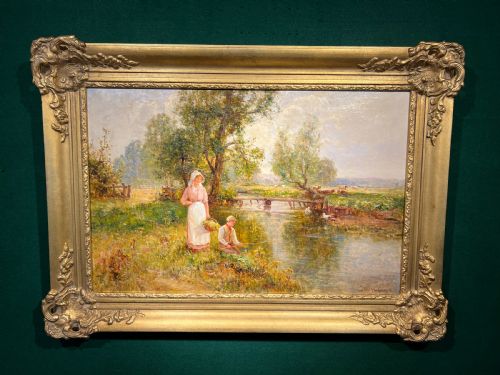

Classic English Landscape Painting
A classic english landscape painting brings the quiet fields, rivers, and mountains of the British countryside onto canvas.
Classic English Landscape Painting
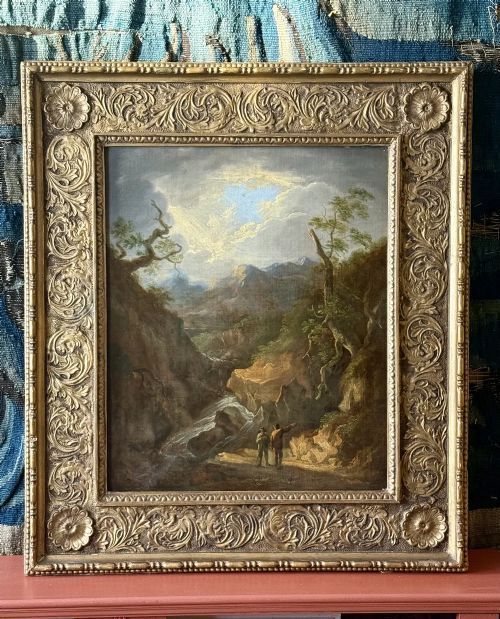
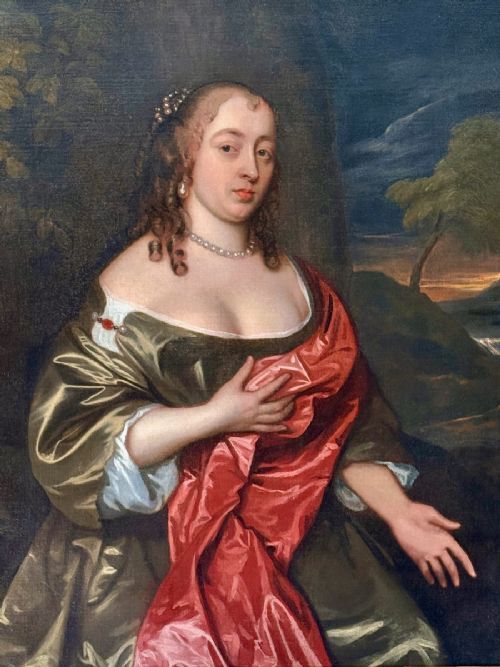
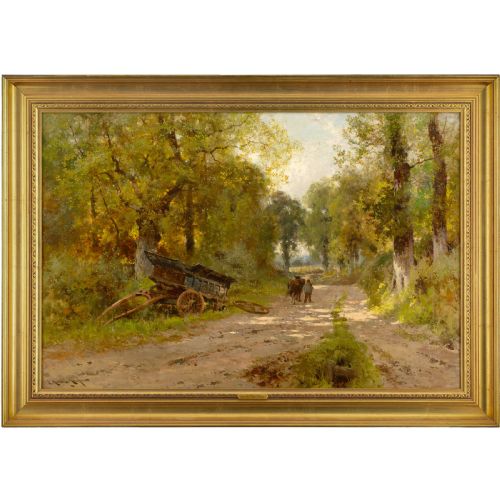
When you search for a classic english landscape painting, you encounter works ranging from seventeenth-century portraits set in expansive rural scenes to twentieth-century views of rivers, mountains, and village taverns. The nineteenth century forms the core of what appears here, encompassing Victorian pastoral views, realism, and British impressionism.
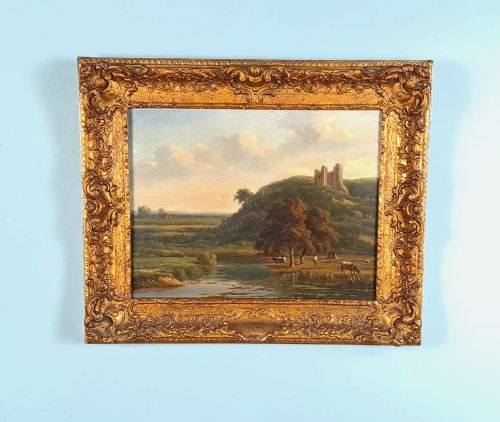
The subjects span pastoral river valleys, wooded river landscapes, Welsh mountains, and pastoral settings with sheep resting in fields or figures boating on the water. These oils on canvas and watercolour paintings record the topography and rural life of Britain through the eyes of artists working from the seventeenth century up to nineteen forty.
How they were made
The works rely primarily on oil paint applied to canvas, wood, or board, capturing the play of light over water, foliage, and stone. Painters built up these compositions through layered brushwork that defines both atmospheric skies and detailed terrain.
Framing forms an integral part of the physical object, with gilt wood and giltwood frames often housing the canvases and panels. Plaster elements within moulded frames provide additional decorative depth, complementing the painted surfaces.
The listings span the seventeenth century through to nineteen forty, featuring oil on canvas, watercolour, and gilt wood frames.
What varies in quality
Quality rests on the precision of brushwork and the artist's command of light, atmosphere, and spatial depth within the composition. Stronger works capture naturalistic movement in water, trees, and skies rather than relying on stiff formulae.
The handling of the original framing, particularly period gilt wood and giltwood surrounds, influences the integrity of the piece. Works by recorded painters with established exhibition histories demonstrate superior execution in handling scale and pigment.
JOHN HAYLS·John Horace Hooper·T C Hofland·William Arthur Breakspeare·Sidney Richard Percy·William Mellor·Benjamin Williams Leader·Clifton Tomson·John Wright Oakes·James L Brooke·WILLIAM STEPHEN COLEMAN·A Davis·John Holland Snr·David Bates·George Romney
The Classic English Landscape Painting Glossary
- Oil on canvas
- Pigment suspended in a drying oil applied to a woven fabric support. This medium allowed artists to achieve rich colour depth and blended transitions.
- Gilt wood
- Carved timber finished with a thin layer of gold leaf or metallic gilt. It provided ornate borders that enhanced the visual weight of nineteenth-century paintings.
- Board
- A rigid wooden or pasteboard panel used as a painting support instead of woven fabric. Painters often utilised smaller boards for plein air landscape studies.
- Victorian realism
- An artistic approach focusing on the accurate, unidealised depiction of everyday life and natural scenery during the nineteenth century. This style prioritised observational truth over grand historical convention.
- British impressionism
- A movement capturing fleeting effects of light and weather through visible brushstrokes. Artists working in this manner moved away from rigid academic finishes.
Classic English Landscape Painting: Frequently Asked Questions
How do I identify a nineteenth-century landscape?
Look to the handling of pigment, canvas preparation, and framing style to gauge the period of a work. Nineteenth-century pieces frequently employ oil on canvas with specific stretchers and framing materials typical of the Victorian era.
Compare the signature, subject matter, and recorded exhibition styles with known regional painters of the period. Documentation or labels on the reverse of the canvas or board often provide further historical context.
Where were these landscapes displayed?
These paintings traditionally hung in the reception rooms, parlours, and galleries of British homes. They served to bring views of familiar countryside, rivers, and rural estates indoors.
Makeshift or formal domestic settings accommodated works of varying scale, from intimate board studies to large framed canvases intended as focal points over fireplaces.
What subjects are most common?
River valleys, wooded paths, and mountainous terrain dominate the rural scenes preserved in these works. Artists frequently included everyday elements such as livestock, figures boating, or village taverns.
Views span specific regional locations across Britain, capturing recognisable landmarks alongside idealised pastoral compositions from the Victorian period.
How should I care for an oil painting?
Keep paintings away from direct sunlight, excessive heat sources, and damp environments to protect both the canvas and the pigment. Stable indoor conditions prevent the wood and canvas from warping or cracking.
Dust surfaces gently with a soft, dry brush without applying pressure or moisture. Professional conservators should handle any cleaning of the paint layer or repair of gilt frames.