



Classic Deep Seat Armchair
A classic deep seat armchair offers generous proportions and upholstered comfort, providing a commanding focal point for any traditional or period room.
Classic Deep Seat Armchair
A classic deep seat armchair is defined by its substantial dimensions and low, encompassing seating position designed for extended repose. These items appear across multiple periods including the eighteenth century, the Regency era, the Victorian period, and the nineteen-thirties.
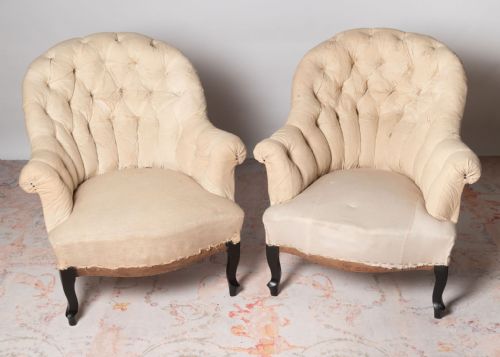
Buyers encounter forms ranging from George III wing-backed armchairs and Regency porters armchairs to nineteenth-century Howard style armchairs and nineteen-twenties leather club chairs. The selection spans traditional English country house styles, French Napoleon III designs, and Art Deco leather club armchairs.
Materials and construction
Construction relies on sturdy timber frames, notably mahogany and general wood, paired with metal or brass elements where structural reinforcement or castors are applied. These solid foundations support the substantial weight and deep proportions characteristic of the form.
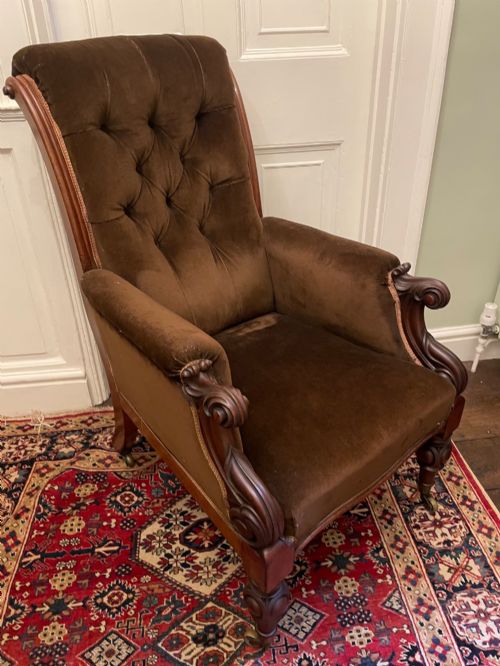
Upholstery techniques utilise traditional padding and springs finished in hand-dyed brown leather, caramel tan leather, gold velvet, linen, and various woven fabrics. Specific examples, such as Chesterfield club chairs and porters armchairs, demonstrate skilled buttoning and leather-working methods.
Classic Deep Seat Armchair Retail Price Guide 2026
Typical asking prices for classic deep seat armchair among the pieces listed under this phrase on Sellingantiques today, from the lower quarter to the upper quarter. They describe what is for sale here now, not the wider market.
Some porters armchairs were built like indoor hooded sentry boxes, proving that nineteenth-century hall porters took their draught-exclusion very seriously indeed.
Assessing quality in seating
Quality resides in the integrity of the timber frame and the depth of traditional upholstery work, where firmer internal support prevents sagging over decades of use. Superior examples display precise joinery in woods like mahogany and careful proportioning in the arms and back.
The finish of the covering material dictates the visual standard, from hand-dyed leathers showing natural patination to precisely fitted velvet and linen textiles. Pieces executed in recognised historical idioms, such as George III wing backs or Howard and Sons styles, demonstrate greater fidelity to traditional proportions.
Howard and Sons·Gillow
The Classic Deep Seat Armchair Glossary
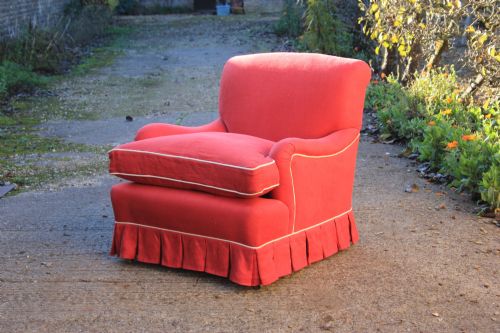
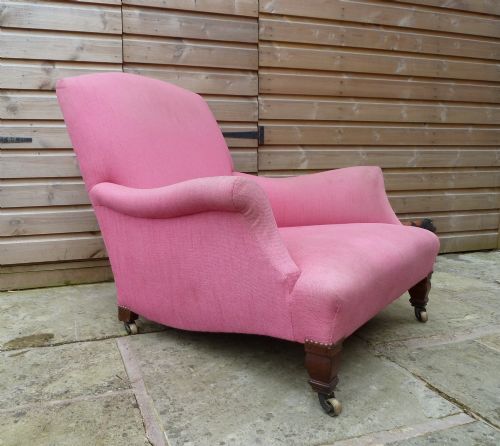
- Howard style armchair
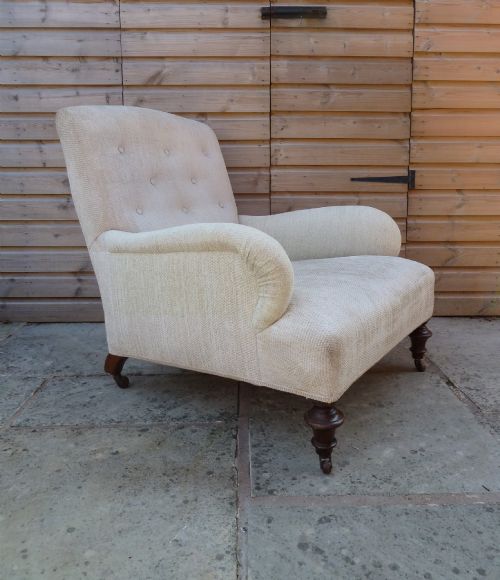
- A nineteenth-century seating form noted for low rolled arms, deep seating, and generous proportions designed for relaxation. These chairs often sit on low turned wooden legs with brass castors.
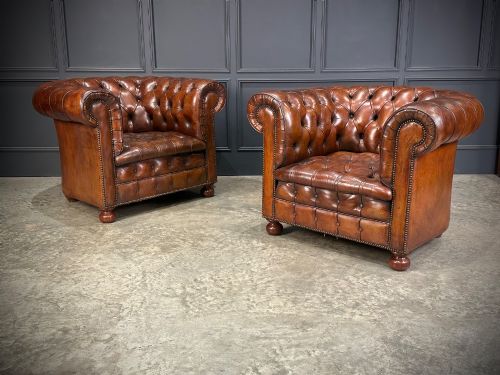
- Chesterfield club chair
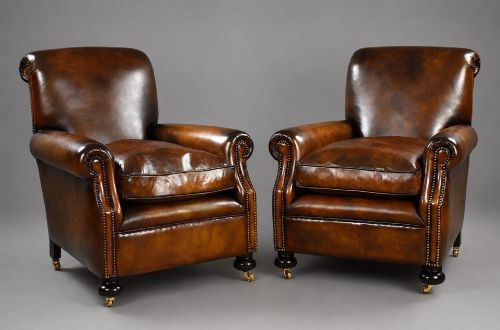
- A low-slung, deeply upholstered seating piece typically covered in dark or hand-dyed leather. The style prioritises robust comfort and sturdy construction.
- Porters armchair
- A high-backed seating form originally designed to keep out draughts in cold entrance halls. Regency examples feature fully enclosed upholstered sides and a hooded canopy.
- Wing-backed armchair
- A traditional seating design featuring protective side panels attached to the arms and back. Eighteenth-century iterations like the George III examples provide formal upright support with deep upholstered wings.
- Art Deco club armchair
- A twentieth-century seating form characterised by rounded, streamlined contours and smooth leather upholstery. These pieces reflect modernist design shifts away from ornate nineteenth-century decoration.
Classic Deep Seat Armchair: Frequently Asked Questions
How do I care for leather club chairs?
Leather club chairs require regular dusting and occasional treatment with appropriate leather balms to maintain the suppleness of the hide. Keeping them away from direct sunlight prevents the caramel tan and brown dyes from fading.
Natural patination develops over time through use, enhancing the character of hand-dyed leather surfaces.
What is a Howard style armchair?
A Howard style armchair originates from the nineteenth century and is celebrated for its comfortable proportions, low rolled arms, and deep cushioning. They typically feature casters on low wooden legs for ease of movement.
These chairs serve as a benchmark for traditional English country house comfort.
Where were porters armchairs used?
Porters armchairs were historically placed in large entrance halls to shelter doorkeepers from cold draughts. The high enclosed back and sides trapped body heat around the occupant.
Regency examples incorporate these enclosed hoods into substantial leather-upholstered forms.