
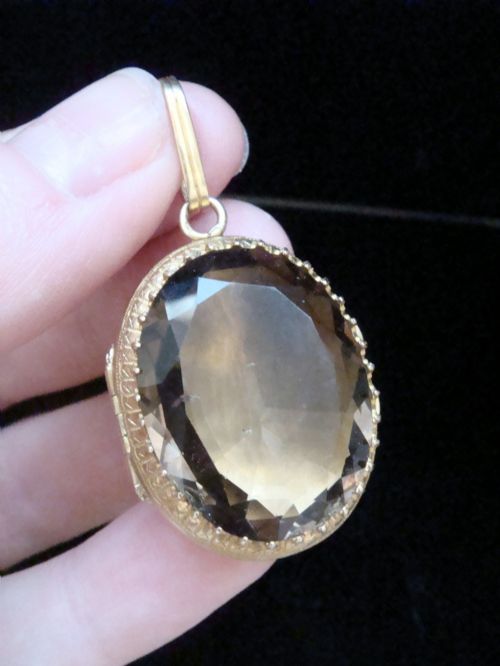


Citrine Pendant Necklace
These citrine pendant necklace pieces bring warm yellow quartz tones to the neck, prized for centuries for their bright golden presence.
Citrine Pendant Necklace
A citrine pendant necklace brings together yellow quartz stones and precious metal chains, presenting forms from simple drops to elaborate cluster designs. When exploring this selection, buyers encounter everything from modest mid-century settings to ornate Victorian pieces.
The objects span multiple eras, including Georgian, Victorian, Edwardian, Art Nouveau, and mid-century modern periods. Surviving examples range from simple gold-mounted quartz drops to elaborate multi-gem arrangements featuring seed pearls, garnets, and diamonds.
Makers and workshops across Britain and Europe utilised silver, gold in various carat weights, and enamel work to house these stones. Pieces often double as lockets, fobs, or convert from brooches, reflecting the versatile jewellery designs of their respective decades.
Materials and construction methods
Goldsmiths and silversmiths shaped yellow quartz stones using faceted cuts, including trillion and oval shapes, mounted in nine-carat or eighteen-carat yellow gold and sterling silver. Metalwork techniques incorporate chased floral motifs, wirework, and specialised settings to secure the stones.
Edwardian and Art Nouveau examples demonstrate specialised decorative skills such as plique-à-jour enamel and silver gilding. Makers combined citrines with supportive materials like seed pearls, diamonds, rubies, and garnets to enhance the visual depth of the pendant designs.
Materials paired with citrine across current and archived items include diamonds, rubies, garnets, seed pearls, and blue topaz.
Factors separating standard examples from exceptional ones
The clarity and saturation of the central quartz stone largely dictate a piece's visual impact, alongside the weight and purity of the surrounding gold or silver mount. Stronger colour distribution and clean stone cutting separate finer examples from more routine items.
The complexity of the metalwork, whether hand-chased floral motifs or delicate enamel framing, indicates the level of artisan skill involved. Pieces retaining their original matching chains or incorporating secondary gemstones like diamonds and seed pearls demonstrate higher original status.
Heinrich Levinger·Liberty and Co
The Citrine Pendant Necklace Glossary
- Citrine
- A yellow variety of quartz valued for its warm golden to orange hues. It has served as a primary gemstone in pendant jewellery across multiple centuries.
- Locket pendant
- A hinged hollow pendant designed to hold a miniature portrait or lock of hair. Victorian examples frequently combine this function with citrine settings.
- Plique-à-jour
- An enamelling technique where enamel is applied without a backing, creating a stained-glass effect that lets light pass through. This method appears on fine Art Nouveau pieces.
- Seed pearl
- Very small natural pearls often used as delicate accents in Edwardian and Victorian clusters. They provide a soft white contrast to bright yellow quartz.
- Spinner fob
- A rotating pendant containing stones or hardstones on opposing faces. These items originally served to seal documents before transitioning to decorative neckwear.
Citrine Pendant Necklace: Frequently Asked Questions
How do I date a citrine pendant necklace?
Dating relies on examining the metal purity marks, stone cuts, and overall stylistic motifs. Georgian and Victorian pieces often feature closed-back settings and hand-carved details, while mid-century examples tend toward bolder geometric goldwork.
Assay marks and maker stamps, where present, provide direct clues to the year and location of manufacture. Comparing the pendant style with known periods helps narrow down the decade of creation.
What metals are typically used in these necklaces?
Surviving pieces utilise nine-carat and eighteen-carat yellow gold, sterling silver, and occasionally silver gilt. The choice of metal often reflects the prevailing fashion and economic conditions of the period.
Gold dominates Victorian and mid-century iterations, while silver frequently underpins Edwardian and Arts and Crafts designs. Chains may be original to the pendant or added later to facilitate wear.
Are citrine stones treated or natural?
Many historical citrines occur naturally as yellow quartz, though thermal treatment of amethyst or smoky quartz has a long history in the trade. Antique pieces generally feature stones chosen for their inherent colour rather than modern enhancement techniques.
Evaluating the stone under magnification reveals natural inclusions that confirm its status as genuine quartz. The depth of the yellow shade varies from pale lemon to deep madeira tones depending on the origin.
How should I care for an antique citrine pendant?
Quartz is a durable mineral, but antique settings and delicate secondary materials like seed pearls or enamel require gentle handling. Cleaning should involve warm soapy water and a soft brush, avoiding harsh chemical dips that damage older metals or adhesives.
Store the pendant separately from harder gemstones to prevent surface scratching on the gold or the stone facets. Regular checks by a jeweller ensure the prongs holding the citrine remain secure.