


Citrine Gemstone Jewellery
Citrine gemstone jewellery spans bright clusters and geometric drops, bringing rich golden tones from Victorian settings right through to mid-century modern designs.
Citrine Gemstone Jewellery
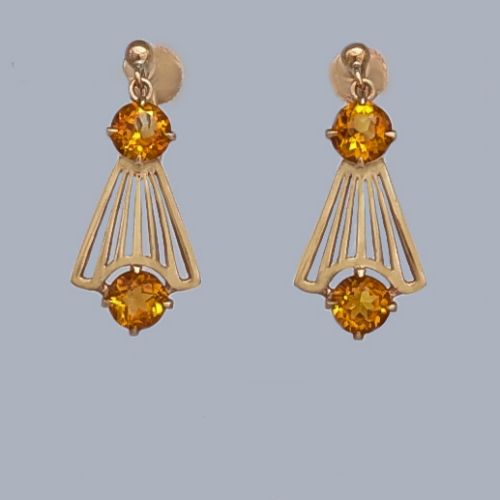
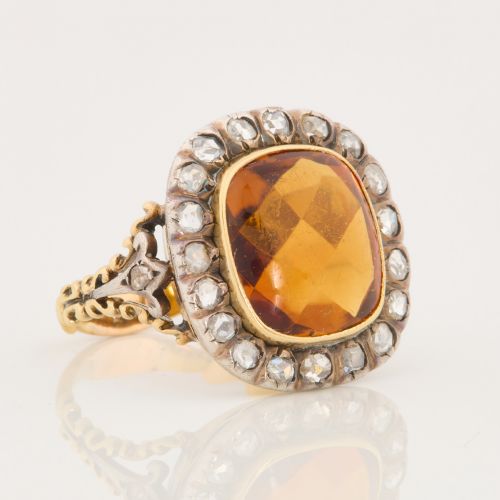
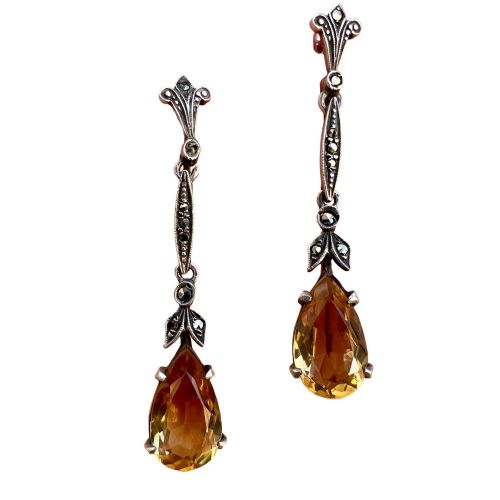
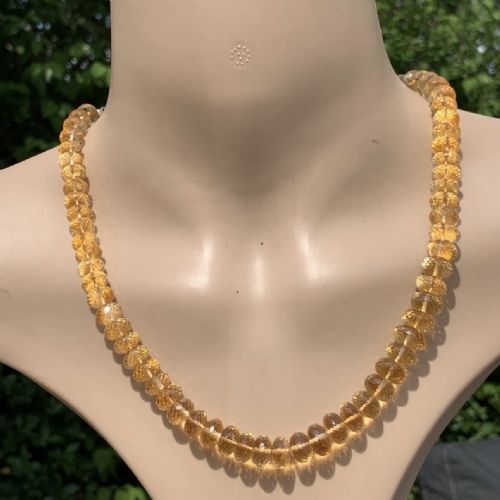
Citrine gemstone jewellery appears in a wide variety of wearable forms, from rings and necklaces to drop earrings, brooches, and trinket boxes. The selections span multiple eras, with Victorian, Edwardian, and Art Deco pieces sitting alongside mid-century examples.
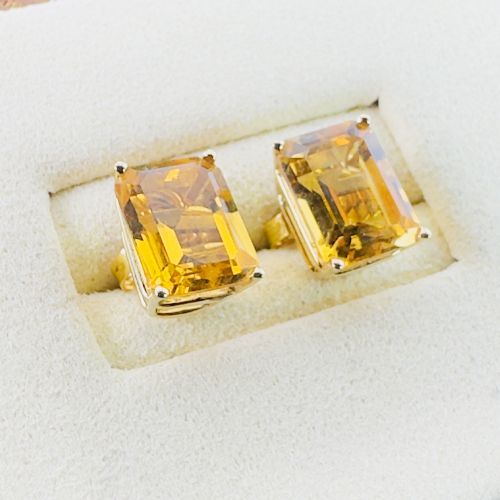
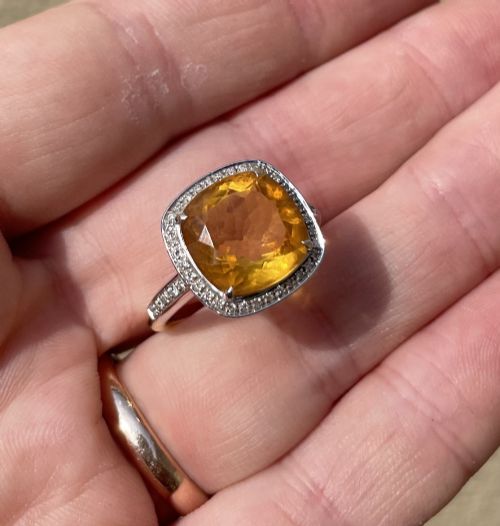
Rings and pendants frequently utilise cluster settings or clean emerald and cushion cuts. Earrings range from delicate dangles to secure lever backs, while larger statement brooches and fob seals show the heavier presence of earlier decades.
Scottish silver work and French yellow gold pieces add regional diversity to the selection. Buyers will frequently encounter 9ct and 18ct gold mounts framing the distinct yellow quartz.
Materials and Technique
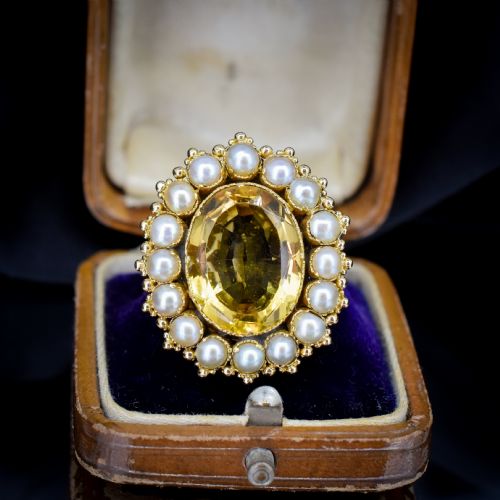
Gold forms the primary metal framework for these pieces, utilising 9ct, 14ct, and 18ct yellow gold alongside silver settings. Metalworkers shaped these supports into intricate halo clusters, witch's heart charms, and hinged bangle structures.
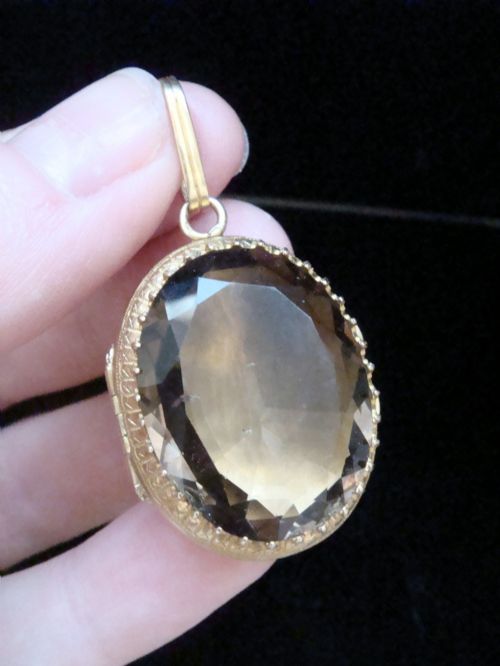
The stones themselves undergo various cuts, including emerald, cushion, and faceted drops, often accented by diamonds, garnets, or seed pearls. Gemstones are secured using traditional claw and bezel mountings suited to each specific period's aesthetic.
Listings feature 9ct and 18ct gold alongside silver, incorporating periods from the Victorian era through the mid-twentieth century.
Evaluating the Range
Quality in citrine gemstone jewellery rests upon the depth of the stone's colour and the precision of its faceting. Strong saturation and clean internal clarity elevate a piece well above standard commercial production.
The integrity of the surrounding metalwork and the originality of secondary stones, such as seed pearls or diamonds, dictate the overall standard. Heavier gold weights and fully intact hallmarks from regional assay offices further distinguish the superior examples.
The Citrine Gemstone Jewellery Glossary
- Citrine
- A yellow variety of quartz valued for its transparent amber and golden hues. It has served as a primary gemstone in British and European jewellery for centuries.
- Halo Cluster
- A central gemstone surrounded by a ring of smaller stones, typically diamonds or pearls. This arrangement maximises the visual impact of the main gem.
- Faceted
- A cutting technique that applies flat polished surfaces to a gemstone at geometric angles. This process optimises the way light reflects through the quartz.
- Seed Pearl
- Very small, naturally occurring pearls historically used in delicate clusters and borders. They appear frequently in Victorian and Edwardian jewellery designs.
- Lever Back
- A secure earring closure featuring a hinged lever that snaps shut behind the earlobe. This mechanism prevents loss during wear.
Citrine Gemstone Jewellery: Frequently Asked Questions
How do I clean antique citrine jewellery?
Warm soapy water and a soft brush will safely remove everyday oils from the quartz and metal mountings.
Avoid harsh chemical dips or ultrasonic cleaners, particularly on pieces containing seed pearls or foil-backed stones.
Are these gold mounts solid or plated?
The pieces utilise solid gold across varying purities, primarily 9ct, 14ct, and 18ct yellow gold.
Assay marks and traditional testing methods confirm the solid construction of the frames and chains.
Can I wear a citrine ring every day?
Quartz rates a seven on the Mohs hardness scale, making it durable enough for regular daily wear with sensible precautions.
Removing rings during heavy manual work protects both the central citrine and any surrounding seed pearls or diamonds.
How do I identify an Art Deco citrine piece?
Art Deco designs rely on geometric symmetry, sharp emerald cuts, and stylized lines that contrast with earlier organic Victorian motifs.
These pieces frequently pair bright yellow quartz with streamlined 14ct or 9ct gold settings typical of the 1920s.