

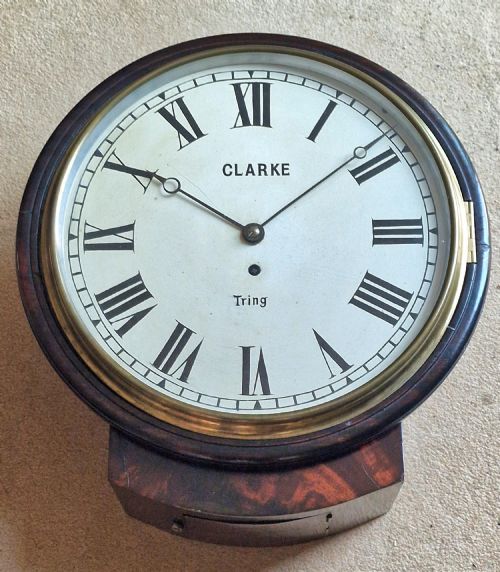
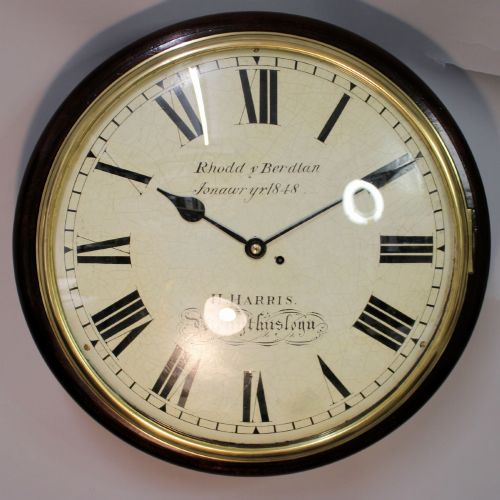
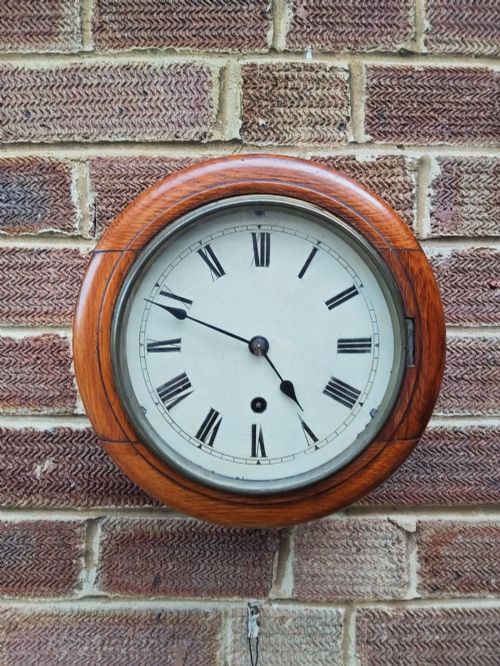
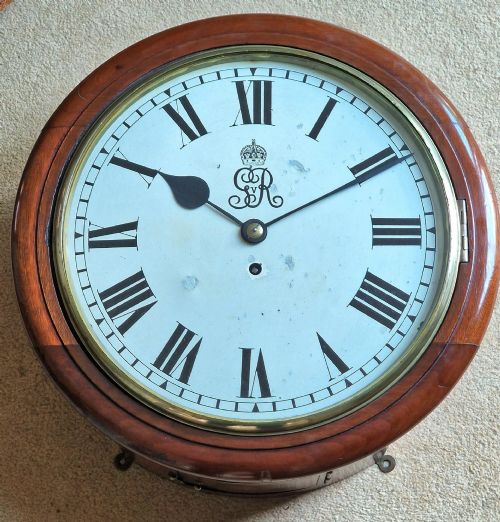



Circular Wood Wall Clock
A circular wood wall clock brings practical timekeeping and honest construction into a room, spanning schoolrooms, railway stations and domestic halls.
Circular Wood Wall Clock
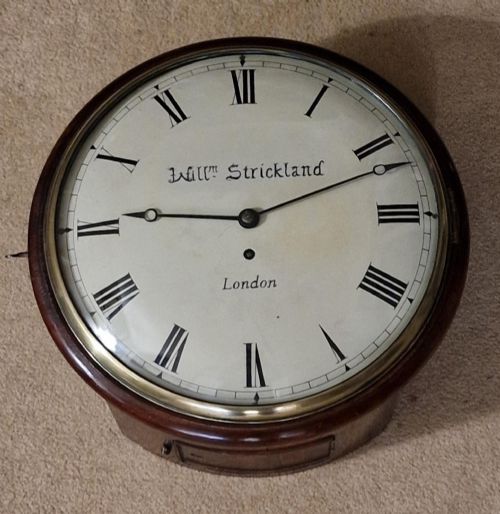
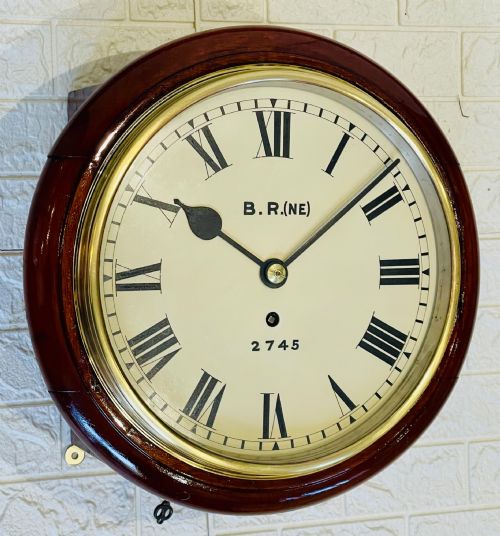
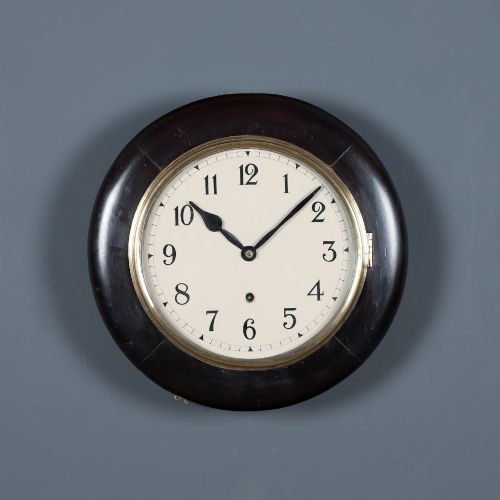
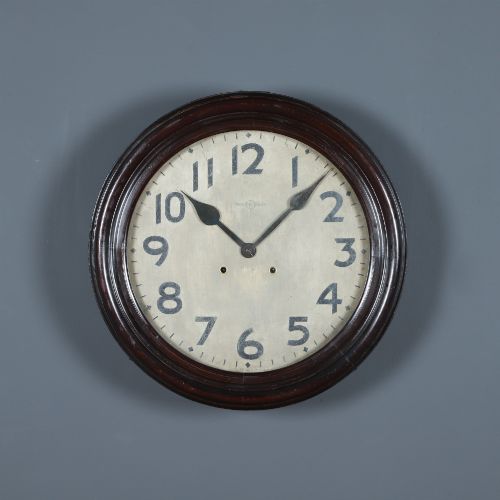
A circular wood wall clock combines a round timber housing with a protected dial, designed for straightforward timekeeping in public and private spaces. These pieces appear across various periods including the Georgian and Victorian eras, alongside interwar military examples and twentieth-century utility styles.
The most common formats on this page are round dial clocks and railway or schoolhouse styles, often driven by fusee movements housed in deep timber surrounds. Simpler wall clocks share these circular wooden profiles, typically designed to hang securely in prominent positions.
Origins stretch from British provincial makers and London workshops to Japanese trade production, reflecting diverse regional tastes in timber casing and dial layout. The materials range from rich mahogany and oak to beech and walnut, creating distinct visual weights on the wall.
Materials and construction
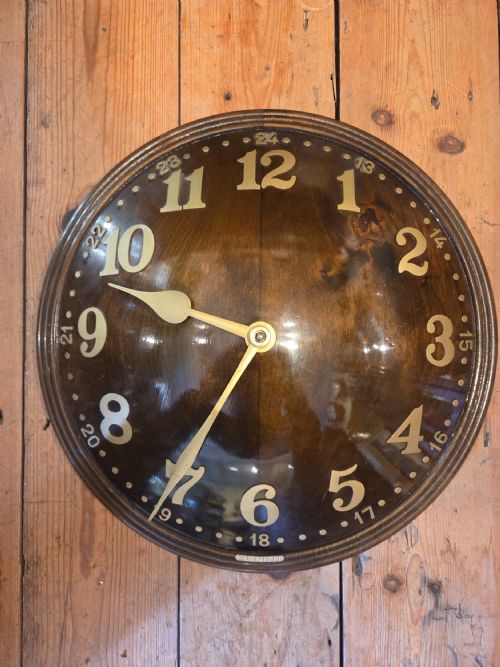
Timbers such as mahogany, oak, beech and walnut form the structural carcasses and outer frames, shaped into solid circular surrounds designed to protect the internal movement. Glass protects the painted or wooden dials, while brass components operate the inner mechanics.
Circular Wood Wall Clock Retail Price Guide 2026
Typical asking prices for circular wood wall clock among the pieces listed under this phrase on Sellingantiques today, from the lower quarter to the upper quarter. They describe what is for sale here now, not the wider market.
Origin records span British regional makers, London workshops, Japanese production and military issue items.
Judging quality and craftsmanship
The distinction between standard timepieces and superior examples often lies in the precision of the dial lettering, the selection of figured timber for the case, and the complexity of the movement. Fusee movements and chiming or striking capabilities indicate higher grade production.
Proportion and execution of the timber surround separate regional vernacular pieces from fine London or specialised workshop outputs. The clarity of the painted metal or wooden dial and the integrity of the brass bezels complete the assessment of overall standard.
George Clarke Tring·Henry Harris Monythusloyn·Francis Perigal London·Sly Weymouth·J Beckett London·Anglo Swiss Watch Co·Smiths
The Circular Wood Wall Clock Glossary
- Fusee
- A conical pulley used in spring-driven clocks to maintain even power as the mainspring unwinds. This mechanism helps ensure steady timekeeping across the duration of the wind.
- Dial clock
- A wall-mounted clock featuring a prominent circular face and a side or bottom access door. These were widely utilised in railway stations, schools and offices.
- Drop-dial
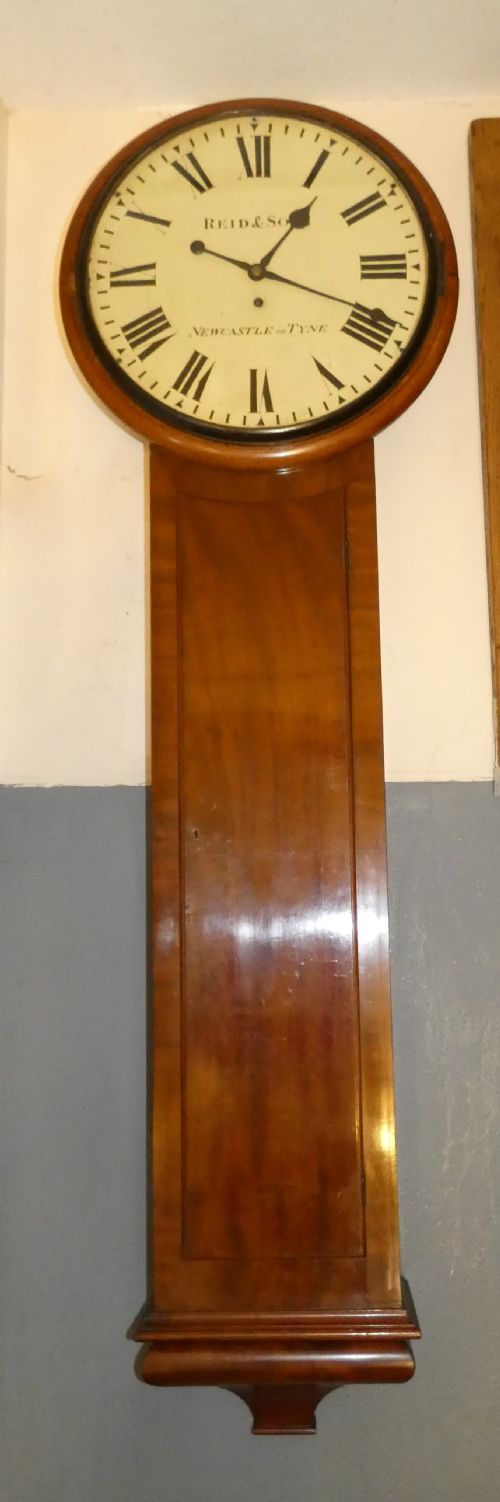
- A clock case featuring a circular dial section at the top with an extended lower wooden trunk. This drop often accommodates a longer pendulum swing or weight drop.
- Striking
- A mechanical function that sounds the hours or half-hours via a bell or gong. Chiming versions produce melodic sequences at quarter-hour intervals.
- Aneroid barometer
- An instrument measuring atmospheric pressure without liquid, often paired alongside circular wall clocks. It relies on a flexible metal box that expands or contracts with weather changes.
Circular Wood Wall Clock: Frequently Asked Questions
How do I hang a heavy wooden wall clock safely?
These clocks require secure fixing directly into wall studs or solid masonry using appropriate fixings rated for the weight of the timber and movement. Hanging them from picture rail hooks is generally discouraged due to the pendulum and movement vibrations.
Ensure the case sits flush against the vertical surface to prevent the movement from beating unevenly. A stable mounting keeps the escapement regular and protects the timber housing from strain.
What is the difference between a fusee and a standard spring movement?
A fusee movement uses a conical drum and chain to equalise the decreasing force of the mainspring as it runs down. This traditional method promotes more consistent timekeeping throughout the operational cycle.
Standard spring movements rely directly on the mainspring barrel without this equalising pulley. Fusee variations are typically found in higher grade British dial clocks from the nineteenth century.
How do I wind a wall clock with a pendulum?
Insert the winding key into the dial aperture and turn it gently until resistance indicates the mainspring is fully tensioned. Care should be taken not to overwind the mechanism.
After winding, ensure the pendulum is set swinging evenly to establish a steady beat. If the ticking sounds uneven, the case may need slight adjustment on the wall.
Where were school and railway clocks typically used?
Railway station and school clocks were mounted in high-traffic communal areas where clear visibility and reliable timekeeping were essential for public coordination. Their robust circular designs allowed staff and pupils to read the time from a distance.
These pieces often featured simple, high-contrast dials and durable mahogany or oak surrounds to withstand busy environments. Their presence reflects institutional standardisation during the nineteenth and early twentieth centuries.