

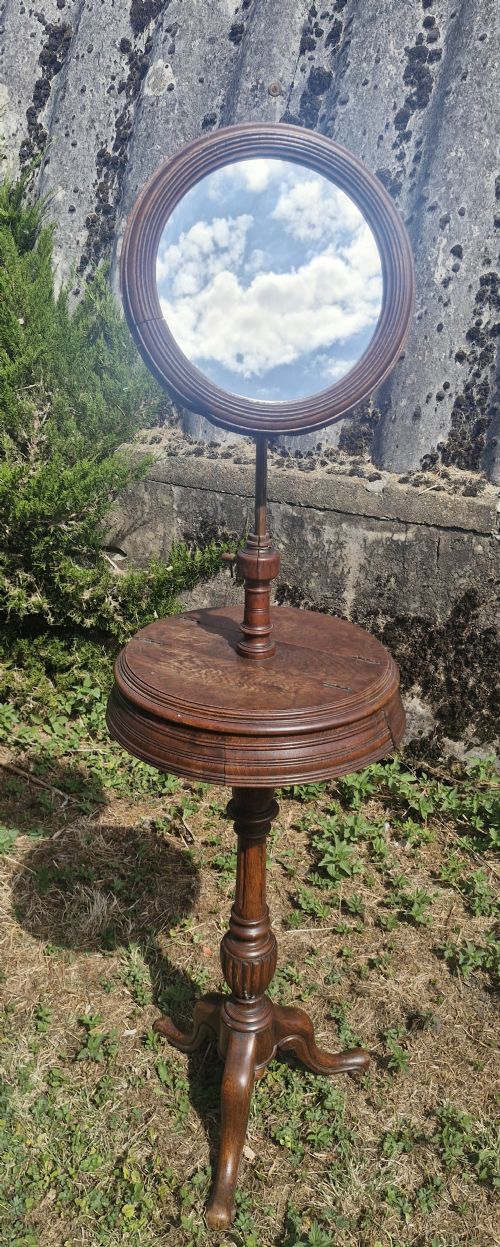


Circular Mirror on Stand
A circular mirror on stand is a portable looking glass raised on its own base, prized for bringing both utility and reflected light to a surface.
Circular Mirror on Stand
When you search for a circular mirror on stand, you encounter a focused group of table and dressing mirrors alongside small plateaux designed to sit directly on furniture surfaces. The examples recorded here stretch from the Georgian and Regency eras through the Victorian period and into the early twentieth century.
Most pieces on this page take the form of shaving stands, dressing table mirrors, and mirrored table plateaux, often featuring adjustable frames mounted on tripods, pedestals, or low feet.
The materials span traditional cabinet timbers such as mahogany, oak, satinbirch, and walnut, paired with brass fittings and silver plate, reflecting the domestic habits and grooming routines of past centuries.
How they were made
Cabinetmakers constructed these stands using solid timbers and veneers, shaping mahogany, oak, and walnut into turned pedestals and tripod legs that support the tilting mirror frames. Brass adjustment screws and pivots allow the glass to angle correctly for the user.
Mirrored plateaux and table bases often incorporate wooden or pewter carcases fitted with heavy glass plates and velvet or fabric undersides to protect furniture surfaces.
Circular Mirror on Stand Retail Price Guide 2026
Typical asking prices for circular mirror on stand among the pieces listed under this phrase on Sellingantiques today, from the lower quarter to the upper quarter. They describe what is for sale here now, not the wider market.
One piece carries a specific 1927 registration date, proving someone felt a small silver-plated mirror plateau required official paperwork.
What varies in quality
Quality rests in the precision of the turning and the harmony of the proportions, particularly where tripod legs meet the central pillar or where brass pivots secure the glass plate. Heavier gauge metals and finely figured timbers distinguish superior workshop output from simpler utilitarian pieces.
The integrity of the mirror glass and the retention of original fittings, such as specialised scientific optical lenses or maker-stamped brass work, separate standard examples from those of greater distinction.
The Circular Mirror on Stand Glossary
- Shaving stand
- A specialised piece of furniture incorporating an adjustable mirror designed for grooming. These usually feature compact footprints and pivoting glass.
- Table plateau
- A flat mirrored base placed on dining or side tables to display centrepieces or reflect candlelight. They utilise heavy glass plates within wooden or metal mounts.
- Tripod stand
- A three-legged base providing stable support on uneven surfaces. This form is common in nineteenth-century dressing mirrors and shaving stands.
- Silver plate
- A thin layer of silver fused to a base metal such as copper or pewter. It appears frequently on nineteenth-century table plateaux and hardware.
- Optical mirror
- A precision glass plate, sometimes associated with scientific instruments, designed to provide accurate magnification or reflection.
Circular Mirror on Stand: Frequently Asked Questions
What is a circular mirror on stand used for?
These pieces served primarily for personal grooming and shaving in bedrooms or dressing rooms, where an adjustable glass was necessary for adequate light.
Table plateaux were deployed in dining rooms to hold centrepieces and amplify the glow of candles across the table.
How do I date a dressing mirror?
Dating relies on timber selection, construction methods, and the style of the turning on the uprights and base. Earlier Regency and Georgian pieces often display finer joinery and specific wood choices compared to later Victorian iterations.
Hardware such as brass thumbscrews and hinges also provides clues to the manufacturing period.
Are these mirrors fixed or adjustable?
The majority of these pieces feature pivoting mechanisms that allow the circular glass to tilt back and forth to the user's preferred angle.
Some shaving stands also incorporate telescopic columns to adjust the overall height.
Where should I place a table plateau?
A mirrored plateau sits well on a sideboard, side table, or dining surface to create a focal point and reflect decorative objects.
Ensure the surface is level and capable of supporting the weight of the wooden or metal base.
What woods were used for these stands?
Cabinetmakers utilised dense hardwoods including mahogany, walnut, and oak for durability and rich grain patterns.
Later Victorian examples occasionally employ lighter timbers such as satinbirch alongside traditional materials.