

Circular Mahogany Candle Stand
A circular mahogany candle stand provides a stable, elegant pillar for holding a single taper near a seat or bed.
Circular Mahogany Candle Stand
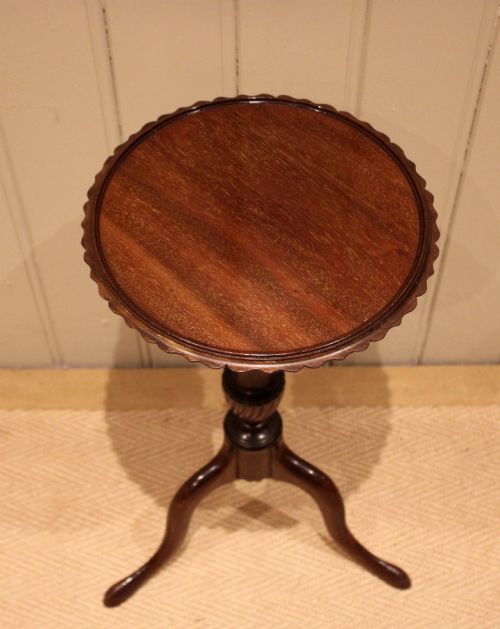
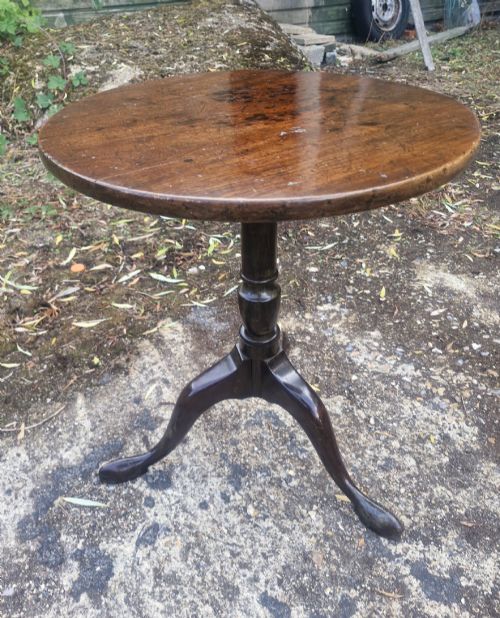
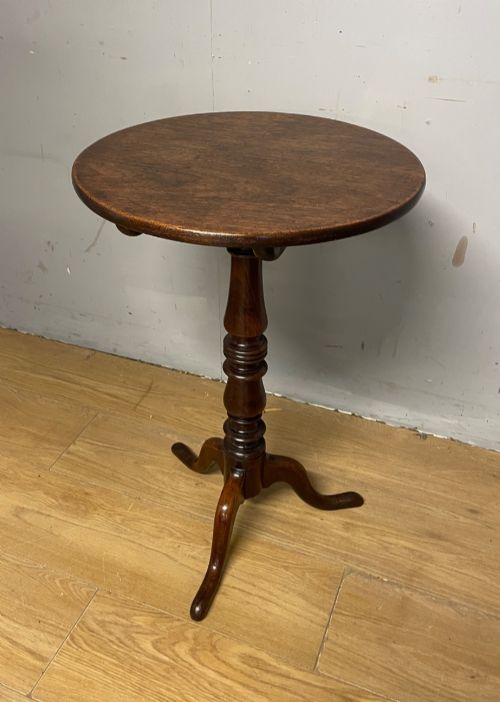
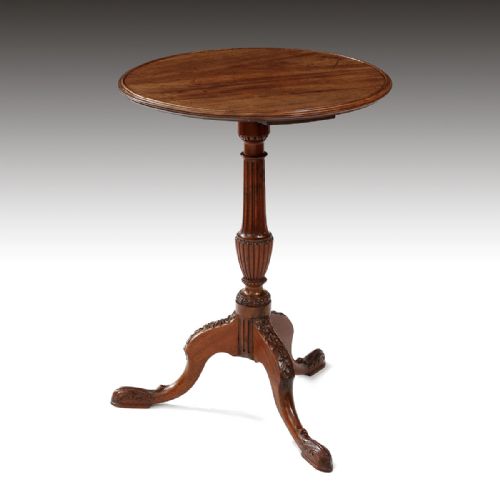
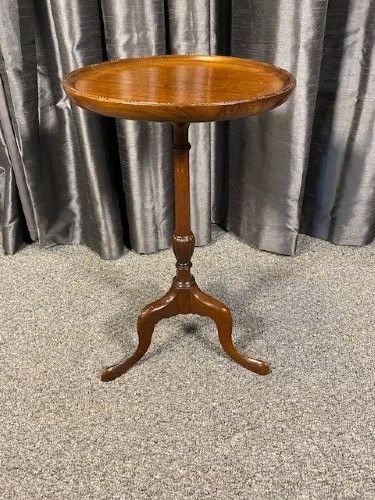
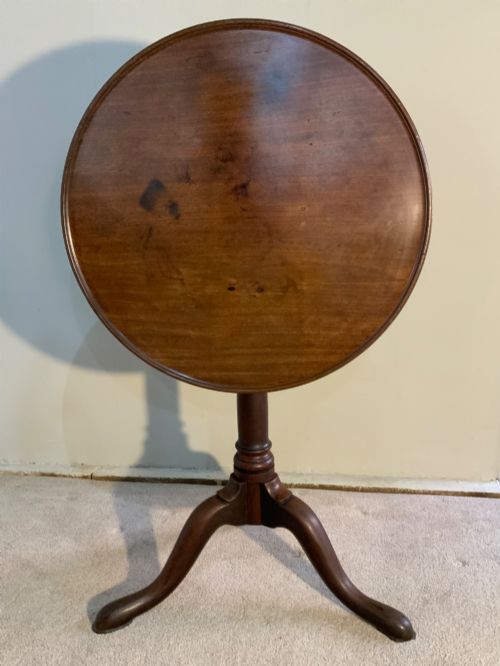
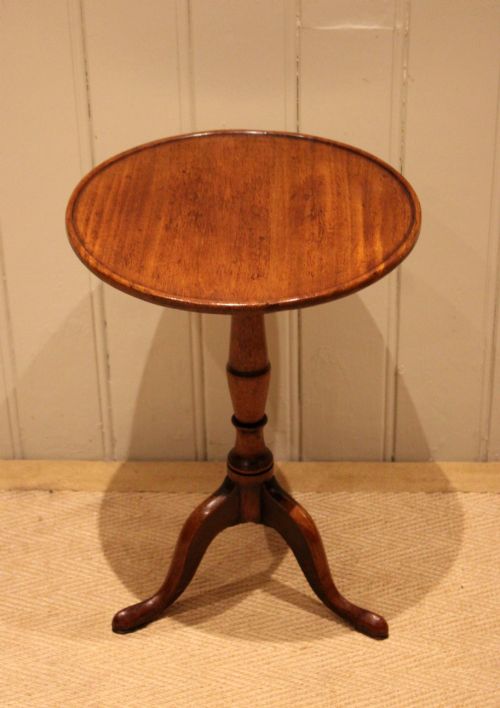
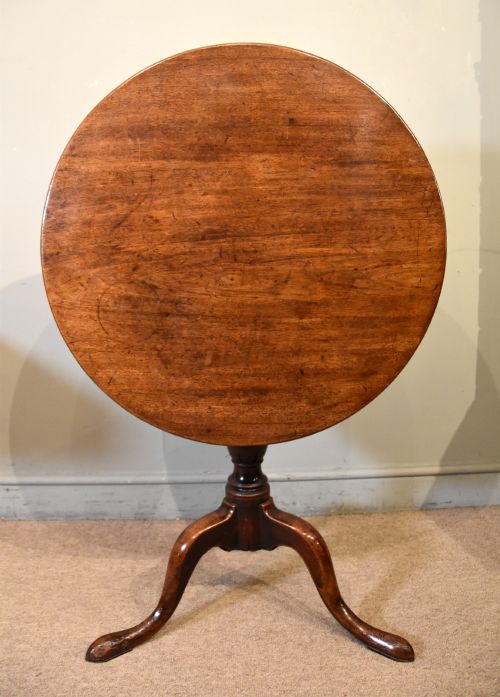
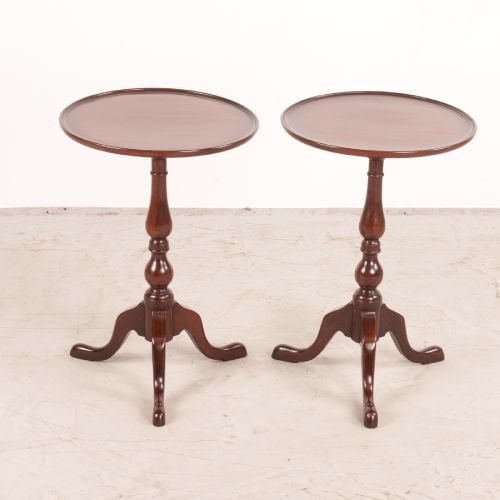
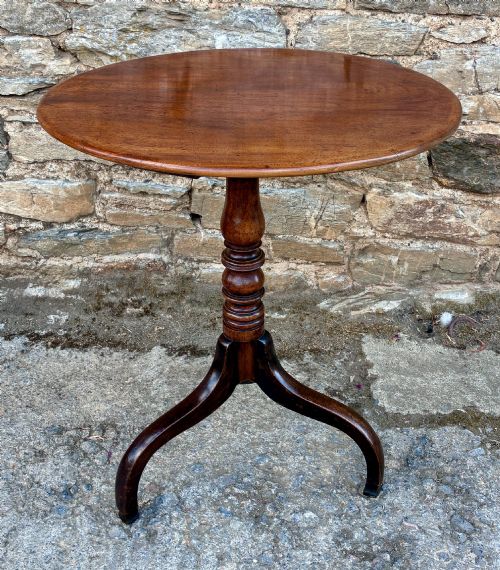
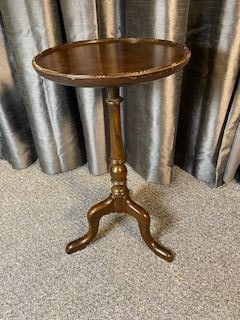
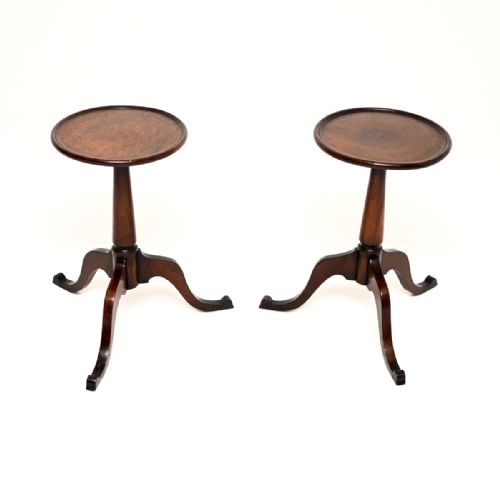
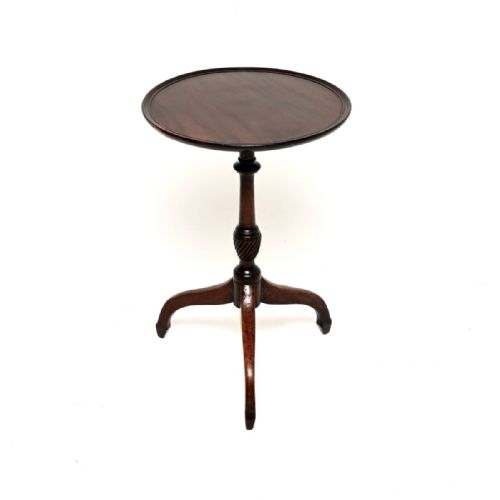
A circular mahogany candle stand, often termed a wine table or lamp table, stands upon a central pillar supported by three legs. The form dates principally from the eighteenth and nineteenth centuries, spanning the Georgian, Regency and Victorian eras.
Most examples found here date from the Georgian and Victorian periods, alongside later Edwardian interpretations. They function as small occasional surfaces designed to hold lighting or small vessels rather than heavy loads.
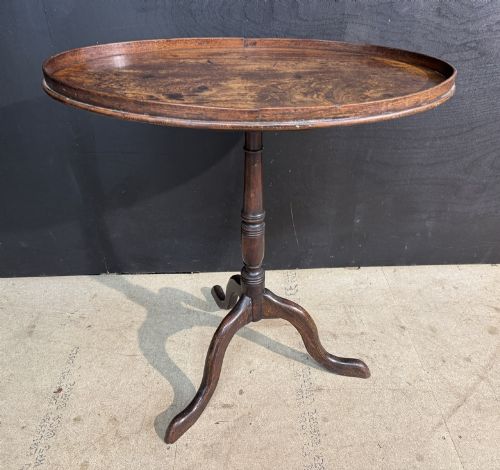
Tripod bases predominate, frequently featuring a tilting mechanism that allows the top to fold flat against the stem when not in use. Some pieces incorporate sophisticated birdcage mechanisms beneath the top for smooth rotation and pivoting.
Materials and construction
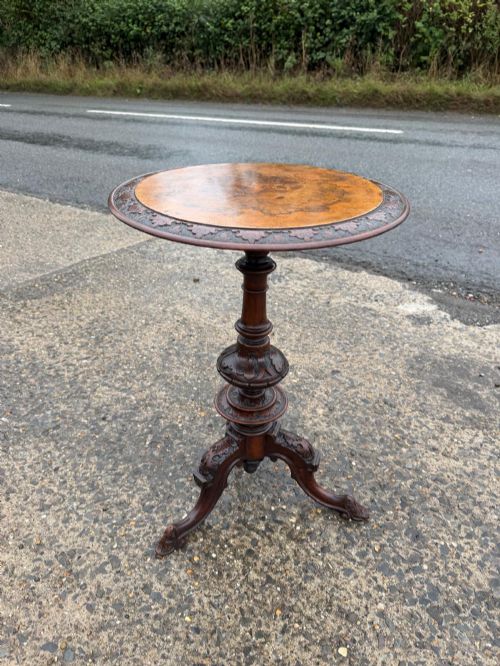
Makers utilised solid mahogany and applied veneers such as flame mahogany or burr wood to the circular tops for rich grain patterns. Secondary timbers like oak occasionally appear in the structural framing underneath.
Turning lathes shaped the central pedestals and pillars, while hand-cut joinery secured the legs to the shaft using dovetail or tenon joints. Brass fittings and iron reinforcement sometimes strengthen the central pivot and leg junctions.
Some tables tilt so neatly they can double as miniature modesty shields when guests arrive unexpectedly.
Distinctions in execution
The choice of timber determines much of the visual depth, with highly figured flame mahogany or burr wood tops commanding attention over plain planks. Finely carved cabriole legs ending in pad or claw feet represent a higher standard of cabinet-making than simple tapered legs.
The mechanical action of tilt-top mechanisms and birdcage joints reveals the precision of the original maker. Smooth movement without excessive play in the central column separates finely fitted examples from simpler utilitarian pieces.
Gillow
The Circular Mahogany Candle Stand Glossary
- Tripod table
- A small circular table supported by a central pillar and three legs. This construction prevents wobbling on uneven floorboards.
- Tilt top
- A table top hinged to tip vertically when not in use. This allowed the piece to be stored flat against a wall.
- Birdcage
- A rotating wooden framework beneath a table top that permits both tilting and turning. It uses small vertical spindles resembling a cage.
- Flame mahogany
- Timber cut from the fork of the mahogany tree to produce a flickering, flame-like grain pattern. Cabinet-makers reserved it for prominent surfaces.
- Lamp table
- A low circular table adapted over time to support lighting rather than drinking vessels. They share the same fundamental tripod architecture.
Circular Mahogany Candle Stand: Frequently Asked Questions
What is a birdcage mechanism?
A birdcage is a rotating wooden assembly fitted beneath the circular top that allows the table surface to both pivot and tilt.
This clever engineering allowed eighteenth-century owners to move the table easily and store it flat against a wall when the room was cleared.
How do I identify a tilt top?
Look underneath the circular surface for a wooden catch or brass latch holding the top to the central pillar block.
When released, the surface hinges upward to stand vertically, a feature designed for compact storage in period drawing rooms.
Were these used for candles?
Yes, their primary early function involved holding lighting near seating areas before the widespread adoption of fixed wall sconces and electric lamps.
Over subsequent decades, owners repurposed them as wine tables, lamp tables and general occasional surfaces.
How do I distinguish Georgian from Victorian pieces?
Georgian examples generally exhibit restrained classical proportions, slender turned pillars and subtle timber selection.
Victorian pieces frequently display heavier pedestals, bolder carved decoration and occasionally more exotic secondary veneers like burr wood.