



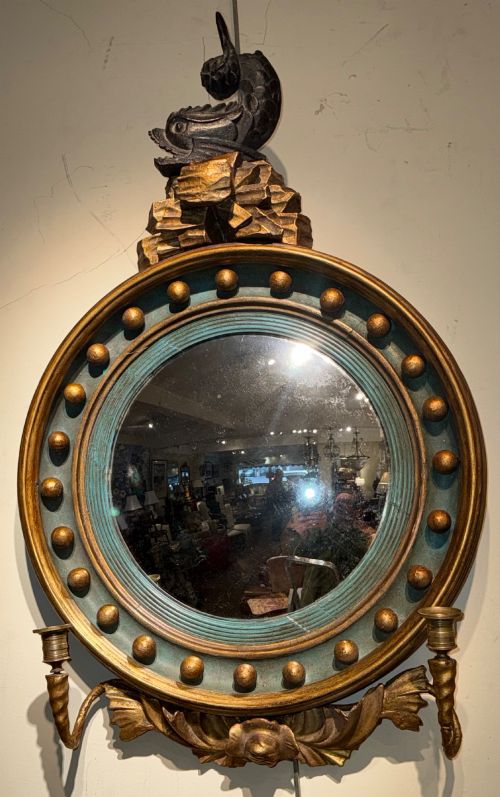



Circular Gilt Frame
A circular gilt frame brings immediate focus and reflected light to a wall, framing convex mirrors, portraits, and prints with golden warmth.
Circular Gilt Frame
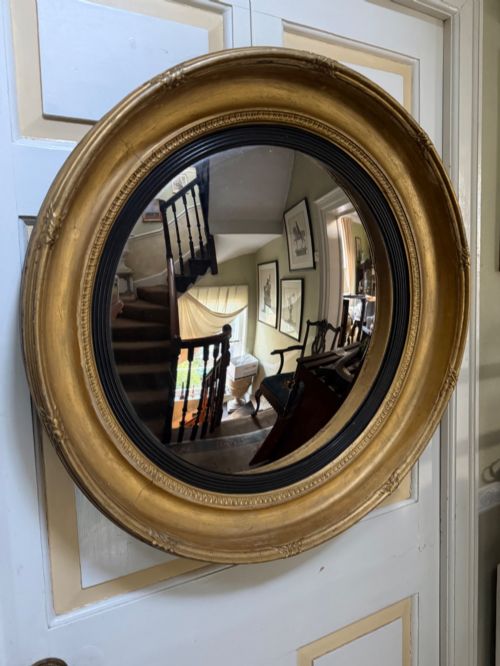
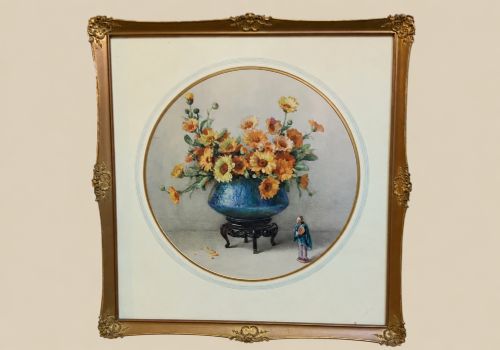
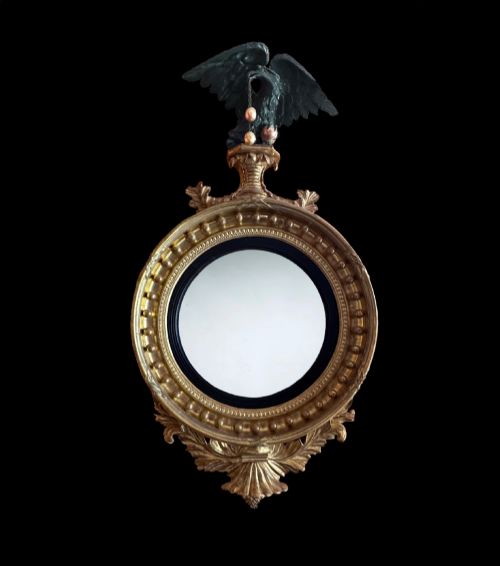
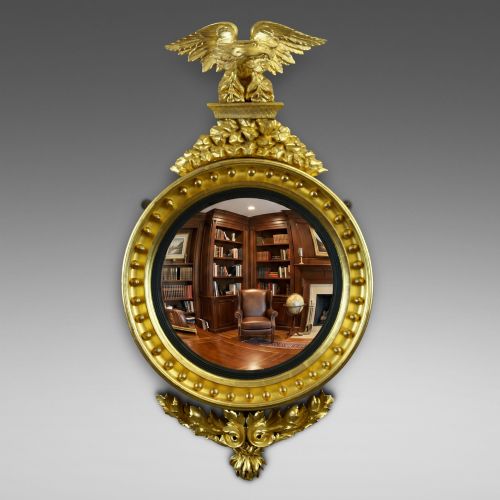
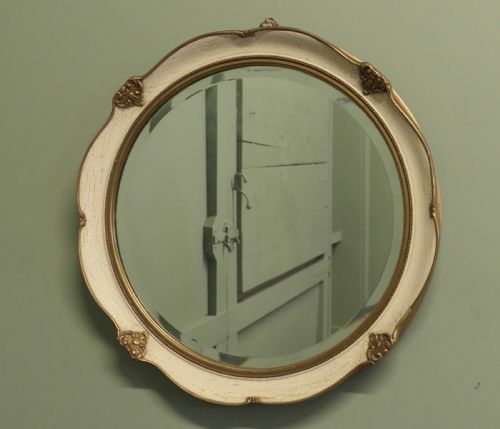
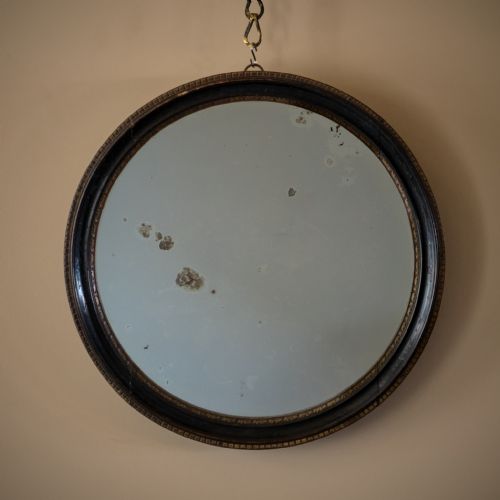
A circular gilt frame primarily houses convex wall mirrors, tondo paintings, watercolours, and classical prints spanning the Regency, Victorian, and Edwardian periods. The convex mirror format dominates the selection, bringing depth and a wide-angle reflection of the room into a compact circular boundary.
Makers across the nineteenth and early twentieth centuries utilised this round format to break the monotony of rectilinear wall arrangements. Pieces range from grand Regency convex plates of substantial scale down to smaller Victorian and Edwardian examples intended for intimate spaces.
Materials and Construction
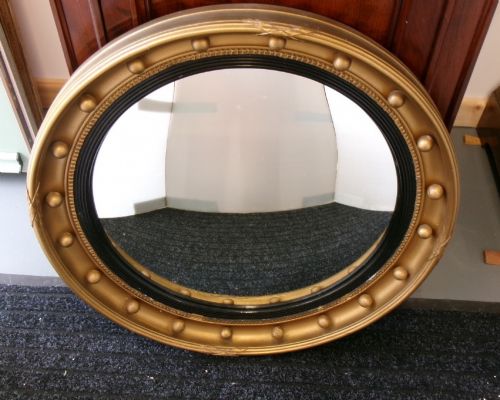
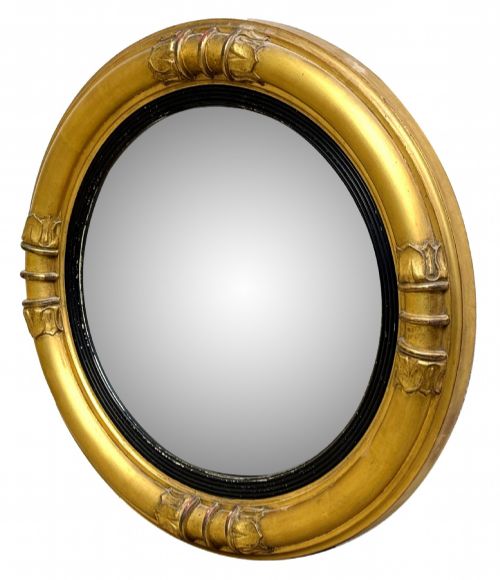
Giltwood forms the primary structural material, carved from timber and coated in gold leaf or gesso to achieve a brilliant metallic sheen. Ebonised wood details often contrast against the gilt surfaces, particularly in Regency and nineteenth-century examples.
Moulded gesso builds up relief decoration, such as floral leaves or decorative spheres, directly onto the wooden substrate. Glass plates are frequently curved to fit convex mirror frames, capturing distorted panoramic reflections.
Circular Gilt Frame Retail Price Guide 2026
Typical asking prices for circular gilt frame among the pieces listed under this phrase on Sellingantiques today, from the lower quarter to the upper quarter. They describe what is for sale here now, not the wider market.
Early convex mirror frames often include carved dragons keeping watch from the top crest.
Assessing the Pieces
The crispness of the carved wooden or gesso ornamentation separates standard production from finer work, with sharper floral motifs and well-defined mouldings indicating superior craftsmanship. The application and preservation of the original gold leaf layer also dictate the visual depth of the finish.
Proportion and scale influence desirability, particularly in larger Regency convex plates where maintaining structural integrity across a wide diameter requires expert joinery. The clarity and original state of the convex glass plate remain key determinants of overall integrity.
John Bell·John Frederick Herring·Luigi Bardi·Lady Francis Herbert
The Circular Gilt Frame Glossary
- Convex mirror
- A round mirror featuring an outward-curving glass plate that reflects a wide, curved perspective of the interior. This form was especially popular during the Regency period.
- Giltwood
- Timber that has been coated with a thin layer of gold leaf or gold paint. It provides a reflective, durable surface for decorative frames.
- Gesso
- A plaster-like mixture applied to wood bases to create a smooth surface for gilding or to build up relief ornamentation. It allows carvers to achieve fine decorative detail.
- Tondo
- A Renaissance revival term for a circular painting or relief sculpture. These works fit naturally into round gilt surrounds.
- Regency
- A British design period spanning the early nineteenth century defined by neoclassical influences and bold decorative motifs. Frames from this era often incorporate ebonised reeded details.
Circular Gilt Frame: Frequently Asked Questions
Where should I hang a circular gilt frame?
These pieces suit focal points such as above a mantelpiece, in a hallway, or centred on a plain wall where their round geometry contrasts with rectangular furniture.
Because convex mirrors gather and project light across a space, placing them opposite a window maximises illumination in darker rooms.
How do I clean a giltwood frame?
Dust the surface gently with a soft, dry brush or feather duster to remove particles without disturbing the delicate gold leaf.
Avoid using water, chemical sprays, or abrasive cloths, as moisture and friction easily damage historical gilt and gesso layers.
What is the difference between Regency and Victorian frames?
Regency examples often feature bold neoclassical details like ebonised reeding, applied spheres, and deep convex plates designed to command attention.
Victorian pieces tend toward ornate floral leaf carvings and varied scales, adapting earlier Regency motifs for domestic interiors of the later nineteenth century.
Can I hang pictures as well as mirrors in these frames?
While convex mirrors are the most common form, the evidence includes tondo oil paintings, watercolours, and engraved prints housed in matching circular surrounds.
Artworks in round formats offer a distinct visual alternative to traditional rectangular frames when grouped on a gallery wall.