






Circular Ebonised Side Table
A circular ebonised side table brings dark, striking geometry to a room, offering a compact surface rooted in nineteenth-century and early twentieth-century design.
Circular Ebonised Side Table
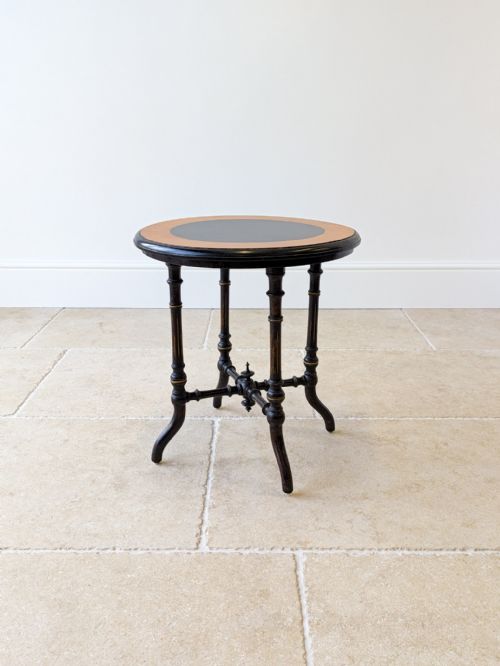
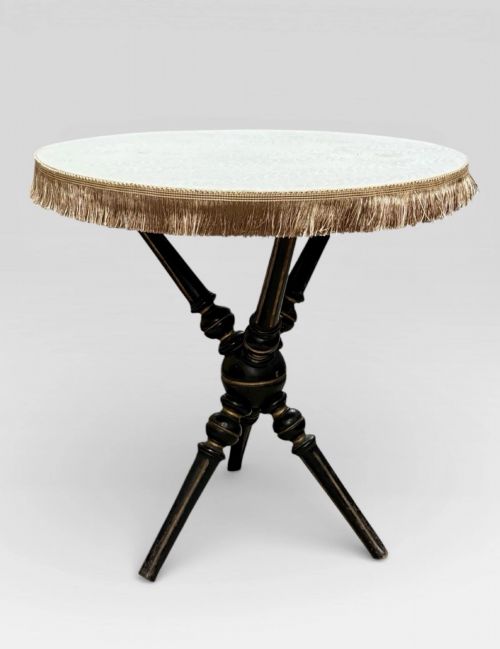
A circular ebonised side table is an occasional piece defined by its blackened wood finish and round top, appearing frequently across Victorian, Aesthetic Movement, and Regency periods. You will encounter these in forms ranging from compact lamp tables and gypsy card tables to larger centre tables and guéridons.
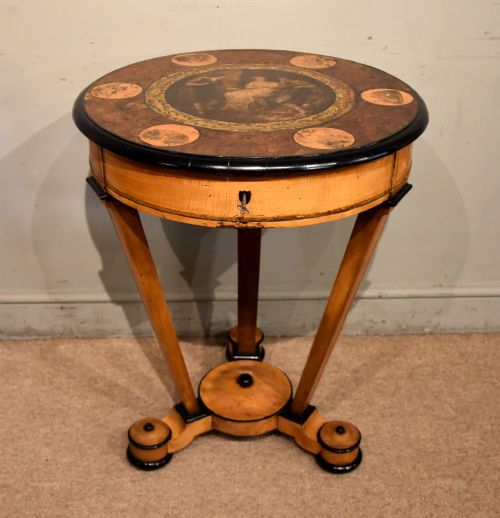
The selection on this page draws together diverse origins and styles, encompassing French Empire, Biedermeier, and Art Deco interpretations alongside English examples. Occasional tables and lamp tables dominate the forms, while related items such as hand mirrors and coffee tables occasionally appear.
How they were made
Construction relies heavily on timbers such as mahogany, beech, birch, and walnut, which are then ebonised to simulate costly ebony or finished with giltwood and gold leaf highlights. Many examples incorporate contrasting materials, pairing the darkened wood with inset marble tops or adding delicate brass details.
Surface decoration extends to Japanned lacquering and fine wood veneers, reflecting periods from the early nineteenth century through to the 1930s. Artisans combined robust structural frames with meticulous surface finishing, utilising natural stone and metallic accents to elevate the simple occasional table.
Circular Ebonised Side Table Retail Price Guide 2026
Typical asking prices for circular ebonised side table among the pieces listed under this phrase on Sellingantiques today, from the lower quarter to the upper quarter. They describe what is for sale here now, not the wider market.
What varies in quality
The distinction between standard production and finer pieces rests in the depth of the ebonisation and the integrity of the underlying wood, whether mahogany, beech, or birch. Superior examples display crisp turnings, intact giltwood or gold leaf details, and stable joints that withstand decades of use.
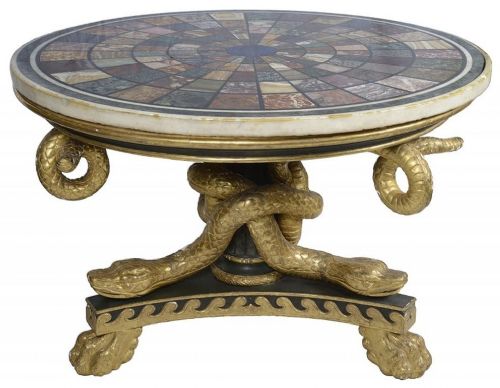
The integration of decorative elements, such as heavy specimen marble tops or original mirror plates, dictates the standing of an individual table. Finer pieces maintain harmonious proportions between the circular top and the supporting pedestal or legs, showing precise craftsmanship across styles from Regency to Art Deco.
The Circular Ebonised Side Table Glossary
- Ebonised Wood
- Timber treated with a dark stain or finish to imitate true ebony, prevalent in Victorian and Aesthetic Movement furniture. This dark surface creates a stark silhouette against lighter interiors.
- Guéridon
- A small French table, often circular and supported by a central column or pillar. These pieces frequently feature marble tops and date back to the nineteenth century.
- Aesthetic Movement
- A late nineteenth-century design style focusing on visual beauty rather than narrative storytelling. Pieces from this era often utilise ebonised finishes and simple, striking forms.
- Specimen Marble
- A tabletop composed of various distinct types of marble assembled in geometric or pictorial patterns. This decorative technique appears on grander nineteenth-century centre tables.
- Japanned Lacquering
- A European imitation of East Asian lacquerware applied to furniture surfaces. It provides a glossy, durable finish seen on selected occasional tables from the early twentieth century.
Circular Ebonised Side Table: Frequently Asked Questions
What is a circular ebonised side table?
A circular ebonised side table is a small round furnishing finished in a dark, blackened stain, designed to sit beside seating or against a wall.
These pieces span various eras, including the Victorian period and the Aesthetic Movement, combining utility with distinct dark wood aesthetics.
How were these tables used originally?
In period interiors, these small tables served multiple domestic purposes, acting as stands for lamps, display surfaces for ornaments, or compact card tables.
Their portable nature allowed them to be moved easily around a drawing room or boudoir as daily requirements changed.
How do I style a dark wood table?
A dark table provides a strong visual anchor in a room, contrasting well against lighter walls or soft furnishings.
Pairing the piece with contrasting textures, such as marble or metallic accessories, highlights the depth of the ebonised finish.
How can I tell different periods apart?
Dating relies on observing structural characteristics, timber choices, and decorative motifs associated with specific design movements.
Regency examples often show neoclassical restraint, while Victorian and Aesthetic Movement pieces lean towards bolder ebonised surfaces and turned supports.