
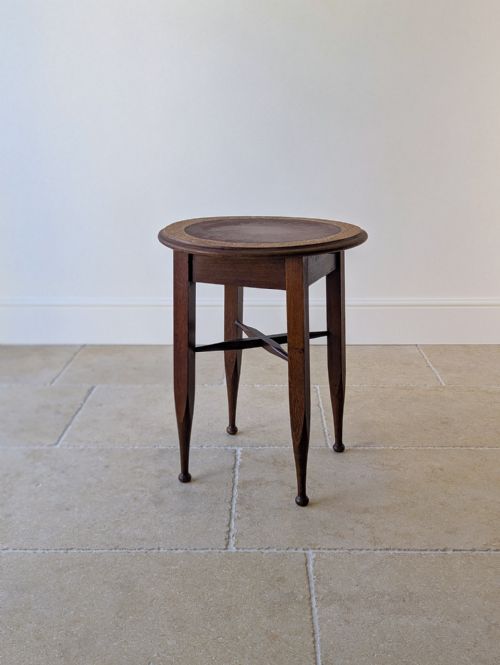
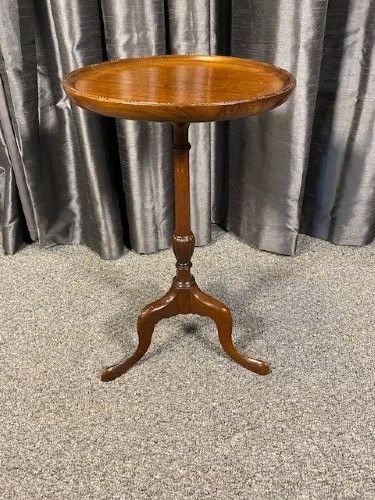
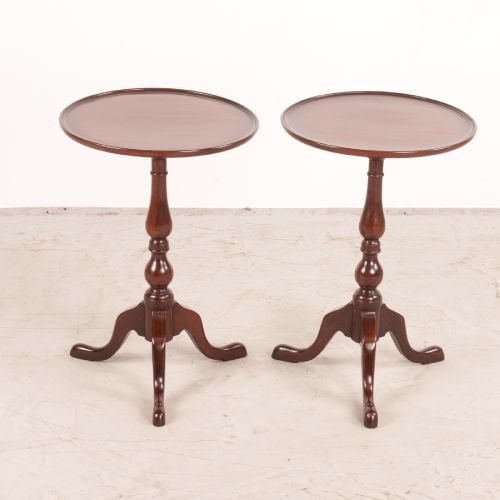
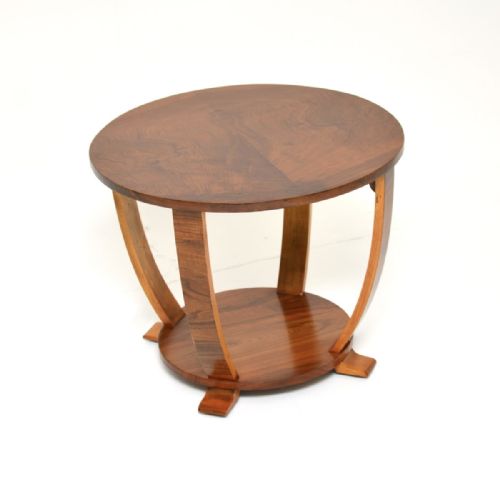

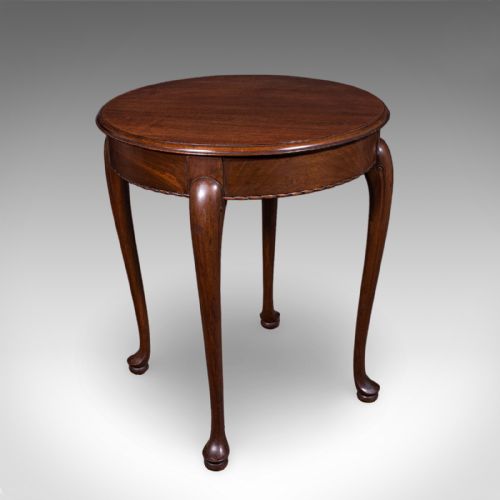


Circular Drinks Table
A circular drinks table brings a compact surface and steady foot to your room, holding a glass or decanter with quiet grace.
Circular Drinks Table
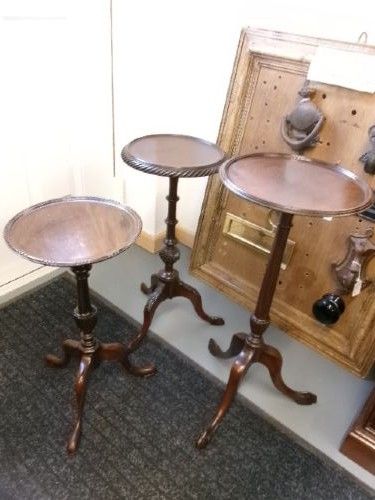
A circular drinks table stands on a single central pillar or slender legs, designed to hold glassware, bottles or lamps within easy reach of a seat. When you search for a circular drinks table, you meet a varied group spanning the eighteenth century through to the art deco period.
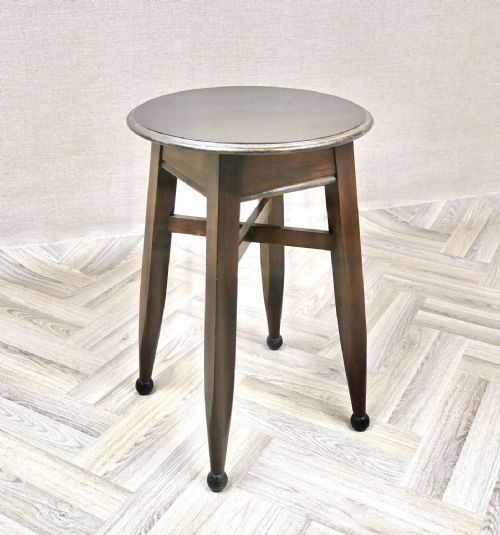
The pieces on this page appear in forms such as wine tables, occasional tables, pub tables, and cocktail tables. Mahogany and walnut dominate the selection, accompanied by oak, rosewood, satinwood, brass, glass, and marble.
Georgian and Regency examples show classical turning and rich timbers, whilst Edwardian and art deco pieces introduce inlaid details, chromium plating, and birds-eye maple. You are most likely to encounter mahogany wine tables from the Edwardian era and nineteen-thirties walnut cocktail or side tables.
How they were made
Cabinet makers built these tables using solid hardwoods like mahogany, walnut, and oak for structural stability on slender frames. Turning lathes shaped the central pillars, while cabinet makers applied figured veneers such as burr walnut, satinwood, and rosewood to the circular tops.
Twentieth-century examples integrate modern materials, joining chrome and brass metalwork with glass and marble inserts. Joinery methods varied from traditional mortise and tenon joints in earlier oak pieces to sturdy twentieth-century assembly.
Periods represented range from eighteenth-century Georgian and Regency pieces through Victorian, Edwardian, and nineteen-thirties Art Deco designs.
What varies in quality
The quality of a circular drinks table rests in the crispness of its turning, the selection of timber veneers, and the stability of the central column. Superior examples display carefully matched wood grain on the top and well-balanced weight in the base.
Later or simpler pieces may rely on plain timber and straightforward construction without decorative inlay or figured grain. The integration of specialty materials like brass frames, marble tops, or chrome plating marks the ambition of the maker.
Harry and Lou Epstein·Waring and Gillow
The Circular Drinks Table Glossary
- Wine table
- A small circular occasional table designed traditionally to hold a wine glass or bottle near a chair. These pieces typically feature a single pillar resting on tripod legs.
- Cricket table
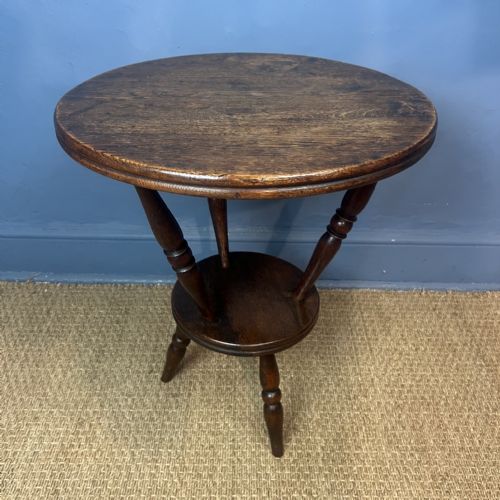
- A small three-legged round table originating in the eighteenth century, often built in oak with a lower shelf. They provide exceptional stability on uneven floors.
- Quarter-veneered
- A method of arranging four matching slices of veneer so the grain patterns mirror each other across the centre of the table top. This technique highlights the natural figure of walnut or mahogany.
- Toleware
- Painted or enamelled metalware, frequently tin or iron, used to form decorative table trays or small bases. It introduces colour and a distinct decorative surface to occasional furniture.
- Occasional table
- A light, movable small table intended for specific, temporary use in a room rather than a permanent central position. They appear across multiple periods in diverse materials.
Circular Drinks Table: Frequently Asked Questions
What is a circular drinks table used for?
These tables provide a convenient surface for resting glasses, cups, decanters, or small lamps beside a seating area. Their compact footprint allows them to fit easily into corners or between chairs.
Historically, wine tables held bottles and glasses during evening gatherings. Today, they serve equally well as lamp tables or convenient spots for everyday drinks.
How do I tell an art deco drinks table apart from an Edwardian one?
Art deco tables, dating around nineteen-thirty, frequently incorporate chrome, glass, marble, and contrasting veneers like birds-eye maple and rosewood. Their lines tend to be geometric and streamlined.
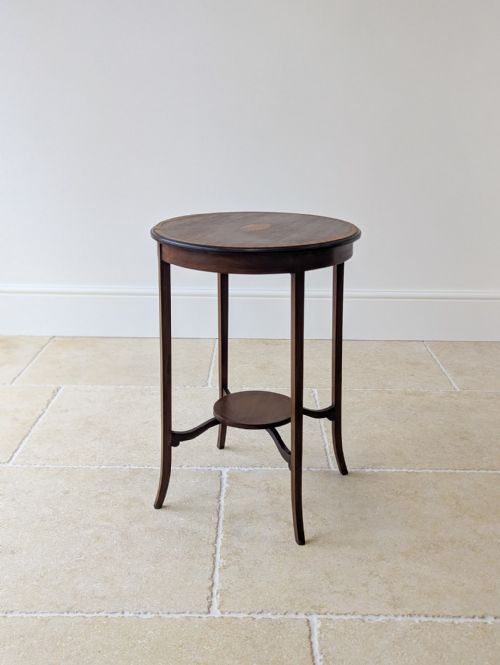
Edwardian tables from the early nineteen-hundreds lean towards traditional timbers such as mahogany and oak, often featuring classical satinwood stringing or Sheraton revival inlay.
Are these tables stable on carpets?
Tables with tripod legs or heavy central pedestals generally maintain good balance on firm carpets. Lighter occasional tables with slender brass or wooden frames require careful placement to ensure steadiness.
Heavier marble or glass-topped pieces rely on their own weight to stay secure. Checking the base construction helps determine how well a table handles different floor surfaces.
How do I care for a polished wood table top?
Polished mahogany and walnut surfaces benefit from regular dusting with a soft, dry cloth. Avoiding direct sunlight prevents the timber and natural veneers from fading over time.
Using coasters for drinks protects the finish from moisture rings and heat marks. Occasional application of appropriate wax preserves the lustre of the wood.