





Circular Art Deco Mirror
A circular art deco mirror brings geometric symmetry and striking glass tones to a wall.
Circular Art Deco Mirror
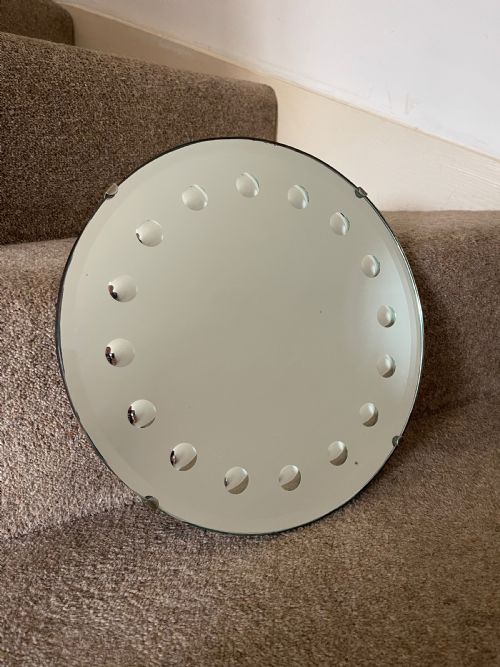
A circular art deco mirror takes the distinct geometry of the interwar decades and concentrates it into a round plate. These pieces date principally from the 1920s and 1930s, emerging from both English and French workshops. Wall mirrors dominate the selection, appearing either frameless or set within borders of coloured glass, chrome or wood.
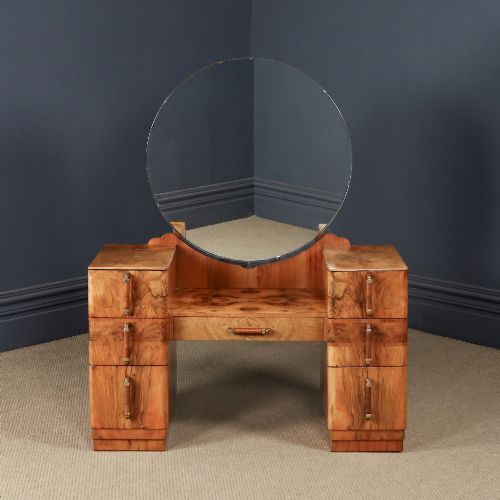
Beyond standard wall hanging formats, the search for a circular art deco mirror often leads to related domestic items featuring reflective circular elements. The evidence records dressing tables with matching mirrors, mantel clocks incorporating glass dials, and small mirror plateaus. Walnut, burr walnut, and brass frequently frame these designs.
What Varies in Quality
The calibre of a circular art deco mirror rests heavily on the sophistication of its glass treatment and materials. Pieces featuring tinted peach or blue mirror glass, or complex etched motifs, demonstrate greater ambition than plain frameless alternatives. The selection of finely figured walnut veneers similarly elevates certain dressing tables and frames above standard production.
Construction details also separate baseline items from exceptional examples. The integration of metals like solid chrome or heavy brass framing provides structural integrity and weight. French and English pieces from established makers show refined proportions and cleaner facet cuts around the perimeter.
One remarkably niche piece is the sorcerer type mirror, offering a delightfully enigmatic twist on standard domestic reflection.
Smiths Clock Company·Betty Joel·Elkington
The Circular Art Deco Mirror Glossary
- Art Deco
- A design style spanning the 1920s and 1930s characterised by geometric shapes, streamlined forms, and modern industrial materials. It replaced the flowing curves of Art Nouveau with stark symmetry and bold lines.
- Peach Mirror Glass
- A tinted variety of reflective glass popular during the interwar period, yielding a warm, rosy reflection. This material was frequently utilised in wall mirrors and clock faces.
- Mirror Plateau
- A decorative tabletop mirrored tray traditionally used to display centerpieces or silver items. These circular surfaces reflect candlelight and objects placed upon them.
- Facet Cut
- An angled edge ground along the perimeter of a glass plate to catch and refract light. This technique adds depth and a finished appearance to frameless mirrors.
- Burr Walnut
- Wood harvested from the growths of walnut trees, displaying intricate, swirling grain patterns. It was prized for luxury furniture and dressing table surrounds during the 1930s.
Circular Art Deco Mirror: Frequently Asked Questions
Where should I hang a circular art deco mirror?
These mirrors suit spaces where their distinct geometry can act as a focal point, such as above a mantelpiece or in an entrance hallway. Their round form contrasts effectively against rectangular furniture and vertical wall panels.
They also function well above dressing tables or side tables, echoing the curved lines of contemporaneous interwar interior design.
How do I date a circular art deco mirror?
Dating relies on examining the materials, hardware, and backing boards typical of the 1920s and 1930s. The presence of peach glass, chrome plating, or specific registered design stamps often points towards this interwar window.
Earlier pieces from around 1910 tend to feature simpler etched glass without the bold geometric styling that emerged fully in the subsequent decade.
What is peach glass in art deco mirrors?
Peach glass is a specialised tinted mirror plate that produces a warm, copper-toned reflection. It was widely adopted by designers in the 1930s to soften the starker industrial elements of the style.
Mirrors utilising this tinted glass command attention through their distinct colouration, whether used plain or with facet-cut borders.
How do French art deco mirrors differ?
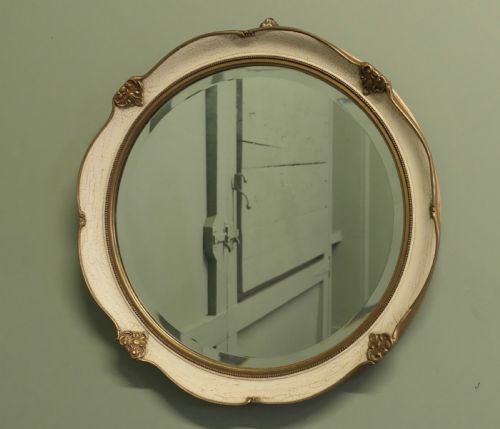
French examples often incorporate painted finishes, such as gilt and cream, alongside specialised etching techniques on round glass plates. They frequently emphasise decorative wall presence through elaborate framing.
English variants tend to lean towards architectural walnut surrounds or streamlined, frameless geometric glass constructions.