




Church Book Reading Desk
When you need a church book reading desk, you are looking at functional ecclesiastical woodwork and metalwork designed to hold texts for service.
Church Book Reading Desk
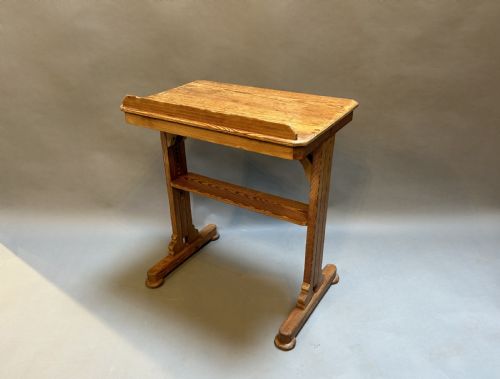
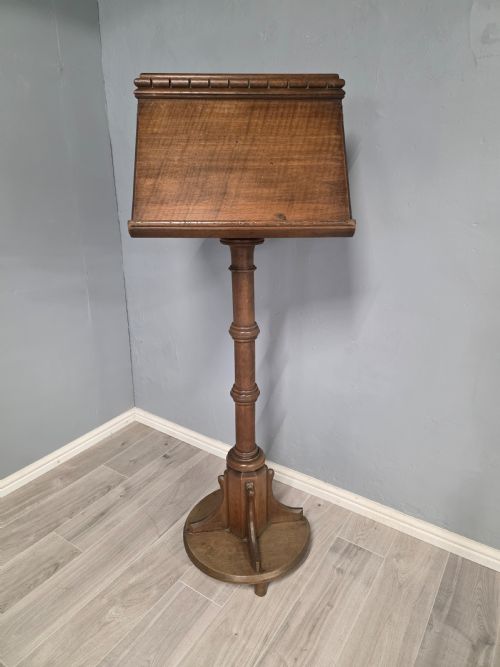
A church book reading desk encompasses lecterns, book stands, and reading stands built to support large volumes during services. You will most frequently meet pieces described as lecterns or reading desks, originating from the nineteenth century up through the nineteen-thirties.
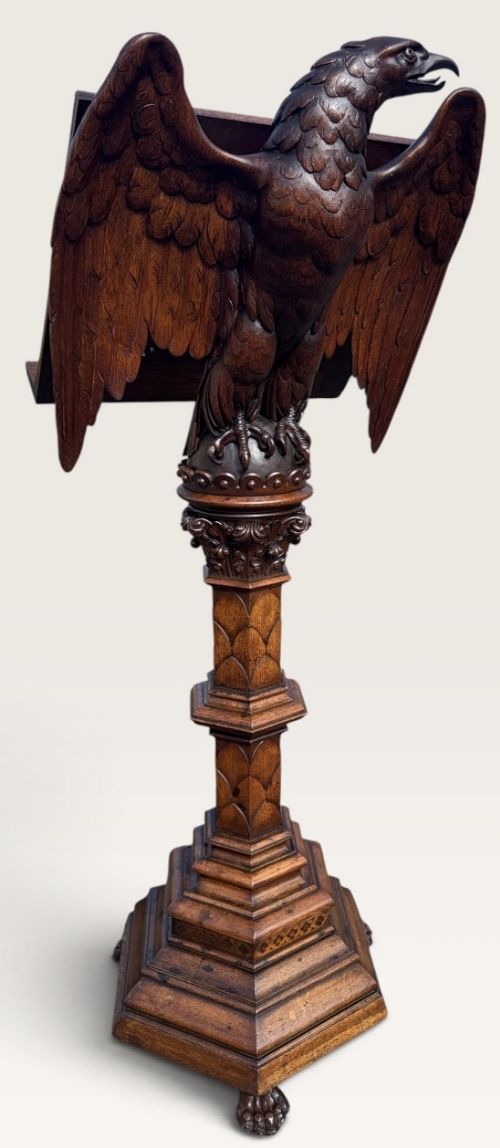
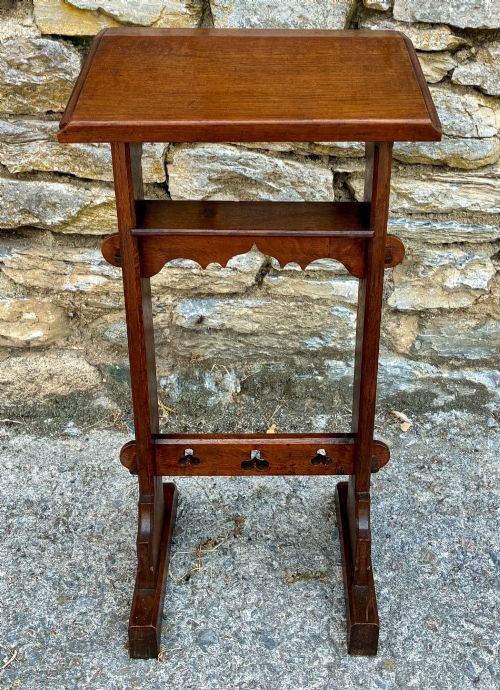
The forms range from compact table models and small rests to substantial floor-standing podiums and carved wooden eagle lecterns. These items served practical purposes in ecclesiastical settings, providing an elevated surface for holding service books and manuscripts.
The selection on this page draws primarily from the Victorian and Edwardian eras, featuring styles such as Gothic Revival and Victorian Gothic alongside simpler utility pieces. Pieces span oak and pine constructions as well as cast iron variants.
How they were made
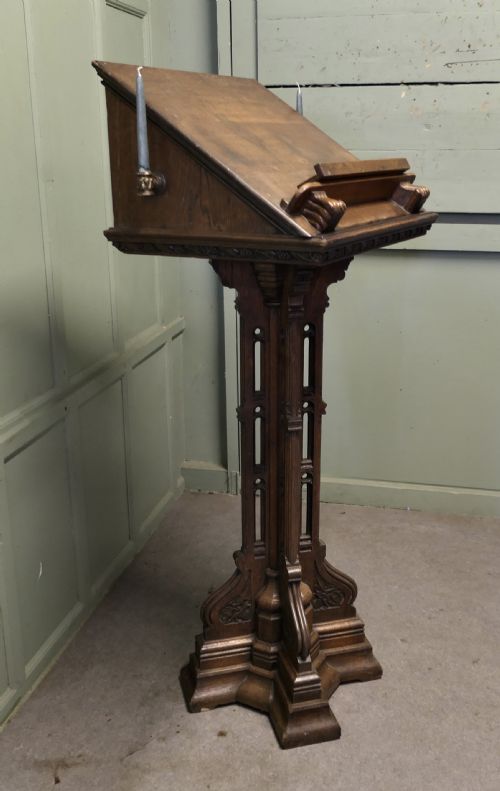
Makers utilised solid timbers such as oak and pine to construct the main bodies and stands of these desks, employing traditional joinery methods suited to heavy use. Carved details often reflect Gothic Revival motifs, featuring surface ornamentation worked directly into the wood.
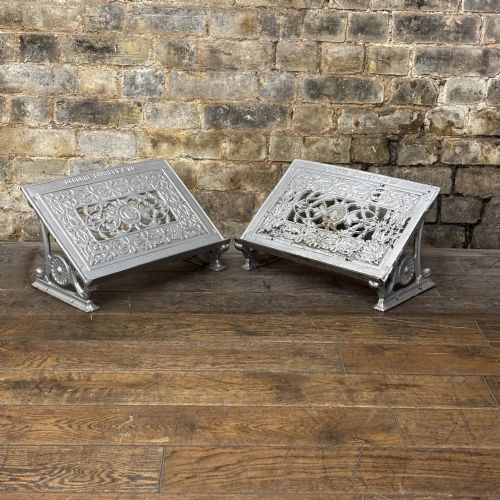
Metal components also appear, notably in cast iron and brass elements utilised for structural support or adjustable book rests. These combinations of wood and metal provided the rigidity necessary to hold heavy church books securely.
Church Book Reading Desk Retail Price Guide 2026
Typical asking prices for church book reading desk among the pieces listed under this phrase on Sellingantiques today, from the lower quarter to the upper quarter. They describe what is for sale here now, not the wider market.
Carved wooden eagles stand ready to support the weight of heavy texts with unwavering feathered resolve.
What varies in quality
Quality in a church book reading desk reveals itself in the depth and execution of the carving, particularly on pieces featuring figural elements like carved eagles or Gothic tracery. Finer examples display deliberate proportions and careful timber selection rather than purely utilitarian assembly.
The choice of material alters the character of the piece, with dense carved oak sitting at a different level of craftsmanship compared to straightforward pine utility items or cast iron variants.
Osborne Garrett Co
The Church Book Reading Desk Glossary
- Lectern
- A tall stand with a sloping top to hold a book for a reader at the front of a church. These often take the form of floor-standing pedestals or table-top book rests.
- Gothic Revival
- An architectural and decorative style drawing on medieval ecclesiastical forms. This style frequently employs pointed arches, heavy carving, and tracery.
- Book rest
- The sloping or flat surface designed to hold an open volume at a readable angle. These components can be fixed or adjustable in pitch.
- Ecclesiastical
- Relating to the Christian Church or its clergy. Pieces described thus were originally made for use within a place of worship.
Church Book Reading Desk: Frequently Asked Questions
What is a church book reading desk used for?
These pieces were built to support heavy service books, Bibles, and hymnals at a comfortable height for reading during religious services. They provided a stable, elevated platform so the reader could address a congregation without holding the volume.
Today, buyers repurpose them in domestic or commercial settings as reading stands, recipe book holders in kitchens, or greeting stations in hospitality venues.
How do I identify a Gothic Revival piece?
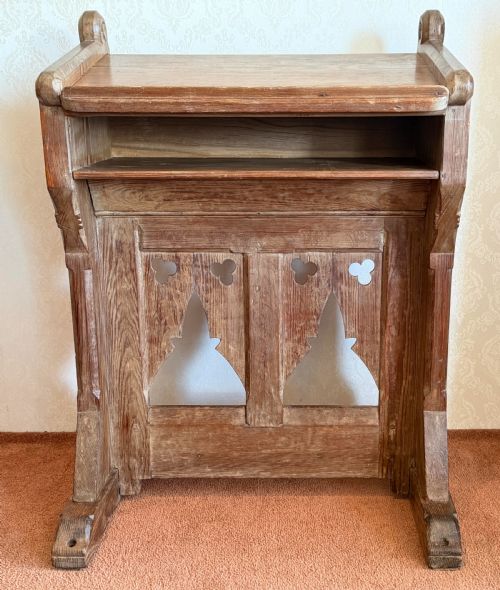
Gothic Revival items typically display characteristic medieval architectural motifs such as pointed arches, quatrefoils, and deep linenfold or floral carving. The woodwork is often heavy and solid, mirroring the stone details of nineteenth-century church architecture.
These pieces lean heavily into the Victorian ecclesiastical aesthetic, utilising dark oak and dramatic silhouettes to command attention in a room.
Are these desks made of solid wood?
The listings on this page feature solid timbers predominantly in oak and pine, along with variants incorporating cast iron and brass. Joinery is traditional, reflecting the robust construction required for heavy ecclesiastical use.
Pine versions often date to simpler utility periods or continental workshops, while oak examples tend to carry the more ornate carved styling of the Victorian era.
How do I live with a lectern at home?
Floor-standing lecterns require a dedicated corner or focal point where their height and sloping top will not obstruct movement. Tabletop book rests offer a more flexible option that can sit easily on top of existing furniture.
Ensure the pitch of the desk suits the items you plan to display on it, whether that is an open art book, a tablet, or a family Bible.